
Fabric Shrinkage & Dimensional Stability: The Complete Science of Fit Retention

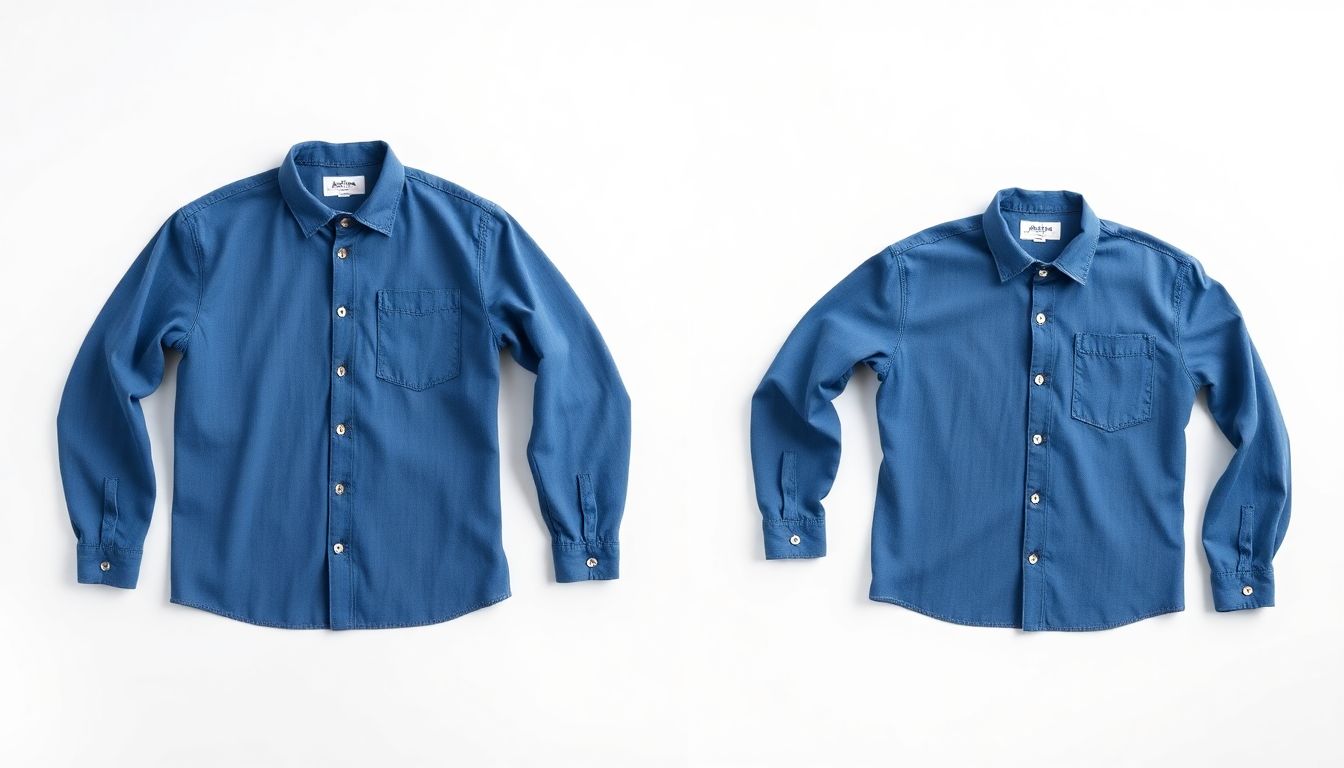
Fabric shrinkage occurs when fibers return to their natural, unstrained state after being stretched during manufacturing. There are three distinct types of shrinkage — relaxation shrinkage (most common), felting shrinkage (wool only), and consolidation shrinkage — each with different causes, percentages, and prevention strategies. This guide covers every fiber type and explains exactly when and why shrinkage happens.
What Is Fabric Shrinkage? (The Science Explained)
Fabric shrinkage is the dimensional change in a fabric’s length or width after laundering, heat exposure, or simply being left to relax. It is measured as a percentage of the original dimension and is a primary indicator of a fabric’s dimensional stability — its ability to maintain its initial size and shape after wear and care.
During manufacturing, nearly every fabric is stretched at some point. Yarns are held under tension during spinning, fabrics are pulled taut on looms during weaving, and finished textiles often pass through heated rollers that set them under stress. These manufacturing stresses leave fibers in an unnatural, elongated state. When the fabric encounters water, heat, or simply time, those fibers seek their natural equilibrium — and the fabric contracts.
The first wash causes the most shrinkage in most fabrics. This initial contraction can range from barely perceptible to a full size down on a garment tag. Understanding why this happens — and which fiber types are most vulnerable — is the key to controlling it.
Residual shrinkage is the technical metric used to express how much a fabric will shrink under standard washing conditions. It is expressed as a percentage. A fabric with 5% residual shrinkage will lose 5 centimeters of length per meter in the first appropriate wash. Industry standards set the threshold for “pre-shrunk” fabrics at less than 3% shrinkage under standard test conditions such as those defined in ISO 6330 and AATCC Test Method 135.
The Three Types of Fabric Shrinkage
Most fabric-care articles mention shrinkage as if it were a single phenomenon. It is not. Textile scientists and fiber technologists recognize three fundamentally different mechanisms, each with distinct causes, fiber targets, and prevention strategies. Mastering these distinctions is what separates an informed consumer — or a thorough TextileTuts guide — from the typical blog post that oversimplifies everything.
1. Relaxation Shrinkage
Relaxation shrinkage is the most common type and affects virtually all fabric types. It occurs when the mechanical stresses introduced during spinning, weaving, and finishing are released by water or heat. The fibers, released from manufacturing tension, simply return to their natural, unstretched state.
Relaxation shrinkage is most pronounced in natural fibers — particularly cotton and linen — because their cellulosic polymer chains have large amorphous regions that can reorganize when given sufficient moisture and freedom of movement. The fiber swells, the yarn twist tightens slightly, and the fabric contracts.
Typical amount: 1–5% in a single wash, with the majority of that contraction occurring in the first wash cycle. Prevention focuses on pre-washing fabric before cutting and sewing, and on machine washing new garments in warm water to accelerate any residual relaxation before the garment is first worn.
2. Felting Shrinkage
Felting shrinkage is unique to felting-susceptible protein fibers — wool, cashmere, mohair, and other animal-derived fibers. Unlike relaxation shrinkage, felting is caused by the physical structure of the fiber itself: wool fibers are covered in microscopic cuticle scales that act like one-directional hooks.
When wool is exposed to heat, moisture, and agitation, these cuticle scales swell and open, then lock together as they cool and dry. This inter-locking is irreversible — the fibers cannot be separated without breaking. The fabric literally becomes denser and smaller as the fibers felt together.
Felting shrinkage can be catastrophic. In severe cases — such as a wool sweater washed in a standard top-loading machine on a hot cycle — shrinkage of 30–50% is possible. A garment can shrink from an XL to a child’s size in a single wash. Unlike relaxation shrinkage, felted wool cannot be restored to its original dimensions by any consumer-level method.
Prevention requires cold water, minimal agitation (gentle cycle or hand wash), and absolutely no tumble drying. Some wool garments are treated with a SuperWash coating that chemically smooths the cuticle scales, allowing machine washing on a gentle cold cycle — but even SuperWash-treated wool is not immune to felting under harsh conditions.
3. Consolidation Shrinkage
Consolidation shrinkage is caused by the interaction of fiber swelling and yarn twist tightening during the drying phase. When a fabric is immersed in water, the fibers swell radially. This swelling forces the yarn twist to loosen. Then, as the fabric dries under tension (such as the tumbling action in a dryer), the yarn twist tightens back up — but the drying fabric is simultaneously contracting, creating dimensional compression in the yarn pack.
Knit fabrics are especially vulnerable to consolidation shrinkage because their loop structure allows more dimensional change than woven fabrics. Cotton jersey, fleece, interlock, and French terry are all high-risk. The combination of a warm wash followed by a high-heat tumble dry is particularly damaging.
Typical amount: 3–8% in knit fabrics. Prevention centers on laying garments flat to dry rather than using a tumble dryer, and avoiding high dryer heat settings for cotton knits.
How Heat and Agitation Interact with Fiber Structure
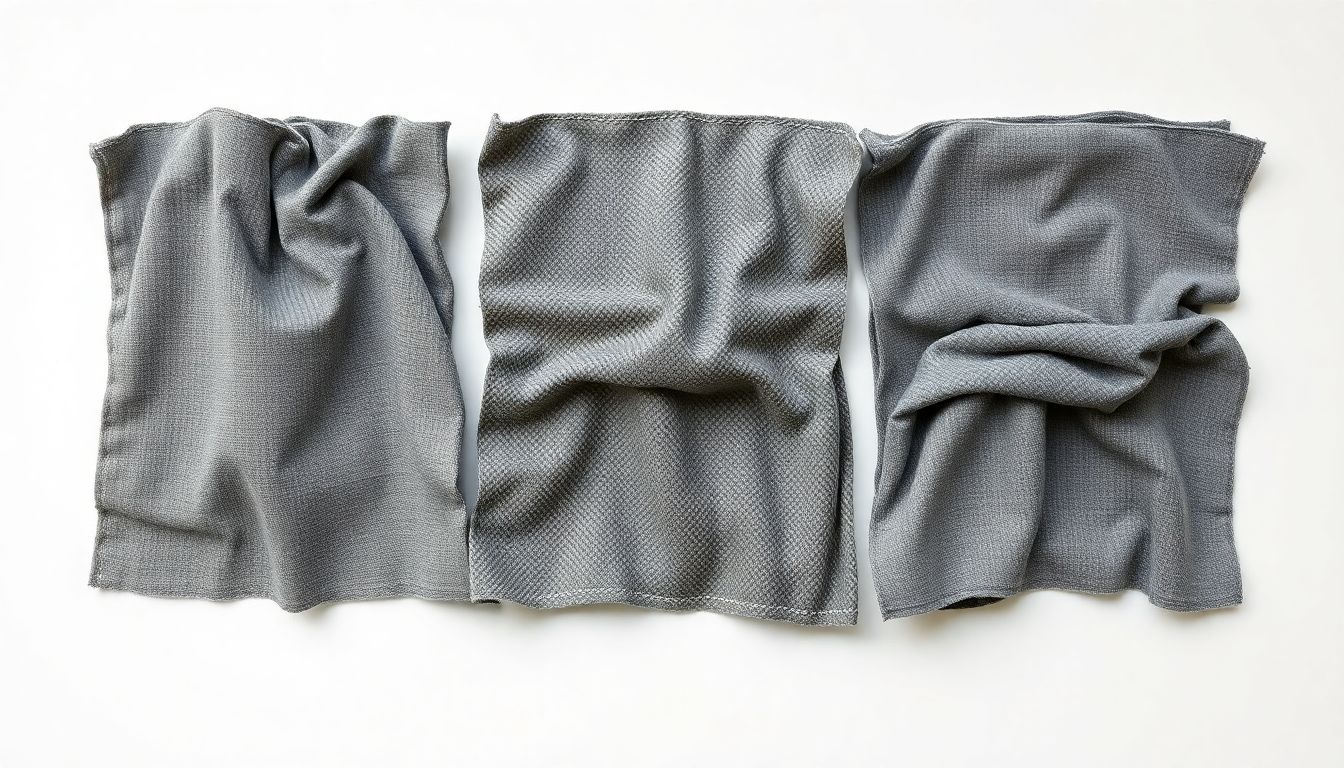
Water temperature and mechanical action are the two primary variables in any wash cycle, and they interact with each fiber type in specific, predictable ways. Understanding these interactions explains why a cold wash protects wool but does not fully protect cotton knits from consolidation shrinkage.
Water Temperature
Cold water (below 30°C) minimizes fiber swelling and reduces the release of manufacturing tension, making it the safest choice for most fabrics. Warm water (30–40°C) accelerates detergent efficiency and soil removal but begins to activate the relaxation mechanism in cotton and linen. Hot water (above 60°C) causes maximum relaxation shrinkage in cellulosic fibers and triggers felting in unprotected wool — it should be reserved only for heavily soiled cotton items that are not meant to retain their precise fit.
Agitation
Top-loading washing machines with agitator posts subject fabrics to high mechanical stress — vigorous rubbing against the agitator and other garments. Front-loading machines use a tumbling action that is gentler on fabric structure. For wool and delicate knits, this distinction can mean the difference between a garment surviving ten wash cycles and felting in one. Front-loaders are generally preferable for high-shrinkage-risk items.
Tumble Drying
The dryer is frequently more damaging to cotton fabrics than the wash cycle itself. The combination of tumbling (mechanical action), heat (accelerating relaxation), and centrifugal tension (pulling the fabric against the drum wall) creates conditions for both relaxation and consolidation shrinkage simultaneously. Studies of cotton jersey consistently show higher dimensional loss during tumble drying than during wet block — the dryer essentially completes the shrinkage process that the wash begins.
Steam and Ironing
Steam can cause both temporary and permanent dimensional change. Steam applied to wool while the garment is stretched on a blocking board can temporarily open the cuticle scales and reshape the garment — this is a valid part of the blocking process. However, steam applied to cotton under tension can set the fabric in a relaxed state, effectively “permanently” fixing the relaxed dimensions. Ironing without steam at moderate temperatures carries the lowest risk of accidental dimensional change.
Fiber-by-Fiber Shrinkage Risk Chart
The table below provides shrinkage risk, typical shrinkage amounts, and prevention guidance for every major fabric type. Use this as both a reference guide and a directory to individual spoke articles on TextileTuts.
| Fiber | Shrinkage Type | Risk Level | Max Shrinkage | Prevention |
|---|---|---|---|---|
| Cotton | Relaxation + Consolidation | HIGH | 5–10% | Cold wash, lay flat to dry |
| Wool | Felting + Consolidation | VERY HIGH | 30%+ | Hand wash cold, no tumble dry |
| Linen | Relaxation | MEDIUM-HIGH | 3–5% | Pre-wash before use |
| Silk | Relaxation | MEDIUM | 2–4% | Hand wash cold |
| Polyester | Consolidation (minor) | LOW | <2% | Avoid high heat (>70°C) |
| Nylon | Consolidation (minor) | LOW | <2% | Normal care |
| Rayon/Viscose | Relaxation + Consolidation | HIGH | 5–10% | Dry clean or hand wash |
| Acrylic | Consolidation | LOW-MEDIUM | 2–4% | Low heat drying |
| Cashmere | Felting | VERY HIGH | 20–30% | Professional cleaning |
| Denim | Relaxation | MEDIUM | 3–5% | Cold wash, pre-shrunk options |
Reading Care Labels to Predict Shrinkage
Care labels are the manufacturer’s single most important communication about how a garment should be treated. Learning to read them accurately is the single most effective step any consumer can take toward preventing shrinkage.
ISO 3758 Washing Symbols
The international standard for care labeling is ISO 3758 (also adopted as ASTM D3136 in the United States). The wash tub symbol with a temperature number indicates the maximum water temperature — but critically, it does not specify agitation level or dryer settings, which are often the actual drivers of shrinkage.
- 30°C (cold wash): Safe for most delicates, wool, silk, and synthetic blends
- 40°C (warm wash): Standard for cotton blends, mixed-fiber items
- 60°C (hot wash): Heavy-duty cottons only; will cause significant shrinkage in untreated cotton
What “Machine Washable Wool” Actually Means
A “machine washable wool” label means the garment has been treated with a SuperWash finish — a chlorine-Hercosett treatment that chemically removes the cuticle scales from the wool fiber surface, preventing them from interlocking during washing. While SuperWash allows machine washing on a gentle cold cycle, it does not make wool completely shrink-proof. Aggressive handling, high temperatures, or unsuitable dryer settings can still cause felting.
What “Pre-Shrunk” Means
Pre-shrunk does not mean shrinkage-proof. Per industry test standards (AATCC 135 and ISO 6330), a garment labeled pre-shrunk has undergone processing to limit residual shrinkage to less than 3% under standard wash conditions. Most retail garments labeled pre-shrunk still have 1–3% residual shrinkage remaining — enough to cause a perceptible change in fit on a closely-fitted garment after the first wash. Pre-shrunk is not the same as fully stabilized.
Fast Fashion Label Accuracy
Research into care label accuracy has consistently found that fast fashion retailers frequently mislabel fiber content and wash instructions. A 2017 study by the European Clothing Foundation found that nearly 40% of sampled fast fashion garments had inaccurate care labels. Always err toward gentler treatment than the label suggests — if the label says “machine wash warm” and the garment is cotton, wash cold anyway. The cost of a slightly less clean garment is far lower than the cost of a shrunk one.
The Role of Yarn Twist and Fabric Construction in Shrinkage
Two construction factors beyond fiber type have an outsized effect on shrinkage behavior: yarn twist and fabric structure.
Yarn Twist
High-twist yarns — such as those used in voiles, organdy, and crepes — are inherently more dimensionally stable because the tight twist holds the fibers together under stress. Low-twist yarns, commonly used in soft cotton jersey and fleece, allow more fiber movement and thus more potential shrinkage. The twist multiplier (TM) of a yarn is a measurable parameter that correlates directly with dimensional stability — yarn with a TM above 4.0 is generally considered high-twist.
Knit vs. Woven Structure
Knit fabrics shrink more than woven fabrics on average because each loop in a knit structure is a small, independent unit of potential dimensional change. When a knit fabric relaxes, hundreds or thousands of loops can each contract simultaneously, compounding into significant total shrinkage. Woven fabrics, in which each yarn is interlaced with dozens of perpendicular yarns, have far less individual freedom of movement. This is why a cotton woven canvas at 3–5% shrinkage risk can be considered relatively stable, while a cotton jersey of identical fiber composition carries 5–10% shrinkage risk.
Tightly Woven vs. Open Construction
Fabrics with high thread counts — canvas, poplin, sateen — resist shrinkage because each yarn is held in place by its neighbors. Loose, open constructions allow more fiber movement and greater dimensional change per shrink event.
How to Prevent Clothes from Shrinking: The Master Checklist
Shrinkage prevention is a set of habits, not a single action. Apply this checklist consistently for maximum dimensional stability across your wardrobe.
- Buy pre-shrunk when available: Pre-shrunk fabrics reduce residual shrinkage to under 3%. For fitted garments, this matters.
- Always cold wash new garments: Even if the label says warm — start cold. You can always rewash warm if needed; you cannot unshrink a garment.
- Read and follow care labels, but err toward gentler: If the label says 40°C, wash at 30°C. If it says tumble dry, hang dry instead.
- Avoid the dryer for high-risk fabrics: Cotton knits, wool, cashmere, and rayon should never go in the dryer. Lay flat to dry.
- Lay flat to dry for knits: Hanging wet knits causes them to stretch out of shape in addition to potential consolidation shrinkage from drying.
- Wash inside-out: This reduces mechanical friction on the outer face of the fabric, lowering abrasion and agitation stress.
- Use a mesh laundry bag for delicates: A mesh bag reduces direct garment-to-garment contact and limits mechanical stress from tumbling.
- Pre-wash fabric before sewing: If you are making your own garments, always wash and dry your fabric before cutting to eliminate manufacturing residual shrinkage.
How to Unshrink Clothes (When It’s Possible)
The ability to reverse shrinkage depends entirely on the type of shrinkage that occurred. Felting shrinkage is permanent. Relaxation and consolidation shrinkage are often partially reversible using the methods below.
What Can and Cannot Be Unshrunk
- Felted wool: Cannot be unshrunk. The cuticle scale inter-locking is irreversible. Attempting to stretch felted wool will break the fibers.
- Cotton relaxation shrinkage: Often reversible because the fibers are undamaged — they have simply returned to a shorter natural state.
- Consolidation shrinkage in knits: Partially reversible in many cases. The yarn structure is intact; the dimensional compression can often be stretched out.
- Cashmere and fine wools: Like wool, but more fragile — professional restoration is recommended over DIY methods.
The Conditioner Method for Cotton
Soak the shrunken cotton garment in warm water (not hot) with a generous amount of hair conditioner or fabric softener for 15–20 minutes. The conditioner relaxes the fiber bundles. While the garment is still wet, gently stretch it back to the original dimensions by hand — work from the center outward, pulling steadily but not violently. Lay flat to dry, occasionally re-stretching as the garment dries to prevent it from contracting again.
The Glycerin Method for Knitwear
Mix 2 tablespoons of glycerin and 1 tablespoon of mild baby shampoo into warm water. Soak the garment for 30 minutes. Gently work the fibers apart with your hands, applying steady outward pressure from the center. Rinse in cool water with a fabric softener, then lay flat and block to the original dimensions. This method works best on cotton jerseys and lightweight knitwear.
What to Do Immediately
The moment you realize a garment has shrunk, stop putting it in the dryer. Continuing to machine dry accelerates consolidation shrinkage. Rinse it in cool water, gently reshape it by hand, and apply one of the methods above as soon as possible. The longer you wait, the more the yarn twist sets into its contracted state.
Complete Directory: Every Fabric Shrinkage Article on TextileTuts
Explore every spoke article in Pillar 1 — Dimensional Stability. Each article covers shrinkage behavior, care requirements, and prevention methods for a specific fiber or use case.
By Fiber Type
- Cotton Shrinkage Guide
- Wool Shrinkage Guide
- Linen Shrinkage Guide
- Silk Shrinkage Guide
- Polyester Shrinkage Guide
- Nylon Shrinkage Guide
- Rayon/Viscose Shrinkage Guide
- Modal Shrinkage Guide
- Bamboo Shrinkage Guide
- Fleece Shrinkage Guide
- Corduroy Shrinkage Guide
- Flannel Shrinkage Guide
- Tencel Shrinkage Guide
- Acrylic Shrinkage Guide
- Microfiber Shrinkage Guide
- Cashmere Shrinkage Guide
- Jersey Shrinkage Guide
- Denim Shrinkage Guide
- Spandex Shrinkage Guide
- Chiffon Shrinkage Guide
- Tweed Shrinkage Guide
By Brand
- Do H&M Clothes Shrink?
- Do Zara Clothes Shrink?
- Do Gap Clothes Shrink?
- Does Patagonia Shrink?
- Does Columbia Shrink?
- Does Carhartt Shrink?
- Does Champion Shrink?
- Does Hanes Shrink?
- Does Adidas Shrink?
- Does Puma Shrink?
- Does Tommy Hilfiger Shrink?
- Does Ralph Lauren Shrink?
- Does Fruit of the Loom Shrink?
- Does New Balance Shrink?
How-To Guides
- How to Shrink Cotton on Purpose
- How to Shrink Jeans
- How to Shrink Polyester
- How to Unshrink a Sweater
- How to Unshrink Jeans
- How to Unshrink Wool
- How to Prevent Shrinkage: The Complete Method
- Dry Cleaning and Shrinkage: What You Need to Know
Frequently Asked Questions
Q: What percentage does cotton shrink?
A: Cotton typically shrinks 3–10% in the first wash, depending on whether it has been pre-shrunk. Most retail garments labeled “pre-shrunk” still have 1–3% residual shrinkage remaining.
Q: Can you unshrink clothes?
A: Cotton and synthetic blends can often be stretched back to near-original size by soaking in warm water with hair conditioner and gently reshaping while wet. Felted wool cannot be unshrunk — the fiber scale interlocking is irreversible.
Q: Does cold water prevent shrinkage?
A: Cold water significantly reduces relaxation shrinkage in cotton and linen, and prevents felting shrinkage in wool. However, consolidation shrinkage in knits can still occur during machine agitation and drying regardless of water temperature.
Q: Do synthetic fabrics shrink?
A: Polyester and nylon have very low shrinkage risk (<2%) because they are thermoplastic — their molecular structure is set by heat during manufacturing. However, high dryer heat above the heat-setting temperature (usually >70°C) can cause permanent deformation.
Q: Why do clothes shrink in the dryer but not the wash?
A: Dryers combine heat, tumbling (agitation), and centrifugal tension, which together cause more fiber relaxation and consolidation than washing alone. High heat also accelerates residual relaxation in cotton fibers.
References
- Textile World. (2019). Understanding Fabric Shrinkage. Textile World.
- International Organization for Standardization. (2012). ISO 6330:2012 — Textiles — Domestic washing and drying procedures for textile testing. ISO.
- AATCC. (2020). AATCC Test Method 135 — Dimensional Changes of Fabrics after Home Laundering. AATCC.
- AATCC. (2020). AATCC Test Method 150 — Dimensional Changes of Garments after Home Laundering. AATCC.
- Wikipedia. (2026). Shrinkage (fabric). Wikipedia, The Free Encyclopedia.
- European Clothing Foundation. (2017). Care Label Accuracy Study. ECF.


