
CATEGORY HUB · 2 ARTICLES
Weaving
Looms, weaves, and fabric formation
Shuttle, projectile, rapier, air-jet, water-jet - how modern looms interlace warp and weft into the world's most-produced fabric. Weave structures, preparation, performance metrics, modern trends.
01
Essential reading
Start here. The most important articles that explain the category to a textile engineer in one sitting.
Weaving
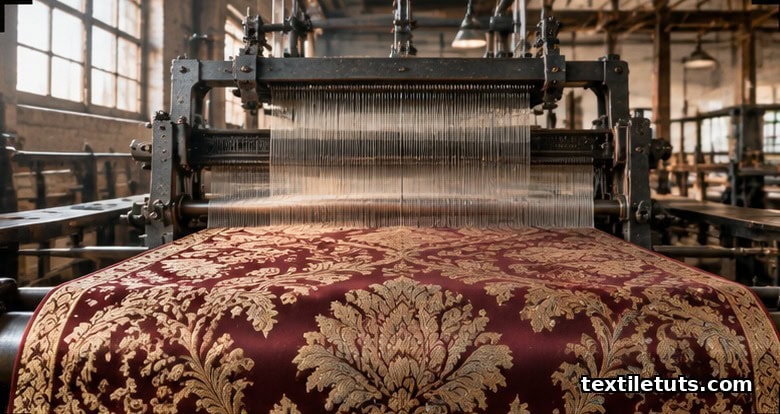
Jacquard Weaving: How Complex Patterns Are Made
Jacquard weaving is a method of producing complex woven patterns, florals, damasks, brocades, tapestries, figured...
Read article →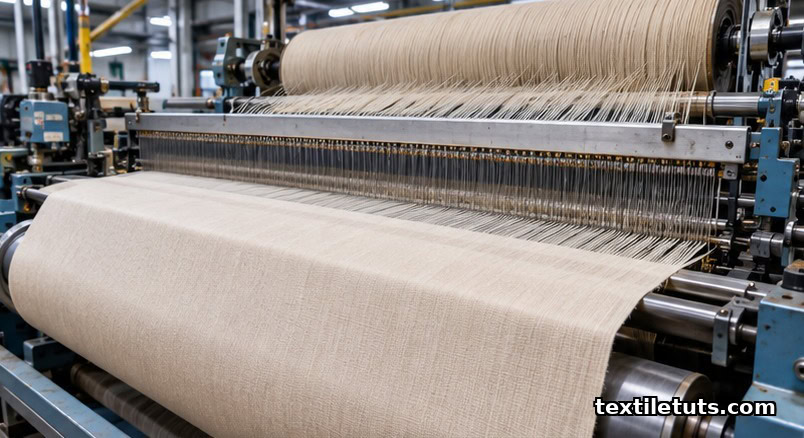
Weaving
Weaving: Complete Guide to Loom Types and Weave Structures
Jacquard weaving is a method of producing complex woven patterns, florals, damasks, brocades, tapestries, figured...
Read article →No recent articles.
04
Frequently asked questions
What is the fastest type of loom?
Air-jet looms are the fastest conventional loom, reaching 1500-2200 ppm. Toyota JAT810 hits 2200+ ppm. Multiphase looms reach 6000+ ppm but are limited in fabric range.
What is the most common weave structure?
Plain weave, accounting for roughly 60% of woven fabric production. Twill is second at 20%, with satin/sateen, jacquard, and specialty weaves making up the remainder.
What is the difference between weft and warp?
Warp runs lengthwise (parallel to selvedge). Weft runs crosswise. Warp is typically stronger and more tightly twisted. Weft is softer and often has more loft.
What is a selvedge?
The self-finished edge of a woven fabric. Shuttle selvedges are strong; air-jet selvedges are often cut. Selvedge denim (woven on shuttle looms) is a premium product.
How fast does a modern loom weave fabric?
Air-jet looms at 800-2200 ppm produce 15-50 m/hour. A modern air-jet mill with 200 looms produces 50,000-100,000 m/day.
Can't find what you're looking for?
The team replies to every email. Send us your question or a sample spec and we'll route it to the right specialist.