
Does Fleece Shrink? How to Wash Fleece Without Damaging It

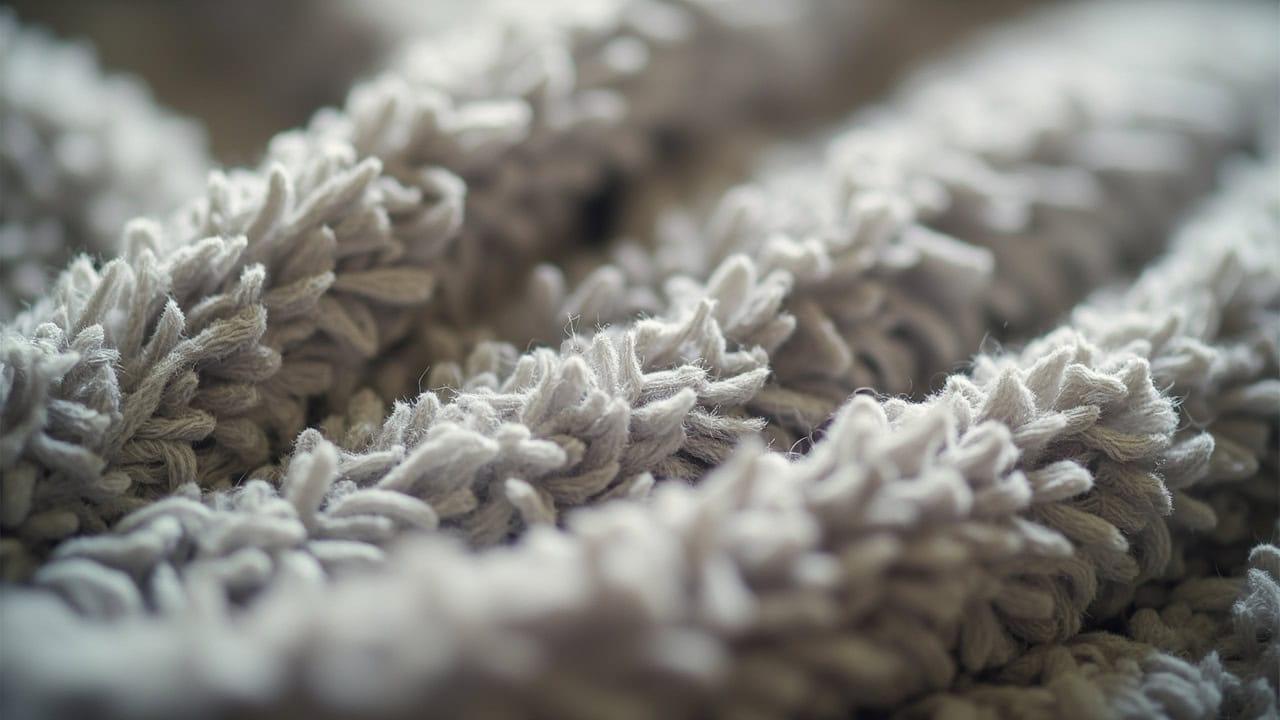
Synthetic polyester fleece is highly resistant to traditional, water-based shrinkage. Because it is engineered from thermoplastic fibers, cold or warm water washes will not alter its dimensions. However, fleece has a significant weakness: excessive heat. Temperatures exceeding 60°C (140°F) disrupt its heat-set molecular structure, causing fiber distortion, melting, and permanent surface matting. Understanding the science behind fleece care is the key to preserving its signature plush warmth.
What Is Fleece? (Fiber Composition Determines Shrinkage)
Fleece is a synthetic, lightweight knit fabric defined by a deeply brushed pile surface that mimics natural wool shearling. To accurately predict how a fleece garment will behave in the laundry, you must first look at its fiber composition.
- Standard Polyester Fleece: Crafted from 100% polyethylene terephthalate (PET) — the same polymer used to produce plastic bottles. During manufacturing, the yarn is knitted into a stable grid base and passed through heavy mechanical wire brushes that pull fiber ends upward to construct the classic fuzzy loft.
- Microfleece: Features ultra-fine denier fibers (typically under 1.0 denier). While incredibly lightweight and soft next-to-skin, its delicate structure makes it far more susceptible to heat glazing and friction damage.
- Sherpa and Teddy Fleece: Thick, high-loft variations engineered with dense, crimped polyester loops on one or both sides to replicate heavy sheepskin. The high density means that if heat-matting occurs, the loss of insulating properties is stark.
Note: Natural wool fleece behaves under entirely different physics. Wool scales interlock and felt aggressively under moisture and friction. The protective guidelines below focus strictly on synthetic polyester fleece, which constitutes the vast majority of consumer outdoor and performance apparel.
The Science of Synthetic Shrinkage: Why Heat Destroys Fleece
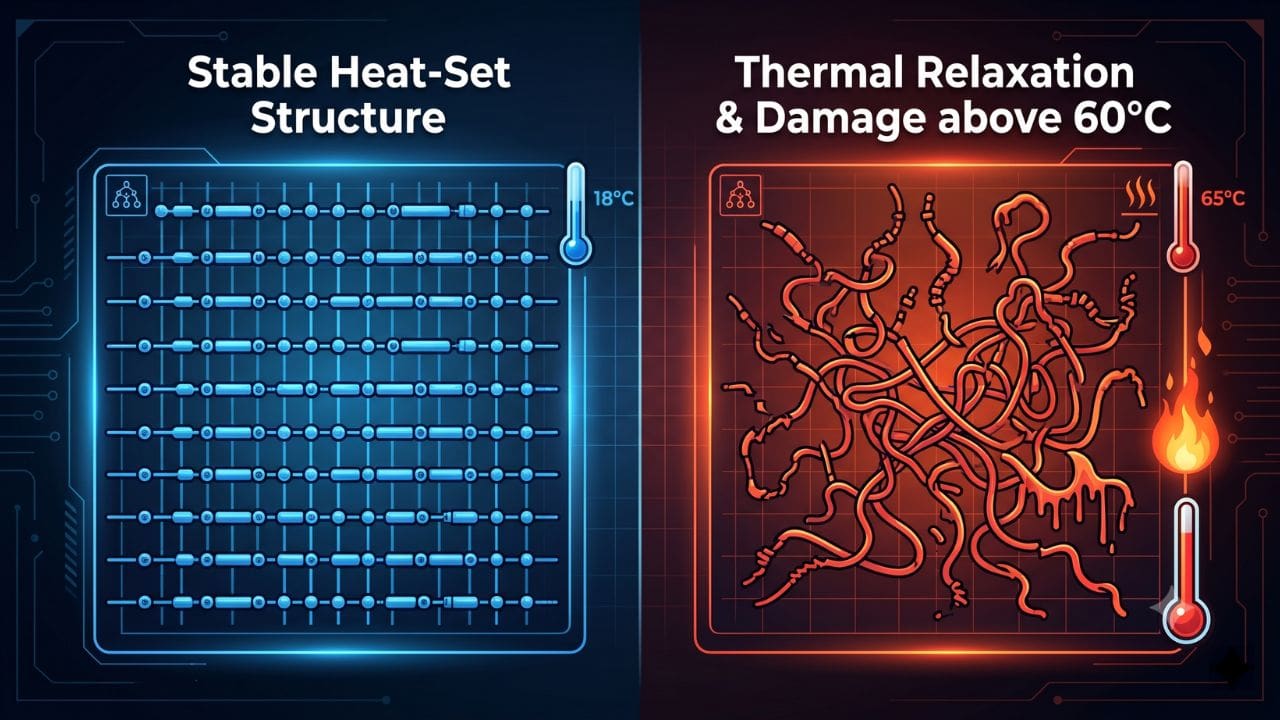
Polyester fibers undergo a process called heat-setting during manufacturing. The polymer chains are stretched and heated near their crystalline melting point, then rapidly cooled to permanently lock their dimensions. Because polyester has an incredibly low moisture absorption rate (under 0.4%), water alone cannot break down these bonds or trigger relaxation shrinkage.
However, exposing the material to thermal environments that approach or surpass its glass transition temperature (approx. 60–70°C / 140–158°F) unlocks the polymer configuration. When this thermal threshold is crossed, the fibers naturally attempt to relax back to their original, unstructured states, which manifests to the user as shrinking, warping, and severe fabric stiffness.
Common Signs of Heat and Friction Damage
Thermal and mechanical degradation of polyester fleece rarely manifests as a clean, uniform reduction in size. Instead, the damage is heavily localized, ruining both the appearance and the insulating capabilities of the garment.
1. Fabric Matting
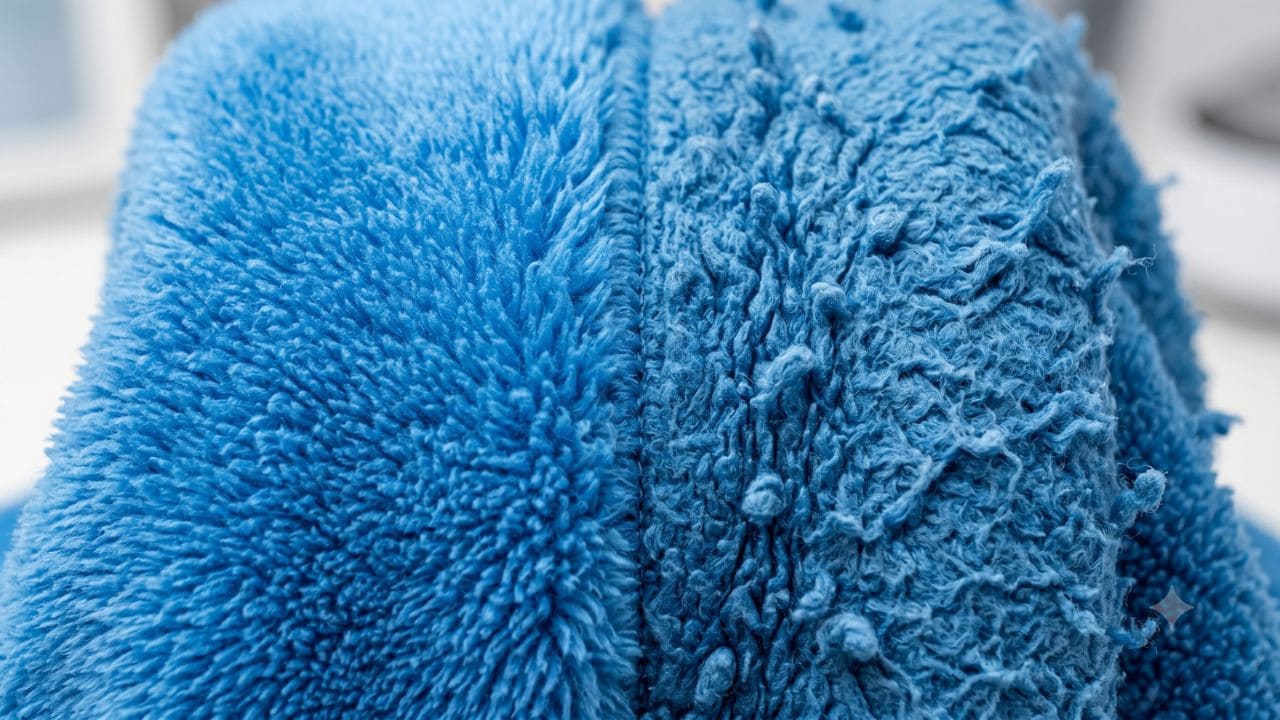
When subjected to high dryer heat or heated agitation, individual pile fibers collapse onto themselves and bond together. This creates a rough, dense, flattened texture. Because fleece relies on its open, airy loft to trap a boundary layer of warm air, a matted jacket will lose up to 50% of its thermal efficiency. Matting cannot be reversed.
2. Glazing and Superficial Melting
Mainly affecting delicate microfleece, glazing occurs when direct hot metal (like a household iron) or a hot dryer drum face contacts the fabric. The tops of the raised synthetic fibers reach their melting point, fusing together into a reflective, plastic-like, and itchy crust.
3. Pilling
Unlike matting, pilling is driven by mechanical friction. Abrasive tumbling cycles break weak surface filament ends, which migrate and entangle into small, stubborn fiber balls. While pilling doesn’t impair warmth, it degrades the garment’s appearance.
How to Wash Fleece to Prevent Damage: Step-by-Step
To maximize the operational lifespan and soft hand feel of synthetic activewear, implement this highly protective laundry protocol:
Step 1: Turn the Garment Inside Out
Always reverse your fleece before placing it in the wash drum. This keeps the exposed, brushed pile surface safe from abrasive friction against zippers, buttons, and the rough metallic walls of the washing machine.
Step 2: Wash in Cold or Cool Water
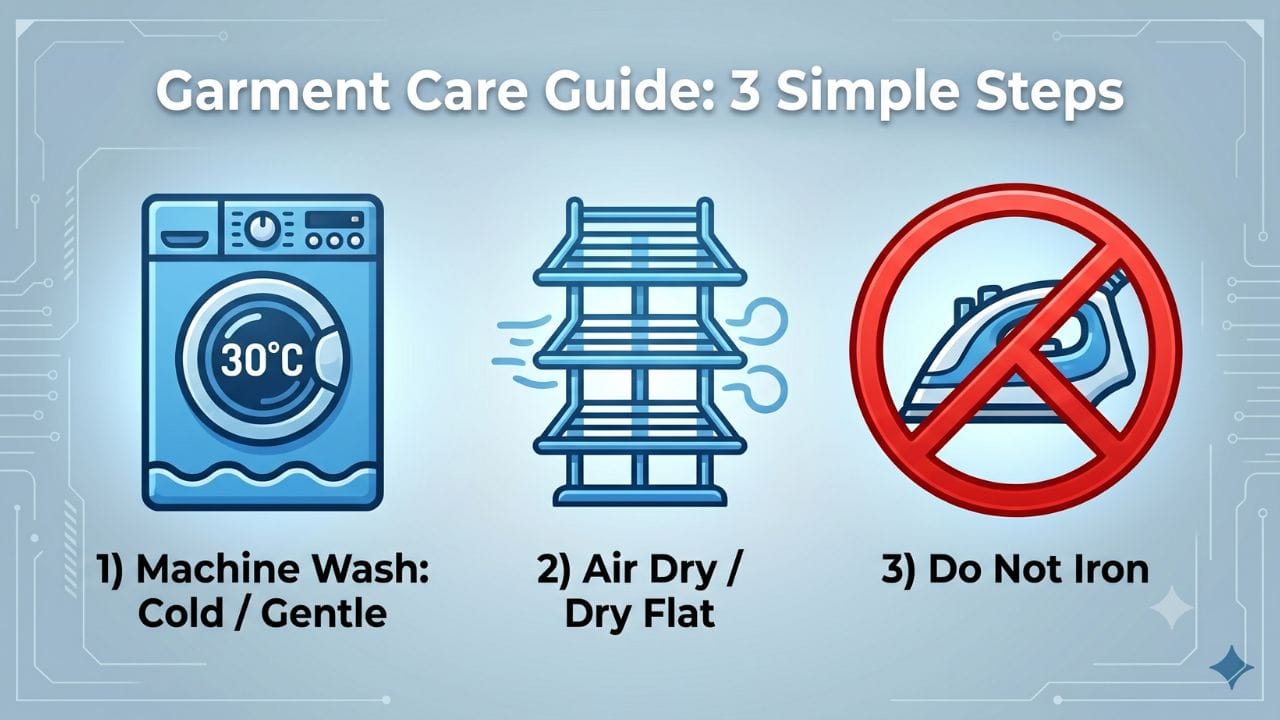
Set your washer cycle strictly to Cold (below 30°C / 86°F) or Warm (maximum 40°C / 104°F). This completely safeguards the structural integrity of the thermoplastic polymers.
Step 3: Choose a Gentle or Synthetics Cycle
Select a cycle with minimal mechanical agitation and a low spin speed. Short, gentle cycles decrease the frequency of fiber-shredding collisions, preventing premature structural wear.
Step 4: Use Mild Liquid Detergent (No Fabric Softeners)
Use a standard, residue-free liquid detergent. Categorically avoid liquid fabric softeners and dryer sheets. Cationic surfactants deposit a slick, chemical coating across synthetic fibers. This film seals the fabric, severely lowering moisture-wicking breathability and gluing loose fibers together into massive, unsightly pills.
Step 5: Avoid Velcro and Hard Hardware
Never wash fleece in an open load with tactical jackets, packs, or gear containing hook-and-loop (Velcro) fasteners. Velcro hooks work by snagging fiber loops; passing a fleece garment against exposed Velcro will instantly pull, shred, and ruin its surface. If mixing loads is unavoidable, seal the fleece entirely inside a mesh laundry bag.
Drying and Post-Wash Recovery
Because polyester sheds water efficiently, it exits the spin cycle relatively dry. The safest drying option is to hang the garment on a plastic hanger or lay it flat on a drying rack to air-dry. It will generally dry completely within a few hours without any risk of thermal damage.
If a machine dryer must be utilized, follow these protocols:
- Set the machine exclusively to Air Fluff or the absolute lowest manual heat setting.
- Pull the fleece garment out while it is still slightly damp (approx. 85-90% dry) to prevent the drum from over-heating the fabric once moisture leaves the chamber.
- Never Iron Fleece. To fix creases, hang the garment inside a steamy bathroom or use a clothing steamer from a safe distance of 15–20 cm. This relaxes the knit pattern without exposing the delicate pile to flattening contact plates.
How to Safely Remove Existings Pills
If your fleece has already developed pills from years of use, you can restore its clean surface profile without purchasing a replacement. Run an automated, battery-operated rotary fabric shaver gently across the surface of the flattened garment. The protective mesh screen feeds the knotted pills into internal spinning blades, slicing them away at the base without compromising the structural grid underneath.
Frequently Asked Questions
Q: Can you put fleece in the dryer?
A: Yes, but only on an air-fluff or lowest-heat setting. High heat risks melting the thermoplastic fibers, which permanently matts the soft pile and causes irreversible texture damage.
Q: Why is my fleece pilling?
A: Pilling is caused by mechanical friction during wear or laundry cycles. Washing fleece inside out on a gentle cycle, avoiding liquid fabric softeners, and preventing contact with rough hardware like Velcro can significantly reduce pilling.
Q: Does fleece shrink after washing multiple times?
A: No. When washed in cool or warm water, synthetic polyester fleece exhibits exceptional dimensional stability and will not shrink over time. Any minor sizing changes are usually due to elastic waistband or sewing thread relaxation.
References
- International Organization for Standardization. (2021). Textiles — Domestic laundering procedures for textile testing (ISO Standard No. 6330:2021). Retrieved from https://www.iso.org/standard/6330.html
- American Association of Textile Chemists and Colorists. (2020). AATCC Test Method 135 — Dimensional Changes of Fabrics After Home Laundering. Retrieved from https://www.aatcc.org
- Tortora, P. G., & Merkel, R. S. (1996). Fairchild’s Dictionary of Textiles (7th ed.). New York: Fairchild Publications.


