
Does Cashmere Shrink? The Delicate Truth About Cashmere Care

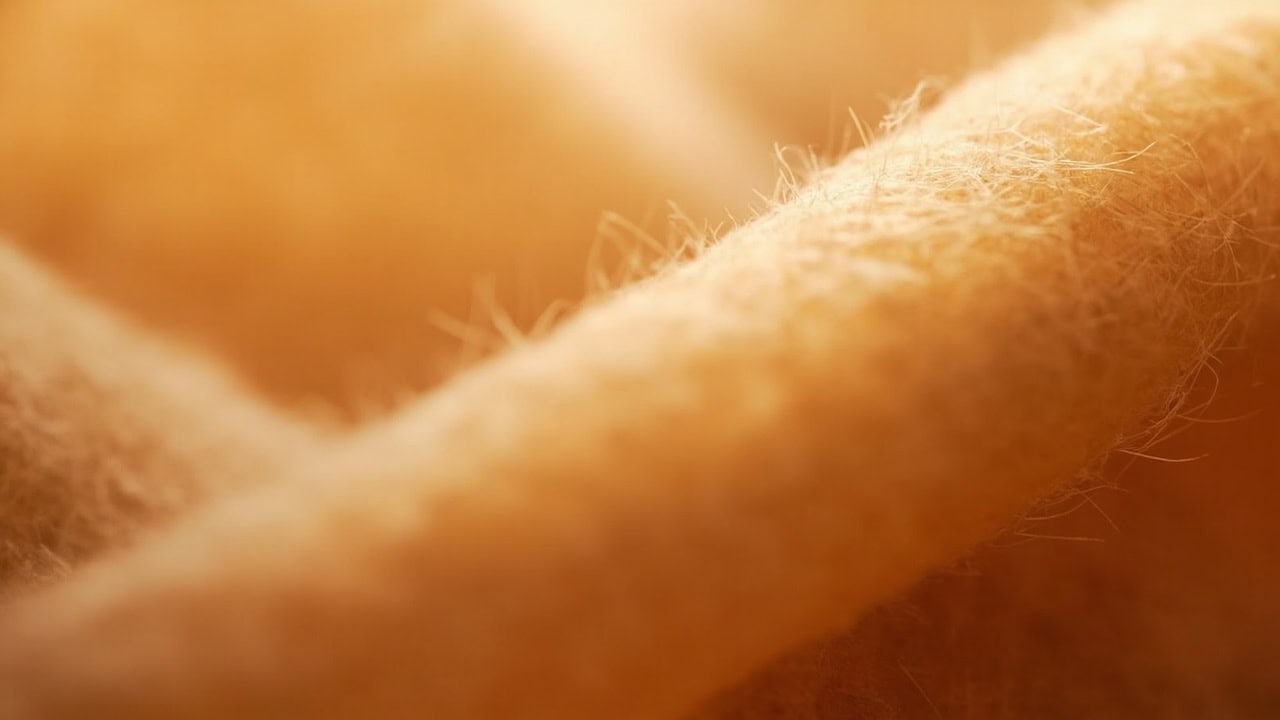
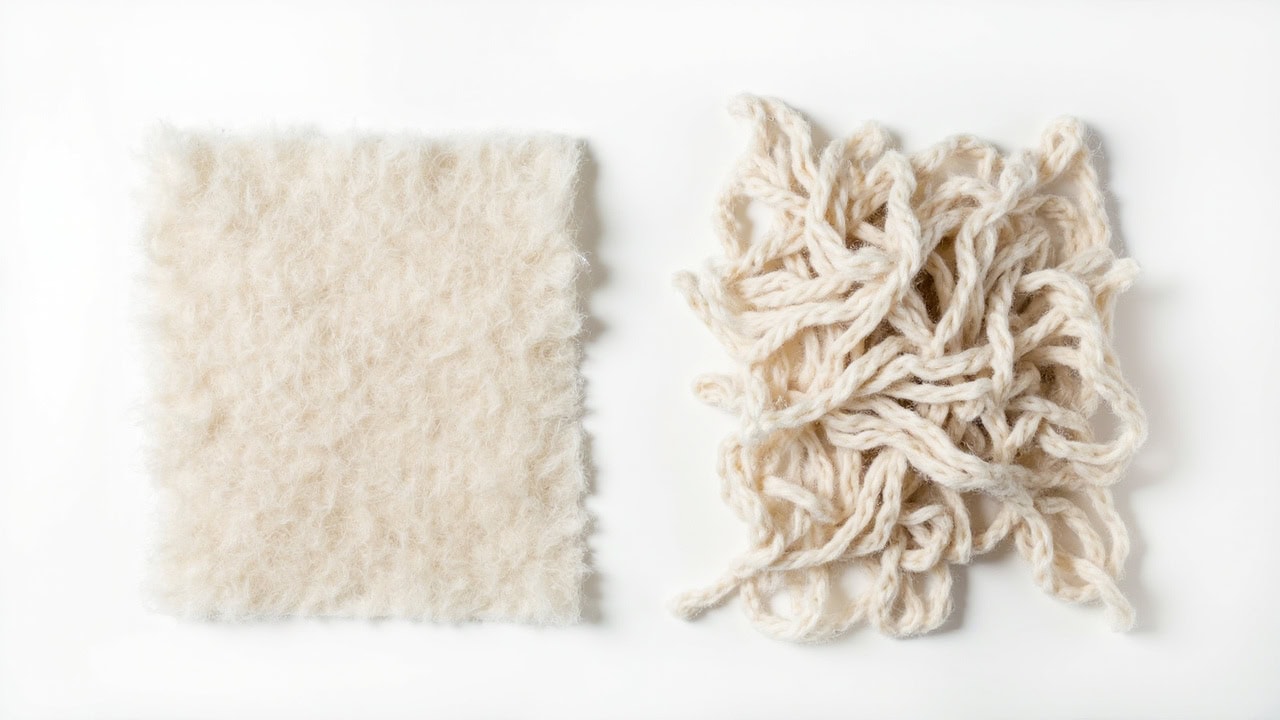
Cashmere shrinks more dramatically than almost any other fabric — potentially 20–30% or more from a single machine wash or hot water exposure — because cashmere fibers have the same microscopic scale structure as all wool, and these scales interlock irreversibly under heat and agitation (felting). Unlike cotton shrinkage (which is reversible through stretching), felted cashmere cannot be restored to its original dimensions. The mechanism is structural and permanent: once the fiber scales interlock, no amount of conditioning or pulling will return the garment to its former shape.
Why Cashmere Is Extremely Shrink-Prone
Cashmere is an animal protein fiber — wool harvested from the undercoat of Cashmere goats native to the Gobi Desert and Himalayan regions. Like all wool fibers, cashmere is covered in microscopic cuticle cells called scales, arranged like overlapping roof tiles along the fiber shaft. This scale structure is the key to both wool’s famed softness and its catastrophic shrinkage risk.
When cashmere is exposed to water and heat, these cuticle scales swell outward and open. Agitation — whether from machine tumbling, vigorous hand-washing, or even wringing — causes the open scales to catch on adjacent fibers and interlock. This process is called felting, and it is fundamentally different from the relaxation shrinkage seen in cotton or linen. Felting permanently changes the fiber structure at a microscopic level. The result is not merely a slightly tighter garment — it is a matted, compressed fabric that cannot be un-felted.
Cashmere’s fibers are exceptionally fine — typically 15–19 microns in diameter. For reference, the U.S. Wool Products Labeling Act defines cashmere as fiber with an average diameter not exceeding 19 microns, with no more than 3% of fibers exceeding 30 microns. By contrast, standard merino wool ranges from 18–25 microns. Finer fibers mean more scales per unit length, and more scales per unit length means a higher density of interlocking points when felting begins. This is why cashmere is actually more prone to felting shrinkage than standard wool, despite its reputation as a luxury material. The same properties that make it softer — its extreme fineness — make it structurally more vulnerable.
How Much Does Cashmere Shrink?
The extent of shrinkage depends entirely on the washing conditions. Cashmere can experience anything from negligible shrinkage to catastrophic felting, depending on water temperature, agitation level, and detergent use.
| Condition | Risk Level | Expected Outcome |
|---|---|---|
| Hand wash, cold water (max 30°C), no agitation | LOW | <3% shrinkage — negligible dimensional change |
| Machine wash, cold, gentle/silk cycle | MEDIUM–HIGH | 5–20% shrinkage plus felting risk; scale interlocking begins |
| Machine wash, warm or hot water (35°C+) | VERY HIGH | 20–30%+ shrinkage; active felting; irreversible structural change |
| Tumble dryer (any heat setting) | EXTREME | Severe felting; garment may reduce to half its original dimensions |
| Dry cleaning | SAFE | No shrinkage or felting when performed by a professional |
Global production of raw cashmere fiber is approximately 15,000–20,000 metric tons annually, with China producing roughly 19,200 metric tons and Mongolia approximately 8,900 metric tons. Each Cashmere goat yields only about 150 grams of usable undercoat fiber per year — making cashmere one of the most珍贵的 and least available textile fibers in the world. This scarcity is precisely why a felted cashmere garment represents such a significant loss. The International Wool Textile Organisation (IWTO) classifies wool shrinkage under two categories: felting shrinkage (irreversible, caused by scale interlock) and relaxation shrinkage (minor, reversible, caused by fiber swelling and settling). Cashmere is uniquely susceptible to the former.
Cashmere Wash Temperature Guide
Safe Zone
Cold to lukewarm water. Gentle hand wash only. Scales remain closed.
Hand wash · Wool wash · No agitationDanger Zone
Hot water opens fiber scales rapidly. Felting begins in minutes.
Machine wash hot · Boiling water · NeverCashmere scales begin opening at approximately 30–35°C. The felting reaction accelerates dramatically above 40°C.
How to Wash Cashmere at Home (The Safe Method)
Professional dry cleaning is the gold standard for cashmere care, but a careful hand wash at home is perfectly safe — provided you respect three rules: cold water, minimal agitation, and a pH-neutral detergent. Here is the step-by-step method used by textile conservators and cashmere specialists.
- Fill a basin or clean sink with cold water — temperature must not exceed 30°C (86°F). Hot tap water in many homes reaches 40–60°C, so test with your hand or use a thermometer.
- Add a few drops of wool wash, baby shampoo, or a pH-neutral liquid detergent. Avoid standard laundry detergents, which are typically alkaline and can damage protein fibers. A pH of 6–7 is ideal.
- Submerge the cashmere garment fully. Gently squeeze the water through the fabric — never rub, scrub, or twist. Rubbing creates localized agitation and is the single most common cause of cashmere felting.
- Allow the garment to soak for 5–10 minutes. Longer soaking is unnecessary and offers no benefit.
- Drain the basin. Refill with clean cold water and gently squeeze to rinse — do not agitate. Repeat until all detergent is removed.
- Press water out between your palms — never wring, twist, or squeeze the fabric aggressively. Wringing applies uneven torsion that bends and felts individual fibers.
- Lay the garment flat on a dry, clean towel. Roll the towel and garment together, pressing gently to absorb excess water. Do not scrub or roll aggressively.
- Unroll. Transfer the damp garment to a fresh dry towel. Reshape it carefully to its original dimensions — this is critical, as cashmere retains the shape it dries in. Gently stretch to restore original measurements if any slight shrinkage occurred.
- Allow to dry flat, away from direct sunlight, radiators, or heat sources. Turn the garment once during drying to ensure even air circulation. Drying typically takes 24–48 hours.
What to Do If Cashmere Shrinks
Mild Shrinkage (From a Gentle Wash That Went Slightly Wrong)
If the garment has only minor shrinkage — typically under 10% — and the fabric has not fully felted (it still has some flexibility and softness), recovery may be possible. The method relies on the fact that the cuticle scales are not yet fully interlocked, and the fibers can still be coaxed apart with moisture and lubrication.
- Re-soak the garment in cold water with 1–2 tablespoons of hair conditioner added. Use a pH-neutral, unscented conditioner. Allow to soak for 30 minutes.
- Remove from the water and gently stretch the garment back toward its original dimensions — work slowly and evenly, stretching all edges simultaneously to avoid distortion.
- Pin the stretched garment to a blocking board or a clean towel using rust-proof pins at the edges. A foam blocking board is ideal for this purpose.
- Allow to dry fully flat before removing pins. Do not attempt to wear or use the garment until completely dry — wet cashmere is extremely stretchy and vulnerable to distortion.
Severe Felting (From Machine Wash or Hot Water)
If cashmere has been through a hot machine wash or tumble dry, the felting is likely structural and irreversible. The cuticle scales at this point have fully interlocked — similar to how a human hair with opened cuticles becomes impossibly tangled with adjacent hairs. No conditioner, no amount of stretching, and no commercial “cashmere unshrinking” product can reverse this process. Attempting to force the fabric back to size will result in uneven, distorted fabric with permanently compressed fiber clusters.
The practical recourse for severely felted cashmere is repurposing. Felted cashmere fabric has unique properties — it does not fray when cut, it is dense and wind-resistant, and it retains the insulation properties of the fiber in a more compact form. Felted cashmere can be cut and used for:
- Coin purses and small leather-goods-style accessories
- Patch squares for repairing other cashmere garments
- Insulated lining squares for boot shafts or glove interiors
- Decorative felted accents in craft projects
Cashmere Grade and Shrinkage Sensitivity
Not all cashmere is equally vulnerable to shrinkage. The grade of cashmere — determined by fiber length, fineness, and source — directly affects both the luxury quality of the garment and its sensitivity to improper washing.
- Grade A cashmere uses the longest, finest fibers from the goat’s finest undercoat. Fibers typically measure 14–16 microns in diameter and 34–40mm in length. This is the softest, most luxurious cashmere — and paradoxically, the most sensitive to felting. Longer fibers produce softer fabric but also have more scale surface area per fiber, increasing interlocking potential.
- Grade B and Grade C cashmere use progressively shorter and coarser fibers (16–19+ microns, 28–34mm length). These are slightly less prone to felting simply because shorter fibers have fewer scales, but they are still wool and still highly vulnerable compared to other fiber types. Grade B/C garments often feel coarser and pill faster.
- SuperWash-treated cashmere (sometimes labeled “machine washable cashmere”) has undergone a chlorination treatment that strips the cuticle scales from the fiber surface, followed by a polymer resin coating that prevents any residual scales from interlocking. This is the same process used in SuperWash wool treatment. The result is a fiber that resists felting and can safely undergo gentle machine washing. Garments labeled SuperWash can typically tolerate a cold, gentle machine cycle without felting — but standard untreated cashmere absolutely cannot.
The lesson for consumers: always check the garment label. If it does not say “machine washable” or “SuperWash,” treat it as standard cashmere and hand wash only. There is no visual test to distinguish Grade A from Grade C — both look equally fine in a retail setting. The difference is felt over years of wear and care.
Storage and Moth Prevention for Cashmere
Cashmere requires specific storage conditions that differ from most other wardrobe items. Failure to store cashmere properly is the second most common cause of cashmere loss — after washing errors.
- Store folded, never hung. Cashmere knitwear is flexible and relatively heavy for its size. Hanging causes the garment to stretch permanently under its own weight, distorting the shoulder line and elongating the body. Always fold cashmere and stack it flat in a drawer or on a shelf.
- Clean before storing. Moth larvae — the damaging stage of clothes moths — feed on keratin, the protein that forms protein fibers like cashmere and wool. The larvae are specifically attracted to fiber that is soiled with body oils, sweat, food residue, or perfumes. Never store a worn cashmere garment without washing it first.
- Cedar and lavender deter adult moths but do not kill moth eggs. Adult moths avoid cedar oil but will readily lay eggs on cashmere stored near cedar blocks. Lavender sachets mask the scent that helps adult moths locate fiber but have no lethal effect on larvae. For reliable long-term protection, store clean cashmere in a breathable cotton garment bag or sealed storage box.
- For seasonal long-term storage: Wash the garment, allow it to dry fully, seal it in a breathable cotton storage bag or acid-free box with a pheromone moth trap (which actually kills adult moths rather than just deterring them), and keep it in a cool, dry place. Inspect storage every 3–6 months.
Frequently Asked Questions
Q: Can cashmere go in the washing machine?
A: Standard cashmere should not go in the washing machine unless it is labeled “machine washable” (which indicates SuperWash treatment). Even a gentle machine cycle carries felting risk because the drum’s tumbling motion creates more agitation than hand-washing. Hand wash in cold water (max 30°C) with a pH-neutral wool wash is the safe standard for untreated cashmere.
Q: How often should cashmere be washed?
A: Cashmere does not need to be washed after every wear. Body oils and odors are naturally released from cashmere fiber through airflow — simply hanging the garment in a steamy bathroom or outside in fresh air for a few hours will refresh it. Wash cashmere after 3–5 wears or when it is visibly soiled. Over-washing accelerates fiber degradation and pilling.
Q: Is dry cleaning safe for cashmere?
A: Yes — dry cleaning is safe and is the recommended method for structured cashmere garments like coats, suits, and formal knitwear. Professional dry cleaners use solvents that clean without agitation or temperature stress. Note that very frequent dry cleaning (multiple times per year for several years) can cause slight dulling of the fiber luster. Alternating dry cleaning with careful hand washing is the ideal long-term care strategy for fine cashmere.
Q: Can you unshrink cashmere that has felted?
A: Mild shrinkage (under 10%, fabric still flexible) can sometimes be reversed using a conditioner soak and gentle stretching technique. Severe felting — the tight, matted shrinkage that results from machine washing or hot water — is structurally irreversible. The cuticle scale interlocking is permanent once fully formed. Prevention is the only reliable protection; there is no commercial product or technique that can fully restore severely felted cashmere to its original dimensions.
References
- U.S. Wool Products Labeling Act. (Current). Fiber diameter and cashmere classification standards under the Textile Fiber Products Identification Act. U.S. Federal Trade Commission.
- International Wool Textile Organisation (IWTO). (2024). Wool Science and Technology. IWTO Guidance Papers and Test Methods.
- Cotton, R. & Lewis, J. (Various). Wool felting mechanisms and fiber scale structure. In Textile Terms and Definitions, 12th Edition. The Textile Institute.
- Textile Exchange. (2024). Responsible Wool Standard and Cashmere Fiber Sourcing Guidelines. Textile Exchange.
- International Wool Textile Organisation (IWTO). (2024). Wool Testing Resources and IWTO Test Methods. IWTO.


