
Does Tweed Shrink? How to Care for Woven Wool Fabrics

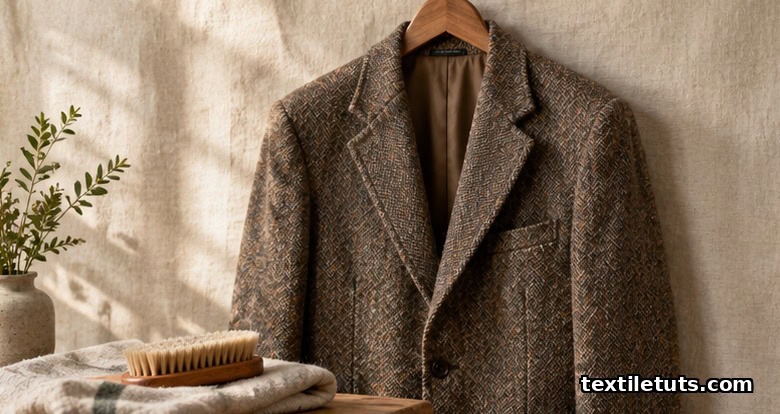
Tweed shrinks and felts in water — a single machine wash causes 15–30% shrinkage because tweed is a woven wool fabric and shares wool’s felting vulnerability: the microscopic scales on wool fibers interlock irreversibly under heat and agitation. Tweed structured garments (jackets, coats) require professional dry cleaning to maintain their shape and structure.
Unlike cotton or synthetic fabrics that may stretch or distort slightly during washing, wool behaves fundamentally differently. The protein fibers that make up tweed are covered in microscopic cuticle scales — tiny, backward-facing barbs that serve as the wool’s natural defense mechanism. When these scales are exposed to heat and agitation in water, they catch on one another and lock together permanently, a process called felting. Once felted, the fabric cannot be returned to its original state. The garment will appear contracted, matted, and dense — and the individual fibers will have shrunk up to 30% in extreme cases.
What Is Tweed? (Fiber and Construction)
Tweed is a rough-textured woven fabric made from woolen (carded, non-combed) wool yarn. Unlike worsted wool, which uses long fibers combed parallel, woolen yarn is carded — meaning the short, randomly oriented wool fibers are gathered together without being aligned. This carded construction is central to tweed’s characteristic texture and its vulnerability to felting.
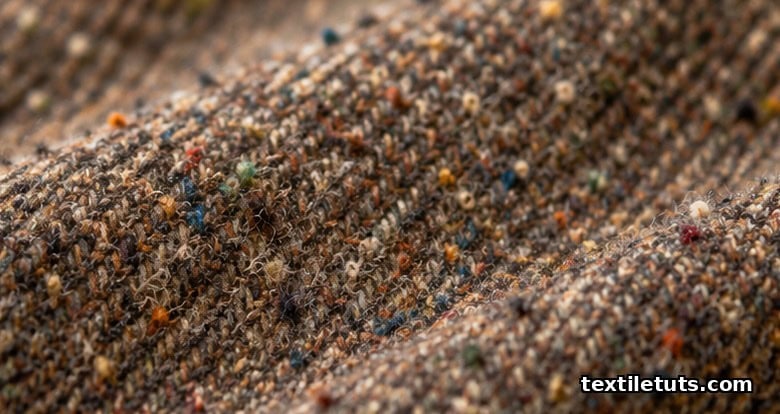
The most recognized types of tweed include:
-
Harris Tweed — Handwoven by islanders in the Outer Hebrides, Scotland, legally defined under the Harris Tweed Act 1993 as made from pure virgin wool dyed and spun in the Outer Hebrides. Each piece carries the official Orb mark certification.
Irish Tweed — Produced in Ireland, traditionally made from wool from locally bred sheep with natural plant dyes including blackberries, gorse, and moss.
Donegal Tweed — A form of Irish tweed from County Donegal, characterized by colorful flecks of color embedded in the weave.
Saxony Tweed — Developed in Saxony, Germany, made from merino sheep wool for a softer, smoother hand feel.
All true tweeds are 100% wool. The fiber content subjects them to every wool care requirement, including cold water washing, wool-specific detergents, and avoidance of heat and agitation. Tweed is typically constructed in a twill weave — a diagonal parallel interlacing pattern that creates the characteristic herringbone, chevron, or twill texture visible on the fabric surface. Some tweeds also use a plain weave. This construction gives tweed its durability and moisture resistance but does not protect against felting shrinkage.
Tweed is most commonly used for structured garments — jackets, coats, blazers, skirts, and caps — where its weight and body provide shape. These structured garments typically include interfacing and full lining, which create additional complications when the fabric is exposed to water: the lining may shrink at a different rate than the outer fabric, causing the garment to twist, pucker, or lose its intended silhouette.
Why Tweed Is Highly Shrink-Prone
Tweed is more prone to felting shrinkage than many other wool fabrics for several compounding reasons. Understanding these factors explains why even experienced launderers treat tweed with extreme caution.
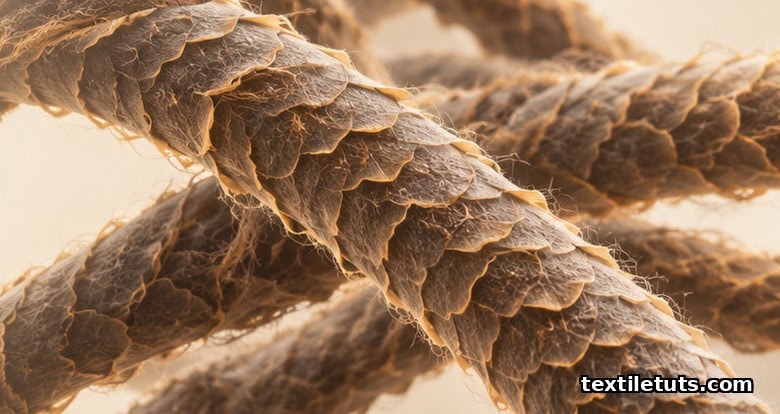
Short fiber length in woolen yarn: Woolen yarn is made from shorter wool fibers than worsted yarn, which uses fibers typically 2–4 inches long. These short fibers have more exposed cuticle scales per given weight of fiber — the tiny, serrated edges that catch and lock together during agitation. Shorter fibers also create a loftier, more open yarn structure with more air space between fibers, which means more fiber surface area comes into contact with water and agitation simultaneously.
More exposed fiber scales: In combed worsted yarn, long fibers are aligned and many of the cuticle scales are pressed flat during the combing process. In carded woolen yarn, the scales remain fully exposed and projecting outward from each fiber. When water is introduced, these scales swell open (the fiber cortex absorbs water and the scales spread apart), making them far more likely to catch on neighboring scales during any movement. This is the critical mechanism that makes wet felting possible.
Heavy fabric weight (300–600 GSM): Tweed is typically produced in heavier weights, ranging from approximately 300 to 600 grams per square meter (GSM). Heavier wool fabrics contain more fiber mass per unit area. More fiber mass means more cuticle scales exposed to water simultaneously, and a thicker fabric requires more mechanical action to move water through it — which means more agitation, increasing felting risk proportionally.
Structured garment construction: Tweed jackets and coats are assembled with multiple layers: an outer tweed shell, an inner interfacing layer (often cotton or linen canvas), and a full lining (typically acetate or silk). When this multi-layer system is immersed in water, each material responds differently — the wool outer may felt and shrink, the canvas interfacing may pucker, and the lining may distort. Even if the outer tweed could theoretically be hand-washed without felting, the bonded layers make this extremely risky in practice. The internal distortion is not correctable by blocking or pressing.
How Much Does Tweed Shrink?
The exact shrinkage depends entirely on the washing method. The table below summarizes the risk profile for each approach:
| Wash Method | Shrinkage Risk |
|---|---|
| Machine wash, any cycle | EXTREME — 15–30% possible; permanent felting likely |
| Hand wash, cold water, no agitation | HIGH — 5–10% shrinkage still possible even with careful handling |
| Professional dry cleaning | SAFE — less than 1% dimensional change |
| Spot cleaning only | SAFEST method for structured garments |
The felting process operates through a three-stage mechanism: First, in the dry state, wool cuticle scales lie relatively flat against the fiber shaft. Second, when wool absorbs water — particularly warm or hot water — the scales open and spread outward from the fiber surface due to hydration of the protein structure. Third, when agitation (hand rubbing, machine tumbling, or any mechanical movement) occurs while the scales are open, they catch on one another like hooks and loops. As agitation continues, the fibers pull closer together and lock permanently in this contracted position. The result is irreversible matting of the fabric, reduced diameter and length of each fiber, and a visible decrease in fabric dimensions. This is fundamentally different from relaxation shrinkage, which affects cotton and some other fibers and which can be corrected by gentle re-blocking.
Temperature plays a significant role in accelerating felting. Research into wool textile performance indicates that the combination of warm water (above approximately 30°C / 86°F), alkaline conditions (standard soap or detergent), and mechanical action creates the fastest and most severe felting response. Cold water alone slows the scale-opening process, but does not stop it entirely — the scales open progressively during extended water contact. Even hand washing in cold water carries measurable risk because the scales can eventually open during extended immersion.
Caring for Tweed: The Right Method by Garment Type
Proper tweed care extends far beyond simply avoiding the washing machine. Different garment types require different approaches based on their construction complexity and the likelihood of encountering conditions that trigger felting.
Tweed Jackets, Coats, and Blazers
All structured tweed jackets, coats, and blazers require professional dry cleaning. This is non-negotiable for three reasons: the multi-layer construction (outer fabric + interfacing + lining) makes controlled washing impossible at home; the structured silhouette is created through tailoring techniques that are disrupted by any dimensional change in any single layer; and professional dry cleaning uses chemical solvents (typically perchloroethylene or hydrocarbon solvents) that clean without water immersion, entirely bypassing the felting mechanism.
Between professional cleanings, maintain your tweed jacket with these steps:
-
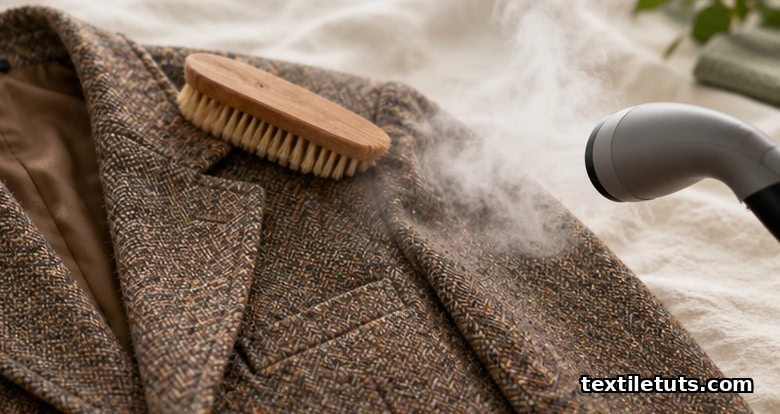
Brush after wearing with a natural bristle brush to sweep surface debris, dust, and lint from the fabric in one direction following the nap. This prevents particles from embedding in the weave and breaking down the fiber structure over time.
Air after wearing in a well-ventilated area overnight. Wool has natural self-cleaning properties due to the lanolin content in the fiber — moisture and odors dissipate naturally. This is why wool outerwear requires washing far less frequently than cotton garments.
Steam from a distance of at least 15–20 cm (6–8 inches) from the fabric surface to remove wrinkles. The steam relaxes the wool fibers without direct heat contact. Never press an iron directly onto tweed — direct heat causes permanent shine (polishing) on the fabric surface, particularly on the diagonal twill areas where the weave is most compressed.
Store on broad, padded hangers to maintain shoulder shape. Cover with a breathable cotton garment bag (not plastic, which traps moisture) during off-season storage.
Tweed Skirts (Unstructured)
Unlined, unstructured tweed skirts present somewhat less risk than tailored jackets because there is no interfacing layer to distort and no lining to create differential shrinkage. However, they are still made of woolen yarn with all the attendant felting risks.
-
Dry cleaning remains the preferred method for maintaining the skirt’s dimensions, drape, and surface texture without risk.
Light hand washing is possible if the skirt is unlined and unstructured (no internal boning, padding, or stiff interfacing). Use cold water (below 30°C / 86°F) and wool-specific detergent. Do not soak for more than 10 minutes. Do not rub, wring, or twist the fabric. Gently press water out, then roll in a clean towel to remove excess moisture.
Lay flat to dry on a clean towel, reshaping gently to its original dimensions. Never hang a wet tweed skirt — the weight of water stretches the woolen fabric into a distorted shape.
Tweed Caps and Hats
Tweed caps and hats are challenging because their shaped internal structures (often including sweatbands, internal sizing, and sewn brims) cannot survive full immersion regardless of care taken. For tweed caps:
-
Spot clean minor stains using cold water and a minimal amount of wool-safe detergent applied with a clean, damp cloth. Blot rather than rub.
Dry cleaning is the appropriate choice for any significant soiling or body oils that have penetrated the fabric.
Air dry fully on a hat form or an appropriately sized round object (such as a clean, overturned bowl) to preserve shape during drying.
Never use a washing machine for a tweed cap — the agitation in a machine basket felts the wool even in cold water.
Spot Cleaning Tweed
Spot cleaning is the most common maintenance task for tweed garments and the safest approach for isolated stains on structured pieces. When done correctly, it can remove most common stains without risking the entire garment.
For general stains (water-based, food, mud):
-
Mix cold water with a few drops of wool-specific detergent. Standard enzyme-based laundry detergents damage wool protein fibers and should never be used on tweed.
Dampen a clean, white, lint-free cloth with the solution. The cloth should be damp, not wet — saturation increases the risk of water stains forming on the wool surface.
Blot the stain gently from the outside edge working inward. Never rub the stain — rubbing creates friction that triggers localized felting even without full immersion. Blotting applies cleaning action without mechanical agitation.
Rinse the cloth with clean cold water and blot the area again to remove detergent residue. Detergent residue left in the wool attracts dirt over time and may degrade the fiber.
Allow the area to air dry naturally away from direct heat or sunlight. Do not attempt to speed drying with a hairdryer or heat source.
Once dry, use a soft clothes brush to gently restore the pile and texture of the tweed in the cleaned area, brushing in the direction of the nap.
For oil and grease stains:
-
Oil does not dissolve in water, so water-based cleaning will not work. Apply a dry cleaning powder (available from specialist cleaning suppliers) or plain cornstarch directly to the oil spot.
Allow the powder to absorb the oil for several hours or overnight. The cornstarch or cleaning powder draws the oil up from the fiber and into the powder particles.
Brush off the powder thoroughly using a soft brush. Inspect the stain — for stubborn oil stains, repeat the application before considering professional dry cleaning.
References
-
Woolmark. (n.d.). Wool Fiber Properties. Woolmark.
Wikipedia. (n.d.). Wool — Felting Mechanism and Fiber Scales. Wikipedia.
Wikipedia. (n.d.). Tweed (Cloth) — Types and Construction. Wikipedia.
International Wool Textile Organisation (IWTO). (n.d.). Felting and Shrinkage. IWTO.
Woolmark. (n.d.). Garment Care — Wool Jacket Care Guide. Woolmark.


