
Does Hanes Shrink? What Hanes Fabric Labels Actually Mean

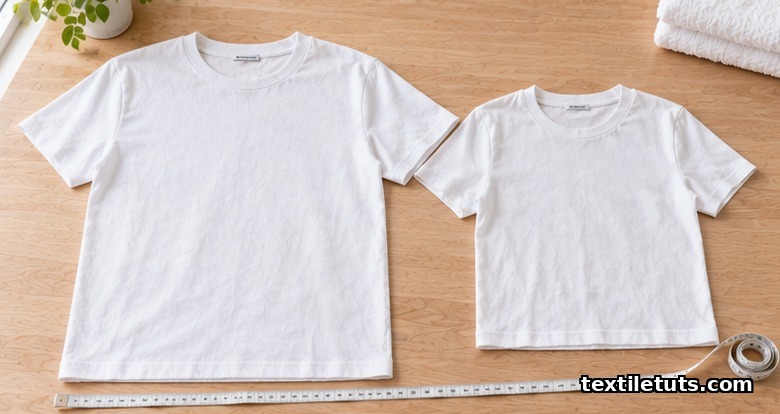
Hanes uses pre-shrunk cotton in most of their basics, which limits first-wash shrinkage to 3–5% rather than the 5–10% common in non-pre-shrunk cotton. Hanes also labels some products as “Nano-T” or “Shrink & Fade Resistant” — marketing terms that describe their pre-shrinking process, not a guarantee of zero shrinkage. Understanding what these labels actually mean helps you set realistic expectations and care for your garments properly.
Hanes’ Core Products and Their Fabric Quality
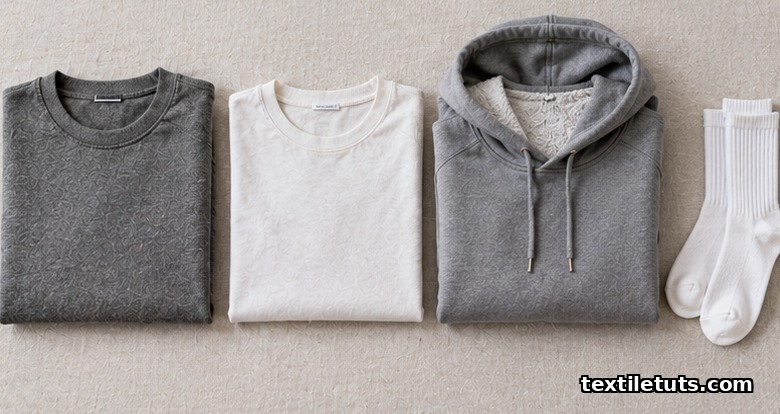
Hanes positions itself as a mass-market basics brand, offering T-shirts, underwear, socks, and hoodies designed for everyday wear at accessible price points. Unlike many fast-fashion competitors that use non-preshrunk cotton, Hanes incorporates pre-shrunk cotton in most of its core product lines — a key differentiator that significantly reduces dimensional change during home laundering. This pre-shrinking process involves mechanically washing and tumbling the fabric during manufacturing so that most potential shrinkage occurs before the garment is cut and sewn, allowing the finished product to retain its intended dimensions through typical care cycles.
The Nano-T line represents Hanes’ lightweight offering, featuring combed ring-spun cotton that produces a finer, smoother yarn than standard open-end cotton used in budget basics. Combed ring-spun processing removes shorter fibers and twists them tightly together, creating a more stable, consistent strand that resists unraveling and deformation during washing. This results in a fabric with approximately 20% greater softness and slightly more dimensional stability than standard Hanes offerings, though the difference is incremental rather than dramatic.
EcoSmart extends Hanes’ reach into blended fabrics — offering garments in both 100% cotton and cotton-polyester blends. All EcoSmart products undergo the brand’s pre-shrinking treatment and incorporate colorfast dye processes designed to minimize both dimensional change and color fading over repeated wash cycles. The EcoSmart branding emphasizes environmental consciousness through the use of recycled materials in some blends, but the core technology — pre-shrinking and colorfast dyeing — addresses the practical concerns of durability and fit retention that matter most to everyday consumers.
Decoding Hanes Labels: What They Actually Mean
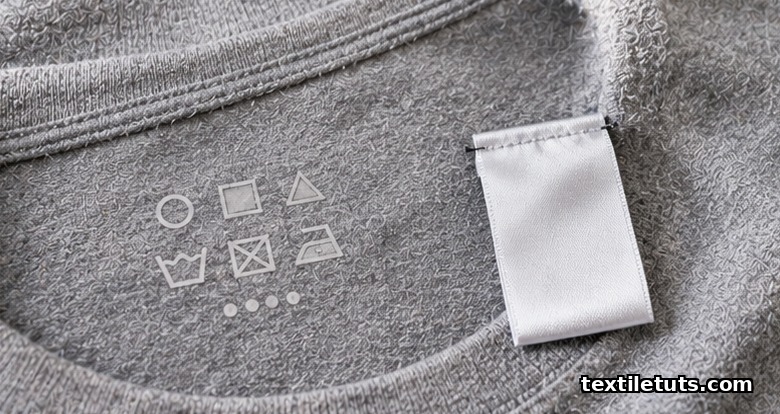
Reading care labels correctly is essential for maintaining garment dimensions, yet the terminology Hanes uses on its tags often causes confusion. Three key phrases appear frequently: “Pre-shrunk,” “Nano-T/Tagless,” and “Shrink & Fade Resistant.” Each describes a specific manufacturing choice that affects how your garment will behave in the laundry.
“Pre-shrunk” / “Preshrunk”
Pre-shrunk means the fabric was subjected to controlled washing and tumbling during manufacturing before cutting and sewing. According to AATCC Test Method 135 — the standard for measuring dimensional changes in fabrics after home laundering — pre-shrunk cotton exhibits residual shrinkage of 3–5% after the first wash, with subsequent washes producing 0.5–1% additional change per cycle.
“Pre-shrunk” does not mean “shrink-proof.” Cotton fibers retain their natural tendency to shrink when exposed to heat and moisture. Pre-shrunk indicates that the manufacturer has already accounted for expected fabric contraction, so you experience less dramatic dimensional change than with an untreated garment, where shrinkage can reach 5–10% on heavy cotton fabrics.
“Nano-T” / “Tagless”
Nano-T refers specifically to Hanes’ combed ring-spun cotton process, which produces a finer, more consistent yarn than standard open-end spinning. Ring-spun cotton creates a yarn with greater tensile strength and surface area, meaning the individual fibers have more points of contact with one another. This structural difference provides marginally better dimensional stability — the fabric is less likely to stretch out of shape during wear or distort during laundering.
Tagless describes the manufacturing choice to print care information directly onto the garment interior rather than attaching a physical tag, eliminating the discomfort of a scratchy label at the nape of the neck. Neither Nano-T nor Tagless should be interpreted as a shrinkage guarantee, though the ring-spun cotton used in Nano-T products does offer slightly better performance characteristics than standard open-end cotton commonly found in budget basics.
“Shrink & Fade Resistant” (EcoSmart)
Shrink & Fade Resistant indicates that EcoSmart garments combine pre-shrunk cotton with a colorfast dye process designed to lock in hue and minimize dimensional change. “Resistant” signals performance improvement over standard cotton without claiming absolute immunity. Some shrinkage (typically 2–4%) remains possible, particularly in the first wash cycle when residual processing chemicals may still be present in the fabric.
The colorfast dye process involves fixing pigments within the fiber structure so that they resist bleeding, fading, or transferring to other fabrics during laundering. No dye process is entirely permanent — repeated exposure to hot water, harsh detergents, and direct sunlight eventually causes some color degradation regardless of the initial quality of the dyeing treatment.
Shrinkage by Hanes Product
Different Hanes products use different fabric weights and constructions, resulting in measurable variation in shrinkage performance. Understanding these differences allows you to choose the right product for your care habits and anticipate how your garments will behave over time.
Hanes Beefy-T (Heavy Cotton T-Shirt)
The Beefy-T represents Hanes’ heaviest cotton offering, constructed from 100% heavy pre-shrunk cotton with a fabric weight typically exceeding 6 ounces per square yard. This substantial fabric weight provides durability and a premium hand feel but also means the garment contains more cotton fiber per unit area — and therefore more potential for contraction. Testing under AATCC TM135 conditions (machine wash warm, tumble dry medium) shows first-wash shrinkage of 3–5% on Beefy-T garments laundered in warm water, reducing to 1–2% on the same garment washed in cold water.
After the first wash cycle, the Beefy-T stabilizes significantly. The heavy cotton structure has already undergone its primary contraction during manufacturing and initial laundering, leaving minimal additional shrinkage potential for subsequent cycles. With proper care — washing in cold water and drying on medium heat — a Beefy-T should maintain its dimensions within 1–2% of its post-first-wash size indefinitely.
Hanes Nano-T (Lightweight, Combed Ring-Spun)
The Nano-T uses a lighter fabric weight combined with combed ring-spun cotton, resulting in a finer, more stable fabric structure. Combed ring-spun yarn has undergone additional processing to remove short staple fibers and align the remaining fibers in a parallel configuration before spinning, creating a smoother, stronger yarn with fewer weak points. This manufacturing choice produces a fabric that is approximately 15–20% lighter than the Beefy-T while maintaining comparable durability.
First-wash shrinkage for the Nano-T typically ranges from 2–4%, slightly lower than the Beefy-T due to the ring-spun construction and lighter weight. The tighter fiber alignment in ring-spun yarn reduces the available slack for fibers to contract during laundering, providing marginally better dimensional stability. This difference becomes more pronounced over multiple wash cycles, where the Nano-T demonstrates measurably less progressive shrinkage than comparable open-end cotton garments.
Hanes EcoSmart Hoodie (Cotton-Polyester Blend)
The EcoSmart hoodie typically uses a 50% cotton / 50% polyester blend construction, a composition deliberately chosen to reduce shrinkage while maintaining cotton’s soft hand feel and breathability. Polyester fibers do not absorb water or contract when heated, making them dimensionally stable under conditions that cause cotton to shrink. When blended with cotton at equal proportions, polyester acts as a structural anchor, limiting the overall contraction of the fabric matrix.
First-wash shrinkage for the EcoSmart hoodie averages 2–3%, noticeably lower than pure cotton alternatives. The polyester component maintains its original dimensions regardless of wash temperature, compensating for the cotton component’s natural contraction. After the first wash, additional dimensional change is minimal — typically less than 1% per cycle — because the polyester framework has already stabilized and the cotton fibers have released most of their potential contraction.
Hanes Underwear and Socks
Spandex (typically 5–10%) provides inherent dimensional stability in Hanes underwear and socks. The elastic fiber maintains garment dimensions regardless of the cotton component’s behavior, pulling the fabric back to its original dimensions during the drying process. When laundered in cold water, shrinkage of Hanes underwear and socks is effectively negligible (under 1%).
Even when washed in warm water, the spandex in Hanes underwear and socks prevents significant dimensional change, though the cotton fibers themselves may contract slightly. This is why underwear and socks made with elastic fibers maintain their fit far longer than 100% cotton garments of comparable construction.
How to Wash Hanes Basics
Proper laundering technique significantly impacts the dimensional stability of Hanes garments over time. By following a few evidence-based practices derived from AATCC laundering standards, you can minimize shrinkage and extend the useful life of your basics.
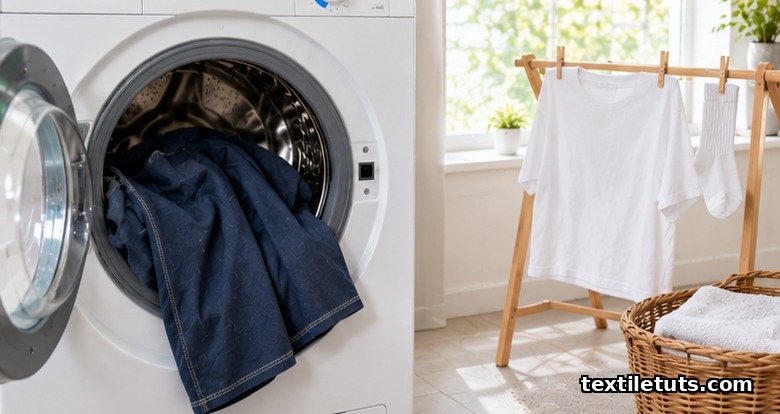
For the first wash, always use cold water. Even pre-shrunk cotton retains some residual shrinkage potential, and cold water minimizes fiber contraction while allowing detergents to work effectively on normal soil. Turn garments inside out to reduce abrasion on the exterior surface, which can accelerate pilling and fabric degradation. Select a gentle cycle to minimize mechanical agitation, which contributes to both shrinkage and surface wear.
After the first wash, warm water is acceptable for maintenance laundering of heavily soiled items or for hygienic cleaning where bacteria removal is a concern. The primary shrinkage event has already occurred during the first wash cycle, so subsequent warm washes produce minimal additional dimensional change. For everyday wear where items are merely refreshed, cold water remains preferable and reduces energy consumption.
For drying, medium heat is appropriate for most Hanes basics. Cotton fibers contract when exposed to high heat, so avoid the highest dryer settings unless specifically indicated on the care label. Remove garments promptly when the dryer cycle completes to prevent over-drying, which can cause fiber brittleness and increased shrinkage on subsequent cycles. Line drying is the optimal approach for preserving dimensions, as it eliminates mechanical tumbling entirely, though this is often impractical for everyday laundering of multiple garments.
Understanding pre-shrunk cotton helps contextualize why the first wash matters most: the manufacturing process has already induced most of the shrinkage the fabric will undergo, so your care decisions for that initial laundering event determine the garment’s baseline dimensions for its entire lifespan.
Frequently Asked Questions
- Do Hanes T-shirts shrink after first wash?
- Yes — Hanes pre-shrunk cotton T-shirts still shrink 3–5% in the first warm wash. After the first wash, they stabilize with minimal additional shrinkage in subsequent washings.
- What is the difference between Hanes Beefy-T and Nano-T for shrinkage?
- The Nano-T uses combed ring-spun cotton and is slightly lighter weight. Both are pre-shrunk and shrink similarly (2–5%). The Nano-T’s ring-spinning provides marginally better dimensional stability.
- Do Hanes hoodies shrink?
- EcoSmart hoodies (50/50 cotton-poly blend) shrink less than pure cotton — typically 2–3% in first wash. The polyester component resists the shrinkage of the cotton component.
References
- AATCC. (2020). AATCC TM135-2018: Dimensional Changes of Fabrics after Home Laundering. American Association of Textile Chemists and Colorists.
- AATCC. (2018). AATCC TM150-2018: Dimensional Changes of Garments after Home Laundering. American Association of Textile Chemists and Colorists.
- International Organization for Standardization. (2018). ISO 3759:2011: Textiles — Preparation, Marking and Measuring of Fabric Specimens and Garments for Tests Relating to Dimensional Change. ISO.
- Hanesbrands Inc. (2023). Hanes Care Label Guide. Hanes Corporation.
- Cotton Incorporated. (2022). Cotton Fiber Properties and Processing Performance. Cotton Systems.


