
Does Jersey Knit Shrink? T-Shirt Fabric Care Explained

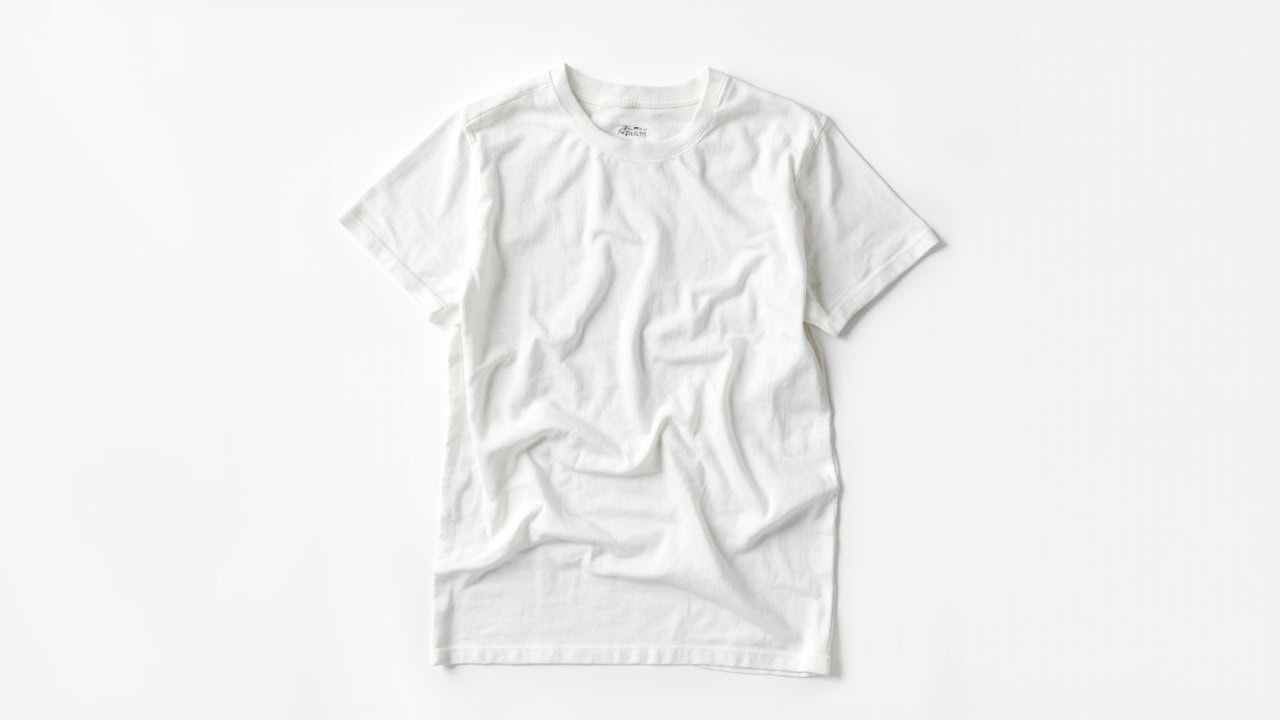
Cotton jersey knit — the fabric used in the overwhelming majority of T-shirts — shrinks 3–8% in warm water on the first wash, and can shrink 10% or more in hot water or a high-heat dryer cycle. If you own a 100% cotton T-shirt and have ever pulled it from the wash feeling noticeably tighter, shorter, or less generous in its original dimensions, the fabric is not defective. This is predictable, measurable, textile-science-backed behavior that follows from the molecular structure of cotton fiber and the loop construction of jersey knit.
Jersey Knit vs. Woven Cotton: Why Knits Shrink More
To understand why jersey knit shrinks more than a typical dress shirt or bedsheet, you need to understand what separates a knit fabric from a woven one at the structural level.
Jersey knit is a single-knit construction — it is made from one continuous yarn that loops through itself in a single direction, creating what textile engineers call a course (the horizontal row of loops) and a wale (the vertical column of loops). This interlocked loop structure gives jersey its characteristic stretch and drape. Woven cotton, by contrast, uses two perpendicular yarn systems — warp (vertical) and weft (horizontal) — that cross over and under each other in a grid. This crosswise interlacing makes woven fabric structurally rigid in both directions.
The knit loop structure is both jersey’s strength and its vulnerability to shrinkage. Each loop has what engineers call built-in stretch — the yarn has room to move within the loop geometry. When heat and moisture are applied, two things happen simultaneously:
- Consolidation shrinkage: The yarn loops physically tighten as the fibers swell with moisture and then contract as they dry under heat. The loop structure has less structural constraint than a woven grid, so it can tighten more dramatically.
- Relaxation shrinkage: The cotton fibers, which were stretched and held under tension during the knitting and finishing process, are released when they get wet and warm. They return to their natural, shorter state.
Woven fabrics experience relaxation shrinkage but not consolidation shrinkage to the same degree, because the warp-and-weft grid restricts how much the yarns can reconfigure themselves. The result is that a T-shirt made from jersey knit typically shrinks 5–8% in length on its first wash, while a woven cotton shirt of equivalent fiber composition might shrink 2–4%.
How Much Does Jersey Knit Shrink?
The exact shrinkage depends almost entirely on the water temperature and drying method. The table below shows the typical dimensional change you can expect from a standard pre-shrunk or lightly-shrunk cotton jersey knit T-shirt:
| Wash/Dry Conditions | Typical Shrinkage (Length) |
|---|---|
| Cold wash, air dry | 1–3% |
| Warm wash (40°C / 104°F), air dry | 3–5% |
| Hot wash (60°C / 140°F), air dry | 5–8% |
| Warm wash + low-heat tumble dry | 5–8% |
| Warm wash + high-heat tumble dry | 8–12% or more |
These figures represent the primary shrinkage event — the first wash where most of the dimensional change occurs. Subsequent washes produce diminishing returns, typically 0.5–1% additional shrinkage per wash cycle, unless temperatures remain consistently high. According to AATCC Test Method 135 (Dimensional Stability of Fabrics to Washing), the industry standard for measuring this behavior, dimensional change is assessed after five machine-wash cycles using standardized conditions.
Cotton Weight and Shrinkage: Does GSM Matter?
Jersey knit T-shirts span a wide weight range, measured in grams per square meter (GSM). The GSM does not change whether shrinkage happens — all cotton jersey shrinks — but it affects how the shrinkage feels and how noticeable it is:
- Lightweight jersey (120–150 GSM): Think of a lightweight summer undershirt or a thin layered piece. These shrink in similar percentage terms to heavier jersey, but because the garment is already thin, the dimensional change is proportionally more visible and the fabric can feel noticeably tighter after washing.
- Mediumweight jersey (150–200 GSM): This is the standard T-shirt weight used by most consumer brands. Typical first-wash shrinkage is 5–8% in length. After pre-shrinking (see below), this drops to 2–3% — still significant on a garment you expect to maintain its original fit.
- Heavyweight jersey (200–280 GSM): Found in premium or workwear T-shirts, heavyweight jersey has more yarn mass per unit area, which gives it more dimensional stability. The shrinkage percentage is similar, but the absolute change feels less dramatic because the fabric started thicker and more structured.
- Pre-shrunk jersey: Most retail T-shirts labeled as pre-shrunk have undergone a mechanical pre-shrinking process (typically a compressively-shrunk or sdwashed treatment) during manufacturing. Pre-shrunk jersey typically retains only 1–3% residual shrinkage — real, but modest enough that most wearers do not notice it on subsequent washes.
The AATCC 150 standard for Dimensional Stability of Fabrics to Home Laundering specifically covers this home-use scenario and is the reference most garment manufacturers use when setting care labels.
Directional Shrinkage: Why T-Shirts Get Shorter, Not Narrower
Anyone who has accidentally shrunk a favorite T-shirt has likely noticed it becomes shorter before it becomes narrower. This is not coincidence — it is a direct consequence of how jersey knit is constructed.
Jersey knit is knitted in the lengthwise direction — the yarn loops run vertically along the length of the fabric as it comes off the circular knitting machine. The wales (vertical loop columns) are the dominant structural element. When heat, moisture, and mechanical agitation are applied, the loops in this vertical alignment tighten more aggressively than the horizontally-oriented course loops.
The practical result: a T-shirt that measured 30 inches from shoulder to hem before washing might measure 28–28.5 inches after a hot first wash, while the chest width (measured at the armpits) might only shrink from 20 inches to 19.5 inches. Length shrinkage typically exceeds width shrinkage by a ratio of roughly 2:1 in jersey knit fabrics.
This matters practically: if you are buying T-shirts and are between sizes, sizing up in length may be smarter than sizing up in chest width, because the length is the dimension most likely to change over the life of the garment.
Preventing Shrinkage in T-Shirts
You cannot eliminate shrinkage entirely — cotton is a natural fiber with hygroscopic properties that make it inherently reactive to water and heat. But you can minimize it to the point where it is functionally negligible:
- Wash in cold water for the first 2–3 cycles. New cotton jersey has the most residual processing tension and the highest potential for dramatic shrinkage. Cold water (below 30°C / 86°F) dramatically reduces the swelling and relaxation effect. This is the single most impactful step.
- After the first few washes, warm water is generally safe. Once most of the relaxation shrinkage has occurred, the fabric stabilizes. Warm washes (40°C) on a regular cycle are fine and help remove oils and bacteria more effectively than cold water.
- Tumble dry on low heat, and remove while slightly damp. High-heat dryer cycles compound shrinkage significantly. Pulling garments out of the dryer while they retain 10–15% moisture and laying them flat to finish drying eliminates the extreme heat that causes the most consolidation shrinkage.
- Stretch shrunken T-shirts back to shape. If shrinkage has already occurred, you can often recover most of the lost dimension. Soak the garment in warm water with a fabric softener or hair conditioner for 15–20 minutes, then gently stretch it back to the original dimensions on a flat surface and pin it in place while it dries. This works best on minor shrinkage (up to 5%).
How to Intentionally Shrink a T-Shirt
Sometimes shrinkage is not an accident — it is the goal. If a T-shirt is slightly too large and you want to improve the fit through controlled dimensional change, jersey knit responds well to deliberate shrinking:
- Wash the garment in hot water at 60°C (140°F) or higher on a normal cycle.
- Transfer directly to a high-heat tumble dryer cycle.
- Check the fit after one cycle. If further shrinkage is desired, repeat.
Be aware that deliberate shrinkage is not uniform — areas with more seam construction, print embellishment, or ribbed collar/arm opening will behave differently than the plain body of the shirt. The body may shrink 10% while the collar, which was already受过定型处理 (pre-set during manufacturing), shrinks only 2–3%. This can create fit asymmetries over time. For a complete step-by-step guide to controlled cotton shrinking, see our guide to how to shrink a cotton shirt one size.
Intentional shrinking works best on 100% cotton. Cotton-polyester blends resist shrinkage significantly — a 50/50 blend typically yields only 2–4% total shrinkage even under aggressive hot-wash-and-dry conditions, because the polyester fibers do not absorb water or respond to heat in the same way cotton does.
Frequently Asked Questions
Q: Why do T-shirts shrink in length but not width?
A: Jersey knit fabric is knitted in the lengthwise direction, so the knit loops are aligned vertically. Under heat and moisture, these loops tighten primarily in the length direction, causing more shrinkage in the vertical dimension. The horizontal course (loop row) alignment provides some structural resistance in the width, reducing dimensional change in that axis.
Q: Do 100% cotton T-shirts shrink more than cotton blends?
A: Yes — 100% cotton shrinks more than cotton-polyester blends. A 50/50 blend typically shrinks 2–4% versus 5–8% for 100% cotton jersey on the first wash. The polyester component resists dimensional change because polyester fibers have lower moisture absorption (less than 1% versus cotton’s 8–10%) and higher thermal stability. A tri-blend (50% polyester, 25% cotton, 25% rayon) shrinks even less.
Q: What does “pre-shrunk” mean on a T-shirt label?
A: Pre-shrunk means the fabric was washed and tumbled during manufacturing to allow most of its potential shrinkage to occur before the garment was cut and sewn. This process — sometimes called “compacting” or “sanforization” — reduces but does not eliminate shrinkage. Most pre-shrunk T-shirts still retain 1–3% residual shrinkage. A garment labeled “sanforized” has specifically undergone the Sanfor process, a mechanical compressive-shrinking treatment developed in the 1930s that is considered the industry standard for pre-shrinking textiles.
References
- American Association of Textile Chemists and Colorists (AATCC). (2022). AATCC 135-2022: Dimensional Stability of Fabrics to Washing. AATCC Technical Manual.
- American Society for Testing and Materials (ASTM). (2021). ASTM D5238-21: Standard Test Method for Dimensional Change of Fabrics Under Tension. ASTM International.
- Cotton Incorporated. (2023). Cotton Shrinkage: Understanding the Science Behind Fabric Dimensional Change. cottoninc.com
- International Organization for Standardization (ISO). (2019). ISO 3758:2012/Amd 1:2019 — Textiles — Care Labelling Code Using Symbols. ISO.
- U.S. Department of Agriculture (USDA). (2020). Cotton Processing and the Compressive Shrinkage Process. USDA Agricultural Research Service.


