
CATEGORY HUB · 25 ARTICLES
Pretreatment
Desizing, scouring, bleaching, mercerizing
The wet-process sequence that prepares greige fabric for dyeing. Chemical preparation of cotton, polyester, and blends. The foundation of every successful dyeing operation.
01
Essential reading
Start here. The most important articles that explain the category to a textile engineer in one sitting.
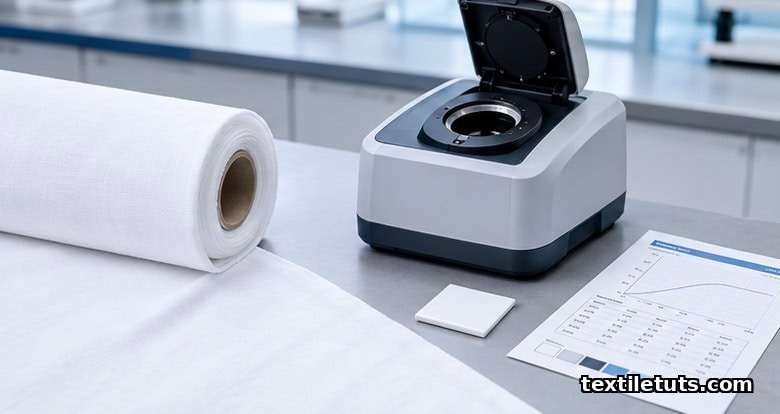
Pretreatment
Whiteness Measurement
Whiteness of a textile is quantified by the CIE Whiteness Index, defined in ISO 11475:2004...
Read article →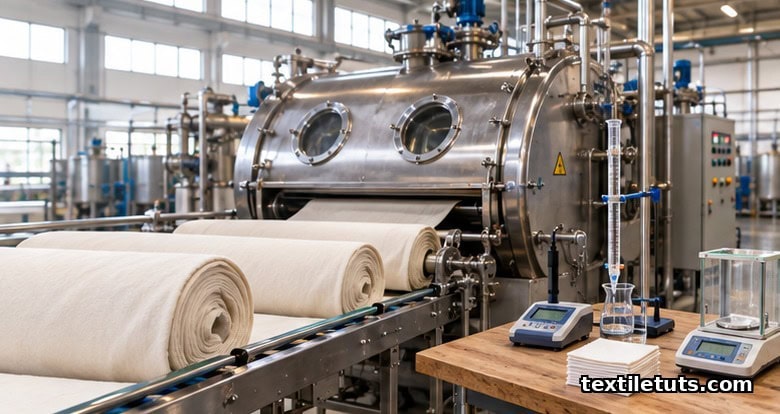
Pretreatment
Pretreatment Quality Control
Whiteness of a textile is quantified by the CIE Whiteness Index, defined in ISO 11475:2004...
Read article →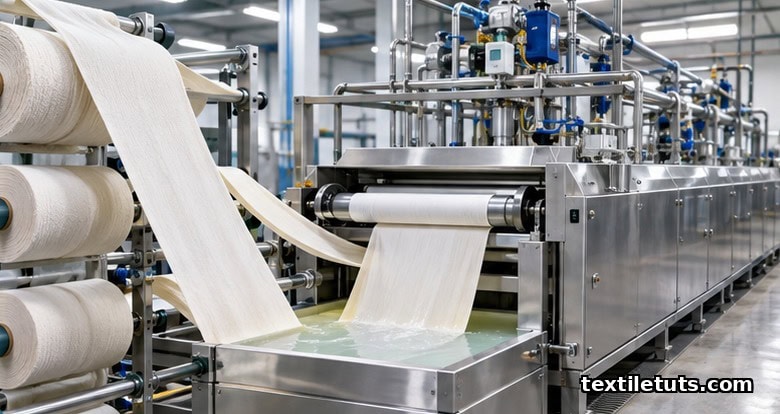
Pretreatment
Combined Pretreatment Processes
Whiteness of a textile is quantified by the CIE Whiteness Index, defined in ISO 11475:2004...
Read article →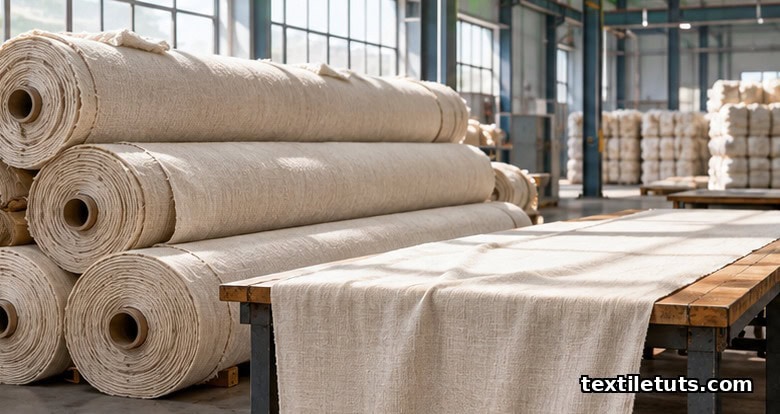
Pretreatment
Batch Pretreatment Process
Whiteness of a textile is quantified by the CIE Whiteness Index, defined in ISO 11475:2004...
Read article →
02
More from this category
More specific processes, techniques, and topic deep-dives.

Pretreatment
Continuous Pretreatment Process
Whiteness of a textile is quantified by the CIE Whiteness Index, defined in ISO 11475:2004...
Read article →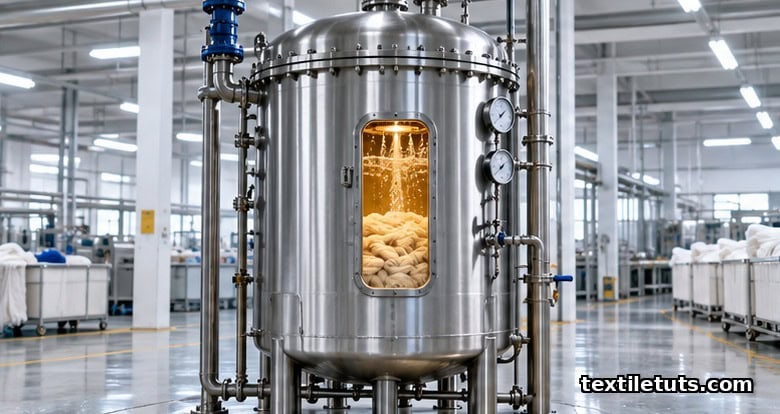
Pretreatment
Scouring of Cotton: Kier Scouring
Whiteness of a textile is quantified by the CIE Whiteness Index, defined in ISO 11475:2004...
Read article →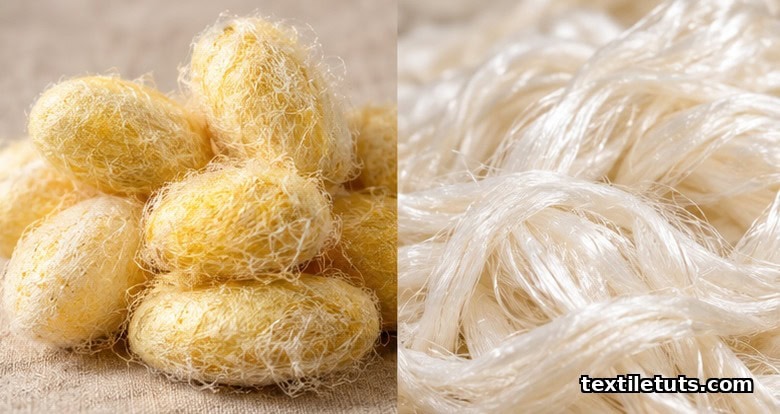
Pretreatment
Preparation of Silk: Degumming
Whiteness of a textile is quantified by the CIE Whiteness Index, defined in ISO 11475:2004...
Read article →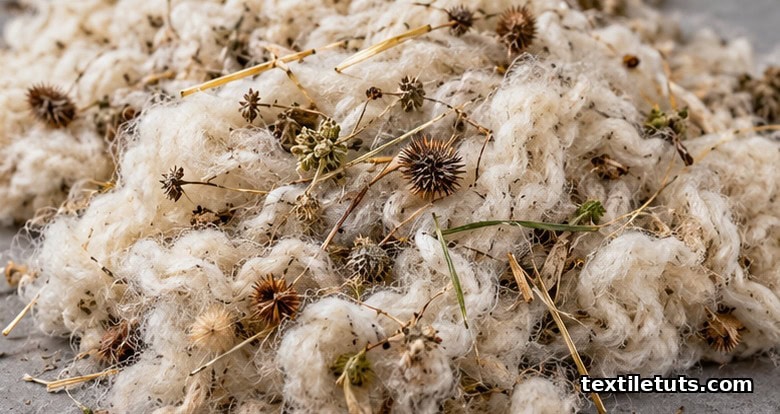
Pretreatment
Preparation of Wool: Carbonizing and Crabbing
Whiteness of a textile is quantified by the CIE Whiteness Index, defined in ISO 11475:2004...
Read article →
Pretreatment
Preparation of Synthetic Fibers: Heat Setting
Whiteness of a textile is quantified by the CIE Whiteness Index, defined in ISO 11475:2004...
Read article →
Pretreatment
Mercerization: With and Without Tension
Whiteness of a textile is quantified by the CIE Whiteness Index, defined in ISO 11475:2004...
Read article →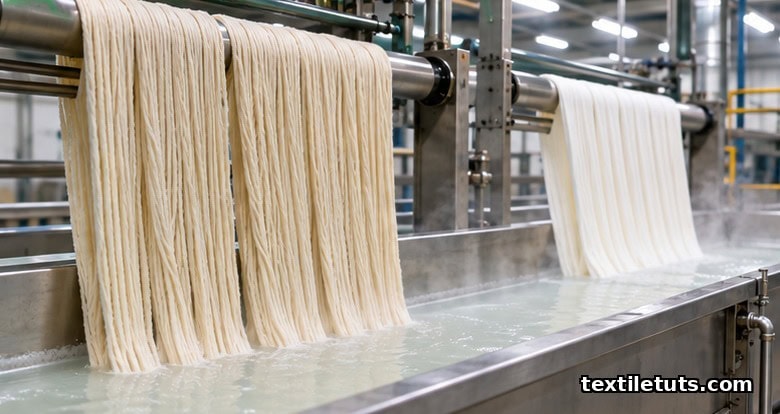
Pretreatment
Causticizing Process
Whiteness of a textile is quantified by the CIE Whiteness Index, defined in ISO 11475:2004...
Read article →
Pretreatment
Liquid Ammonia Treatment
Whiteness of a textile is quantified by the CIE Whiteness Index, defined in ISO 11475:2004...
Read article →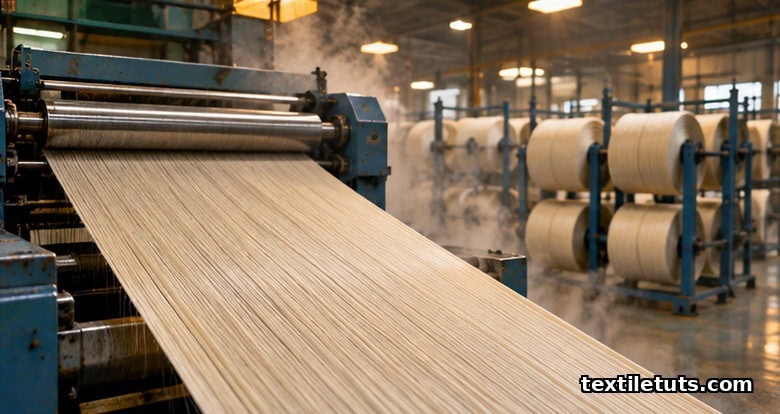
Pretreatment
Desizing Process: Acid vs Enzymatic
Acid desizing uses dilute mineral acid (typically 0.5 to 1.0% sulfuric or hydrochloric acid) at...
Read article →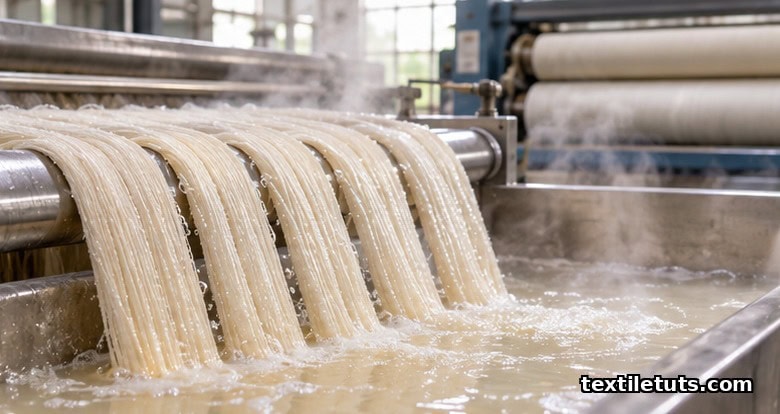
Pretreatment
Enzymatic Desizing: Alpha-Amylase
Alpha-amylase enzymatic desizing removes 90 to 95% of starch-based size from cotton fabric within 15...
Read article →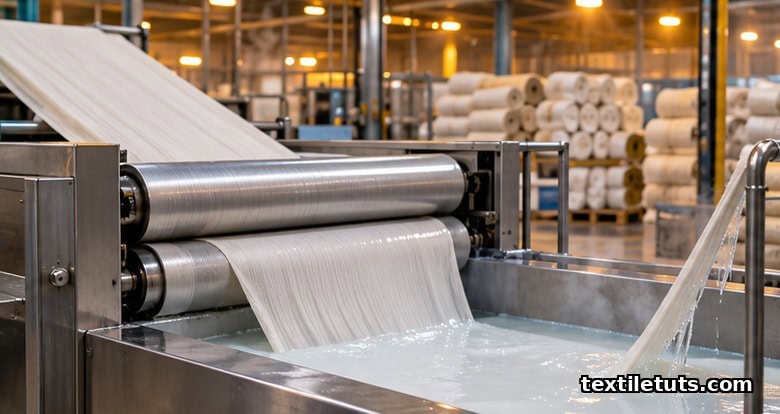
Pretreatment
Oxidative Desizing
Oxidative desizing removes starch-based sizing agents from woven cotton and polyester/cotton fabrics using oxidizing agents...
Read article →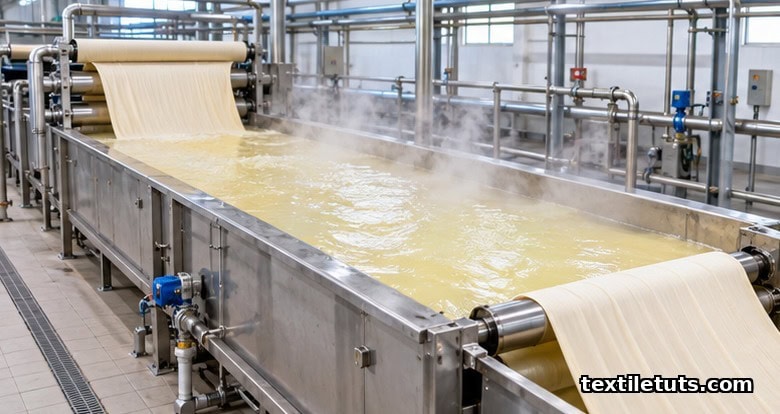
Pretreatment
Scouring Process: Alkali Scouring
Alkali scouring treats greige cotton fabric in a sodium hydroxide (NaOH) bath, typically 2 to...
Read article →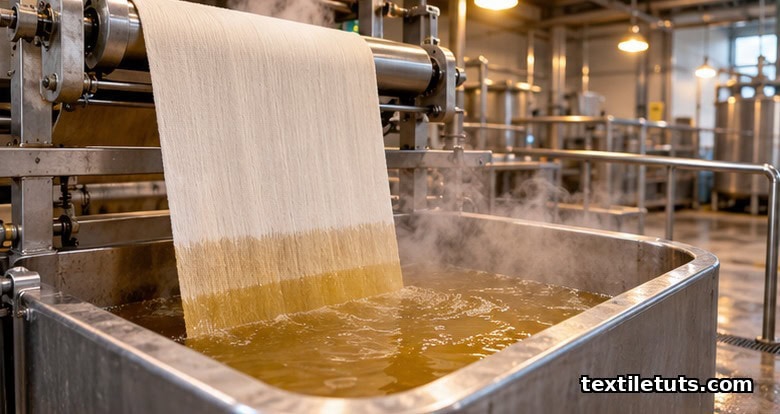
Pretreatment
Scouring Auxiliaries: Surfactants
Scouring surfactants reduce the water surface tension from approximately 72 mN/m to 25–40 mN/m in...
Read article →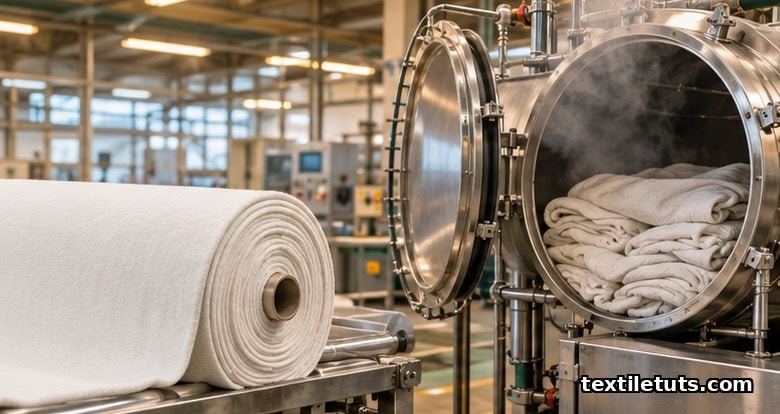
Pretreatment
Bioscouring: Enzyme-Based
Enzymatic bioscouring uses pectinase enzymes at pH 7-9.5 and 45-65°C to hydrolyze the pectin layer...
Read article →
04
Frequently asked questions
What is desizing?
Removing the protective size (starch, PVA, CMC) applied to warp yarns before weaving. Methods: enzymatic (amylase), oxidative (hydrogen peroxide), or acidic. Critical for even dyeing.
What is scouring?
Alkaline treatment (NaOH 5-10 g/L at 95-100C) with surfactant to remove natural waxes, oils, and pectins from cotton. Critical for even dye uptake.
What is bleaching?
Oxidative whitening, typically with H2O2 (hydrogen peroxide) at 95C, pH 10.5-11.0. Removes natural pigments from cotton and prepares for dyeing or printing.
What is mercerizing?
Treatment of cotton with concentrated NaOH (22-26%) under tension. Increases luster, dye uptake, and tensile strength. John Mercer, 1844.
Why is pre-treatment important?
Pre-treatment is the foundation of every successful dyeing operation. Poor pre-treatment leads to uneven dyeing, color spots, and poor fastness. Most re-dye claims are due to pre-treatment issues.
Can't find what you're looking for?
The team replies to every email. Send us your question or a sample spec and we'll route it to the right specialist.