
Does Viscose Shrink? And How to Stop It

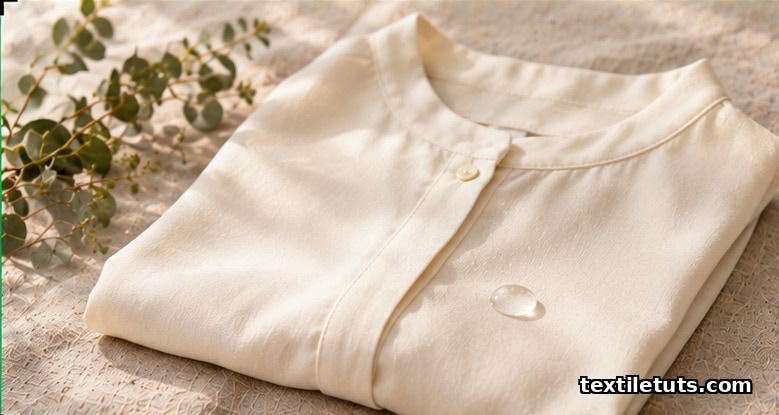
Viscose shrinks 5–10% on its first wash at any temperature above cold — and it is one of the most shrink-prone fabrics in common use. Unlike synthetic fibers that resist water absorption, viscose is a cellulose-based fiber that actively pulls moisture into its structure, causing the fibers to swell, release manufacturing tension, and contract. Understanding exactly why this happens is the first step to preventing it.
If you have ever pulled a viscose blouse from the wash only to find it has emerged notably smaller, you are not alone. Viscose shrinkage is one of the most frequently reported fabric care complaints, and it occurs even when care labels are followed. This guide covers the science behind why viscose shrinks, exactly how much it shrinks under different conditions, and precisely what you can do to prevent — and sometimes reverse — that shrinkage.
Viscose vs. Rayon: The Same Fiber
Viscose is a type of rayon — the most common variety produced globally. The terminology differs by region: “Viscose” is the European name for the fiber, while “Rayon” is the North American term. They refer to an chemically identical fiber made from regenerated cellulose.
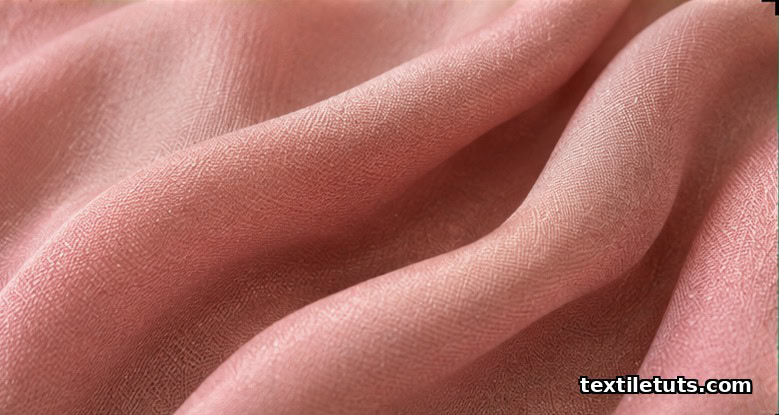
Viscose rayon is produced through a multi-step chemical process that begins with wood pulp (cellulose from trees, typically pine, spruce, or bamboo). The cellulose is immersed in a sodium hydroxide (caustic soda) solution, then treated with carbon disulphide to create a xanthate derivative. This xanthate solution is extruded through spinnerets into a sulphuric acid bath, where it regenerates into cellulose filaments. These filaments are then drawn, washed, and cut into staple fiber.
The critical issue with this manufacturing process is that significant tension is applied to the fiber during extrusion and drawing. This tension aligns the cellulose molecules partially — but because the regeneration process leaves the fiber with low structural crystallinity compared to cotton or linen, the fiber retains high sensitivity to water. Water molecules break apart the weak hydrogen bonds between cellulose chains, allowing the fiber to swell laterally and release the built-in tension. The result is fabric contraction — shrinkage.
Why Viscose Shrinks: The Cellulose Water Relationship
Viscose fibers absorb 11–12% of their own weight in moisture, compared to polyester which absorbs approximately 0.4% and cotton which absorbs around 8.5%. This high moisture affinity is central to why viscose shrinks so readily.
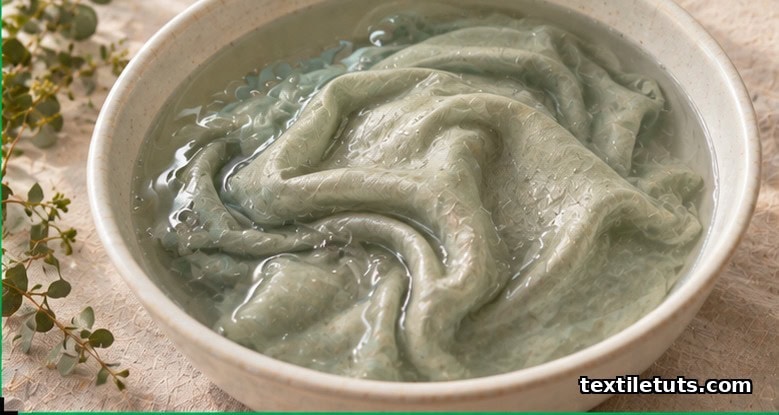
When water enters the fiber, it causes lateral swelling of the cellulose molecules. The water molecules insert themselves between cellulose chains, breaking existing hydrogen bonds and forming new ones with the fiber. This process destabilizes the fiber’s internal structure.
Compounding this effect is the manufacturing tension stored in the fiber during extrusion. During production, viscose filaments are stretched as they exit the spinneret — this stretching orients the cellulose chains along the fiber axis and stores potential energy within the molecular structure. When the fiber gets wet, those oriented chains can relax back toward a lower-energy state, and the fabric contracts. This is called relaxation shrinkage.
The contraction is not uniform across the fabric. Viscose fabric typically shrinks more in the length direction (warp) than in the width direction (weft), because the weaving or knitting process orients more tension along the length. The effect is most pronounced in the first wash, with each subsequent wash producing diminishing additional shrinkage.
An added risk factor is dry heat. When viscose is tumble-dried at high temperatures, the combination of residual moisture and heat causes consolidation shrinkage on top of the initial relaxation shrinkage. The heat drives out remaining water molecules before the fiber can relax back to its pre-wet dimensions, permanently setting the contracted state. This is why viscose garments that have been tumble-dried at high heat show the most severe and irreversible shrinkage.
How Much Does Viscose Shrink in Each Situation?
| Wash Condition | Expected Shrinkage |
|---|---|
| Hand wash, cold water | 1–3% (first wash) |
| Machine wash, cold, delicate cycle | 3–5% |
| Machine wash, warm water (40°C/104°F) | 5–10% |
| Machine wash, hot water (60°C+/140°F+) | 10–15%+ |
| Tumble dryer, high heat | 15–20%+ (also risk of distortion) |
Viscose Shrinkage by Washing Condition
These shrinkage figures represent dimensional reduction in each wash cycle. A garment that shrinks 5% in its first warm-water wash and then is tumble-dried at high heat can easily lose 15–20% of its original dimensions by the end of a single care cycle. For a blouse with a 20-inch chest measurement, that is a 3–4 inch reduction — taking it from a size medium to a size small or XS.
How to Prevent Viscose Shrinkage
Preventing viscose shrinkage is straightforward in principle — keep it cool, keep it wet, and handle it gently — but it requires consistent discipline because viscose’s sensitivity means a single mistake can cause irreversible damage.
- Pre-wash new viscose garments before first wear. Manufacturers frequently set finishing treatments (sizing, softeners, dyes) that can mask the fiber’s true behavior. A pre-wash in cold water pre-shrinks any residual tension shrinkage and reveals the garment’s actual post-wash dimensions before you rely on the fit.
- Always use cold water — maximum 30°C (86°F). Temperature is the single largest controllable variable in viscose shrinkage. Even “warm” water at 40°C (104°F) produces measurably more shrinkage than cold. If a garment has a care label permitting machine washing, cold is the only safe temperature.
- Hand wash whenever possible. Machine washing, even on a delicate cycle, subjects viscose to mechanical agitation that compounds shrinkage and can cause distortion. Hand washing allows you to control the agitation entirely. Use a gentle detergent formulated for delicates.
- Use a mesh laundry bag if machine washing is unavoidable. A fine-mesh bag reduces mechanical stress on the fiber by preventing the garment from tangling with other items and rubbing against the drum walls. Place the mesh bag inside the drum, not on top of other clothes.
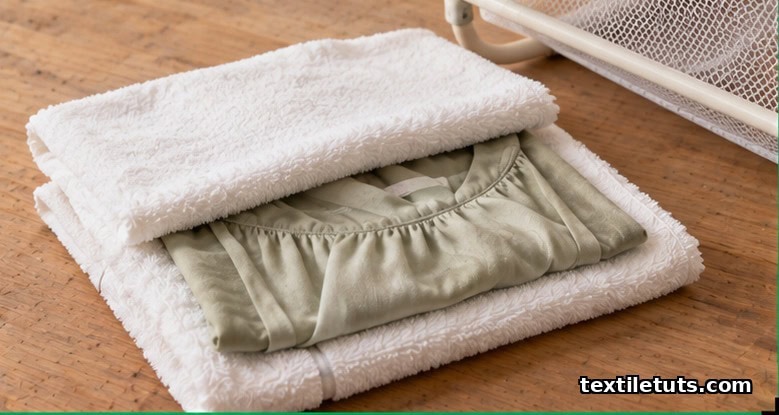
- Never wring viscose — press it gently between dry towels. Viscose in its wet state is mechanically fragile (wet strength is significantly lower than dry strength). Wringing creates high localized stress that can stretch or tear the fabric. Instead, roll the garment in a clean, dry bath towel to absorb excess water, then lay it flat.
- Reshape immediately and lay flat to dry. Viscose can stretch easily when wet, so immediate reshaping is critical. Gently pull the garment back to its intended dimensions while it is still saturated, and lay it on a clean, flat surface — a drying rack with a mesh surface is ideal. Do not hang wet viscose, as gravity will elongate it, particularly in the length direction.
- Hang drying is acceptable but monitor for stretching. If you prefer to hang dry, use a padded hanger and allow the garment to dry in its natural relaxed state. Check after 30 minutes — if the shoulders are stretching or the hem is dropping, switch to flat drying.
- Never tumble dry on high heat. If tumble drying is unavoidable (some blended fabrics require it), use the lowest heat setting and remove the garment while it is still slightly damp. Over-drying in the machine is a primary cause of severe, permanent viscose shrinkage.
Can Viscose Be Unshrunk?
Partial recovery of shrunken viscose is possible in some cases, but the extent of recovery depends entirely on the type of shrinkage and the care taken during the unshrinking process. Not all shrinkage in viscose is reversible.
Mild Shrinkage (from first cold wash)
If the shrinkage is mild (1–5%) and resulted from a cold or cool-water wash without dryer exposure, you can often restore the garment by soaking it in cold water for 20 minutes, then gently stretching it back to the original dimensions while the fabric is still wet and pliable. Lay the reshaped garment flat to dry, checking the dimensions periodically and re-stretching if the fabric begins to contract as it dries.
Moderate Shrinkage (from warm wash or brief dryer exposure)
For moderate shrinkage (5–10%) from warm water or limited heat exposure, soak the garment in warm (not hot) water with a tablespoon of hair conditioner for 20 minutes. The conditioner temporarily softens and lubricates the cellulose fibers, making them more pliable. While the garment is still damp, gently stretch it back to the original dimensions — work slowly and evenly across the fabric to avoid creating distortion. Lay flat to dry.
Severe Shrinkage (from hot wash or high-heat dryer)
Severe shrinkage — 10% or more — caused by hot water, high-heat tumble drying, or a combination of both, is largely permanent. At these temperatures and moisture levels, the cellulose molecular structure has been irreversibly consolidated. The fibers have undergone both relaxation shrinkage and consolidation shrinkage, and the molecular bonds have been permanently reconfigured into a denser, smaller configuration. Attempting to stretch this fabric back will likely result in tearing rather than reshaping.
An important caveat applies even to successful unshrinking: any viscose that has been stretched back to its original dimensions is mechanically weaker than it was before. The stretching process creates micro-fractures in the cellulose chains. Treat restored garments with extra care in subsequent washes — they will shrink more readily and tear more easily than a garment that has never been shrunk and restored.
Frequently Asked Questions
Q: Should viscose be dry cleaned?
A: Many viscose garments are labeled “dry clean only” as a precaution, but light-weight viscose can be hand washed in cold water with care. “Dry clean only” on viscose usually means “do not machine wash or use hot water” rather than a strict requirement. The dry cleaning process is gentler than machine washing on delicate viscose, but it is not the only safe option. If you choose to hand wash, use a detergent formulated for delicates and never wring the garment.
Q: Does viscose stretch after shrinking?
A: Yes — viscose that has shrunk in water can be partially stretched back to shape while wet. The fiber itself has some elasticity when damp, and careful stretching can restore some lost dimension. However, this does not fully reverse felting or fiber damage from high heat. Severe heat damage causes permanent consolidation of the fiber structure that stretching cannot address. Additionally, any viscose that has been shrunk and restretched is permanently weakened and should be handled with greater care in future washes.
Q: Why does my viscose feel stiff after washing?
A: Viscose can feel stiff after washing because the fibers slightly restructure when wet and dry — the cellulose chains re-bond in a more rigid configuration during the drying process, reducing the fabric’s natural softness. Adding a small amount of fabric softener to the rinse water helps restore drape and hand feel. Lightly steaming and reshaping the garment while it is still damp also relaxes the fibers back toward their softer state. The stiffness typically diminishes after the first wear as the fabric absorbs body moisture and the fibers relax again.
References
- Wood, F. C. (1937). The constitution of viscose rayon. Journal of the Textile Institute Proceedings, 28(3), 77–91. https://doi.org/10.1080/19447013708659491
- Kampen, W. H. (2006). Fiber Technology: Fiber to Fabric. Elsevier Science & Technology Books. https://www.sciencedirect.com/science/book/9781855736512
- International Rayon and Synthetics Industry Federation. (2005). Textile Fiber Materials: Natural and Synthetic Fibres. IRF Publishing. https://www.iwto.org
- Morton, W. E., & Hearle, J. W. S. (2008). Physical Properties of Textile Fibres (4th ed.). Woodhead Publishing. https://www.woodheadpublishing.com
- American Society for Testing and Materials. (2021). ASTM D3822 — Standard Specification for Textile Filament Yarns. ASTM International. https://www.astm.org/d3822-14.html


