
Does Spandex (Elastane) Shrink? What Heat Does to Stretch Fabric

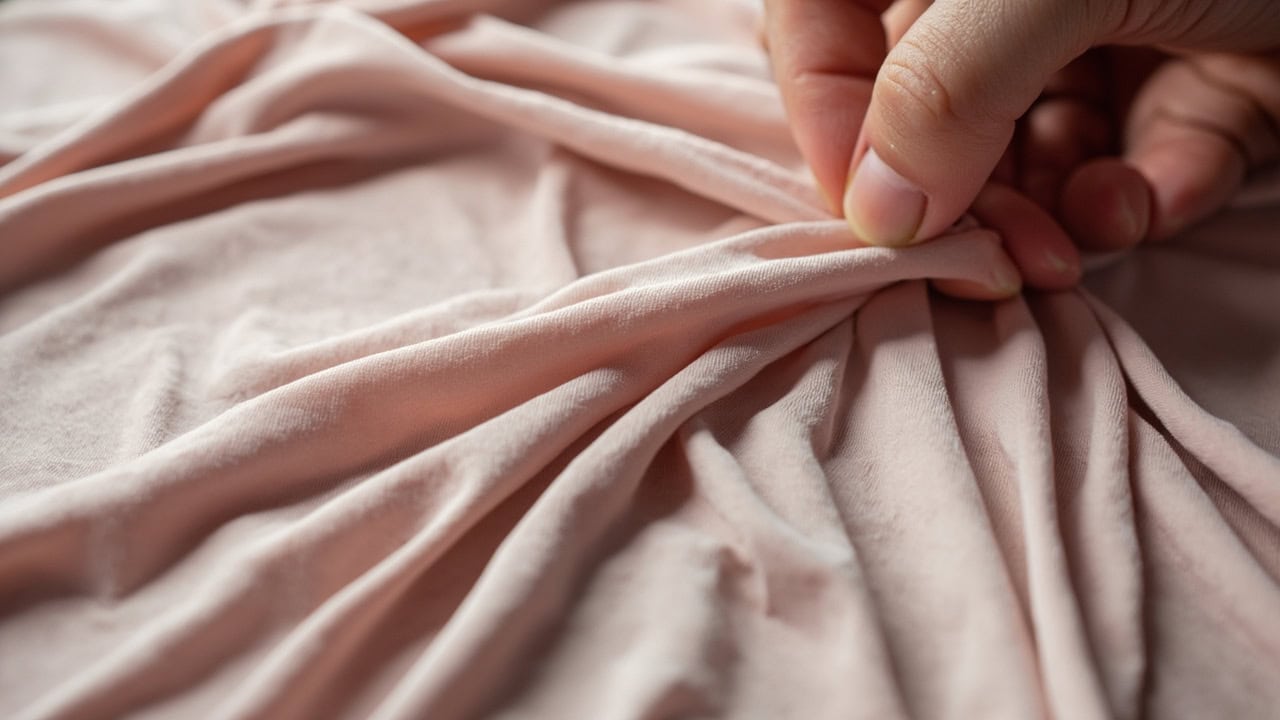
Spandex (also called elastane or Lycra) does not shrink in the traditional sense — its molecular structure resists water-based dimensional change. However, heat above 60°C (140°F) causes permanent degradation of the elastic polymer chains, resulting in loss of stretch and recovery, not a reduction in size. After heat damage, spandex-containing garments become permanently stretched out, saggy, or stiff — the opposite of shrinkage.
What Is Spandex and How It Works
Spandex is the generic name for this synthetic fiber; elastane is the European adopted term, and Lycra is DuPont’s proprietary brand name. All three refer to the same polyurethane-based polymer fiber that revolutionized stretch clothing in the mid-20th century. Joseph Shivers at DuPont invented spandex in 1958 as a replacement for rubber, offering superior comfort and durability in form-fitting garments.
The fiber is classified as a polyether-polyurea copolymer — a long-chain polymer made from alternating soft segments and rigid hard segments. The soft segments are the polyether chains that provide flexibility, while the rigid hard segments act as crosslinking points that give the fiber memory. This segmented structure is what allows spandex to stretch 5–8 times its original length and return to its original dimensions when tension is released.
Spandex is rarely used as a standalone fabric. Because pure spandex lacks the structure and feel of conventional textiles, it is blended with cotton, polyester, or nylon at concentrations typically between 2% and 20%. Even at these relatively low percentages, spandex transforms a garment’s fit — adding four-way stretch, improved shape retention, and greater comfort. Athletic wear, swimwear, compression garments, and underwear all rely on spandex blends to deliver their signature fit and performance.
Does Spandex Shrink? The Direct Answer
The answer requires a two-part response. In water alone, spandex does not shrink at any temperature a consumer would typically use — even in hot wash cycles up to 60°C (140°F), the polymer chains in spandex do not contract or felt together the way wool or cotton fibers do. Spandex’s polyurethane chemistry is inherently dimensionally stable in aqueous environments.
Heat is a different story, but not in the way most people expect. When exposed to temperatures above 60°C (140°F), spandex does not shrink — it degrades. The heat breaks down the hard segment crosslinks in the polyurethane chain that give spandex its elastic memory. This is not shrinkage in the technical sense; it is permanent polymer scission. The garment does not become smaller. Instead, it loses its ability to recover from stretch, resulting in a permanently saggy, stretched-out appearance that cannot be restored.
Because the degradation mechanism is chemical (heat-induced chain scission), the damage is cumulative and irreversible. Each exposure to elevated heat compounds the effect. A single tumble-dry cycle may not produce noticeable damage, but repeated heat exposure progressively erodes the elastic performance until the garment is effectively ruined.
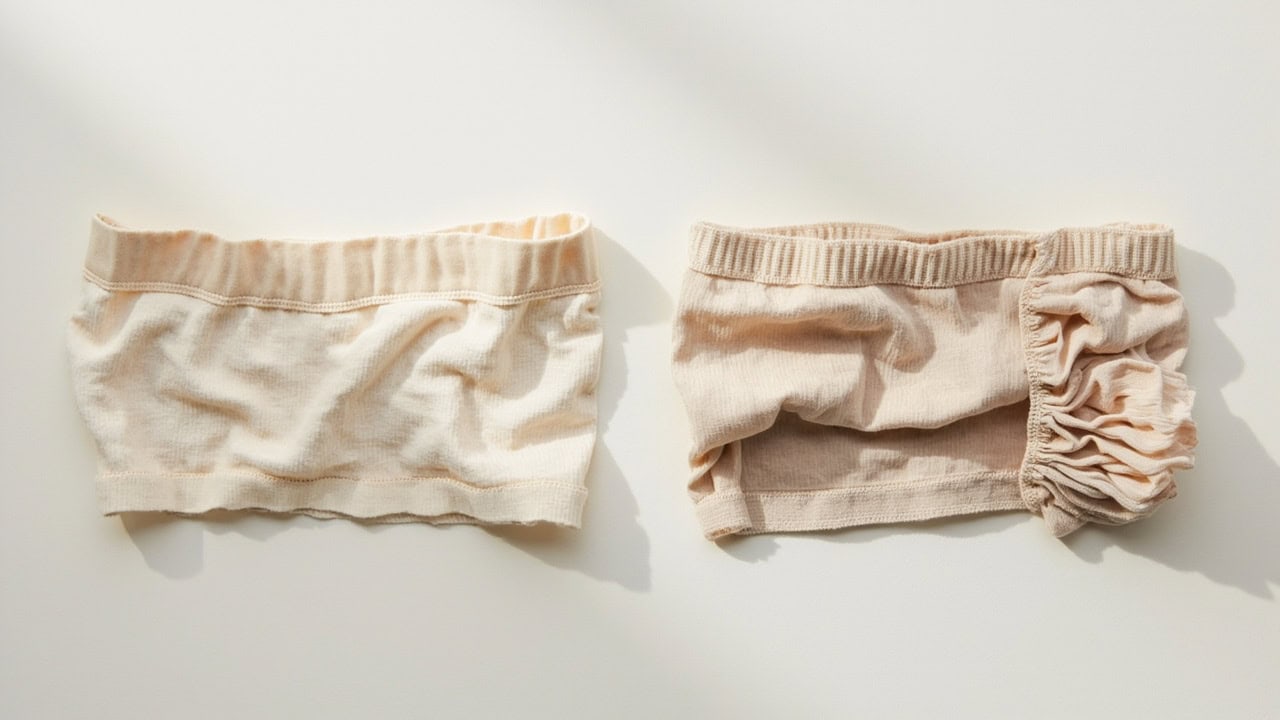
Heat Damage in Spandex-Blend Garments
Different garment types experience heat damage at different rates, depending on the spandex content, the other fibers present, and the care conditions. Understanding these specific vulnerabilities helps you prioritize the most protective care practices for each category of stretch clothing.
Swimwear (typically 10–20% spandex): Swimwear is subjected to a double degradation threat — pool chlorine and dryer heat. Chlorine attacks the polyurethane polymer chains independently of heat, and when combined with even medium tumble-dry heat, the elastic degradation accelerates dramatically. Swimwear that is both chlorinated and machine-dried loses significant stretch recovery within just a few cycles.
Athletic leggings and sportswear (typically 15–25% spandex): Leggings and compression tops are designed to fit tightly, which means any loss of elastic recovery is immediately noticeable. Repeated drying on medium-high heat causes progressive bagginess, particularly in areas of highest stress (knees, waistband, seat). Most athletes find their leggings lose their “snap” after 10–20 dryer cycles.
Compression garments (typically 20–30% spandex): Medical-grade and performance compression garments rely on precise elastic pressure curves. Heat exposure progressively destroys the gradient compression profile, reducing the garment’s therapeutic or performance function. The effect is gradual but irreversible — compression garments laundered incorrectly lose their rated compression level permanently.
Underwear with elastic waistbands (typically 5–15% spandex): The elastic waistband in underwear is one of the most heat-sensitive components because it receives concentrated heat exposure in the dryer. High dryer heat significantly shortens the functional lifespan of waistband elastic, causing waistbands to stretch out and lose their snug fit within a season of regular laundry.
Chlorine and Spandex: The Swimwear Warning
Pool chlorine is one of the most aggressive enemies of spandex. Unlike heat, which degrades polyurethane chains gradually, chlorine chemically attacks the polymer backbone through a substitution reaction, causing rapid chain scission even at room temperature. This is why competitive swimwear — even premium “chlorine-resistant” varieties — has a dramatically shorter lifespan than ordinary activewear.
Lycra Xtra Life is a chlorine-resistant treated spandex marketed by DuPont, but it is important to understand what “chlorine-resistant” means in this context. It does not mean chlorine-proof. Lycra Xtra Life resists chlorine degradation longer than untreated spandex — extending swimwear lifespan roughly 2–3x under heavy pool use — but it still degrades in chlorinated water, just at a slower rate. Even with this enhanced treatment, proper swimwear care is essential for maximizing garment life.
The correct care protocol for all spandex swimwear is straightforward: rinse thoroughly in cold fresh water immediately after swimming, hand-wash in cool water with a gentle detergent, and lay flat to dry. Never put swimwear in a dryer, and never store it in a damp state where chlorine residual can continue to degrade the fibers. Following these steps can extend the life of a chlorinated swimwear garment by a year or more compared to machine-dried equivalents.
How to Wash Spandex-Blend Garments
- Machine wash: Cold water, gentle cycle — always. Even warm washes (above 40°C / 104°F) accelerate polymer degradation over time. Cold water is the safest choice for all spandex blends.
- Detergent: Use a gentle, pH-neutral laundry detergent. Avoid optical brighteners and enzyme-heavy “active wear” detergents unless specifically formulated for delicates. Harsh surfactants accelerate polyurethane degradation.
- Drying: Air dry flat on a clean surface. This is the single most important care practice for preserving spandex elasticity. If you must use a dryer, use the lowest heat setting and remove the garment while it is still slightly damp.
- Avoid direct sunlight: UV radiation from direct sunlight degrades polyurethane polymer chains. Dried spandex garments left in direct sunlight experience photo-oxidation that weakens the elastic structure over time. Dry in shade or indoors.
- Never iron spandex: Ironing spandex subjects it to direct high heat that will melt or scorch the polymer. If a garment is wrinkled from line-drying, the wrinkles will fall out during wear or can be removed with a handheld steamer held well away from the fabric surface.
- Avoid bleach: Chlorine bleach destroys polyurethane polymer chains immediately upon contact, dissolving the hard segments and eliminating elastic recovery. Even oxygen-based bleaches can degrade spandex over time. Never use bleach on spandex garments.
Cotton-Spandex and Polyester-Spandex Blends
Spandex is almost never found alone — it is always blended with a “host” fiber that provides the garment’s primary textile properties. The two most common host fibers are cotton and polyester, and each presents different shrinkage dynamics within the blend.
Cotton-spandex blends (typically 95% cotton / 5% spandex or 98% cotton / 2% spandex): The cotton component in these blends does undergo traditional shrinkage. Untreated cotton can shrink 3–8% on first wash and additional 1–3% with subsequent hot washes. This means a cotton-spandex T-shirt that is not pre-shrunk may become tighter after washing — but the added dimension change comes from the cotton shrinking, not the spandex. Pre-shrunk cotton fabrics minimize this effect, but a small amount of residual shrinkage remains possible with repeated hot washing.
Polyester-spandex blends (typically 80–90% polyester / 10–20% spandex): Polyester is highly dimensionally stable, with shrinkage typically below 1% even at elevated wash temperatures. Garments made from polyester-spandex blends hold their dimensions well over repeated wash cycles. The shrinkage risk in these blends is essentially negligible — the polyester host fiber is not the concern; the spandex component’s heat sensitivity is the sole care priority.
When caring for any spandex blend, the golden rule is simple: treat according to the most sensitive component. Since spandex is the most heat-sensitive fiber in any blend, default to cold water washing and air drying for every spandex-blend garment regardless of whether the host fiber (cotton, polyester, or nylon) would tolerate higher temperatures.
Frequently Asked Questions
Q: Does spandex shrink in the dryer?
A: Spandex does not shrink in the dryer but the heat permanently degrades the elastic polymer chains, causing loss of stretch and recovery. The garment will not be smaller — it will feel saggy and stretched out instead. The polyurethane hard segments break down above 60°C (140°F), destroying the fiber’s elastic memory. This damage is cumulative and irreversible.
Q: Why do my leggings lose their stretch over time?
A: The most common cause is repeated dryer use. Each heat exposure degrades the spandex polymer chains progressively, destroying the hard segment crosslinks that give the fiber its elastic memory. The result is permanent bagginess that cannot be reversed. Cold washing and air drying dramatically extends the stretch life of leggings and athletic wear. Even a single tumble-dry cycle causes measurable degradation.
Q: Can you shrink spandex intentionally?
A: No — spandex cannot be shrunk. Any attempt to shrink spandex with heat will degrade the elastic properties rather than reduce fabric dimensions. The polyurethane polymer chains do not contract under heat; they break instead, causing the opposite of the intended effect. To shrink a garment containing spandex, you would need to target the non-spandex component (cotton or polyester) — but doing so will not restore any lost elasticity.
References
- Shivers, J. (1958). DuPont spandex development. Textile Research Journal. DuPont Fibers — Internal Research Notes.
- Holland, B. (2002). Textile Terms and Definitions (11th ed.). The Textile Institute, Manchester.
- DuPont. (2003). Lycra Fiber Care Guidelines. DuPont Textiles & Interiors.
- Cotton Incorporated. (2009). Elastic cotton fabric properties and care. Quality Matters. Retrieved from cottoninc.com.
- IWTO. (2007). Method 159: Determination of Fiber Elastic Recovery. International Wool Textile Organisation.
- ASTM International. (2018). ASTM D3107-18: Standard Test Methods for Stretch Properties of Fabrics. ASTM International.


