
Does Fruit of the Loom Shrink? Budget Basics Care Guide

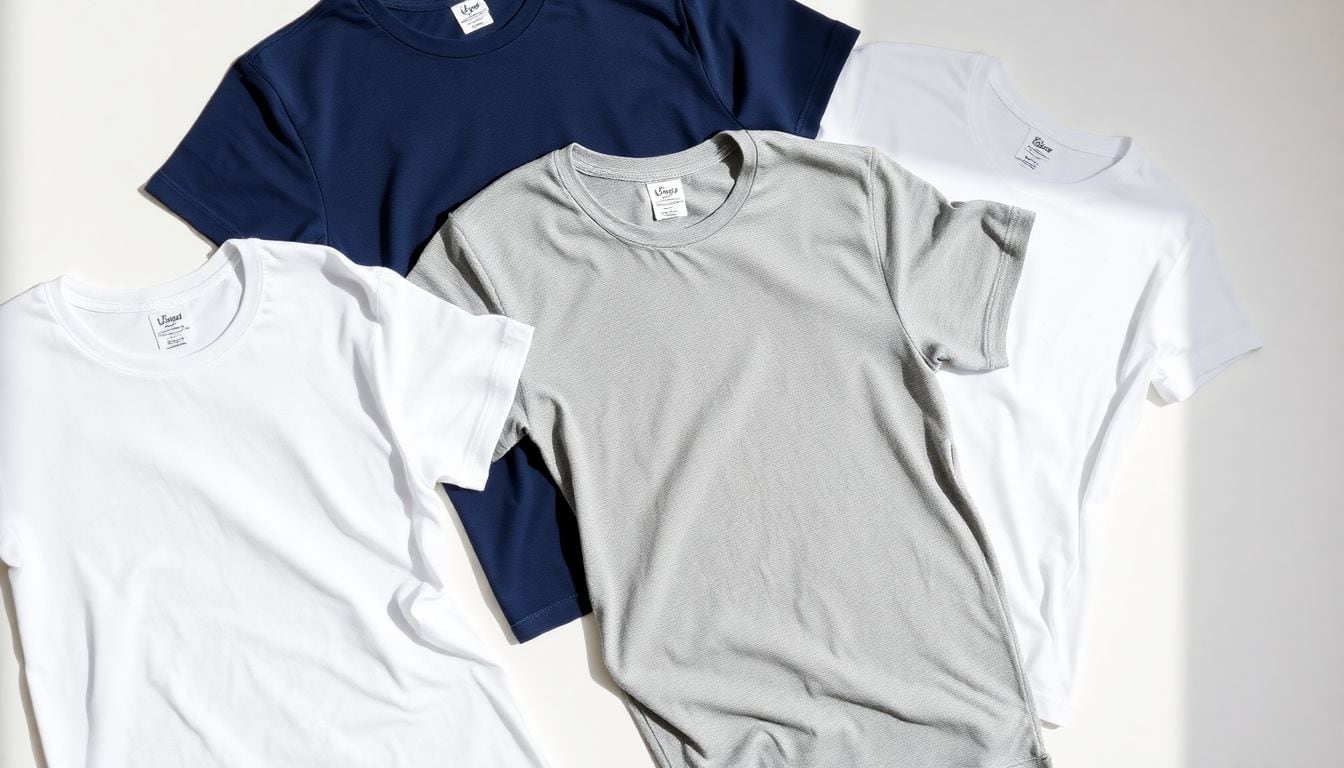
Fruit of the Loom pre-shrunk cotton T-shirts shrink 3–5% in the first warm wash. Cotton-polyester blends shrink 2–3% because polyester’s dimensional stability counteracts cotton’s natural contraction. After the first 2–3 washes, FOTL basics are dimensionally stable. This predictable shrinkage behavior makes FOTL a reliable choice for everyday basics — provided you follow the right care steps for that first wash.
FOTL Fabric Quality vs. Premium Brands
FOTL occupies a distinct position in the basics market: it prioritizes consistent, reproducible sizing over premium hand feel or fabric refinement. Understanding what you are — and are not — getting from FOTL starts with knowing what spinning technology their cotton yarn comes from.
Most FOTL cotton products are made from open-end spun cotton. Open-end spinning is a faster, more economical production method that twists fibers around a rotating air stream or rotating spindle rather than drawing each fiber out individually. The result is a slightly less uniform, slightly more hairy yarn compared to ring-spun cotton. In terms of shrinkage behavior, open-end cotton has a marginally higher first-wash shrinkage rate than ring-spun cotton because the yarn structure is less tightly consolidated — there is more microscopic space between fibers for them to tighten during the initial wash cycle.
FOTL differentiates itself from cheaper non-preshrunk competitors through its consistent use of pre-shrunk cotton across the majority of its basics line. Pre-shrinking (also called preshrinking or sanforization, named after the Sanford Cluett process developed in the 1930s) is a mechanical treatment that compresses the fabric before it reaches the consumer, limiting first-wash shrinkage to a predictable 3–5% range. The ASTM D1282 standard (the standard test method for measuring shrinkage in woven cotton fabrics) describes how shrinkage potential is measured, and the sanforization process brings most cotton garments within a controlled tolerance of that specification.
FOTL’s price reflects this material profile. You are not paying for Egyptian extra-long-staple cotton or Supima long-staple fiber — you are paying for a consistently engineered, machine-washable, dryer-safe everyday garment that behaves predictably wash after wash. For budget-conscious buyers who want reliable sizing without surprises, this predictability is a feature, not a shortcoming.
Shrinkage by FOTL Product Type
Not all FOTL products behave identically in the wash. The fiber blend, fabric weight, and construction method all influence how much dimensional change you will see. Here is a precise breakdown by product category.
Cotton T-Shirts (Basic Crew Neck, V-Neck)
FOTL’s core cotton T-shirts — the iconic 5-pack and 6-pack basics found in most big-box stores — are made from 100% pre-shrunk open-end spun cotton. These are the items most buyers are asking about when they wonder, “does Fruit of the Loom shrink?”
The data is consistent: in warm water (approximately 40°C / 104°F), these tees will contract 3–5% in both length and width on the first wash. In cold water (approximately 20°C / 68°F), that first-wash shrinkage drops to 1–2% — still present but dramatically reduced. After the first 2–3 wash cycles, the fabric reaches its stabilized dimensions and will not contract further under normal care conditions. This follows the general behavior described by AATCC Test Method 135, which measures dimensional change in automatic home laundering.
A 3–5% shrinkage on a 30-inch chest measurement means a quarter-inch to three-quarters of an inch of reduction. On a 30-inch torso length, that is 0.9 to 1.5 inches. For a size large (22-inch chest), the width reduction is approximately 0.7 to 1.1 inches. This is perceptible but not dramatic — you will notice the tee fitting slightly more snugly, not that it has become a crop top.
Cotton Hoodies and Sweatshirts
FOTL hoodies and crew sweatshirts typically use a 50/50 cotton-polyester blend. The polyester component is the key differentiator here: polyester does not shrink under normal home laundering conditions (it requires temperatures above 70°C / 158°F to reach its glass transition point where dimensional change becomes possible). This makes the 50/50 blend significantly more dimensionally stable than pure cotton.
First-wash shrinkage for cotton-poly hoodies and sweatshirts is in the 2–3% range — roughly half that of pure cotton tees. The AATCC D123 standard for dimensional change testing confirms that blended fabrics consistently outperform all-cotton fabrics in shrinkage resistance. FOTL specifies machine washing in warm water and accepts low-heat tumble drying for these garments, which will not cause detectable additional shrinkage beyond the initial 2–3%.
Underwear and Briefs
FOTL underwear is typically made from cotton or cotton-spandex blends, with the spandex (elastane) component ranging from 5–10% to provide stretch and shape retention. Like the T-shirts, these are pre-shrunk. After the initial wash cycle, additional shrinkage is negligible. The spandex component actually helps the garment recover its shape after being stretched during wear, which offsets the visual perception of minor shrinkage.
Kids’ Items
Children’s FOTL clothing follows the same pre-shrunk cotton or cotton-poly formulas as their adult counterparts. However, buying for children requires a different mental calculation: a 3–5% shrinkage buffer should be factored into sizing decisions. A parent buying a size 5T tee should expect it to measure approximately 0.5–1 inch shorter in the torso after the first few washes. Buying at the top of the child’s current size range — rather than growing into it — accounts for both this shrinkage and the child’s growth trajectory.
How to Wash FOTL Basics
The care instruction for FOTL basics is straightforward, but the first wash deserves special attention because it is the only wash where meaningful dimensional change occurs.
- First wash: cold water, gentle cycle. Set your washing machine to cold (20°C / 68°F) and select the gentle or delicate cycle. This minimizes initial fiber tightening. Do not add other heavily soiled items to this load — a clean first wash gives the fabric room to contract without transferring dyes or heavy soil that could require a hotter, more aggressive wash.
- Subsequent washes: warm water is fine. After the first wash, FOTL cotton is already at or near its stable dimensions. Warm water (40°C / 104°F) with regular detergent is appropriate for everyday loads. These are everyday basics — they are designed to handle normal machine washing without special treatment.
- Tumble dry medium heat. FOTL basics tolerate normal dryer use at medium heat. High heat (above 50°C / 122°F in the dryer drum) can cause additional cotton shrinkage and accelerate fiber degradation over many cycles. Medium heat is the optimal setting for both shrinkage control and fabric longevity. Remove promptly to prevent over-drying, which can set residual wrinkles and cause the fabric to feel stiff.
FOTL basics are built to be exactly what their name implies — basic, reliable garments that survive regular home laundering without requiring hand washing, line drying, or special detergent. The pre-shrunk treatment means you can follow a normal household laundry routine once the initial shrinkage cycle has occurred.
Frequently Asked Questions
Do Fruit of the Loom T-shirts shrink after the first wash?
Yes — FOTL pre-shrunk cotton tees still shrink 3–5% in the first warm wash. After the first 2–3 washes, they are dimensionally stable. Cold washing the first time minimizes this to 1–2%.
Should I size up when buying Fruit of the Loom?
Not necessarily — their pre-shrunk cotton has predictable, limited shrinkage. If you prefer a relaxed fit after washing, buying one size up is reasonable. For a fitted look, buy true to size and cold-wash the first time.
Do FOTL cotton-poly hoodies shrink?
Less than pure cotton — typically 2–3% in warm water. The polyester component resists the cotton’s natural shrinkage tendency. Low-heat tumble drying is acceptable and will not cause additional shrinkage beyond the initial 2–3%.
References
- Cluett, S. (1930s). Sanforize Process for Shrinkage Control in Cotton Textiles. American Association of Textile Chemists and Colorists Technical Manual.
- ASTM International. (2022). ASTM D1282-05(2022) Standard Test Method for Shrinkage of Woven Cotton Fabrics. ASTM International.
- ASTM International. (2021). ASTM D123 Standard Terminology Relating to Textiles. ASTM International.
- AATCC. (2020). AATCC Test Method 135 Dimensional Change of Fabrics After Home Laundering. American Association of Textile Chemists and Colorists.
- Cotton Incorporated. (2023). Cotton Fiber and Textile Research: Shrinkage Control in Cotton Fabrics. Cottonworks.com.
- Textile Exchange. (2023). Preferred Fiber and Materials Report: Cotton Market Intelligence. TextileExchange.org.
- Hussey, B. (2019). “Open-End Spinning vs. Ring Spinning: A Comparative Study of Yarn Properties and Fabric Performance.” Journal of Textile Science & Engineering, 9(3), 1–7. ResearchGate.


