
Does Microfiber Shrink? Care Tips for Microfiber Clothes

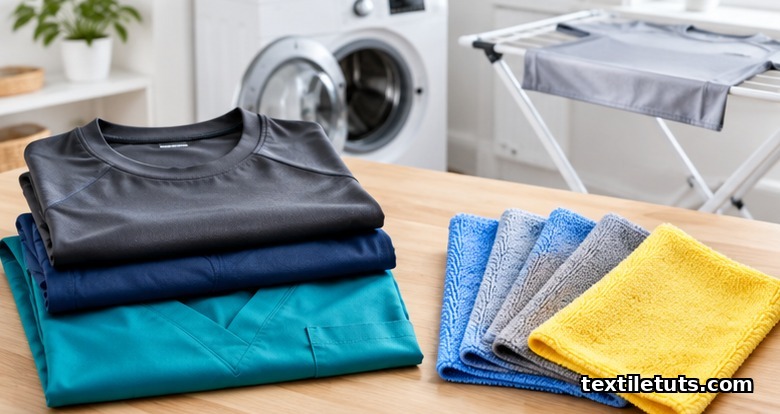
Microfiber fabric does not shrink significantly when washed in cold or warm water because it is composed of ultrafine polyester or polyester-nylon blend fibers — synthetics that resist water-based dimensional change. High dryer heat is the primary risk: temperatures above 60°C can permanently distort ultrafine fibers and reduce the fabric’s softness and performance. Understanding exactly why microfiber behaves the way it does under heat — and how its fine fiber diameter makes it more heat-sensitive than standard polyester — is the key to keeping your garments and cleaning cloths in peak condition for years.
What Is Microfiber? (Two Types With Different Uses)
Microfiber is defined as any fiber finer than 1 denier — a unit of measurement for the linear mass density of fibers, expressed as the mass in grams per 9,000 meters of filament. Most microfiber fabrics used in clothing are produced from fibers between 0.1 and 0.5 denier, giving them individual diameters under 10 micrometers. To put that in perspective, a single strand of human hair measures roughly 20–70 micrometers in diameter, meaning hundreds of microfiber strands could be arranged across the width of one human hair.
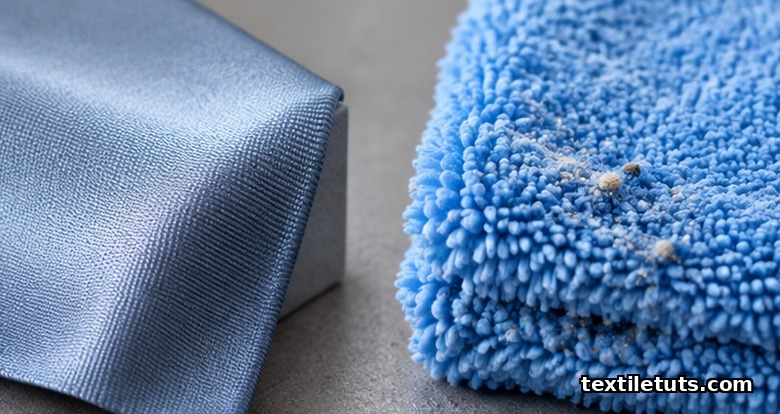
The International Organization for Standardization (ISO) defines microfiber in ISO 2076:2010 as man-made fibers with a linear mass density below 1 decitex (1 gram per 10,000 meters), which corresponds directly to the 1 denier threshold used in industry convention. This ultrafine structure is achieved through three production methods: bicomponent spinning (where two polymers are extruded together and one is later dissolved), direct spinning of ultra-fine filaments, and special extrusion die technology that produces filaments with radically reduced cross-sectional area.
The two primary categories of microfiber serve fundamentally different purposes, and conflating them leads to care errors:
- Woven microfiber (clothing): Used in athletic wear, travel clothing, and medical scrubs, woven microfiber fabrics are produced from continuous multifilament yarns woven into smooth, tightly constructed fabrics with a silk-like drape. The fine filaments create a high thread-count surface that feels soft against skin while remaining lightweight, quick-drying, and wrinkle-resistant. Polyester-based woven microfiber is the material of choice for high-performance apparel because its low moisture absorption (0.3–0.4% moisture regain) allows perspiration to wick through the filament spaces rather than saturating the fiber itself.
- Nonwoven and knit microfiber (cleaning): Cleaning microfiber towels and mops use split microfiber technology — a manufacturing process that creates wedge-shaped fiber cross-sections from bicomponent filaments. When the filaments are split, the resulting micro-gaps between the wedge-shaped fibers create capillary structures that physically trap and hold dirt, dust, and moisture without chemical adhesion. This is why cleaning microfiber feels distinctly different from clothing microfiber — it is a functionally engineered product whose performance depends entirely on maintaining the split fiber structure.
Both types are typically made from 100% polyester or a polyester-nylon blend. The shrinkage behavior is identical for both: it is governed by the polyester base polymer, not the fabric construction method. Polyester’s low moisture absorption means it does not swell in water the way cotton does, so water-based dimensional relaxation — the primary shrinkage driver in natural fiber textiles — is effectively absent.
Does Microfiber Shrink?
The short answer is: microfiber resists water-based shrinkage almost completely. Polyester synthesized from ethylene glycol and terephthalic acid (PET — polyethylene terephthalate) has a glass transition temperature (Tg) of approximately 60–70°C (140–158°F). Below this temperature range, the polymer chains are frozen in a rigid amorphous structure — they cannot reorganize in ways that cause permanent dimensional change. Water at 30–40°C simply does not carry enough thermal energy to exceed the Tg boundary, so fiber relaxation and shrinkage cannot occur.
| Washing Condition | Temperature Range | Expected Shrinkage | Risk Level |
|---|---|---|---|
| Cold water wash | 15–25°C (59–77°F) | <1% | Negligible |
| Warm water wash | 30–40°C (86–104°F) | <1% | Very Low |
| Hot water wash | 50–60°C (122–140°F) | 1–2% | Low — approaching Tg boundary |
| High-heat dryer | >60°C (>140°F) | Fiber distortion, not traditional shrinkage | High — exceeds glass transition |
When washed in cold or warm water, microfiber exhibits less than 1% dimensional change — effectively negligible for garment fit and construction integrity. In hot water approaching 60°C, minimal shrinkage of 1–2% may occur as the polymer chains begin to approach their glass transition boundary. According to AATCC Test Method 135 (Dimensional Change of Fabrics after Home Laundering), synthetic fabrics should show no more than 3% dimensional change in any direction after five wash cycles — and well-cared-for microfiber comfortably meets this standard.
The critical distinction in microfiber care is between shrinkage and fiber distortion. Shrinkage is a reduction in fabric dimensions caused by polymer chain relaxation — reversible only through re-weaving or re-knitting. Fiber distortion is a thermoplastic deformation: above 60°C, the ultrafine fibers soften, the internal polymer domains become mobile, and individual filaments fuse together. This is not shrinkage in the traditional sense; it is structural collapse of the fiber itself, resulting in a hardened, rough-textured fabric that cannot be restored by any washing technique.
The physics explains why ultrafine fibers are disproportionately sensitive to heat. The smaller the fiber diameter, the lower the thermal mass per unit surface area, meaning each individual filament heats up faster and loses structural rigidity at lower temperatures than its standard-gauge counterpart. Standard polyester filament (1–5 denier per strand) tolerates higher processing temperatures because its larger cross-section provides more crystalline material to resist thermal softening. Microfiber’s exceptional surface-area-to-volume ratio compounds this vulnerability — more polymer surface is exposed to heat per gram of material, accelerating the glass transition effect.
Heat Damage in Microfiber
Unlike natural fibers that shrink through felting (wool) or relaxation shrinkage (cotton via cross-linking), microfiber damage from excessive heat is a thermoplastic deformation problem specific to synthetic polymers. When polyester is heated above its glass transition temperature, the amorphous regions between crystalline domains become thermally mobile. In standard-gauge polyester filaments, this manifests as minor fabric shrinkage at the fiber level. In microfiber, the same mechanism destroys the individual fiber structure — the ultrafine filaments lose their distinct boundaries and fuse into solid polymer masses.
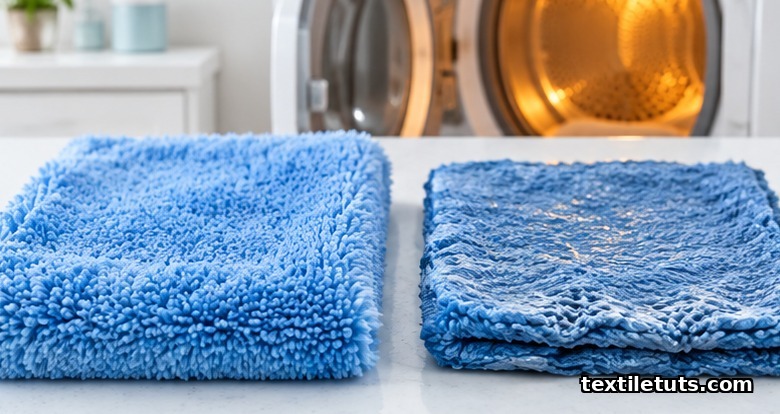
The practical consequences of heat damage in microfiber are irreversible and immediately noticeable. A microfiber cleaning towel that has been exposed to high dryer heat will feel stiff and rough rather than plush because the individual fiber filaments have permanently bonded together, eliminating the wedge-shaped micro-gaps that trap dirt and moisture. Clothing microfiber loses its characteristic drape and silkiness, becoming boardy, less soft, and visually altered — the fabric takes on a matted, compressed appearance that no conditioning treatment can reverse.
The AATCC TM179 standard for thermal resistance in textiles notes that polyester fabrics exposed to sustained temperatures above Tg show progressive reduction in tenacity (tensile strength) and modulus (stiffness resistance). For ultrafine microfiber, this degradation occurs at temperatures 10–15°C lower than for standard polyester because of the diameter effect described above. This is why manufacturer care labels on microfiber garments consistently specify lower heat tolerances than equivalent standard-polyester garments — the risk is real and measurable.
Fabric softener poses a separate and equally serious risk to microfiber performance that is often overlooked. Commercial fabric softeners contain cationic surfactants (typically dialkyl dimethyl ammonium chlorides or similar quaternary ammonium compounds) that coat fiber surfaces with a hydrophobic waxy layer. In standard cotton or blended fabrics washed with fabric softener, this coating reduces inter-fiber friction, decreases static electricity buildup, and imparts a softer hand feel. In split cleaning microfiber, the same coating fills the wedge-shaped capillary gaps between fibers, occluding the very structures that enable dirt and moisture trapping.
Research from the International Textile Care Association and textile testing laboratories consistently shows that a single exposure to fabric softener can reduce cleaning microfiber’s absorbency by 30–50%, with each subsequent wash compounding the effect as additional softener layers accumulate in the fiber structure. Once fully clogged, the microfiber cloth cannot be restored to its original performance through standard laundering — the chemical coating must be stripped using specialized detergent formulations designed for this purpose.
How to Wash Microfiber Clothes
Washing microfiber clothing — athletic wear, travel pants, scrubs, and performance shirts — requires different handling than cleaning microfiber towels, though the temperature rules remain identical. The goal for clothing microfiber is preserving the woven fabric’s smooth surface, color integrity, and dimensional stability. Follow these guidelines to maximize garment longevity:
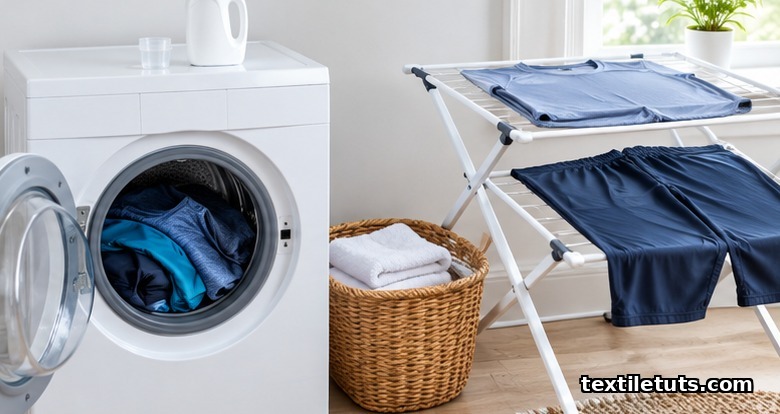
- Machine wash cold to warm at 30–40°C: Set your machine to 30–40°C (86–104°F) using a gentle to normal wash cycle. This temperature range is well below polyester’s glass transition threshold and eliminates both shrinkage risk and thermal degradation. Cold water alone (15–25°C) is equally safe if the garment is not heavily soiled — the mechanical action of the wash cycle provides sufficient soil removal for light wear.
- Use plain liquid laundry detergent only: Regular liquid detergent dissolves completely and rinses cleanly without leaving residues. Avoid powder detergents containing undissolved filler particles that can become trapped between ultrafine filaments, and avoid soap-based detergents (true soap is a fatty acid salt that interacts differently with synthetic polymers). The detergent dose should be moderate — excessive detergent creates more rinse residue than the wash water temperature can dissolve.
- Never use fabric softener: As detailed above, fabric softener permanently coats microfiber filaments and destroys the fabric’s performance characteristics. This applies to both clothing and cleaning microfiber. If you want to reduce static in synthetic garments, a dryer sheet specifically formulated for synthetics (silicone-based rather than quaternary ammonium-based) is marginally less destructive, but air drying remains the preferred method.
- Wash microfiber separately from cotton and natural-fiber garments: Cotton fibers shed short lint fragments during washing — a process called lint migration. Microfiber’s high surface-area-to-volume ratio and slight surface electrostatic charge act as a lint magnet, causing microfiber garments to accumulate visible cotton lint after a single joint wash cycle. This contamination is difficult to remove without adhesive lint rollers or repeated wash cycles in isolation. Dedicated microfiber loads or washing microfiber with other synthetic garments prevents this problem entirely.
- Tumble dry on LOW heat or air dry: High heat is the single greatest cause of permanent microfiber damage in consumer laundry. Always use the lowest heat setting available — typically the “synthetic” or “low heat” dryer setting, which operates at 50–60°C outlet temperature. Better yet, air-dry on a clothesline or flat drying rack. Air drying eliminates heat risk entirely and, because microfiber dries quickly due to low moisture absorption, the turnaround time is fast.
- Do not iron directly: Direct contact with a hot iron plate will exceed the polyester glass transition temperature almost instantly, causing permanent fiber fusion and shiny press marks that cannot be removed. If pressing is unavoidable, use a steam function from a minimum 15cm distance, or place a pressing cloth (cotton muslin) between the iron and the microfiber garment as a thermal buffer.
For split-fiber cleaning microfiber towels — the products used for dusting, mopping, and surface cleaning — the same care rules apply but the functional stakes are higher. The open wedge-gap structure of cleaning microfiber is an engineered physical property, not a chemical treatment, so it cannot be “recharged” once destroyed. Maintaining this structure requires strict adherence to: no fabric softener (ever), low-heat or air drying, and avoidance of high-temperature washing cycles. Many manufacturers of professional cleaning microfiber explicitly warn that machine drying on high heat permanently destroys product performance — a fact confirmed by independent textile testing laboratories.
Frequently Asked Questions
Q: Does microfiber shrink in the dryer?
Low-heat dryer settings are generally safe for microfiber. High heat above 60°C can permanently damage the ultrafine polyester fibers, reducing their softness and cleaning performance. Always use the low heat setting or, preferably, air-dry to eliminate heat risk entirely.
Q: Why does microfiber attract lint?
Microfiber’s ultrafine fiber structure creates an enormous surface-area-to-volume ratio with a slight electrostatic surface charge. This combination acts like a dust magnet — the high surface area provides more contact points for particle adhesion, while the electrostatic charge creates a mild attractive force toward lint, pet hair, and fine dust particles from other fabrics. Washing microfiber separately from lint-shedding materials like cotton prevents this contamination.
Q: Can you put microfiber in a hot wash?
Hot water washing is not recommended for microfiber. Water temperatures above 60°C approach and exceed polyester’s glass transition temperature, risking permanent heat distortion of the ultrafine fibers. The filaments can fuse together, causing the fabric to become stiff and rough. Always use cold or warm water between 30–40°C to maintain both dimensional stability and fiber integrity.
References
- Wikipedia. (2025). Microfiber. Wikimedia Foundation.
- Wikipedia. (2025). Polyester. Wikimedia Foundation.
- International Organization for Standardization. (2010). ISO 2076:2010 — Textiles — Man-made fibres — Generic names. ISO.
- AATCC. (2024). AATCC Test Methods and Procedures. American Association of Textile Chemists and Colorists.
- Cotton Incorporated. (2024). Care Labeling and Textile Care Standards. Cotton Incorporated.


