
How to Unshrink Jeans After Washing

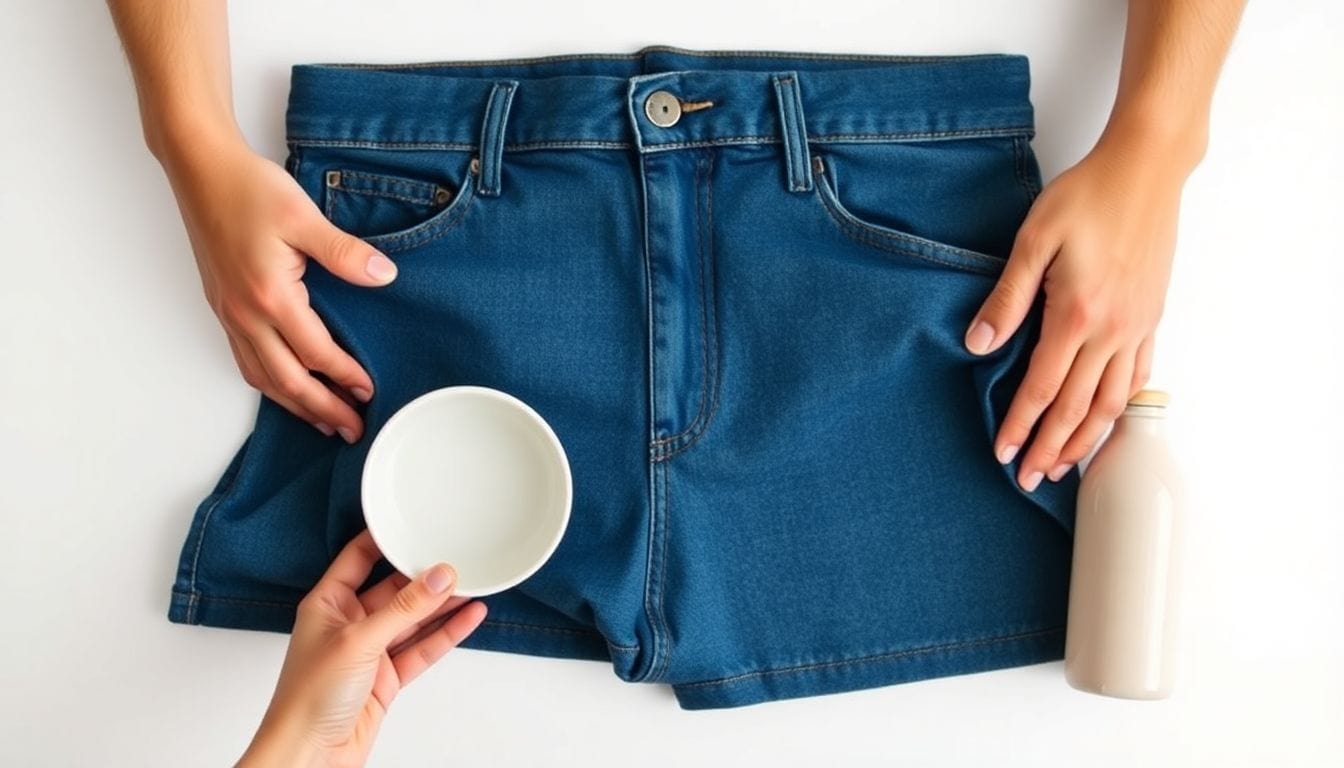
Jeans can be partially unshrunk because denim is woven cotton — a fiber that retains some ability to be stretched back while wet. The most effective method is the warm water conditioner soak followed by manual stretching of the waistband and inseam while the denim is still wet. Additionally, denim naturally relaxes with wearing — jeans that feel tight right after washing often stretch to a comfortable fit within 30–60 minutes of wearing.
Are Your Jeans Actually Shrunk, or Just Stiff?
Fresh-washed denim feels stiffer and tighter than worn denim — this is normal behavior caused by cold water tightening cotton fibers, not shrinkage. According to the American Cleaning Institute’s fabric care guide, cold water tightens cotton fibers while lukewarm water is the safest temperature for both washing and unshrinking cotton garments.
Before committing to the full unshrinking process, try wearing the jeans for 30–60 minutes around the house. Denim is a woven cotton fabric with natural give — the fibers relax with body heat and repeated movement, recovering 1–2 cm (approximately 0.5–1 inch) of width in the waist and some length in the legs without any intervention. If the jeans still feel noticeably too small after wearing them for an hour, proceed with the unshrinking methods below.
Key distinction: if your jeans feel tight but the fabric is still pliable and soft, they likely just need wearing. If the fabric feels compressed, dense, or the seams appear shorter than before, genuine shrinkage has occurred and the following methods can help recover size.
Method 1: Warm Water Soak + Manual Stretching
This is the most effective and widely recommended method for unshrinking denim. The warm water relaxes the cotton fibers while the conditioner lubricates them, making the fabric more pliable and easier to stretch back to its original dimensions. Fabric care research from the American Cleaning Institute confirms that lukewarm water (not hot) opens the cotton fiber structure enough to allow reshaping without causing additional shrinkage or fiber damage.
Materials Needed
- Warm water (38–40°C / 100–104°F — lukewarm to the touch, never hot)
- 2–3 tablespoons of hair conditioner (any standard brand)
- Two clean towels
Step-by-Step Process
- Fill the basin. Fill a bathtub or large basin with warm water at 38–40°C (100–104°F). Hot water above 50°C (122°F) can cause further cotton shrinkage — this is the most critical temperature control point in the entire process.
- Add conditioner. Add 2–3 tablespoons of hair conditioner. Swirl the water to dissolve the conditioner completely before submerging the jeans. The conditioner coats the cotton fibers, reducing friction and allowing them to slide past each other more freely when stretched.
- Soak the jeans. Submerge the jeans completely in the conditioner solution. Let them soak for 20–30 minutes. Longer soaking is not more effective — after 30 minutes the fibers have reached maximum saturation and relaxation.
- Remove and press. Remove the jeans and gently press out excess water with your hands and the towels. Do not wring or twist the denim, as this can permanently distort the weave and seams.
- Stretch the waistband. Lay the jeans flat. Grip the waistband at two points roughly 15 cm (6 inches) apart and firmly pull apart. Hold each stretch for 10 seconds. Repeat every 15 cm along the entire waistband circumference. You should feel moderate resistance — the fabric should stretch, not tear.
- Stretch the inseam and legs. Hold the waistband end with one hand and the hemline of one leg with the other. Pull firmly along the inseam direction to lengthen the leg. Repeat on the other leg. This targets the inseam shrinkage that commonly occurs from machine drying.
- Dry flat in position. Lay the jeans flat on a towel. Gently reshape them to your target measurements — use your hands to coax the fabric to the desired dimensions. Allow to air-dry completely for 8–12 hours. Placing the jeans near a fan or in a well-ventilated room speeds drying.
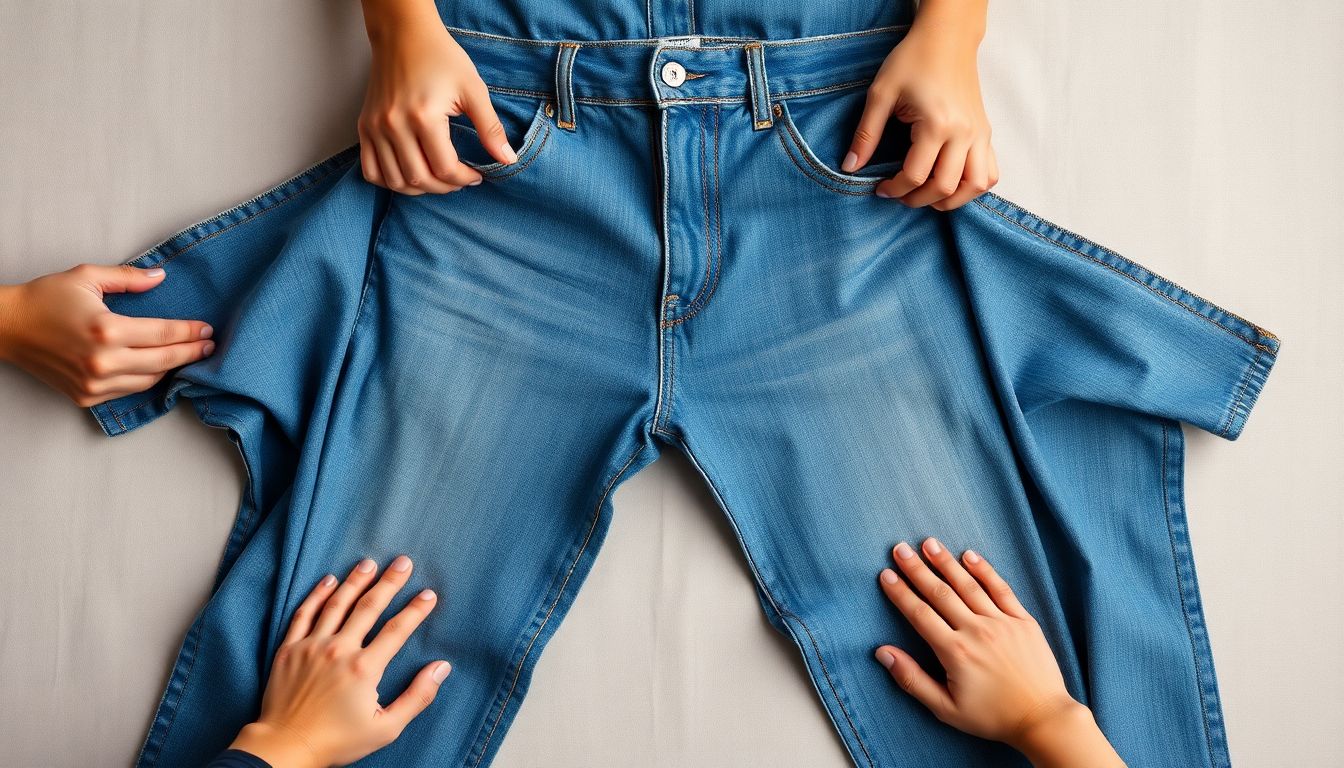
The waistband and inseam are the two most critical stretching points on shrunken jeans. The waistband typically shrinks 2–5 cm in circumference (1–2 inches) after a hot wash cycle, while the inseam can shorten by 1–3 cm (0.5–1.5 inches) depending on the drying temperature used. Focusing stretching effort on these two areas produces the most noticeable fit improvement.
Method 2: Wear While Damp (Molding to Body)
This method uses your own body as a form to reshape the denim to your exact measurements. It is particularly effective for overall fit issues — jeans that feel slightly too small in the waist, hips, and thighs simultaneously respond well to this approach. The technique works because damp cotton denim is highly malleable and will conform to whatever shape holds it as it dries.
- Remove your jeans from the washing machine while they are still damp — or dampen a dry shrunken pair with a spray bottle until evenly moist.
- Put on the jeans while they are still slightly wet. The denim should be damp but not dripping.
- Move around vigorously: squat, lunge, bend at the waist, sit and stand repeatedly. These movements physically push the denim outward in all directions.
- Wear the jeans for 30–60 minutes until the denim feels dry to the touch on the outer surface. The inner thigh area may remain slightly damp longer — this is normal.
- Remove the jeans and lay flat to finish air-drying if needed.
Method 3: Spray Bottle + Jeans Stretcher
For isolated waistband shrinkage — where the legs still fit fine but the waistband is uncomfortably tight — this targeted method avoids disturbing the leg dimensions at all. A jeans waistband stretcher is a small wooden or plastic tool specifically designed for this purpose and is widely available for under $10 (search “jeans waistband stretcher” online or at haberdashery stores).
- Dampen the waistband area with a spray bottle filled with water. The fabric should be moist but not saturated.
- Insert the jeans stretcher into the waistband opening and expand it to the desired circumference. Most stretchers have a turn-screw mechanism for incremental adjustment.
- Leave the stretcher in place for 2–4 hours until the denim dries completely in the stretched position.
- Remove the stretcher and try on the jeans to check fit. Repeat if additional stretch is needed.
This method is the most precise for waistband-only issues because it applies constant, even tension across the entire waistband circumference simultaneously. Unlike manual stretching (Method 1), there is no risk of over-stretching one section and under-stretching another.
Reality Check: What Cannot Be Unshrunk
Some shrinkage conditions are irreversible or only partially reversible. The inseam shrinks less than 5 cm (2 inches) when anchored by seams at both ends, and recovery is possible but may be incomplete for severe shrinkage. Jeans shrunk more than two full sizes in the inseam typically cannot be fully restored. High-heat tumble drying above 70°C (158°F) causes a more permanent fiber compaction than wash-only shrinkage — the combination of mechanical agitation and sustained heat compresses cotton fibers in the length direction. Wash-only shrinkage primarily involves fiber swelling and relaxation shrinkage, which is a more reversible process. Very old or heavily washed denim that has developed a stiff, cardboard-like quality may not respond well to stretching because the conditioner cannot restore fiber flexibility lost through repeated high-heat treatment.
- Significant inseam shrinkage (more than 5 cm / 2 inches): The inseam is anchored at both ends by seams, making it the most mechanically constrained part of the jean. When cotton woven fabric shrinks in the length direction, the warp threads (vertical) compress and bundle together. Recovery is possible but may be incomplete for severe shrinkage. Jeans shrunk more than two full sizes in the inseam typically cannot be fully restored.
- High-heat dryer shrinkage: Jeans that have been tumble-dried on high heat (above 70°C / 158°F) undergo a more permanent fiber compaction than wash-only shrinkage. The combination of mechanical agitation and sustained heat causes the cotton fibers to actually compress in length. Wash-only shrinkage primarily involves fiber swelling and relaxation shrinkage — a more reversible process.
- Fabric that has stiffened or thickened: While this is more relevant for knit fabrics like wool or cotton sweaters, very old or heavily washed denim that has developed a stiff, cardboard-like quality may not respond well to stretching. Conditioner helps but cannot restore fiber flexibility that has been lost through repeated high-heat treatment.
References
- American Cleaning Institute. (n.d.). Fabric Care Guide. https://www.cleaninginstitute.org/understanding-products/fabrics/
- WikiHow. (n.d.). How to Unshrink Clothes. https://www.wikihow.com/Unshrink-Clothes


