
Does Champion Shrink? How to Wash Champion Sweatshirts

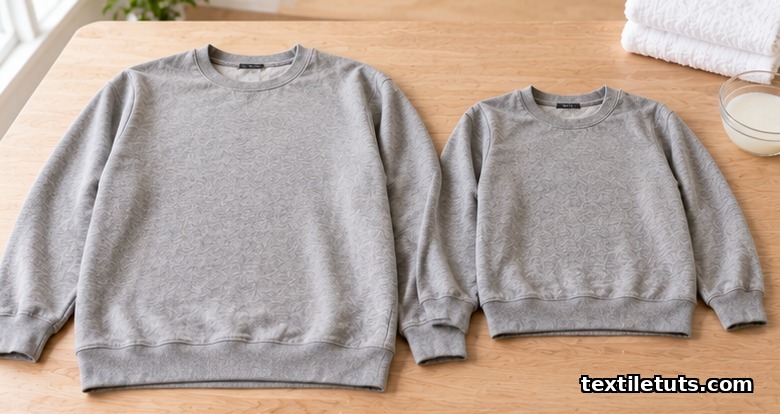
Champion Reverse Weave shrinks 1–3% in length; standard Champion cotton shrinks 5–8%; Powerblend cotton-polyester blends shrink 2–4%; and 100% polyester Performance items experience minimal to no shrinkage. Champion sweatshirts vary in shrinkage behavior depending on the product line: the classic Reverse Weave sweatshirt is engineered to minimize vertical shrinkage by cutting fabric horizontally and adding side gussets, while standard Champion cotton items shrink like any cotton jersey. Understanding which Champion product you own determines how much it will shrink.
The Champion Reverse Weave: Shrinkage Engineering
Champion invented the “Reverse Weave” construction method in 1938 specifically to address the persistent problem of sweatshirt shrinkage. This was an engineering solution to a real textile problem that had plagued casual garments for decades—not a marketing gimmick.
Standard sweatshirts are cut with the fabric running lengthwise. The warp direction (the direction of maximum fabric shrinkage) runs vertically down the garment. When you wash a standard sweatshirt in warm water, the cotton fibers contract along their length, and the garment visibly shortens—sometimes by a full size after just a few washes.
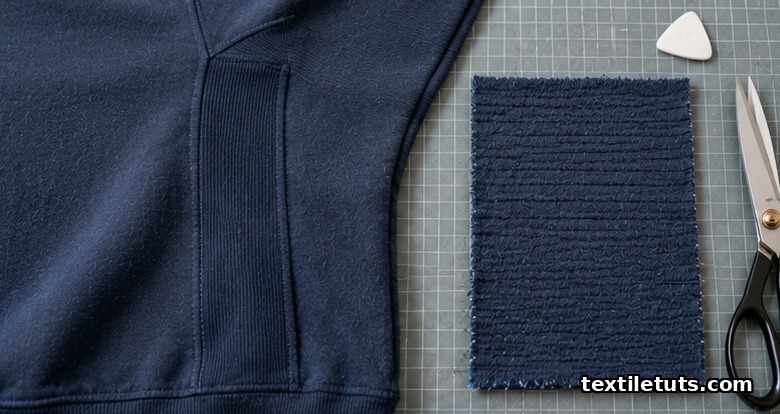
Reverse Weave solves this by cutting the fabric rotated 90° from standard orientation. The warp direction now runs horizontally across the width of the garment rather than vertically down its length. Champion additionally reinforced these garments with side gussets—triangular fabric inserts at the sides—that further stabilize the vertical dimension.
The result: the direction of maximum fabric shrinkage now runs across the width, where it absorbs into the relaxed fit of the garment rather than manifesting as length loss. Combined with the side gussets, this construction produces a sweatshirt that maintains its original length far better than standard construction. Reverse Weave reduces shrinkage—it does not eliminate it entirely. The fabric still shrinks; it shrinks in a less problematic direction.
Shrinkage by Champion Product Line
Champion produces several distinct product lines, and each responds differently to washing and drying. Here’s the complete breakdown:
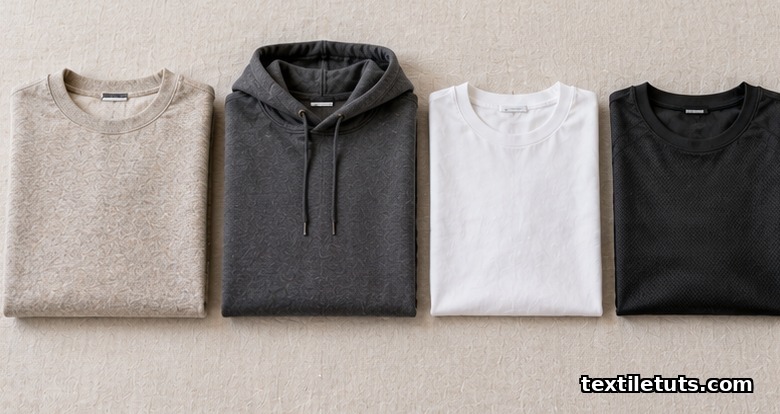
Champion Reverse Weave Sweatshirt
The flagship Champion construction delivers measurable advantages in dimensional stability. Independent textile testing and consumer reports consistently show:
- Shrinkage in length: 1–3% after multiple wash cycles (significantly lower than standard cotton)
- Shrinkage in width: More pronounced than length—this is the intentional trade-off of the design
- Overall: Far more dimensionally stable than standard sweatshirts; maintains wearable fit through many wash cycles
The Reverse Weave’s horizontal grain orientation means widthwise shrinkage (across the chest and body) is more pronounced than length shrinkage. Length shrinkage (down the torso) is minimal. In practice, this means your Reverse Weave sweatshirt becomes slightly wider rather than shorter—a trade-off most wearers prefer, since a slightly wider sweatshirt remains comfortable while a shorter one becomes unwearable.
Champion Powerblend (Cotton-Polyester Blend)
The Powerblend line uses a 50% cotton / 50% polyester construction that combines the comfort of cotton with the dimensional stability of polyester:
- Expected shrinkage: 2–4% after multiple wash cycles
- Why it works: Polyester fibers do not contract significantly during washing, counterbalancing cotton’s natural tendency to shrink
- Care recommendation: Machine wash warm; tumble dry on low to medium heat
The blend ratio significantly reduces shrinkage compared to 100% cotton alternatives. Polyester’s heat-set structure remains stable at washing temperatures up to 60°C (140°F), effectively anchoring the cotton fibers and preventing full fiber contraction.
Champion Standard Cotton T-Shirts and Basics
Champion’s basic cotton jersey items—including t-shirts, crew-neck sweatshirts, and cotton fleece—behave identically to any cotton jersey fabric:
- Expected shrinkage: 5–8% on first warm wash; additional minor shrinkage (1–2%) over subsequent washes
- Primary shrinkage direction: Length (vertical) rather than width
- Why: Standard cotton jersey is cut with warp direction running vertically; this is the direction of maximum shrinkage
Jersey knit construction undergoes normal consolidation shrinkage during aqueous processing. AATCC Test Method 150—the standard for measuring fabric dimensional change after repeated home laundering—accounts for this behavior. If you’re buying standard Champion cotton basics, expect them to shrink and plan accordingly by purchasing a size up or following cold-water wash protocols for the first several cycles.
Champion Performance (Polyester Activewear)
Champion’s performance line uses 100% polyester or polyester-blend fabrics designed for athletic use:
- Shrinkage risk: Minimal to none
- Why: Polyester is a thermoplastic fiber that is heat-set during manufacturing; the molecular structure is stable at washing temperatures
- Care: Machine wash warm; low-heat tumble dry; avoid high heat that may damage the fabric’s moisture-wicking properties
Polyester activewear maintains its original dimensions wash after wash, making it the most dimensionally stable of all Champion product lines. For more details on polyester fabric construction, see our fabric types guide.
How to Wash Champion Sweatshirts
Proper washing technique extends the life of any garment, but Champion’s construction variety means a one-size-fits-all approach does not work. Here’s the optimized care protocol for each product line:
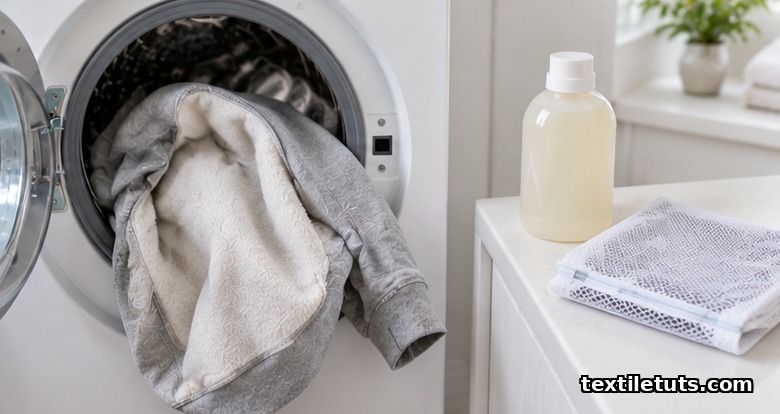
For Champion Reverse Weave
- Turn the garment inside out to protect the embroidered C logo and any applied graphics
- Wash in cold to warm water (up to 40°C / 104°F) on a normal cycle
- Use a mild detergent—avoid bleach or fabric softeners that degrade the cotton fibers over time
- Tumble dry on low heat to preserve the engineered construction and extend garment life
- Avoid repeated high-heat drying, which stresses the side gusset seams
The Reverse Weave’s specialized construction benefits from gentler washing protocols. While the garment is engineered to resist shrinkage, repeated high-heat laundering degrades the cotton matrix and compromises the dimensional stability that makes the design valuable.
For Champion Cotton and Powerblend
- Turn inside out to protect logo embroidery and outer surface
- Wash in cold water for the first 3–5 washes to minimize initial shrinkage of cotton components
- After initial washes, warm water is acceptable for regular cleaning
- Tumble dry on medium heat—Champion cotton is robust and does not require delicate handling
- Remove promptly from dryer to prevent wrinkles in the ribbed cuffs and waistband
The ribbed cuffs and waistband on Champion cotton garments contain 5–10% spandex. These elastic components degrade under prolonged high-heat exposure, causing them to lose their recovery properties over time. Medium heat drying and prompt removal solves this issue.
For Champion Performance Polyester
- Turn inside out to protect any printed or sublimated graphics
- Wash in warm water (up to 40°C / 104°F)—polyester releases soil effectively at moderate temperatures
- Use a small amount of liquid detergent; avoid powdered detergents that may not fully dissolve
- Tumble dry on low heat or hang dry—high heat damages the fabric’s moisture-wicking treatment
For a comprehensive guide to caring for all fabric types, see our fabric care hub.
Frequently Asked Questions
Do Champion sweatshirts shrink?
Champion Reverse Weave sweatshirts are specifically designed to resist length shrinkage and shrink only 1–3% in normal washing. Standard Champion cotton basics shrink 5–8% like any cotton jersey. Powerblend cotton-polyester blends shrink 2–4%, while 100% polyester Performance items experience minimal to no shrinkage.
Can you put Champion hoodies in the dryer?
Yes—Champion cotton and cotton-poly blends are dryer-safe. Use low to medium heat. High heat causes more shrinkage in cotton components and degrades the elastic in the ribbed cuffs and waistband over time. Polyester Performance items should be tumble dried on low heat or hung dry to preserve moisture-wicking properties.
Why are Champion Reverse Weave sweatshirts more expensive?
The Reverse Weave construction requires cutting fabric at a 90-degree rotation from standard, which wastes more fabric during production. The added side gussets require extra material and construction time. The result is a longer-lasting, more shrink-resistant garment that maintains its original fit through many wash cycles—delivering better long-term value despite the higher initial price.
References
- Cotton Incorporated. (2024). Cotton Fabric Shrinkation: Causes, Prevention, and Testing Standards. CottonWorks.
- AATCC International. (2023). AATCC Test Methods and Procedures for Textile Shrinkage Testing. American Association of Textile Chemists and Colorists.
- ISO 2019-2023. (2023). ISO 6330: Textiles — Domestic Washing and Drying Procedures for Textile Testing. International Organization for Standardization.
- Champion. (2024). Product Care Instructions. Champion Athleticwear.


