
Does Puma Clothing Shrink? Washing Tips for Puma Activewear

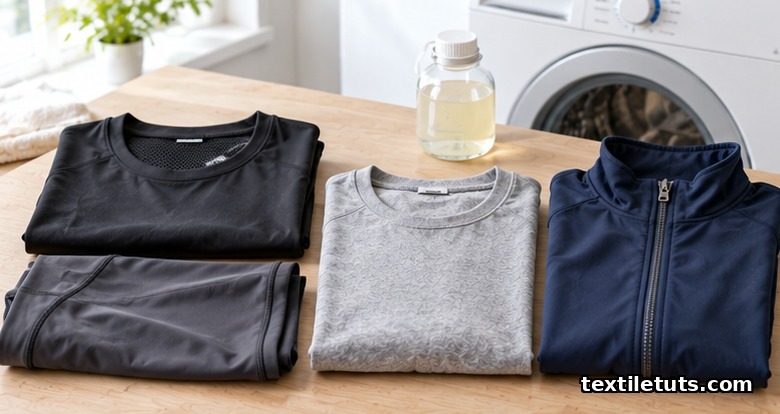
Puma sportswear and activewear items are primarily polyester or polyester-elastane blends and have minimal shrinkage risk. Puma’s cotton lifestyle and heritage items follow standard cotton shrinkage behavior—3–5% dimensional change in warm water. Like all performance activewear brands, Puma’s technical fabrics require cold washing and air drying to preserve their moisture management and stretch properties.
Puma Performance Polyester Resists Shrinkage; Cotton Lifestyle Tees Shrink 3–5%
Puma categorizes its apparel into distinct product lines, each using different fabric compositions that directly determine how the garment responds to washing and heat. Puma’s performance lines use 100% polyester or polyester-nylon blends that resist water-based dimensional change far more effectively than natural fibers. Polyester chains are not sensitive to moisture swelling, and the fiber’s thermal setting during manufacturing makes it dimensionally stable up to approximately 70°C (158°F) in aqueous conditions. Puma’s lifestyle cotton collection follows standard natural fiber shrinkage behavior, with cotton jersey knit shrinking 3–5% when washed in warm water due to the swelling of cotton fibers.
Performance Lines: dryCELL, PWRCOOL, and CLOUDSPUN
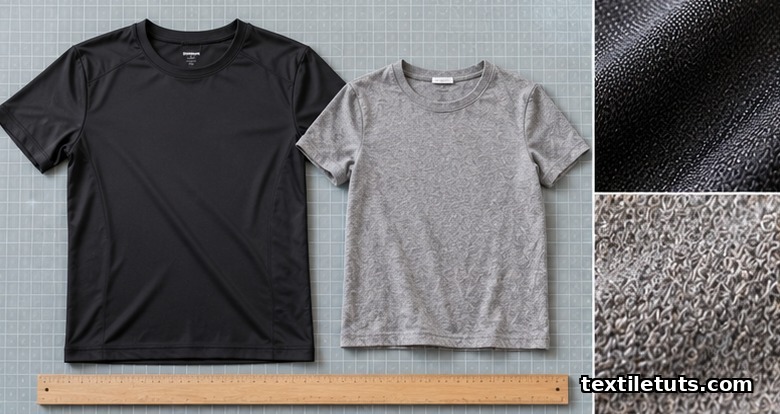
Puma’s performance lines—including dryCELL, PWRCOOL, and the ultra-soft CLOUDSPUN collection—are engineered for athletes and active wearers. dryCELL is Puma’s proprietary moisture-wicking technology applied to polyester base fabrics. The polyester fiber is engineered with a capillary structure that pulls perspiration away from the skin and distributes it across the fabric surface for rapid evaporation. PWRCOOL is Puma’s thermal regulation technology that uses phase-change materials to provide cooling relief during high-intensity activity. CLOUDSPUN is Puma’s ultra-soft polyester variant with a modified cross-section fiber that provides a plush hand feel while retaining standard polyester’s dimensional stability. The moisture management function in dryCELL relies on the gap between individual polyester filaments—fabric softener coats these filaments and physically blocks the moisture pathways, rendering the technology ineffective. Puma explicitly warns against using fabric softener on dryCELL garments. The shrinkage risk for all Puma performance fabrics is very low.
Proper care for Puma performance polyester involves machine washing cold (30°C / 86°F maximum) on a gentle cycle. Turning garments inside out protects printed logos, reflective transfers, and color-matched seam taping from mechanical abrasion. Air drying on a flat surface or hanging garment rack is the gold standard for maintaining fit and compression in stretch performance wear. Low heat tumble drying is acceptable but accelerates gradual elastic fatigue over many cycles. Elastane fibers in stretch activewear degrade at temperatures above 60°C (140°F), losing tensile strength and elasticity permanently. High heat drying causes loss of shape and compression performance over time.
Lifestyle and Heritage Lines: Logo Tees and Classics
Puma’s lifestyle collection—including iconic logo tees, track jackets, and heritage archive reissues—uses cotton or cotton-polyester blend constructions. Cotton jersey knit shrinks 3–5% when washed in warm water (approximately 40°C / 104°F) due to the swelling of cotton fibers in water and subsequent relaxation of tension set during knitting. Cotton-polyester blends shrink less, typically 2–3%, because the polyester content constrains the cotton fibers’ dimensional change. For new Puma cotton lifestyle garments, the first 3–5 washes in cold water reduce residual shrinkage. Once the initial relaxation shrinkage has occurred, these garments can be laundered in warm water without further significant dimensional change.
Golf Collection: DryCell Golf Polos and Performance Golf Apparel
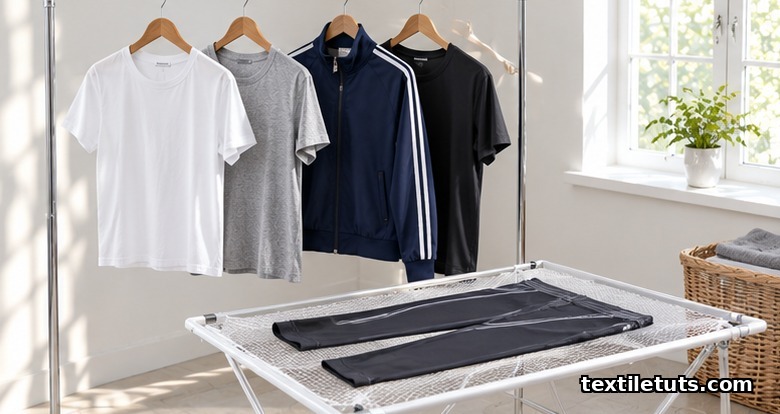
Puma Golf collections use the same polyester performance fabric technology as the brand’s running and training lines. The DryCell golf polos feature moisture management that wicks sweat away from the body during play. Like all Puma performance polyester, these garments carry minimal shrinkage risk. Cold washing, avoiding fabric softener, and air drying or low-heat tumble drying are the recommended care practices to maintain the fabric’s moisture-wicking function and color integrity through repeated wash cycles. The recommended care routine for golf apparel preserves both the physical fabric and the functional finish applied to the garment.
Puma Fabric Care Quick Reference
How to Wash Puma Performance Fabrics: Step-by-Step Care Instructions
Proper washing technique for Puma activewear depends on the specific technology in the garment. Following the correct care routine preserves both the physical fabric and the functional finish applied to it. Each Puma technology requires specific handling to maintain its performance properties through repeated wash cycles.
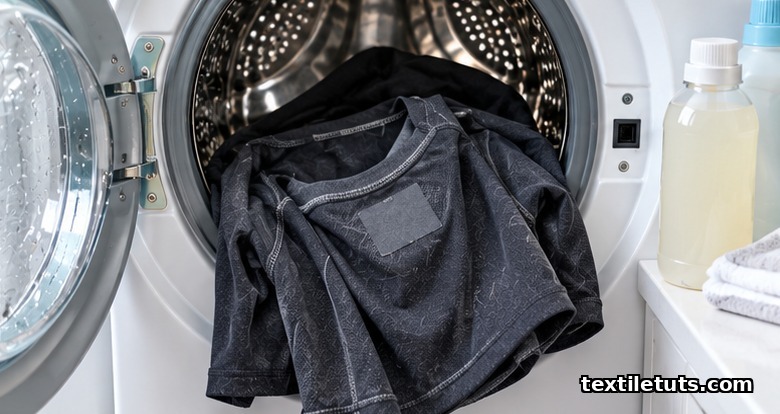
- dryCELL, PWRCOOL, and CLOUDSPUN garments: Machine wash cold (30°C / 86°F maximum) on a gentle or delicate cycle. Never add fabric softener—it coats the polyester filament gaps and permanently degrades moisture-wicking performance. Turn garments inside out to protect printed logos, reflective transfers, and color-matched seam taping from mechanical abrasion in the drum. These polyesters maintain dimensional stability through 30+ wash cycles when cared for properly.
- Stretch activewear containing elastane (spandex): Air drying is always preferable. Elastane fibers degrade at temperatures above 60°C (140°F), losing tensile strength and elasticity permanently. Low-heat tumble drying is acceptable but accelerates gradual elastic fatigue over many cycles. Air drying on a flat surface or hanging garment rack maintains fit and compression in stretch performance wear for the garment’s usable lifespan.
- Printed logos and graphics: High-tumble drying causes printed designs to crack, peel, or fade prematurely. Turning garments inside out before washing and either air drying or using low heat protects these graphic elements through repeated wash cycles. The heat from high-tumble drying damages both the printed surface and the underlying fabric.
- Ironing performance fabric: Never iron Puma performance polyester fabrics. The heat from an iron seals polyester fibers, destroys moisture-wicking capillary structures, and may cause permanent shine on the fabric surface. If a garment is wrinkled from air drying, hanging it in a steamy bathroom is a safer de-wrinkling method that does not apply direct heat to the fabric.
Frequently Asked Questions About Puma Shrinkage and Care
Do Puma T-shirts shrink?
Puma performance T-shirts made from polyester do not shrink. Puma cotton lifestyle tees shrink 3–5% in warm water, following standard cotton jersey shrinkage behavior. The fiber composition of the garment is the primary determinant of shrinkage behavior.
Can Puma activewear go in the dryer?
Low heat tumble drying is acceptable for polyester Puma activewear. High heat degrades elastane content in the fabric, causing loss of stretch and compression fit over time. Air drying is always the safest option for maintaining activewear longevity and performance properties.
What does Puma dryCELL mean?
dryCELL is Puma’s moisture management technology built into polyester fabrics. It draws sweat away from the skin and helps it evaporate quickly through capillary action within the polyester filament structure. Fabric softener blocks this function by coating the filaments and should be avoided when washing dryCELL items to preserve the garment’s performance properties.
References
- American Association of Textile Chemists and Colorists (AATCC). Standard Terminology for Fabric Care Testing. AATCC, 2024. https://www.aatcc.org
- Cotton Incorporated. Cotton Fabric Care: Shrinkage and Dimensional Stability. Cotton Works Technical Library. https://www.cottonworks.com
- Puma SE. Apparel Care Instructions: dryCELL Technology. Puma Product Care. Puma SE
- International Organization for Standardization. ISO 3758:2012 — Care labelling code using symbols. ISO, 2012. https://www.iso.org
- Textile Exchange. Polyester Fiber Market: Technical Performance Guide. Textile Exchange, 2024. https://textileexchange.org


