
The Ultimate Fabric Care Guide: How to Wash, Dry, Iron & Store Every Fabric

Proper fabric care depends on fiber type, fabric construction, and finish — not just the care label. Using the wrong wash temperature, agitation level, or drying method causes irreversible damage including shrinkage, felting, pilling, and color loss. This guide provides specific washing, drying, ironing, and storage instructions for every major fabric type, based on the fiber properties that determine care requirements.
Fabric Care Requirements Vary by Fiber Type, Construction, and Finish
Every fabric behaves differently because every fiber is fundamentally different. Understanding why care methods work — not just what to do — prevents the mistakes that ruin garments permanently. Three factors determine the primary care approach for any fabric:
Fiber type determines the primary care approach. Protein fibers (wool, silk, cashmere) are animal-derived and chemically reactive — they felt under heat and agitation, and enzymes in standard detergents digest their protein structure. Cellulose fibers (cotton, linen, rayon) are plant-derived and more resilient but shrink at high temperatures. Synthetic fibers (polyester, nylon, acrylic) are petroleum-based polymers that melt or deform under excessive heat and shed microplastics during washing.
Fabric construction affects how fibers move and stress during cleaning. Woven fabrics (cotton shirting, denim) are stable and tolerate normal agitation. Knit fabrics (t-shirts, sweaters) are prone to stretching and distortion from hanging or excessive agitation. Nonwoven fabrics (interfacing, some activewear laminates) can delaminate if immersed in water.
Finishing treatments change care requirements in ways the average consumer never sees. A DWR (durable water repellent) coating on technical fabrics degrades with heat and harsh detergents. Mercerized cotton has been treated to increase luster and strength — it tolerates higher wash temperatures than untreated cotton. Sanforized fabrics have been pre-shrunk and are more dimensionally stable. Always check for these treatments before assuming a fabric’s baseline care needs.
Following care labels is essential, but care labels are legal minimums — not optimal care instructions. A label that says “machine wash cold” is typically the manufacturer’s way of minimizing liability, not the best way to clean that garment. The instructions in this guide go beyond care labels to give you the specific, evidence-based methods that keep your clothes lasting longer.
Decoding Care Labels: The International Symbol System
ISO 3758 is the international standard for care labeling of textiles, used across Europe, Asia, and North America. The system uses five categories of symbols, each representing a treatment phase: washing, bleaching, drying, ironing, and professional care. Learning these symbols takes five minutes and prevents the most common and costly laundry mistakes.
Washing Symbols
The wash basin symbol indicates maximum wash temperature. A number inside the basin (30°C, 40°C, 60°C) is the absolute maximum — you can always wash colder safely. A single underline beneath the basin means “gentle machine cycle.” A double underline means “very gentle cycle.” A hand in the basin means hand wash only. An X through the entire basin means do not wash at all — the garment must be dry cleaned.
Drying Symbols
A square with a circle inside means tumble drying is safe — the dots or bars inside the circle indicate the heat setting. One dot or bar is low heat; two dots is medium; three dots is high heat. No dots means any heat is acceptable. A square with a line inside means line drying. A square with a curved line inside means drip drying (hang wet, let gravity do the work). A square with a horizontal line across the middle means flat drying.
Ironing Symbols
The iron symbol with one dot indicates a maximum sole plate temperature of 110°C — safe for silk, wool (with a cloth), acrylic, and nylon. Two dots indicates 150°C — safe for polyester and rayon. Three dots indicates 200°C — safe for cotton and linen. Steam lines beneath the iron symbol mean steam is safe. An X through the steam lines means no steam — use a dry iron only. An X through the entire iron symbol means do not iron.
Dry Cleaning Symbols
A circle by itself means dry cleaning is safe — the letter inside indicates which solvent to use. P = perchloroethylene (perchloro), F = flammable solvents (petroleum-based), and W = wet cleaning only. An X through the circle means do not dry clean. Professional care is always the safest option for structured garments (suits, blazers), delicate fabrics (silk velvet, cashmere), and any item with beading, sequins, or glued embellishments.
Washing by Fabric Type
The most consequential laundry decision is water temperature and agitation level. Get these wrong and no amount of subsequent care can undo the damage. The table below summarizes maximum safe wash temperatures and agitation levels by fiber category.
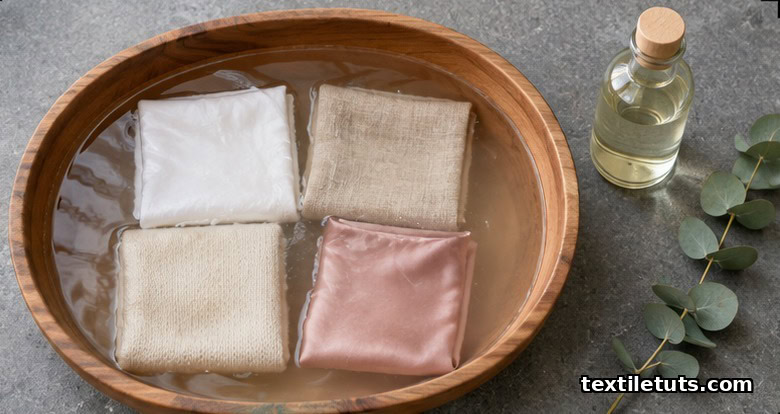
Natural Cellulose Fibers: Cotton and Linen
Cotton and linen are the most durable natural fibers and tolerate higher wash temperatures than any other fabric type. White cotton can be washed at 60°C (140°F) to eliminate bacteria and dust mites — the temperature required by healthcare laundry standards (EN 14065) for hygienic treatment. Colored cotton and linen should be washed at 30–40°C to preserve colorfastness — enzyme-based detergents at 40°C effectively remove protein stains (grass, blood) without the damage of oxygen bleach.
Cotton and linen shrinkage occurs when untreated fabrics are washed in hot water. Untreated cotton can shrink 3–5% on the first hot wash, and linen up to 3%. This is why Sanforizing (pre-shrinking) is standard practice for quality cotton garments — always check whether a garment has been pre-shrunk before washing. Agitation can be normal to vigorous for woven cotton and linen. Jersey-knit cotton (t-shirts, loungewear) should be washed on a normal cycle — excessive agitation causes pilling, especially on ringspun cotton fabrics.
For cotton and linen wash settings: normal agitation, 40°C for colors (30°C for dark or reactive-dyed items), enzyme-based detergent, and always check the care label for specific guidance on mercerized or special-finish fabrics.
Protein Fibers: Wool, Cashmere, and Silk
Protein fibers are chemically distinct from cellulose fibers and demand entirely different care. The amino acid structure that makes wool warm and soft also makes it chemically reactive: heat plus agitation causes the scales of the wool fiber to interlock in a process called felting, which is irreversible. Once wool felts, it cannot be un-felted — the garment is permanently ruined.
Wool and cashmere must be washed in cold water (max 30°C) on the gentlest machine cycle available, or by hand. Use a detergent specifically formulated for wool — these are pH-neutral and free of proteolytic enzymes. Standard enzyme detergents digest the keratin protein in wool and silk, causing structural damage that weakens fibers and creates holes over time. Cashmere, being finer than wool, is even more sensitive and benefits from the delicate or hand wash cycle with a mesh laundry bag.
Silk is technically a protein fiber but behaves differently from wool because it is not structured the same way. Silk lacks the scales that cause felting, so it tolerates slightly more handling — but it is extremely prone to water spotting (mineral deposits from hard water) and can lose color in hot water. Wash silk in cold water, either by hand or on a gentle machine cycle, with a wool-wash detergent. Never wring silk — roll it in a towel to remove excess moisture.
Synthetic Fibers: Polyester, Nylon, and Acrylic
Polyester (PET), nylon (polyamide), and acrylic are manufactured from petroleum-based polymers. Their primary vulnerability is heat: polyester begins to deform at 70°C (158°F) and will melt at temperatures above 200°C, causing shiny patches that cannot be repaired. Nylon is slightly more heat-tolerant but still degrades at sustained temperatures above 100°C. Wash synthetics at 30–40°C.
Standard agitation is safe for most synthetic fabrics. However, microfiber (a type of polyester with very fine filaments) requires gentle handling — its high surface area makes it prone to picking up lint from other fabrics, and harsh agitation can damage the filaments. Wash microfiber separately on a gentle cycle.
Synthetic fabrics shed microplastics during every wash cycle. Studies published in Environmental Science & Technology have documented that a single synthetic garment can release 100,000–700,000 microfibers per wash. Use a Guppyfriend wash bag or Cora Ball to capture microfibers, or install a washing machine filter.
Semi-Synthetic Fibers: Rayon, Viscose, Modal, and Tencel
Rayon (also called viscose), modal, and Tencel (lyocell) are made from regenerated cellulose — wood pulp that has been chemically processed into soft, drapey fibers. These fabrics share cotton’s plant-based origin but are much more fragile when wet. Viscose loses up to 40% of its tensile strength when saturated, making it extremely prone to tearing if handled roughly during washing. This property is called wet tenacity loss.
Rayon, modal, and Tencel require gentle cycle in cold water (max 30°C), using a gentle detergent without enzymes. Never wring or twist these fabrics — instead, press water out by rolling in a towel. Tencel is more dimensionally stable than viscose and tolerates machine washing better, but still benefits from a gentle cycle. Tencel also has a unique property: it can be machine-washed on a delicate cycle without the same risk of damage as viscose, making it a more practical choice for everyday garments.
Delicate Wovens: Chiffon, Lace, Velvet, and Embroidered Fabrics
Chiffon, lace, and embroidered fabrics share one rule: hand wash or use a delicate machine cycle in a mesh laundry bag. Chiffon is a plain-weave fabric with very fine yarns and low tear strength — any snag or pull destroys it. Lace, whether made from cotton or synthetic fibers, has an open structure that snags easily. Velvet (particularly silk velvet) crushes and marks with pressure. Embroidered fabrics have thread that can catch on anything.
For velvet garments, dry cleaning is almost always the best choice. If machine washing is unavoidable (some cotton velvet blends tolerate it), place the item in a mesh bag, wash on the coldest, gentlest cycle, and never wring — roll in a towel and reshape while damp. For lace and embroidered items, hand washing in cold water with a wool-wash detergent preserves the structure and surface better than machine washing.
Drying by Fabric Type
Drying is where many garments meet their end — either from excessive heat causing shrinkage and fiber damage, or from improper technique causing distortion and stretching. The drying method is often as important as the wash method, and it is where many care labels give incomplete guidance.
| Fabric | Tumble Dry? | Heat Setting | Best Drying Method |
|---|---|---|---|
| Cotton | Yes | Low-medium | Tumble or line dry |
| Wool | NO | — | Flat dry always |
| Silk | NO | — | Hang or flat dry, away from sun |
| Linen | Low heat only | Low | Line dry preferred |
| Polyester | Yes | Low | Tumble or hang |
| Cashmere | NO | — | Flat dry only |
| Rayon/Viscose | NO | — | Hang dry, reshape when damp |
| Denim | Yes (loses color) | Low | Turn inside-out; tumble or line |
| Fleece | Low only | Low | Tumble on low |
Tumble drying subjects fabrics to both heat and mechanical agitation — the combination that makes wool felt and causes synthetic fibers to pill. The safest approach for unknown fabrics is line drying or flat drying, which eliminates mechanical stress entirely. If you must tumble dry, always use the lowest heat setting and remove items while they are still slightly damp to prevent over-drying.
Over-drying causes fiber embrittlement in cotton and linen. ASTM D2822 and related standards define optimal moisture content for textiles, and exceeding it by as little as 2–3% can cause fiber embrittlement in cotton and linen, and static buildup in synthetics. Use a moisture-sensing dryer setting when available, or remove items at the “still slightly damp” stage and allow to air dry the final portion.
For knits — cotton t-shirts, wool sweaters, cashmere cardigans — flat drying on a clean towel is essential. Hanging wet knits stretches the fabric permanently at the shoulder line, creating the characteristic “hanger bump” that no amount of reshaping can fully repair. Cashmere and fine wool must be dried flat on a towel, away from direct heat, to maintain their shape and loft.
Ironing by Fabric Type
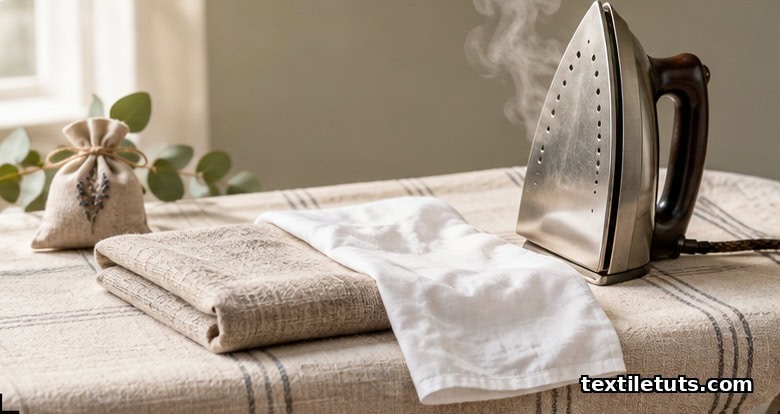
Ironing at the correct temperature prevents the two most common ironing disasters: scorching (melted fibers on cotton and linen) and shine (flattened fiber surfaces on synthetics and wool). The dot system used in care labels corresponds directly to specific temperatures defined by ISO 3758.
| Setting | Temperature | Fabrics |
|---|---|---|
| 1 dot (•) | 110°C / 230°F | Silk, wool (with cloth), acrylic, nylon |
| 2 dots (••) | 150°C / 300°F | Polyester, rayon, viscose |
| 3 dots (•••) | 200°C / 390°F | Cotton, linen |
Wool must always be ironed with a damp pressing cloth between the iron and the fabric. Direct contact at 110°C+ flattens the fiber scales and creates a shiny patch that is permanent. Place a clean, damp cotton cloth (or a press cloth specifically designed for wool) over the garment, and iron through it. The moisture in the cloth creates steam, which relaxes the wool fibers without direct heat damage.
Silk should be ironed inside-out on the lowest heat setting (110°C, one dot). Steam causes water spots on silk — mineral deposits left behind when water droplets evaporate. If you must iron silk on the face side, use a dry iron with a pressing cloth. Never spray water directly onto silk, as this creates the exact water-marking problem you’re trying to avoid.
Linen responds best to ironing while still slightly damp. The moisture penetrates the thick linen fibers and allows the iron to reshape them effectively. If the garment has dried completely, use a steam iron on the linen setting, or dampen it with a spray bottle before ironing. Wrinkled linen at 200°C produces crisp results — lower temperatures simply won’t relax the fibers sufficiently.
Velvet should never be pressed with a flat iron — the direct heat and pressure crush the pile permanently, leaving a shiny, flattened mark. Use a velvet board or a steamer instead. Hold the steamer 2–3 inches away from the fabric and allow the steam to relax the fibers without crushing them. For silk velvet, professional steaming is recommended.
Polyester begins to melt and fuse at 150°C+. At 150°C+ (two dots and above), polyester fibers begin to soften and can fuse together, creating shiny patches that cannot be reversed. If you see a shine appear on polyester mid-iron, stop immediately — the fiber has begun to melt. Allow it to cool completely; some recovery is possible with re-washing and careful re-ironing at a lower temperature.
Storage by Garment Type
Proper storage prevents the two most common off-season disasters: moth damage and moisture damage. Both are entirely preventable with the right approach. The cardinal rule: always clean garments before storing them, even if they look perfectly clean.
Knitwear: Wool, Cashmere, and Cotton Knits
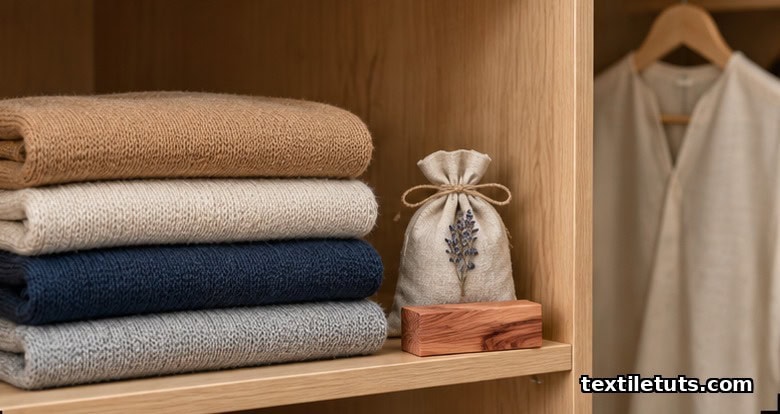
Knitwear must be folded, never hung. The weight of a wet or heavy knit sweater stretches the fabric at the shoulder hanger points, and the resulting distortion is permanent — it cannot be fixed by reshaping or blocking. Fold knits with tissue paper between layers to prevent creasing and maintain the garment’s structure.
Body oils are the primary food source for clothes moths (Tineola bisselliella). A sweater that “looks clean” after a season’s wear may still contain enough skin cells, sweat residue, and natural fibers to attract and sustain a moth infestation. Wash or dry clean all wool and cashmere before long-term storage. Place cedar blocks or lavender sachets in the storage area — these are behavioral deterrents that discourage moth egg-laying. Do not use mothballs: they contain naphthalene or paradichlorobenzene, which are toxic, leave persistent odors, and are classified as carcinogens.
Structured Garments: Suits, Blazers, and Dresses
Structured garments need shaped support to maintain their form. Use hangers that match the shoulder width and have a crossbar for trousers. Allow 24–48 hours between wearings for the fabric to recover from body moisture and stress — this is especially important for wool and linen suits, which can develop shine marks at stress points if worn on consecutive days.
Use cotton garment bags for suits and blazers during travel or seasonal storage. Never use plastic — it traps moisture and creates conditions for mold and mildew growth. Cotton allows the fabric to breathe while still protecting against dust and light, which can fade dark fabrics over time.
Seasonal Storage
For long-term storage, vacuum bags are highly effective for reducing volume and protecting against humidity and moths — but only for durable fabrics like cotton, polyester, and nylon. Delicate fibers like wool, cashmere, and silk should not be compressed in vacuum bags, as the pressure can damage fiber structure and create permanent creases that are difficult to remove.
Cedar and lavender deter moths, but they do not kill existing larvae. If you have had a moth infestation, wash all affected items at 60°C or higher (which kills larvae and eggs) before storage. Place new items in clean storage containers. Monitor with pheromone traps to detect any new activity.
Common Fabric Care Mistakes (and What They Cost You)
The most expensive laundry mistakes are also the most common. Each one is entirely preventable with the right knowledge:
- Machine washing “dry clean only” garments: Solvent-based cleaning relaxes finishes and structures that water-based washing cannot preserve. Dry clean only means just that. The cost: a ruined blazer lining, a felted cashmere sweater, a shrunken silk blouse.
- Using hot water on colored or dark fabrics: Hot water opens fiber pores and accelerates dye bleeding. Studies on reactive dyeing (the most common dye method for cotton) show color loss increases by up to 400% at 60°C compared to 30°C in the first wash. Cold water preserves both color and fit.
- Leaving wet clothes in the washing machine: A 4-hour delay between wash end and unload creates anaerobic bacterial growth (mold, mildew) that produces the musty smell associated with “sour” laundry. This smell embeds in fibers and requires a 60°C wash with an enzymatic laundry cleanser to remove. Prompt unloading is free; the remedy costs time and product.
- Over-drying in a tumble dryer: Running a dryer until clothes are “fully dry” creates a cycle of over-heating and fiber stress. Cotton overdried by just 3% moisture content becomes measurably harsher and weaker. Use the moisture-sensor setting or remove items at “slightly damp” — they finish air drying in 15–30 minutes.
- Hanging knit sweaters: The stretching caused by hanging a wet knit sweater is immediate and irreversible. The shoulder distorts within hours and cannot be reshaped without wetting and flat drying. The fix costs the garment’s lifespan.
- Ignoring pilling: Pills (tangled fiber balls on fabric surfaces) spread from friction points to the entire garment if untreated. Removing pills with a fabric shaver or de-pilling comb when they first appear prevents the underlying fibers from being torn out, which thins the fabric. Ignoring pilling accelerates surface wear and can reduce garment life by 30–50%.
Complete Directory: Every Fabric Care Article on TextileTuts
Browse our complete collection of fabric-specific care guides, organized by category. Each spoke article links back to this hub using the anchor “complete fabric care guide” — whenever you finish one of these guides, you will always find your way back to the full reference.
Washing by Fabric Type
- How to Wash Wool Clothes
- How to Wash Silk at Home
- How to Wash Linen
- How to Wash Cashmere
- How to Wash Velvet Clothes
- How to Wash a Down Jacket
- How to Wash Denim Jeans
- How to Wash Cotton T-Shirts
- How to Wash Synthetic Fabrics
- How to Wash Nylon Fabric
- How to Wash Lace
- How to Wash Embroidered Clothes
- How to Wash Athletic Wear
- How to Wash Acrylic Clothes
- How to Wash Modal and Tencel
- How to Wash Fleece
Drying by Fabric Type
- Can You Put Wool in the Dryer?
- Can You Put Silk in the Dryer?
- Can You Tumble Dry Linen?
- Can You Dry Cashmere in the Dryer?
- How to Dry Clothes Without a Dryer
- Why Clothes Smell After Air Drying
Ironing by Fabric Type
- How to Iron Silk
- How to Iron Wool
- How to Iron Linen
- How to Iron Polyester
- How to Iron Velvet
- Iron Temperature Guide
- Steam Iron vs. Dry Iron
Storage by Garment Type
- How to Store Wool Sweaters Without Moth Damage
- How to Store Silk Clothes
- How to Store Leather Jackets
- Fold vs. Hang Clothes
- How to Store Clothes Long-Term
Frequently Asked Questions
What fabrics cannot go in the washing machine?
Untreated wool (risk of felting), silk (risk of water spotting and fiber damage), cashmere, most dry-clean-only garments, heavily embellished or embroidered items, and structured garments (blazers, suits). Some modern machines have delicate cycles that work for wool and silk with the right detergent.
What temperature kills bacteria in laundry?
60°C (140°F) is the minimum temperature to kill most bacteria and dust mites. However, few fabrics tolerate 60°C safely — only white cotton and linen. For delicate fabrics, add a laundry disinfectant designed for low-temperature washing.
How often should you wash clothes?
It depends on garment type. T-shirts and underwear: every wear. Dress shirts: 2–3 wears. Jeans: 5–10 wears. Outerwear: seasonally or when visibly dirty. Over-washing shortens garment life significantly.
Is fabric softener bad for clothes?
Fabric softener coats fibers with a lubricating film that reduces absorbency in towels and activewear, can cause buildup over time, and may stain certain fabrics if applied directly. Use sparingly or switch to wool dryer balls as an alternative.
References
- ISO. (2012). ISO 3758:2012 — Textiles — Care labelling code using symbols. International Organization for Standardization. https://www.iso.org/standard/30527.html
- AATCC. (2024). AATCC Technical Manual. American Association of Textile Chemists and Colorists. https://www.aatcc.org/standards
- Bouchard, J., et al. (2020). "Microplastic pollution from synthetic textiles: A focus on fiber shedding during laundering." Environmental Science & Technology, 54(19), 11760–11772. https://doi.org/10.1021/acs.est.0c03156
- Cotton Incorporated. (2023). Cotton Care and Repair Guide. https://www.cottonworks.com
- ASTM International. (2021). ASTM D2822 — Standard Specification for Artist’s Acrylic Emulsion Paint. https://www.astm.org
- European Committee for Standardization. (2002). EN 14065 — Textiles — Laundry-processed textiles for use in healthcare settings. CEN. https://www.cen.eu
- International Wool Textile Organisation. (2023). IWTO Specifications for Wool Care Labelling. https://www.iwto.org


