
How to Store Leather Jackets Without Cracking

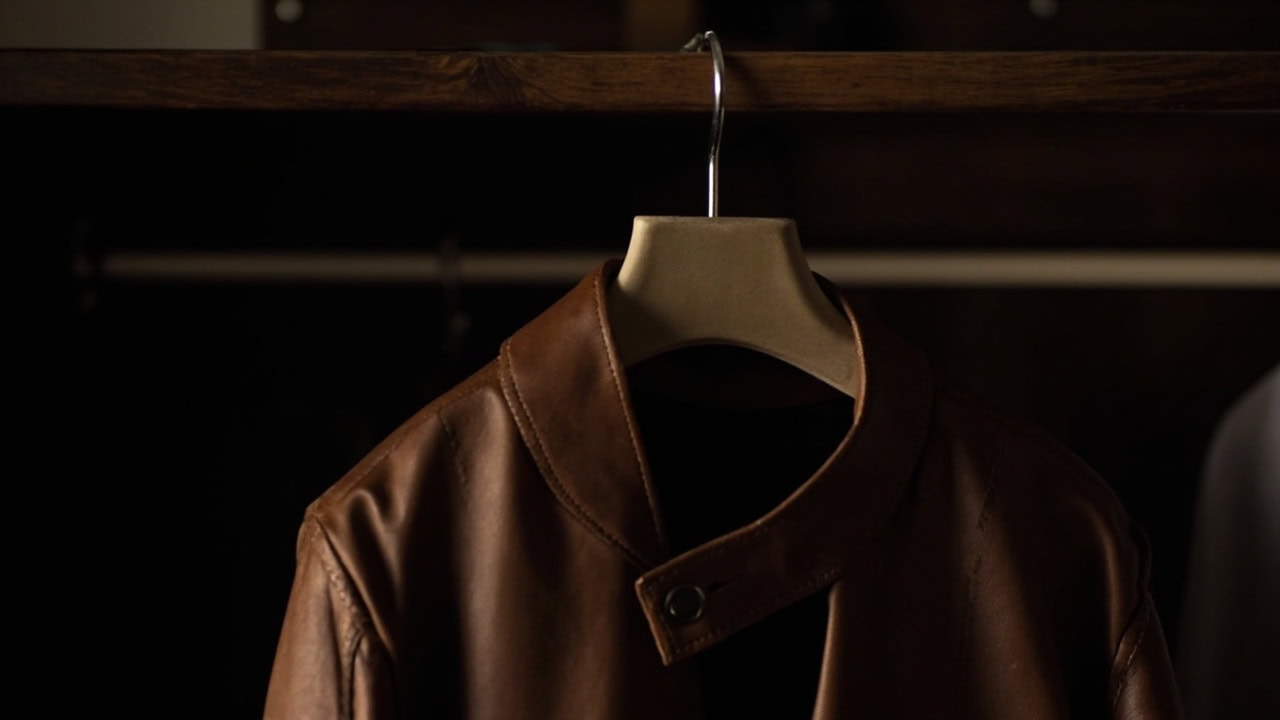
Leather jackets must be stored on broad-shouldered padded hangers in a cool, dark environment at 40–50% relative humidity to prevent cracking. Wire hangers create pressure points that lead to permanent creasing and surface cracking over time. The ideal storage temperature ranges between 15–21°C (59–70°F); leather stored below 30% humidity begins to lose moisture and develops surface cracks that cannot be repaired without professional reconditioning.
The collagen fibers within leather hide rely on natural lubricating oils—tallow, lanolin in untreated leather—to maintain flexibility. When these oils evaporate or are stripped by cleaning, the fibers become brittle and fracture under normal flexing. Unlike fabric, leather does not recover from deep creases, making prevention through proper storage and regular conditioning the only reliable strategy for maintaining a leather jacket’s lifespan.
Fold vs. Hang: Which Is Correct for Leather Jackets
Always hang leather jackets—never fold them. Folding creates sharp creases in the leather that become permanent cracks over time. Unlike fabric fibers that relax and recover from creasing, leather collagen fibers fracture under sustained folding pressure. The deformation is irreversible and typically requires costly professional repair or replacement.
Broad-shouldered padded hangers are non-negotiable for proper leather jacket storage. Wire, wire-coated, or narrow hangers create pressure points that deform leather permanently by concentrating the jacket’s weight into a small area. The shoulder structure of a leather jacket is engineered to distribute weight along its natural contours—wire hangers bypass this design and create indentations that become permanent wrinkles. Cedar hangers offer the additional benefit of natural moth repellent and light moisture absorption, making them an excellent choice for leather garment storage.
The width of the hanger should match or exceed the shoulder span of the jacket. Padded hangers covered in velvet or similar non-abrasive materials prevent shoulder dimpling and maintain the jacket’s original silhouette through seasons of storage.
Optimal Storage Conditions for Leather Jackets
Leather requires a specific balance of temperature, humidity, and light exposure to remain supple. Deviations from these parameters in either direction cause measurable degradation:
| Factor | Optimal Range | Below Minimum Risk | Above Maximum Risk |
|---|---|---|---|
| Temperature | 15–21°C (59–70°F) | Leather fibers contract, natural oils congeal and fail to lubricate properly | Accelerated oil evaporation, leather becomes brittle and fades |
| Relative Humidity | 40–50% | Below 30%: leather dehydrates, surface micro-cracks appear in grain | Above 60%: mold growth, musty odor, surface staining |
| Light Exposure | Darkness or low light | Minor fading only | UV degradation causes fading, brittleness, surface oxidation |
Avoid attics, garages, and basements with temperature extremes—these spaces routinely exceed 27°C (80°F) in summer and drop below 10°C (50°F) in winter. Heated interiors in winter are particularly damaging because forced-air heating strips humidity from the air and by extension from the leather’s fibers. If your storage room is heated, consider placing a small humidifier nearby to maintain the 40–50% relative humidity threshold. Fluorescent lighting also emits low-level UV radiation that degrades leather over extended exposure, making closet storage preferable to open shelving in lit rooms.
Storage Containers and Materials
Breathable cotton garment bags are the correct choice for dust protection while allowing air circulation. Never use plastic garment bags—plastic traps moisture and causes leather to sweat, creating the exact conditions that lead to mold growth and surface deterioration. Leather is a porous material that absorbs and releases moisture to maintain equilibrium with its environment; sealing it in plastic disrupts this breathability and accelerates decay.
Closet shelving made from natural wood or metal with adequate ventilation is ideal—air circulates on all sides of a hanging jacket, maintaining consistent humidity around the garment. If you must use storage boxes for long-term off-season storage, line the bottom with acid-free tissue paper and place the jacket on top without folding; never store leather directly in cardboard, as the acidic compounds in cardboard migrate into leather and cause chemical damage to the hide.
Silica gel packets are highly effective at absorbing excess moisture and maintaining humidity balance within an enclosed storage space. Place two to three packets inside the closet or storage box, replacing them every three to four months or when they appear saturated. Never use newspaper or colored paper in direct contact with leather—the ink contains solvents that transfer onto leather grain and cause permanent staining.
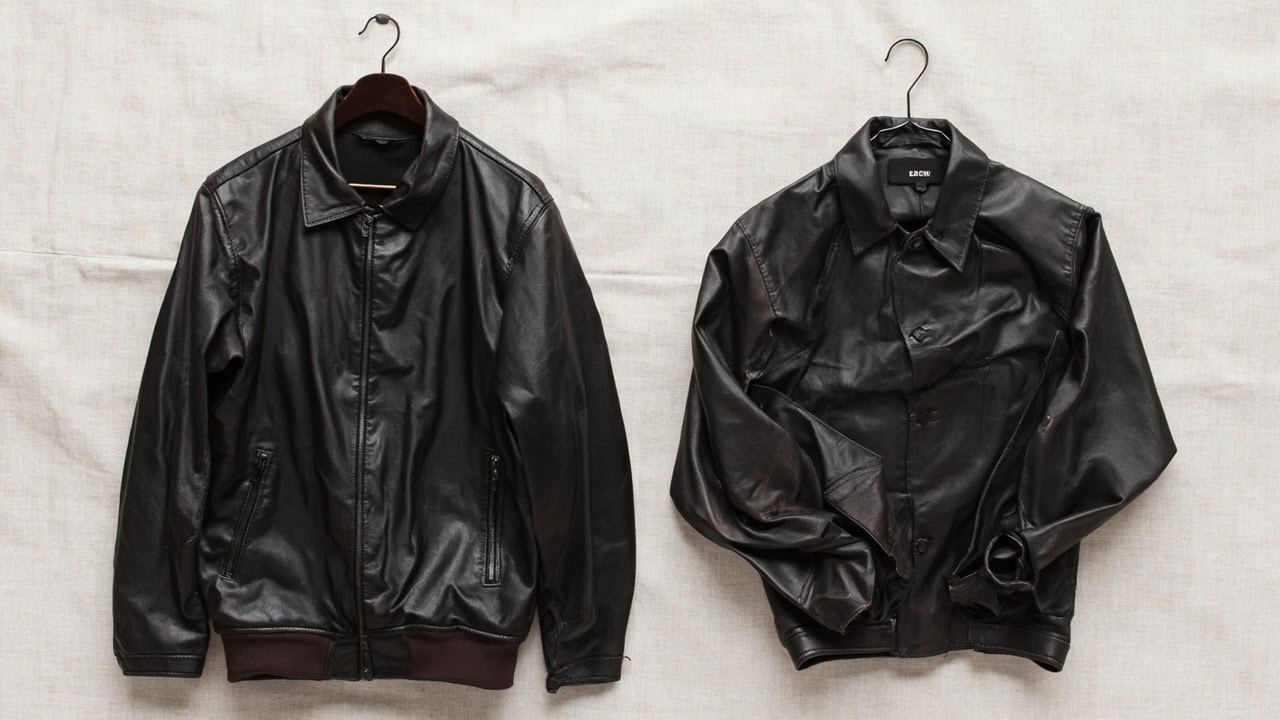
Before-Storage Preparation: The Critical Step Most People Skip
Cleaning and conditioning before storage is not optional—it is the step that determines whether your jacket emerges from storage in the same condition it entered. Body oils, sweat, and dirt left on leather accelerate deterioration during storage because organic compounds provide a food source for mold and cause localized degradation of the hide’s surface finish.
Use a leather-specific cleaner applied with a soft cotton cloth, working in circular motions across all surfaces including the underside of the jacket, the collar, and inside the cuffs where body oils concentrate most heavily. After cleaning, apply a leather conditioner while the surface is still slightly warm—this opens the pores of the leather and allows deeper penetration of the conditioning oils into the collagen fiber matrix. Allow the conditioner to fully absorb for 24–48 hours before hanging the jacket for storage; rushing this step leaves excess conditioner on the surface that can attract dust and cause surface tackiness.
Check all pockets for items that can create bulges, transfer stains, or attract pests—coins, pens, tissues, and food debris are common offenders. Ensure the jacket is completely dry before storage; wet leather combined with storage conditions creates a near-guaranteed mold scenario within two to four weeks.
Long-Term Storage Considerations
For storage periods exceeding one season, additional measures preserve the jacket’s structural integrity and appearance:
- Use padded hangers with velvet or similar non-abrasive covering to prevent shoulder distortion over months of hanging
- Button all snaps and zippers before storage to maintain the jacket’s intended shape and prevent the front panels from pulling outward
- Stuff sleeves lightly with acid-free tissue paper to prevent the sleeve from collapsing inward and developing permanent creasing creases along the fold
- Cover with a breathable cotton bag after all preparation steps are complete—this keeps dust off while allowing continued air circulation
- Inspect every 3–4 months for signs of mold (white or greenish fuzzy patches), unusual dryness, or pest activity (holes, droppings, shed skins)
- Recondition leather every 6 months during extended storage to replenish natural oils lost to environmental humidity gradients
Preventing Leather Cracking: The Moisture Principle
Leather cracking is caused by dehydration of the hide. The collagen protein fibers that give leather its tensile strength are suspended in a matrix of natural oils—primarily tallow (rendered animal fat) and lanolin (wool wax) in unfinished leathers—that keep them flexible and resistant to fracture under flexing. When these oils evaporate or are removed by cleaning agents, the fibers lose their lubricating matrix and begin to rub against each other with each flex of the garment, generating heat and eventually fracturing at the microscopic level. These micro-fractures coalesce into visible surface cracks, typically starting in high-flex areas like the elbows, shoulders, and creases.
Environmental dryness accelerates moisture loss from leather. Heated interiors during winter are particularly damaging—forced-air heating reduces relative humidity to 20–30% in typical homes, far below the 40–50% threshold leather requires. In these conditions, a humidifier in the storage room is not an luxury; it is a necessity for long-term leather preservation. Conversely, storage above 60% humidity creates conditions for mold growth, which produces enzymes that digest the leather’s protein structure, causing irreversible damage including pitting, discoloration, and structural weakening of the hide.
Cracked leather cannot be reversed. Professional leather reconditioning can soften the surrounding areas and make cracks less visually apparent, but fractured collagen fibers do not regenerate. The damage is permanent, making consistent preventive conditioning through a regimen of cleaning and conditioning before storage and every six months during storage the only reliable protection against cracking.
Frequently Asked Questions
Q: Can leather jackets be stored in plastic bags?
No — plastic garment bags trap moisture and cause leather to sweat, leading to mold growth and surface deterioration. Always use breathable cotton garment bags or store jackets openly in a closet with adequate air circulation. Plastic also prevents the natural humidity exchange that allows leather to maintain its moisture balance.
Q: Should leather jackets be stored folded or hanging?
Leather jackets must always be stored hanging on broad-shouldered padded hangers. Folding creates sharp creases that develop into permanent cracks — unlike fabric, leather does not recover from deep creases and may require costly professional repair. The irreversible nature of leather creasing makes hanging the only safe storage method.
Q: How do I prevent my leather jacket from cracking in storage?
Maintain 40–50% humidity in your storage area and apply leather conditioner before storing. Clean the jacket with a leather-specific cleaner, apply conditioner to restore moisture, allow 24–48 hours for full absorption, then hang on a padded hanger in a cool dark closet. Recondition every 6 months during long-term storage. Annual professional inspection is recommended for high-value leather garments.
Q: What causes leather to crack even when stored correctly?
Leather cracks primarily from dehydration — when natural oils in the hide dry out, the collagen fibers become brittle and fracture under normal flexing. Even proper storage cannot reverse existing cracks; they can only be prevented through regular conditioning. Age of the leather, quality of the hide, and frequency of conditioning also affect crack susceptibility. Some cracking may also result from exposure to heat sources like tumble drying, which causes rapid oil evaporation and fiber shock.
References
- Leather Hospitality East. (n.d.). Leather Care Guide. Retrieved from https://www.leatherhospitaleast.com
- Wikihow. (n.d.). How to Store a Leather Jacket. Retrieved from https://www.wikihow.com
- Cotton Incorporated. (n.d.). Textile Care and Maintenance Resources. Cottonworks.com.
- International Wool Textile Organisation. (n.d.). Care Labelling Standards for Textile Products. Retrieved from https://www.iwto.org


