
How to Wash a Down Jacket Without Ruining the Fill

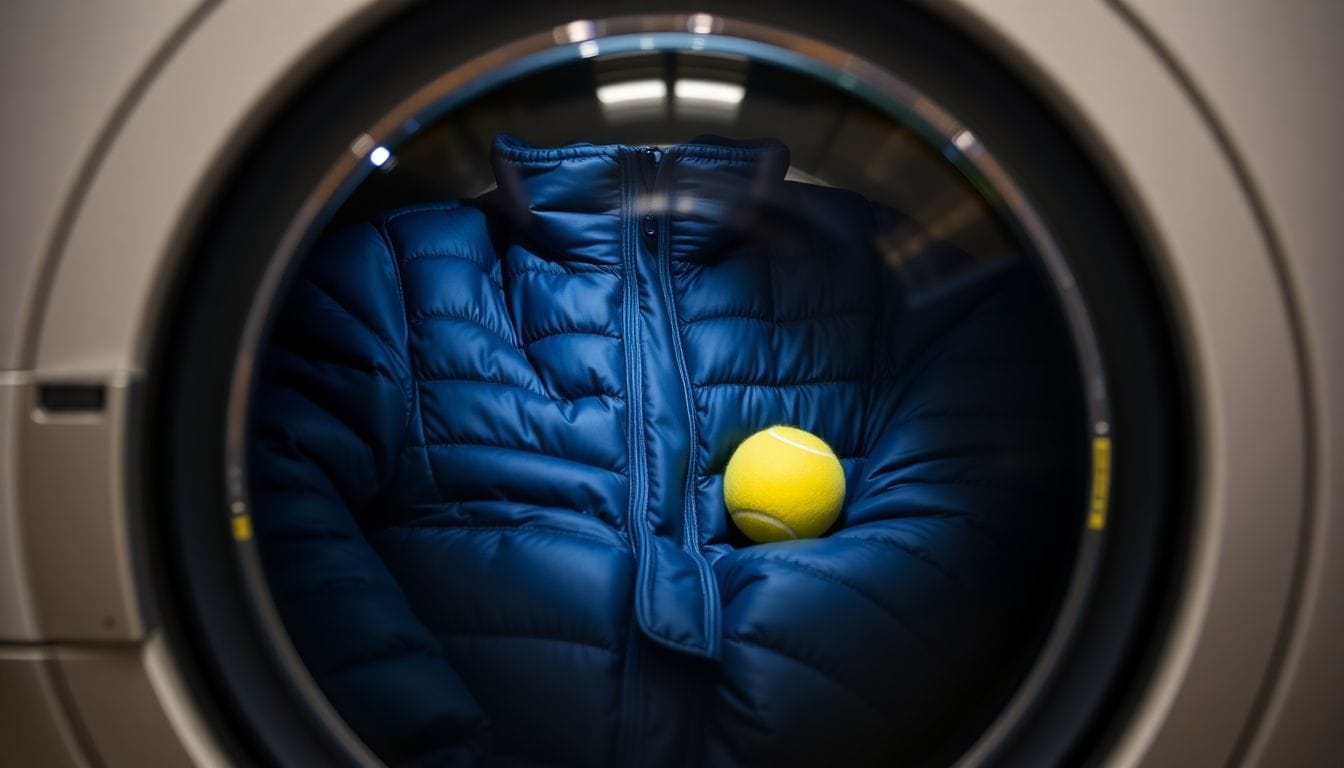
Washing a down jacket correctly comes down to three rules: use down-specific or technical-wash detergent (not regular detergent), dry on low heat with dryer balls or tennis balls to break up wet clumps, and never hand-squeeze or wring. Regular laundry detergent strips the natural oils from down clusters, causing them to clump permanently and lose their insulating loft. Drying without tennis balls also causes permanent clumping. When done correctly, washing actually restores loft — the down expands as it dries.
Why Down Jackets Need Special Washing (The Loft Problem)
Down fill consists of clusters of soft inner feathers from ducks or geese — not the quill-bearing outer feathers. These clusters have a three-dimensional structure that traps air, creating the insulation that makes down jackets warm. The warmth of a down jacket is determined by its fill power (FP) rating, which measures the volume in cubic inches that one ounce of down occupies under a standardized test. You can learn more about fill power measurement on Wikipedia.
Fill power ranges from approximately 400 FP (utility grade) to 900 FP (premium cold-weather gear). The most common ranges encountered in consumer outerwear are:
| Fill Power Rating | Classification | Typical Use |
|---|---|---|
| 400–500 FP | Utility / Budget | Entry-level jackets, cost-effective insulation |
| 550–650 FP | Good | Most mid-range outdoor jackets |
| 650–800 FP | Premium | Technical outdoor gear, expedition jackets |
| 800–900 FP | Ultra-Premium | Lightweight technical gear, cold-weather expedition |
The critical property of down clusters is their natural oils. These oils — produced by the bird — keep each cluster separate from its neighbors, allowing them to fluff up and trap maximum air. When the oils are stripped away, clusters lose their ability to separate and rebound. They compress and clump permanently, creating cold spots in the jacket where no air is trapped.
Standard laundry detergents are formulated to cut through body oils, sweat, and fabric soils on everyday garments. These surfactants are too harsh for down’s natural oils. The same chemistry that makes regular detergent effective on cotton or synthetic fabrics destroys the delicate lipid layer that keeps down clusters fluffy. Once those oils are gone, no amount of washing or drying will fully restore the down’s original loft.
The second threat is mechanical: wet down without proper drying support compresses under its own weight. As water evaporates from clumped clusters, the clusters themselves harden into knots. By the time the jacket is fully dry, these knots are permanent — the jacket will never loft properly again.
How Often to Wash a Down Jacket
For frequently worn outerwear, wash a down jacket 1–2 times per season. This is sufficient for jackets worn as daily winter outerwear in moderate climates. More frequent washing is warranted after high-intensity activities where heavy sweating occurs — body oils and perspiration degrade down fill more aggressively than the washing process itself.
Between full washes, spot-clean the outer shell with a damp cloth and a trace of down-specific detergent on any stained areas. For other down gear, consult our down pillow care guide which covers the same principles. To refresh the jacket between wears without a full wash, place it in a tumble dryer on low heat for 15 minutes with 2–3 dryer balls. This fluffs the down and drives out accumulated moisture and odours without the wear of a full wash cycle.
Never use fabric softener on a down jacket under any circumstances. Fabric softener coats down clusters with a waxy residue that clogs the cluster structure, reducing loft and breathability simultaneously. The residue is extremely difficult to remove and can permanently affect the jacket’s insulating performance.
Machine Washing a Down Jacket: Step-by-Step
What You Need
- Front-loading washing machine — top-loading machines with an agitator can damage down fill and tear jacket baffles (the internal chambers that hold the down in place)
- Down-specific detergent — Nikwax Down Wash Direct, Granger’s Down Wash, or Gear Aid ReviveX are the three most widely available dedicated products. These are pH-neutral, contain no optical brighteners or fabric softeners, and are specifically formulated to preserve the natural oils in down clusters
- 2–3 clean tennis balls or dedicated wool dryer balls — for the drying phase
Washing Steps
- Close all zips, velcro closures, and snaps. This prevents the hardware from catching on the jacket’s shell fabric or the machine drum during the wash and spin cycles.
- Empty all pockets completely. Forgotten items in pockets can cause uneven distribution of the jacket in the drum, leading to unbalanced loads that damage both the jacket and the machine.
- Turn the jacket inside-out. This protects the Durable Water Repellent (DWR) coating applied to the outer shell fabric. DWR is a fluoropolymer treatment (a synthetic polymer that creates a water-resistant barrier) applied to the face fabric; turning inside-out reduces mechanical abrasion on the DWR layer during the wash cycle.
- Place jacket alone or with one similar item in the drum. Down jackets need room to move freely. Overcrowding the machine prevents proper soil suspension and creates excessive mechanical stress on the baffles and seams.
- Add down-specific detergent at half the normal dose. Less is more with down detergent — using too much leaves residue in the down clusters, which can cause clumping and odours as residues ferment. For a standard front-loader, use approximately 25–35 ml (one capful) of concentrate.
- Select gentle/delicate cycle, cold or cool water (maximum 30°C / 86°F), and slow spin speed. High temperatures cause the natural oils in down to oxidize and degrade. The gentle mechanical action minimizes stress on jacket baffles. A slow spin speed (400 rpm or less) reduces the compressive force applied to the wet fill.
- Run an extra rinse cycle. Detergent residue remaining in the down clusters after the wash cycle causes clumping as the jacket dries. The extra rinse ensures all surfactant is flushed from the fill before drying begins.
Drying the Down Jacket (The Critical Phase)
Tumble drying is required — not optional. Air-drying a wet down jacket, even in ideal conditions, leads to permanent clumping. The tumble dryer’s warmth reactivates the DWR coating on the shell, while the mechanical action of the dryer balls breaks up wet clumps as the down dries from the inside out.
After proper drying, store your down gear correctly with our down gear storage guide to maintain loft between seasons.
Tumble Drying Steps
- Place the jacket in the tumble dryer with 2–3 tennis balls or wool dryer balls. The balls bounce against the jacket exterior, mechanically breaking up wet clumps from the outside as they form. This mimics the hand- kneading process that professional cleaners use.
- Set to LOW heat only. High heat (>50°C / 122°F) will melt or damage synthetic shell fabrics, degrade the DWR coating, and can cause the down itself to lose some of its natural oils through oxidation. Many dryers have a dedicated “air dry” or “no heat” setting — this can be used for the initial phase, followed by low heat to complete drying and reactivate DWR.
- Run a full drying cycle. A standard jacket typically requires 60–90 minutes on low heat. Heavy expedition jackets with 800+ FP fill may require up to 2–3 hours. The drying time depends on the jacket’s total weight and the fill power — higher-fill-power jackets trap more air and dry more slowly.
- Stop the dryer every 20 minutes, remove the jacket, and manually break up any clumps from outside the jacket. Grip the clumped sections through the fabric and work the fill apart with your fingers. This step is essential — dryer balls alone cannot reach internal clumps through the shell fabric.
- Check the jacket throughout: It should feel warm throughout when touched. No cold or damp patches should remain. Run your hand along all baffles and seams to feel for any remaining wet clumps.
- Continue drying until completely dry. Damp down develops a sour smell and will eventually mildew — a condition that cannot be reversed and permanently damages the down. If in doubt, run another 30-minute low-heat cycle.
- Squeeze test: Grip a filled section firmly and release. The down should spring back to its original shape immediately with soft, resilient loft. If the fill remains compressed or feels matted, return to the dryer with fresh tennis balls for another 30 minutes.
Can You Hand Wash a Down Jacket?
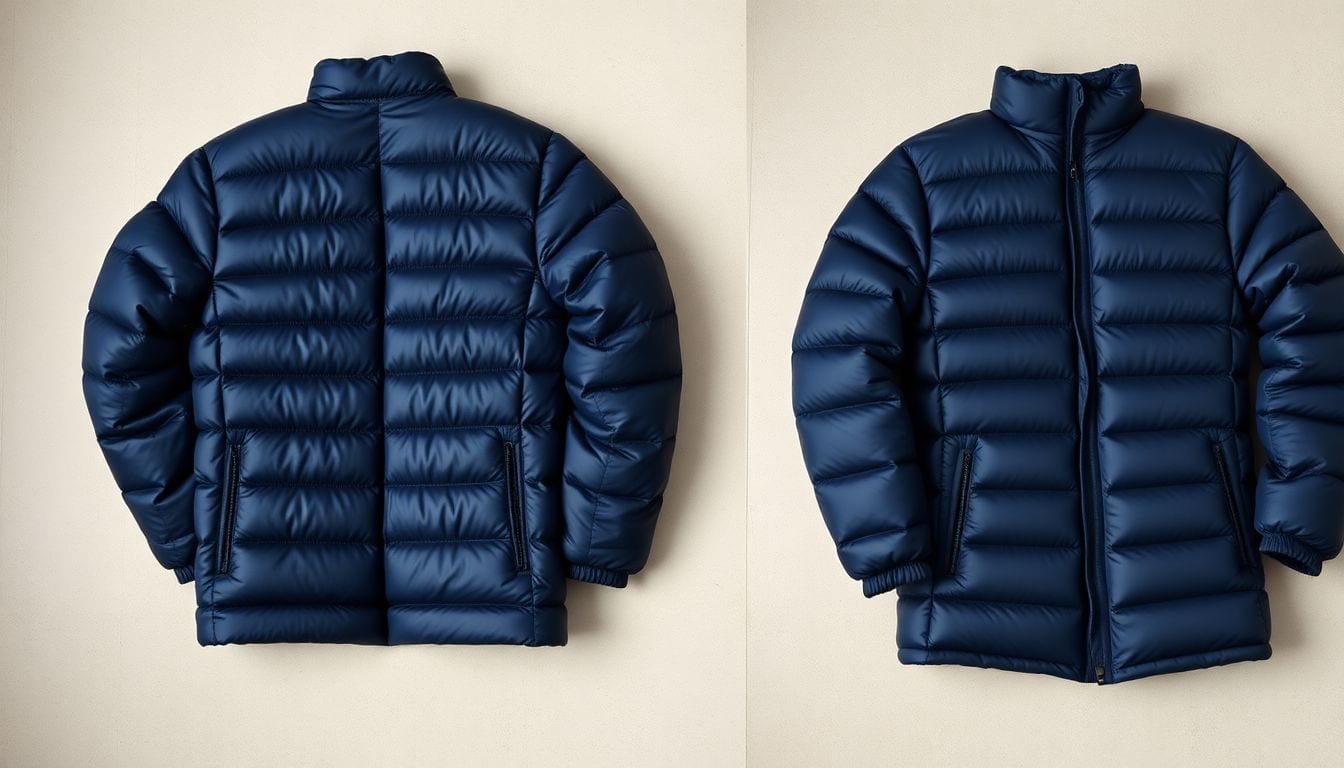
Technically, yes — but the results are reliably inferior to machine washing with tumble drying. Hand washing involves submerging the jacket in cold water with down-specific detergent, gently squeezing (never wringing or agitating) to work the detergent through, and thorough rinsing.
The maximum permissible mechanical action during hand washing is a gentle squeeze — pressing the water through the fabric without any twisting or scrubbing motion. Wringing the jacket, even slowly, can break the baffle stitching and damage the baffle chambers that hold the down in place.
The drying problem is the critical limitation of hand washing. Without a tumble dryer, the jacket must be laid flat and the clumps broken up manually every 30 minutes as it dries — a process that takes 24–48 hours under ideal conditions (warm, dry room with good air circulation). Even with diligent clump-breaking, the results are usually less uniform than tumble drying with tennis balls.
If you must hand wash without a dryer, lay the jacket on a clean white towel, reshape it to its original dimensions, and place a fan nearby for air circulation. Change the towel underneath every few hours. The jacket must be completely dry before storage — any residual moisture leads to mildew.
DWR Coating Care
The Durable Water Repellent (DWR) coating applied to the outer shell fabric of a down jacket causes water to bead up and roll off rather than soaking into the face fabric. This is the first line of defence against precipitation — before water reaches the waterproof membrane (if present) or the down fill itself. Learn more about DWR coatings and durable water repellency on Wikipedia.
DWR coatings degrade with each wash cycle and with general use. This is normal — the fluoropolymer or silicone polymer bonds (silicone-based water repellents are an alternative to fluorochemical treatments) that create the DWR effect break down over time through mechanical abrasion, UV exposure, and repeated contact with body oils and sweat. When DWR degrades, the outer fabric “wets out” — water soaks into the face fabric instead of beading, which makes the jacket feel heavy and clammy even when the membrane below is still waterproof.
Reactivating Existing DWR
After machine washing, the heat from tumble drying on low heat reactivates the existing DWR coating — the thermal energy causes the fluoropolymer or silicone molecules to reorient themselves to the fabric surface, partially restoring the beading effect. This is why it is important to use low heat rather than air-dry when washing a DWR-coated jacket.
Reproofing When DWR Has Degraded
When water soaks into the face fabric rather than beading — even after washing and tumble drying — the DWR has fully degraded and reproofing is necessary. Two categories of products handle this:
- Wash-in DWR (e.g., Nikwax TX.Direct Wash-In) — added directly to the washing machine during the rinse cycle. Flows through the entire garment, coating both the outer fabric and the down fill. Best for jackets where the DWR has degraded evenly across the whole garment.
- Spray-on DWR (e.g., Nikwax TX.Direct Spray-On, Granger’s Performance Repel) — applied directly to the outer face fabric only, typically on the shoulders and upper arms where wear is most pronounced. Allows targeted application without affecting the down fill below.
After applying spray-on DWR, always tumble dry on low heat to bond the treatment to the fabric. Wash-in DWR should be followed by a normal wash-rinse-dry cycle. Never apply DWR to a jacket that is not completely clean — the treatment bonds to the fabric fibres, and any oils or soils present will prevent proper bonding.
If you also own a synthetic insulated jacket, note that the care process differs — synthetic insulated jacket care does not require the same DWR considerations as down, since synthetic fills are not affected by stripped natural oils.
Frequently Asked Questions
Q: Can I wash a down jacket without a tumble dryer?
A: Yes, but results are inferior. Lay flat and break up clumps manually every 30 minutes as it dries — this process takes 24–48 hours. The down will loft again but may not restore as fully as tumble-dried fill.
Q: Why is my down jacket lumpy after washing?
A: Lumpy down means the fill wasn’t broken up during drying. Wet down clusters stick together; as they dry in a clump, they harden. Return the jacket to the dryer with tennis balls on low heat; stop every 20 minutes to manually break up lumps from outside.
Q: How often should I wash my down jacket?
A: Wash 1–2 times per year for regular-use outerwear. Over-washing degrades down faster than under-washing — spot clean when possible and reserve washing for when the jacket noticeably loses loft or becomes soiled.
Q: Can I dry clean a down jacket?
A: Avoid traditional dry cleaning for down — the solvent (perchloroethylene) strips down’s natural oils. Some specialist outdoor gear cleaners offer approved wet-cleaning services for down. Machine washing with down-specific detergent is safer.
References
Last updated: June 2026
- Wikipedia. (2024). Down feather — Fill power measurement. Wikimedia Foundation.
- Wikipedia. (2024). Waterproof fabric — DWR coatings and durable water repellency. Wikimedia Foundation.
- Patagonia. (2024). The Humble Down Jacket — Care and Maintenance Guide. Patagonia, Inc.
- Nikwax. (2024). Nikwax Down Wash Direct — Product Information. Nikwax Ltd.
- REI Co-op. (2024). Down Jacket Care — Expert Advice. RECREATIONAL EQUIPMENT, INC.


