
Can You Put Wool in the Dryer? The Risk Explained

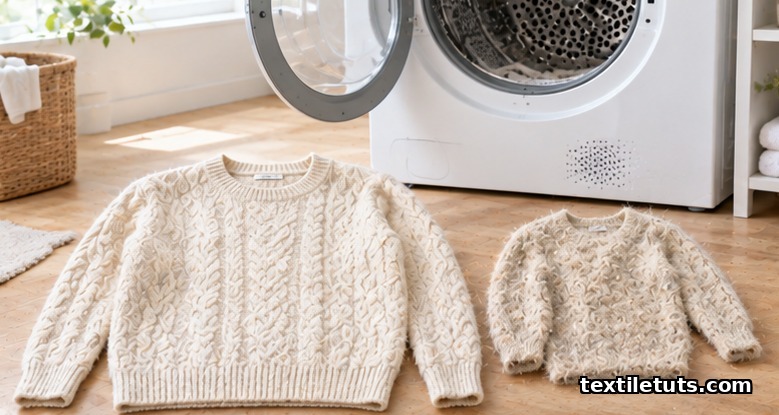
Never put wool in the dryer — heat above 30°C combined with mechanical tumbling causes irreversible felting shrinkage that cannot be stretched or reblocked back to the original size. Wool fibers are covered in microscopic cuticle scales that lock together when heated with agitation, making the fabric shrink, harden, and pill permanently. Even the air fluff or no heat setting carries risk because tumbling action alone can damage the fiber scales, leading to matting and shrinkage over time.
Direct Answer: No — Wool Should Never Go in the Dryer
The short answer is straightforward: do not put wool in the dryer under any normal household conditions. The risk level ranges from high to catastrophic, and the damage is irreversible. The dryer destroys wool’s dimensional stability and hand feel permanently — no amount of professional treatment can fully restore a felted wool garment to its original size and softness.
This applies to all pure wool garments, including Merino wool, which is often assumed to be more resilient due to its fine fibers. Wool blends with synthetic fibers reduce but do not eliminate the risk — the presence of synthetic material only lowers the threshold at which damage occurs. A garment labeled 40% wool and 60% polyester still carries meaningful felting risk, while a garment labeled 80% wool and 20% acrylic is nearly as vulnerable as pure wool.
Why Tumble Drying Causes Irreversible Damage to Wool
Wool fibers are covered in microscopic cuticle scales — essentially overlapping plate-like structures pointing outward, similar to roof shingles. This distinctive scale structure is what makes wool fabrics prone to felting shrinkage during washing and drying, seriously affecting the service life of wool products, according to research documented in peer-reviewed textile science literature.
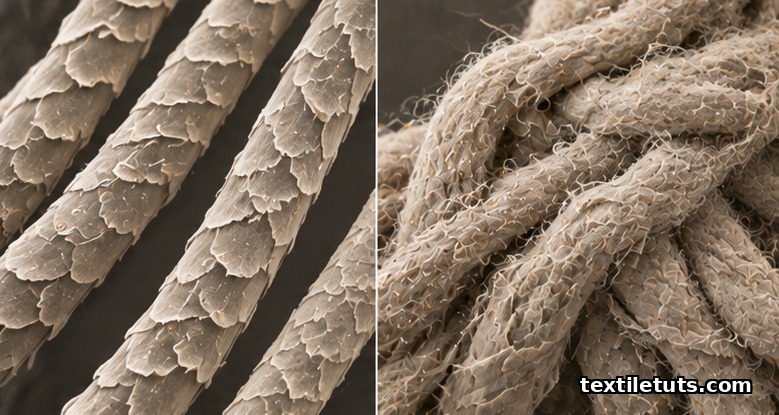
The felting process works in two stages. First, heat above 30°C (86°F) causes the cuticle scales to open and lift away from the fiber shaft. Then, the mechanical agitation of tumbling causes these raised scales to interlock and mat together. Once the scales have interlocked, the fibers cannot be separated — this is felting shrinkage, and it is permanent.
The International Wool Textile Organisation (IWTO), the global authority for standards in the wool textile industry since 1930, confirms that heat combined with mechanical action is the primary driver of dimensional instability in wool. The result of felting is a fabric that shrinks one to three sizes, becomes dense and hard to the touch, develops a rough and uneven texture, and loses all elasticity and drape.
Felting is fundamentally different from progressive shrinkage, which occurs in loosely constructed weaves when fibers relax. Felting is a chemical-mechanical process in which the fiber scales permanently fuse. No amount of stretching, conditioning, or professional treatment fully restores felted wool — the structural change at the fiber level is irreversible.
When Machine Drying Is Acceptable and When It Is Not
There are a narrow set of conditions under which machine drying is acceptable for wool-containing garments. These exceptions are limited and specific.
Acceptable only for:
- Wool blends with 60% or more synthetic fiber (polyester, acrylic, nylon) — the synthetic portion provides dimensional stability that resists shrinkage
- Garments labeled tumble dry with a specific wool cycle — only if your dryer has a certified wool or delicates cycle
- Supermarket wool treated to resist felting — still use low heat only, never high heat
Never acceptable for:
- 100% pure wool garments — including those labeled machine washable
- Wool blends with less than 60% synthetic content
- Merino wool — despite its fine fiber diameter, Merino scales felt at the same threshold as coarser wool
- Wool with special finishes including cashmere, angora, and mohair
- Any wool garment with a care label showing a square with a circle inside — this is the universal symbol for do not tumble dry
The key principle is that the Woolmark Company only approves tumble drying for garments that carry their explicit tumble dry care claim. Even then, a low heat setting or wool/delicates cycle is mandatory. If your garment lacks this specific instruction, flat drying is the recommended method.
Also Read:
- Can You Put Silk in the Dryer? What Really Happens
- How to Wash Wool Clothes Without Shrinking Them
- Can You Dry Cashmere in the Dryer? The Safe Answer
Understanding Your Wool Care Label Symbols
Care labels use standardized symbols to communicate acceptable treatment. For wool specifically, the drying symbols follow a consistent logic that every garment owner should recognize before attempting any drying method.
| Symbol | Meaning | Applies to Wool? |
|---|---|---|
| Square with circle inside, diagonal line through circle | Do not tumble dry — machine drying prohibited | All pure wool and low-synthetic blends |
| Square with circle, one dot inside | Tumble dry low heat | Supermarket wool blends with 60%+ synthetic only |
| Square with circle, two dots inside | Tumble dry medium heat | Not recommended for any wool |
| Square with wavy line inside | Dry flat — do not hang or wring | All wool knitwear and delicate items |
| Square with wavy line and hang drying symbol | Line dry or hang to dry | Woven wool only, not knitwear |
The square with circle inside is the most critical symbol to recognize. Its diagonal line through the circle means tumble drying of any kind — low heat, air fluff, or otherwise — is prohibited. This symbol appears on virtually all pure wool garments and indicates the manufacturer has determined the garment cannot withstand machine drying even under ideal conditions.
Always check the label before attempting any drying method. A garment that survived one tumble dry cycle will not survive a second — felting damage is cumulative, and the scales do not need to fully interlock to cause visible shrinkage.
How to Dry Wool Correctly: The Flat Dry Method
The flat dry method is the gold standard for drying wool garments. It preserves the garment’s shape, protects the fiber scales, and eliminates all risk of felting shrinkage. Follow these steps in sequence for best results.
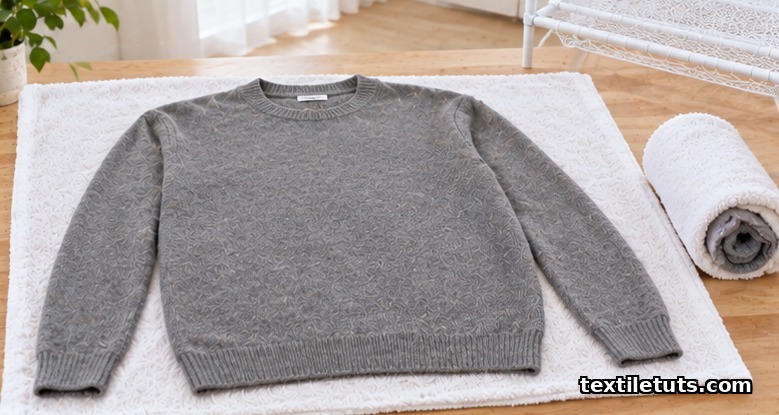
- After washing, gently press the wool garment between clean, dry towels to remove excess water — never wring, twist, or scrub wool, as this mechanically damages the fibers and encourages matting
- Lay a clean, lint-free pale or white towel on a flat surface away from direct heat or sunlight
- Place the wool garment on the towel in its original shape, gently kneading it into the correct dimensions
- Reshape by hand, stretching gently to the original measurements — this is your only opportunity to correct any minor shrinkage
- Roll the towel with the garment inside like a jelly roll to absorb remaining moisture without stressing the fibers
- Unroll and reposition the garment on a dry towel or mesh drying rack in a well-ventilated room
- Allow to air dry completely — typically 24 to 48 hours depending on humidity and garment weight — away from radiators, direct sunlight, or enclosed hot spaces
- Turn the garment over once during drying to ensure even air circulation on both sides
For knitwear specifically — particularly wool sweaters — the Woolmark Company recommends drying them flat to prevent stretching and loss of shape. Special garment drying mesh screens that fit over bathtubs can speed up the process without applying direct heat.
Speed Up Wool Drying: Safe Techniques
While air drying is the safest method, there are ways to accelerate the process without risking felting damage. The key principle is increasing air circulation and evaporation without adding heat.
- Place the garment in a well-ventilated room with a fan running to increase air circulation — moving air dramatically accelerates evaporation without heating the fibers
- Place the garment on a moisture-absorbing mat in a warm (not hot) room — the mat draws moisture away from the fabric without applying direct heat
- For lightly damp wool that is nearly dry: a hair dryer on the cool setting held 30cm (12 inches) or more away from the garment can safely speed remaining drying — never use heat on damp or wet wool
- Never place wool near radiators, in direct sunlight, or in an enclosed hot car or cupboard — uneven or excessive heat causes color change, fiber degradation, and can trigger felting in borderline cases
Wool Dryer Balls: Why They Pose Risks for Wool Care
Wool dryer balls have become a popular laundry accessory, marketed primarily for synthetic blends and cotton — not pure wool. The fundamental problem with using dryer balls on wool is that their primary mechanism of action is the bouncing impact against fabric, which increases mechanical agitation. This is precisely what you want to avoid with wool fibers.
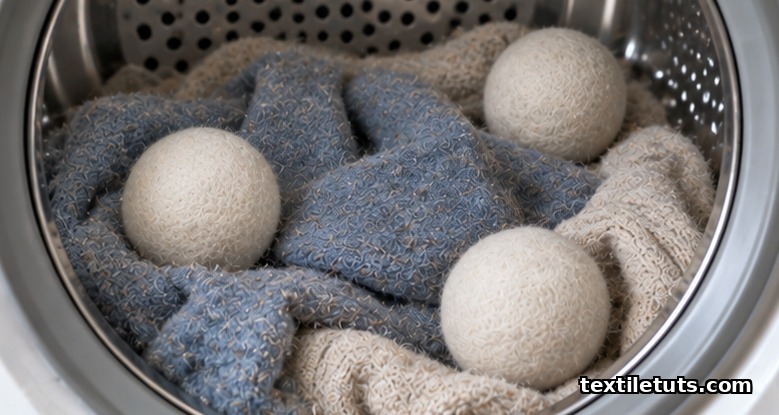
- Wool dryer balls work by bouncing against laundry to separate items and improve airflow — this bouncing action on wool increases agitation of the cuticle scales, raising the probability of interlocking and matting
- Even on low heat or air fluff cycles, the physical impact of dryer balls on wet wool fibers provides the mechanical component needed to initiate felting
- Use dryer balls only for synthetic wool blends with 60% or more synthetic fiber content, where the synthetic component absorbs the mechanical stress and maintains dimensional stability
- For pure wool garments: skip the dryer balls entirely and air dry flat — the minimal energy savings does not justify the risk of catastrophic shrinkage
Frequently Asked Questions
Air Fluff and No Heat Settings Still Damage Wool Fibers
Even on air fluff or no heat tumble dry, the mechanical agitation alone can damage wool fiber cuticle scales over repeated cycles. While heat is the primary felting driver, tumbling action also causes fibers to mat together, especially with heavier wet garments. For pure wool: always air dry flat.
Accidental Tumble Drying Causes Noticeable Shrinkage
A single accidental dryer cycle can cause noticeable shrinkage — half to one full size — in pure wool. Immediate action: while still damp, soak the garment in cold water with 2 tablespoons of hair conditioner for 30 minutes, then gently stretch it back to size on a flat surface. This can partially restore the garment but rarely returns it to original dimensions.
Supermarket Wool Tolerates Low-Heat Tumble Drying
Supermarket wool has a protective polymer coating that prevents scales from interlocking, making it more dryer-tolerant. Still, tumble drying superwash wool on low heat is recommended only — never high heat. Always check the garment label for specific instructions.
Wool Blends Require 60% Synthetic Content for Low-Heat Drying
Wool blends with 60% or more synthetic fiber (polyester, acrylic, nylon) can usually tolerate low-heat tumble drying because the synthetic fibers provide dimensional stability that resists shrinkage. Blends with less than 60% synthetic still carry significant felting risk and should be air dried.
References
- The Woolmark Company. (n.d.). Tumble Drying Wool. Retrieved from https://www.woolmark.com/care/tumble-drying-wool/
- The Woolmark Company. (n.d.). How to Dry Wool. Retrieved from https://www.woolmark.com/care/how-to-dry-wool/
- The Woolmark Company. (n.d.). Washing Instruction Symbols Explained. Retrieved from https://www.woolmark.com/care/washing-instruction-symbols-explained/
- International Wool Textile Organisation (IWTO). (n.d.). About IWTO — Global Authority for Wool Standards. Retrieved from https://www.iwto.org/
- McNeil, S. J., & Arndt, M. R. (1998). Proteolytic enzyme treatment to reduce felting in wool during laundering. Textile Research Journal. doi:10.1177/004051759806800604. Retrieved from PubMed.


