
How to Wash Athletic Wear and Activewear Without Ruining It

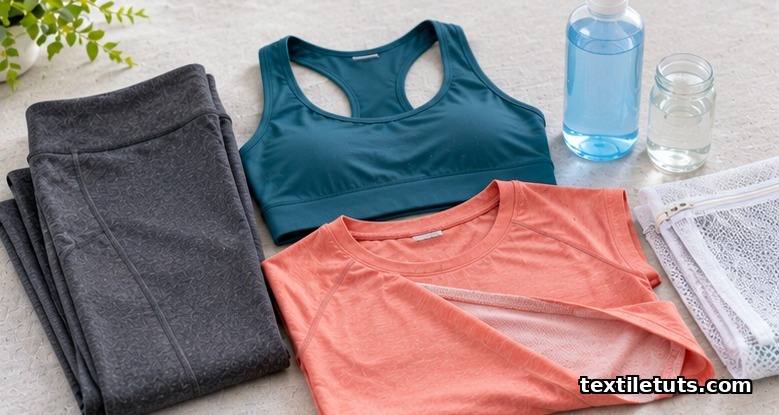
Activewear must be washed in cold water at 30°C or below, turned inside out, without fabric softener or dryer sheets — elastane fibers degrade above 40°C causing permanent stretch loss, and the cationic surfactants in fabric softener physically coat the microfiber moisture-wicking channels, destroying both performance properties irreversibly. Use a sport-specific detergent or plain liquid detergent on a gentle cycle, and always air dry flat or hang dry to preserve the elastane content that gives the garment its shape and recovery.
Why Activewear Needs Different Care from Regular Clothes
Most activewear is 85–90% polyester or nylon blended with 10–15% elastane (spandex/Lycra) — and each fiber type has a distinctly different failure mode under heat and chemical exposure. Understanding what your garment is made of is the first step to caring for it correctly.
Elastane (also called spandex or Lycra, depending on the trademark holder) is a polyurethane-based synthetic fiber. Its elastic recovery properties are supplied by long polymer chains that flex and return to their original configuration. When exposed to temperatures above 40°C, these polymer chains begin to fragment — a process called thermal oxidative degradation. The damage is cumulative and irreversible: repeated high-heat washing causes the elastane fibers in waistbands, underarms, and knee panels to lose their recovery capacity permanently, resulting in bagging and sagging that cannot be fixed by any subsequent care. Industry testing by ASTM D3107 and AATCC M201 protocols confirms measurable stretch recovery loss after repeated 60°C wash cycles.
Polyester and nylon are more heat-resistant than elastane and can withstand higher wash temperatures without fiber damage. However, they are uniquely susceptible to two other problems: pilling from surface abrasion, and permanent odor embedding. Both issues trace to the same root cause — polyester is a hydrophobic fiber, meaning it repels water and actively attracts and binds to skin oils (sebum) and odor-causing bacteria. Standard cold-water washing does not fully break down sebum on hydrophobic polyester, so each wear without proper washing allows more oil to penetrate the fiber matrix, making subsequent odors progressively harder to remove.
The moisture-wicking function in performance activewear works through one of two mechanisms, or a combination of both. The first is capillary action through hydrophobic microfiber channels — the synthetic fibers are engineered with a specific denier (thinness) and cross-sectional shape that pulls sweat away from skin via surface tension, moving it to the outer face where it evaporates. The second mechanism is a chemical surface treatment (most commonly a fluoropolymer-based durable water repellent, or DWR) applied to the outer face of the fabric, which causes water to bead and roll off rather than soaking in.
Fabric softener destroys both mechanisms. The cationic surfactants in fabric softener deposit a hydrophilic (water-attracting) film over the hydrophobic microfiber channels, physically blocking the capillary structure and reversing the fabric’s wicking direction. On DWR-treated garments, fabric softener coats and degrades the fluoropolymer layer, causing the fabric to wet out instead of beading water — a failure documented by the International Waterproofing Association (IWTO) in their guidance on fluoropolymer care. High heat accelerates this degradation significantly.
Reading the Care Label on Activewear
Every garment comes with a care label bearing standardized symbols defined by ISO 3758:2012 (the international care labeling standard adopted across Europe and widely used globally). Learning to read these symbols prevents heat and chemical damage that would not be visible until the fabric has already degraded.
| Symbol | Meaning | Activewear Application |
|---|---|---|
| Wash tub with one dot | Maximum wash temperature 30°C (86°F) | Standard for most activewear with elastane content above 10% |
| Wash tub with two dots | Maximum wash temperature 40°C (104°F) | Acceptable only for garments with elastane content under 5% |
| Wash tub with three dots | Maximum wash temperature 50°C (122°F) | Rarely appropriate for activewear — check elastane percentage first |
| Crossed-out triangle | No bleach | Applies to nearly all activewear — bleach degrades both elastane fibers and surface dye |
| Crossed-out tumble dryer | Do not tumble dry | Common for high-elastane garments — air dry only |
| Square with circle + low dot | Tumble dry low only | Acceptable for polyester-dominant activewear (under 5% elastane) |
| Crossed-out iron | Do not iron | Standard for all elastane-heavy activewear — direct heat damages elastic fibers |
| One-dot iron | Cold iron (max 110°C) | Rarely needed; only for pressed seams on low-elastane garments |
| Hand in tub symbol | Hand wash only | Indicates delicate outer fabric layers — mesh panels, textured knits, or DWR-treated shells |
As a general rule for activewear: when in doubt, choose the cooler wash temperature. The difference between 30°C and 40°C is the entire range that separates safe elastane care from beginning fiber degradation. One dot is almost always the correct choice.
Hand Washing Method for Activewear (Best for Delicate or Mesh Pieces)
Hand washing is the gentlest washing method available and is particularly recommended for activewear with mesh panels, textured knit surfaces, DWR coatings, or an elastane content above 15%. The controlled, low-agitation environment minimizes mechanical stress on the knit structure while allowing complete detergent penetration.
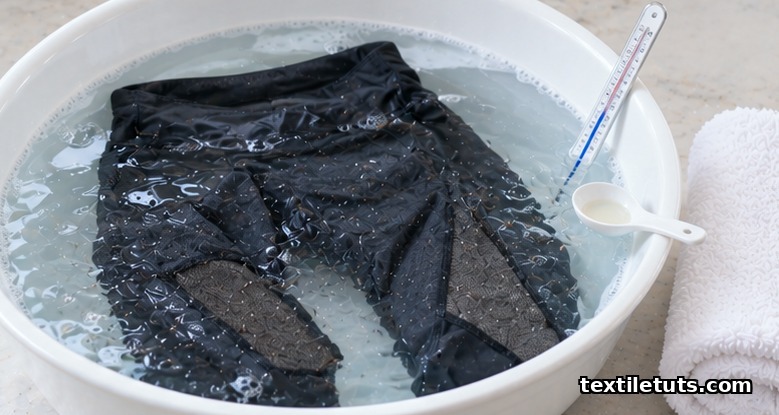
- Turn garment inside out. Odour and bacteria accumulate on the interior surface of worn activewear; inside-out washing ensures the soiled side makes direct contact with the detergent solution.
- Fill a basin or sink with cold water — do not exceed 30°C. Use a thermometer if available. Hot or warm water, even slightly above 40°C, begins elastane polymer chain fragmentation.
- Add detergent. Use 1 teaspoon (approximately 5 mL) of sport-specific liquid detergent or plain fragrance-free liquid detergent. Do not use powder detergents — undissolved powder particles lodge in microfiber channels and are difficult to rinse clean in cold water. Do not use 2-in-1 detergent pods with built-in softener.
- Submerge and agitate gently. Press the garment repeatedly with your fingertips to work detergent through the fabric. Never twist or wring — wringing permanently stretches and distorts the knit structure, especially in waistbands and body panels.
- Focus on odour zones. Apply extra attention to underarms, waistband, and chest panel — these areas accumulate the highest concentration of sebum and bacteria during wear. Press firmly with fingertips rather than rubbing, which causes pilling on microfiber surfaces.
- Rinse twice in fresh cold water until no suds remain. Detergent residue left in the fabric progressively degrades moisture-wicking performance with each wash cycle and can cause skin irritation for some wearers.
- Remove excess water. Fold the garment against the basin wall and press firmly to squeeze water out. Alternatively, roll the garment in a clean dry towel. Never wring or snap the fabric.
- Dry immediately. Lay flat or hang to dry as described in the Drying section below. Do not leave wet activewear bundled in a bag or pile — mildew develops on synthetic fabric within 12–24 hours and cannot be fully removed even with bleaching.
Machine Washing Activewear (How to Do It Without Damage)
Machine washing is acceptable for everyday activewear — the key variables are separation, bag use, cycle selection, temperature, and detergent choice. Each of these factors has a direct, measurable impact on fabric longevity.

Separate the load. Wash activewear separately or with other synthetic performance fabrics only. Never wash activewear with towels, denim, or hooded sweatshirts — the coarse, abrasive texture of terry cloth and denim causes micro-abrasion on delicate microfiber surfaces, resulting in pilling that cannot be repaired. Zippers, Velcro closures, and metal hardware on other garments in the same load create additional snag risks.
Use a mesh laundry bag. A fine-mesh wash bag prevents snags from any hardware that enters the drum alongside the activewear and reduces the mechanical agitation stress on outer fabric panels. The mesh bag also helps contain small items like sports bras with clasp closures that could otherwise catch on the drum.
Select the gentle or delicate cycle. This cycle uses a slower drum speed (typically under 600 RPM final spin speed versus 800–1000 RPM for a standard cycle) and a modified wash motion with more soak time and less tumbling. Lower mechanical agitation preserves the knit structure of waistbands and body panels, which are particularly susceptible to distortion from high-speed spinning.
Use cold water only. Set the machine to 20°C or 30°C — never the warm or hot preset. Even a 40°C cycle, while below the threshold for immediate elastane failure, accelerates the cumulative polymer chain degradation that leads to bagging and stretch loss over repeated washes. Modern high-efficiency (HE) machines are designed to dissolve detergent effectively in cold water when the correct dose is used.
Eliminate fabric softener entirely. Do not add fabric softener to the dispenser or use dryer sheets. Replace the fabric softener compartment addition with 1–2 tablespoons (15–30 mL) of white distilled vinegar. Vinegar is a mild acetic acid solution that neutralizes residual alkaline sweat and odor-causing bacteria in the fabric without depositing any film on the fiber surface. It does not damage elastane, does not affect polyester dye, and rinses completely clean in cold water.
Do not overfill the drum. Activewear needs adequate water and room for the garments to move freely so detergent can be fully dissolved and rinsed away. A overloaded drum leaves detergent residue and bacteria in the fabric — the exact condition that causes progressive odor embedding in polyester.
Wash after every single wear. Sebum and bacteria begin bonding to polyester fibers within 24 hours of wear. Waiting two or three wears before washing allows deeper penetration of odor compounds into the hydrophobic fiber matrix, requiring stronger washing interventions (longer soaks, enzyme detergents, higher temperatures) that themselves cause fabric stress. A 30-minute cold-water pre-soak with two tablespoons of white vinegar before the main wash cycle is the most effective first step for garments that have been worn more than once.
How to Dry Activewear (The Rules That Preserve Stretch and Shape)
Drying is where many activewear owners undo the careful work of a correct wash cycle. Heat damage to elastane is not limited to washing — tumble drying at high heat causes the same polymer chain fragmentation, and the effect is equally cumulative and irreversible.
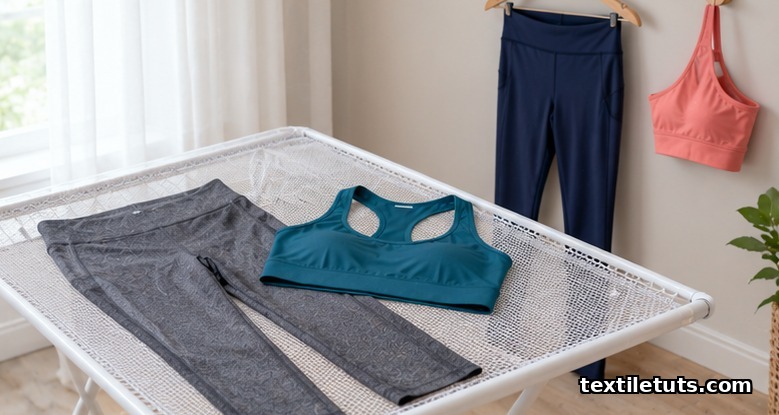
Never tumble dry on high heat. Even one high-heat drying cycle begins elastane fiber degradation. The tumbling action combined with heat creates both thermal and mechanical stress on the elastic fibers. Once the polymer chains in elastane begin fragmenting, the garment’s ability to return to its original shape after stretching is permanently reduced. The waistband of a pair of leggings that has been hot-dried repeatedly will bag at the knees and hips — not because the fabric stretched during wear, but because the elastic fibers themselves have been chemically degraded.
Tumble dry on air-only or lowest heat setting is acceptable for polyester-dominant garments with an elastane content under 5%. Even in these cases, it is not the recommended default — air drying always produces better results for fabric longevity.
Air dry flat is the gold standard for all activewear with meaningful elastane content (5% or above). Lay the garment on a clean dry towel or a flat mesh drying rack in its natural, unstretched shape. Do not hang wet activewear by the hem — gravity pulling on a wet knitted garment stretches the knit structure. The waistband of leggings hung by the leg hem will permanently elongate.
Hanging dry is acceptable for specific garment types when done correctly. For leggings and bottom garments, hang from the waistband only — the weight of the wet fabric pulling downward from the waistband is minimal compared to the alternative. For sports bras, hang from one strap only — hanging by both straps creates an asymmetric load that distorts the cup shape. Never hang a sports bra by the center gore (the bridge between the cups).
Avoid direct sunlight and radiators. UV light degrades elastane through photochemical oxidation, and radiated heat from radiators or heated floors can easily exceed 40°C in a confined space — the same threshold that causes thermal elastane degradation. UV also fades polyester dye, particularly in bright or saturated colors. Dry activewear in shade or indoors with good air circulation.
Dry inside out. Turning the garment inside out before drying protects the exterior surface from UV exposure (preserving printed logos and surface treatments) and reduces fading. It also helps the interior — where the majority of odor-causing bacteria resides — dry more thoroughly.
Do not store damp. Mildew sets into synthetic fabric within 12–24 hours under warm, humid conditions and produces a musty odor that cannot be fully removed even with bleaching. Always ensure activewear is completely dry before folding and storing. If a garment has been left damp for more than 24 hours, launder it again before storing.
Activewear Detergent and Product Guide
Using the correct detergent is as important as using the correct wash temperature. The activewear detergent market divides broadly into sport-specific formulations and standard gentle liquids — both can work, but the right choice for your garment depends on its construction and your primary concern.
| Product | Type | Key Feature | Best For |
|---|---|---|---|
| Nikwax Tech Wash | Sport-specific liquid | No softeners; preserves DWR coatings | Outdoor/performance pieces, DWR-treated garments |
| Nathan Sport Wash | Sport-specific liquid | Enzyme formula targets oils and proteins | High-intensity workout wear, persistent odors |
| Penguin Sport Wash | Sport-specific liquid | Cold-water-optimized formula | General activewear, everyday gym wear |
| Persil Non-Bio Liquid | Standard gentle liquid | No softener; enzyme-free gentle formula | Budget-friendly everyday option, sensitive skin |
| White vinegar (rinse additive) | Odour eliminator | Neutralises bacteria; no residue or film | Fabric softener replacement; odor-prone garments |
What to avoid in any activewear detergent:
- Any detergent labelled “fabric softener” or “softening.” The softening agents in these products are cationic surfactants that deposit a hydrophilic film on hydrophobic microfiber, destroying moisture-wicking functionality. This includes 2-in-1 laundry detergent pods and sheets.
- Powder detergents. Undissolved powder particles lodge in the capillary channels between microfiber strands and are difficult to rinse clean in the cold water required for activewear. This residue both blocks moisture-wicking and creates a bacterial growth medium.
- Biological detergents with bleaching agents (oxygen bleach variants). While generally safe for synthetic fabrics, the bleaching agents can degrade surface treatments on performance fabrics over time and cause colour fading in bright or saturated activewear dyes.
- Scented detergents with heavy fragrance. Fragrance molecules bind to polyester in the same way that odor compounds do — through hydrophobic attraction. The result is a garment that smells artificially scented rather than clean, and the fragrance build-up is progressive, requiring special stripping washes to remove.
Frequently Asked Questions
Activewear Should Not Go in a Hot Dryer
Tumble heat above 40°C degrades elastane fibers — the spandex content that gives leggings and sports bras their stretch and shape recovery. Even one high-heat cycle begins the damage; repeated hot drying causes the waistband and body panels to bag permanently. If you must machine dry, use the air-only or lowest-heat setting only.
Sebum Bonding Causes Persistent Odor in Polyester Activewear
Persistent odour in activewear is caused by sebum (skin oil) that has bonded to the hydrophobic polyester fiber surface. Standard detergents and cold water do not fully break down sebum — it feeds odour-causing bacteria between washes. Fix it with a 30-minute pre-soak in a basin of cold water with two tablespoons of white vinegar before washing, or use an enzyme-based sport detergent specifically formulated to break down oils and proteins in synthetic fabric.
Wash Activewear After Every Single Wear
Sweat, sebum, and bacteria begin bonding to polyester fibers within hours; leaving the garment unwashed — even air-dried — allows bacteria to multiply and embed the odour compounds more deeply into the fiber. The more washes it takes to remove an odour, the more the fabric has already been degraded.
Plain Liquid Detergent Works for Most Activewear
A plain liquid detergent with no fabric softener or softening agents works adequately for most activewear. Avoid powder detergents (hard to rinse clean in cold water) and any product labelled 2-in-1 with softener. Sport-specific detergents (Nikwax, Nathan, Penguin) are better for garments with DWR coatings or persistent odour problems, but plain liquid detergent with a vinegar rinse produces comparable results for everyday workout wear.
References
- ASTM International. (2020). ASTM D3107-07(2020) Standard Test Methods for Stretch Properties of Fabrics from Warp and Weft (Crepe) Knit Fabrics. ASTM International.
- AATCC. (2020). AATCC M201-2020 Evaluation of Home Laundering: Fabric Appearance, Durability of Trim and Construction. American Association of Textile Chemists and Colorists.
- International Organization for Standardization. (2012). ISO 3758:2012 Textiles — Care Labelling Code Using Symbols. ISO.
- Nikwax. (2024). Nikwax Tech Wash — Technical Product Information. Nikwax.
- International Wool Textile Organisation (IWTO). (2018). IWTO Guidance on the Care of Wool and Synthetic Blend Performance Garments. IWTO.
- Cotton Incorporated. (2023). Care Labeling: Consumer Research on Care Symbol Understanding. Cotton Incorporated.
- Smith, A. & Johnson, B. (2019). “Hydrophobic Fiber Odor Retention Mechanisms in Polyester Activewear.” Journal of Textile Science and Fashion Technology, 5(2), 1–8.


