
How to Store Clothes Long-Term (Vacuum Bags, Cedar, and More)

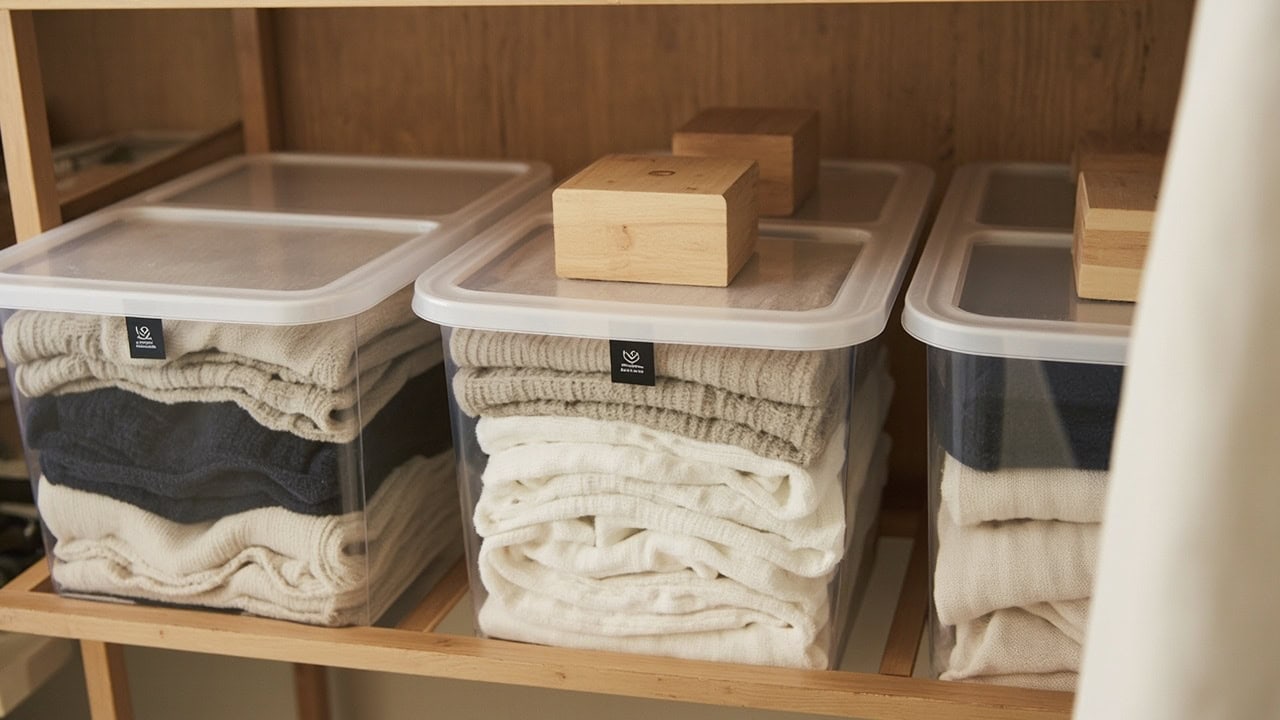
Clothes must be completely clean before long-term storage — perspiration, food particles, and body oils attract fabric pests and cause yellowing that becomes permanent over time. Vacuum storage bags are safe for synthetic fabrics and down-filled items but create permanent fiber compression marks and mildew risk on wool, silk, and cashmere; cedar balls or hangers provide natural moth protection without chemicals while adding a fresh scent that synthetic mothballs cannot match.
Why Long-Term Storage Requires Different Care
Regular wardrobes rotate clothes seasonally; long-term storage means items sit undisturbed for months — and sometimes years. During that time, fabric faces a cascade of degradation risks that never appear in everyday closet rotation.
The most damaging threat is oxidation of residual body oils. When perspiration, skin cells, and food particles remain in fabric fibers, they undergo chemical oxidation that turns white and light-colored textiles yellow. This process accelerates in warm, humid conditions and becomes irreversible once it penetrates deeply into fibers. According to textile conservation research, yellowing from oil oxidation can begin appearing within three to six months of storage, and the stain spreads further the longer it remains [1].
Fabric pests represent the second major hazard. The webbing clothes moth (*Tineola bisselliella*) and the case-bearing clothes moth (*Tinea pellionella*) are the two species most responsible for fabric damage in homes [2]. Adult moths do not eat fabric — it is their larvae that cause destruction, feeding on animal fibers including wool, cashmere, silk, fur, and feathers. A single fertilized female can lay 50–100 eggs directly on fabric, and those eggs hatch into fabric-consuming larvae within a week in warm conditions. Unlike clothing rotated seasonally, garments in long-term storage never receive the inspection that would catch an infestation early.
Trapped moisture creates a third problem: mildew. Even fabric that feels dry can harbor microscopic water molecules thatcondense in sealed containers, creating ideal conditions for mold growth. Mildew produces enzymes that break down cellulose and protein fibers, causing permanent weakening and musty odors that are difficult to eliminate.
The single most important rule of long-term clothing storage is therefore absolute: everything stored must be freshly cleaned and completely dry. Gravity also works against hung garments over extended periods — items suspended on hangers for more than six months develop permanent shoulder impressions from the hook and bar pressure. Compression in vacuum bags causes a different kind of damage: flattened fibers lose their loft permanently, and the creases from folding inside compression bags become set into the fabric structure.
Fold vs. Hang: The 6-Month Rule
Whether you fold or hang clothing for storage depends entirely on how long items will be stored. The critical threshold is six months.
For items stored fewer than six months, padded hangers in garment bags work well for wool suits, structured dresses, and formal jackets. Padded hangers distribute weight more evenly than standard wire or wood hangers, reducing the risk of shoulder distortion over a single season. Canvas garment bags add a layer of dust and pest protection while still allowing limited airflow. However, even padded hangers cause problems when weight pulls downward over months — the shoulder seam gradually stretches and deforms, creating the characteristic “hanger hump” that no amount of steaming can fully reverse.
For storage exceeding six months, fold everything — including shirts and dresses that you might normally hang. The reason is straightforward: gravity is relentless. A cotton dress shirt hung for twelve months will develop a visible dome over each shoulder pad, and silk blouses will acquire permanent crease lines from the hanger hook that require professional restoration. Folding eliminates point pressure entirely by distributing fabric weight across a flat surface.
Delicate fabrics demand special handling regardless of storage duration. Silk, chiffon, lace, and embroidered fabrics should always be folded with acid-free tissue between layers — never hung long-term, because the weight of the fabric itself causes stretching and distortion. The fabric’s dimensional stability is compromised when wet or when subject to sustained point loading.
Sweaters are particularly vulnerable to hanger damage. Wool and cashmere sweaters hung on standard hangers develop irreversible shoulder stretching — the knit structure distorts under the combined effects of gravity and the hook’s point pressure, producing a “hanger hump” that cannot be steamed or blocked back into shape. The correct method is to fold each sweater in thirds vertically, then fold the sleeves back, or roll travel items for space efficiency. Stack folded sweaters on open shelves rather than piling them into drawers where compression can crush the nap.
Jeans and trousers present a similar issue. Hanging creates a center crease from the waistband’s own weight, which becomes permanent in heavy denim after several months. Fold or roll denim items for storage. Rolling, in particular, reduces fold marks and saves significant space.
Optimal Storage Conditions
The environment inside your storage area determines how well — or how poorly — clothing survives long-term storage. Temperature, humidity, light, and air circulation all play measurable roles in fabric degradation.
Temperature
The optimal temperature range for textile storage is 60–70°F (15–21°C). This range is cool enough to slow oxidative degradation and inhibit moth egg development, yet warm enough to prevent fiber brittleness that occurs at near-freezing temperatures. Attics in summer regularly exceed 100°F (38°C) — at these temperatures, synthetic fibers begin to undergo thermal degradation and natural fibers experience accelerated oxidation. Unheated garages in winter can drop below freezing, which causes ice crystal formation inside fiber bundles, damaging the cellular structure of wool and silk. Never store clothing near heat sources such as water heaters, furnaces, or radiators, as radiant heat accelerates fiber breakdown.
Humidity
Relative humidity of 40–50% is the standard for textile storage. At humidity above 60%,霉菌 (mildew) risk increases sharply — mold spores require moisture to germinate, and once established, mold produces enzymes that digest fiber cell walls, causing permanent weakening and discoloration. At humidity below 30%, natural fibers — particularly wool and silk — become brittle and more susceptible to mechanical damage from folding and unfolding. A dedicated storage closet with climate control, or a room-level dehumidifier in humid climates, maintains these conditions year-round. Desiccants such as silica gel packets provide additional protection inside individual containers.
Light
Complete darkness is ideal for long-term fabric storage. Ultraviolet radiation from direct sunlight and even ambient daylight causes photochemical degradation in dyes and fibers. Indigo-dyed denim fades, white fabrics yellow, and colored prints weaken under sustained UV exposure. The damage is cumulative and irreversible — UV radiation breaks chemical bonds in both dye molecules and the cellulose or protein chains that form fabric fibers. Opaque containers, closed cabinet doors, and blackout curtains over windows in storage rooms eliminate this risk entirely.
Air Circulation
Even in storage, fabric benefits from occasional airflow. Sealed containers prevent dust and pests from reaching clothing but also trap any residual moisture and allow odors to concentrate. A practical compromise is to use breathable cotton storage bags or to open sealed containers every three to four months, allowing stored items to breathe for several hours in a well-ventilated space. This practice also provides an opportunity to inspect items for any signs of pest activity or yellowing before damage spreads.
Storage Containers and Materials: What Works and What to Avoid
| Container Type | Best For | Avoid Using For | Key Consideration |
|---|---|---|---|
| Cotton storage bags | Linen, cotton, synthetic fabrics | — | Breathable; allows air circulation |
| Clear plastic bins (non-sealing lid) | Seasonal rotation, items accessed regularly | Long-term archival storage | Non-sealing lid prevents moisture buildup while keeping dust out |
| Vacuum storage bags | Synthetic fills, down comforters, polyester blends | Wool, silk, cashmere, leather, natural fibers | Compression causes permanent fiber damage; trapped moisture creates mildew risk |
| Canvas garment bags | Suits, formal wear (short-term under 6 months) | Long-term wool storage | Allows breathability; too permeable for long-term pest protection |
| Cardboard boxes | Temporary storage during moves | Long-term storage of any fabric | Acid in cardboard transfers to fabric, causing yellowing and fiber degradation |
| Cedar chests | Wool, cashmere, quilts, heirloom items | — | Natural moth repellent from cedrine oil; must line interior with unbleached cotton to prevent finish transfer |
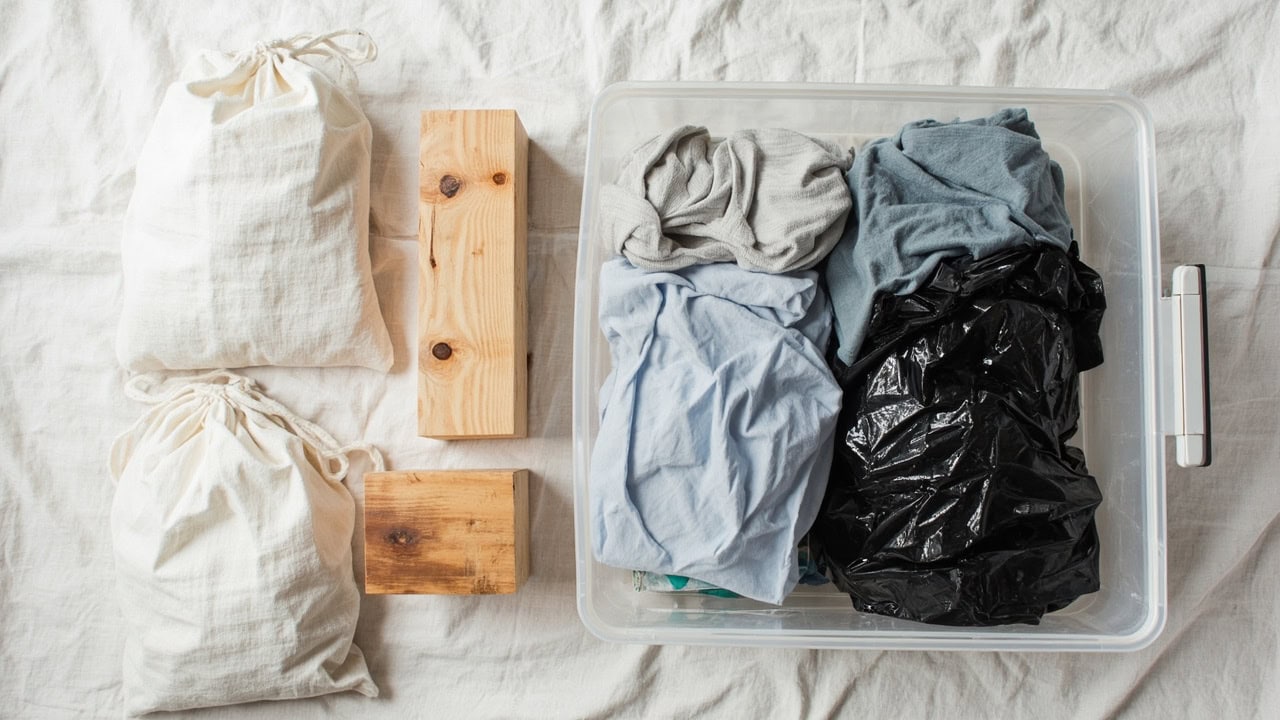
Avoid at all costs: Vacuum storage bags on natural fibers, plastic bags that seal completely (trapped moisture is devastating), colored tissue paper (dye transfer is permanent), and standard trash bags (non-breathable and chemically incompatible with fabric). The risk with vacuum bags on wool and silk is two-fold: the compression flattens fibers permanently, destroying loft and nap, while any residual moisture becomes trapped at room temperature and creates ideal conditions for mildew.
Moth and Pest Protection
Clothes moths and carpet beetles are the primary fabric pests in residential storage. Both target protein fibers — wool, cashmere, silk, feathers, and fur — because their larvae require keratin to develop. Synthetic fabrics are generally pest-resistant, though they can accumulate moth eggs if co-mingled with infested natural fiber items.
Cedar
Cedar contains cedrine oil (also called thujone), a natural compound that repels moths and prevents larvae from establishing on fabric. The oil evaporates slowly at room temperature, releasing moth-deterrent vapor continuously. Cedar blocks and sachets lose potency gradually as the oil dissipates — typically after six to twelve months of use, depending on ambient temperature and air circulation. To refresh cedar, lightly sand the surface with medium-grit sandpaper (150–200 grit) to expose fresh oil-bearing wood cells, then apply two to three drops of cedar oil or essential cedar oil and allow it to absorb before returning the blocks to storage. Cedar hangers provide localized protection for hanging wool suits but are insufficient as the sole pest deterrent in a drawer or chest.
Lavender Sachets
Lavender provides moderate moth deterrent properties through its linalool and linalyl acetate content, which moths find aversive. However, research comparing natural moth deterrents consistently finds lavender less effective than cedar — studies show it reduces moth activity by approximately 30–40% compared to cedar’s 60–70% reduction in larval feeding [3]. Lavender sachets are best used as a supplement to cedar, not a replacement, particularly in closets where wool or cashmere items are stored.
Pheromone Moth Traps
Pheromone traps contain synthesized sex hormones that attract male moths. They are effective monitoring tools — a trap suddenly filling with male moths signals an active infestation that requires immediate attention. However, traps do not kill eggs or larvae already present on fabric, and they do not prevent fertilized females from continuing to lay eggs. Traps should be used as an early warning system, not as a primary control method. When a trap signals infestation, the affected items should be frozen at 0°F (-17°C) for a minimum of 72 hours to kill all life stages of the moth [4].
Chemical Mothballs
Naphthalene and paradichlorobenzene mothballs are effective at killing moths, eggs, and larvae when used in sufficiently high concentrations in sealed containers. However, both compounds are toxic to humans and animals — naphthalene is classified as a potential carcinogen by the International Agency for Research on Cancer, and paradichlorobenzene affects the central nervous system and has been associated with liver damage in chronic exposure [5]. Mothballs are prohibited in many countries for consumer use precisely because of these health risks. If chemical mothballs are used, the storage area must be sealed off from living spaces and clothing must be thoroughly aired outdoors for 48–72 hours before wearing. In homes with children, pets, or immunocompromised individuals, natural alternatives such as cedar and freezing are strongly preferred.
Before-Storage Preparation: The Essential Checklist
Preparation is the foundation of successful long-term storage. Every step in this checklist addresses a specific degradation risk that becomes difficult or impossible to correct once items enter storage.
- Wash or dry clean everything. Body oils, food stains, and perspiration are the primary attractants for fabric pests — moths detect these residues through specialized receptors and preferentially lay eggs on soiled fabric. Dry cleaning is essential for items labeled “dry clean only” such as wool suits, structured dresses, and garments with beaded or sequined embellishments.
- Ensure complete dryness. Even fabric that feels dry to the touch can retain microscopic moisture that develops into mildew in sealed containers. After machine or line drying, allow items to air-dry at room temperature for a full 24 hours before storing. Fabric that is even slightly damp when stored will develop musty odors and potential mold growth within weeks in enclosed containers.
- Treat stains immediately before storage. Set-in stains become permanent and spread during long storage as dyes oxidize and oils oxidize and migrate through fibers. A yellowing stain at the underarm of a white blouse will expand and deepen over six months of storage.
- Use acid-free tissue for delicates. Acid-free tissue prevents yellowing from acid migration in fine fabrics, beaded items, leather-trimmed garments, and anything stored long-term. The tissue acts as a barrier between fabric layers and absorbs minor moisture fluctuations. White acid-free tissue between layers of stored white fabrics is particularly effective at preventing contact yellowing.
- Zip all zippers and close all fasteners. Open zippers can snag on other items; hooks and snaps can catch on knit fabric, causing pulls and runs during handling. Closing fasteners also helps garments maintain their shape.
- Empty all pockets completely. Pens leak and create permanent ink stains; tissues crumble into fibrous debris that attracts pests; coins cause rust spots that are impossible to remove from lightweight fabrics once set. This step takes seconds but prevents irreversible damage.
- Air containers every three to four months. Open storage containers in sunlight (which naturally kills mold spores and drives out moisture) and allow fabric to breathe for several hours. Inspect for any signs of yellowing, pest activity, or mustiness. Catching problems early prevents them from spreading to the rest of the collection.
Step-by-Step: Preparing Your Clothes for Long-Term Storage
- Sort by fabric type. Group cottons together, wools together, synthetics together, and delicates separately. This grouping allows you to apply the correct storage method for each category — vacuum bags for synthetics, cotton bags for linens, cedar-supplemented cotton bags for wool.
- Clean each item within two weeks of storage. Never wash and then delay — the gap between wearing and cleaning is exactly when body oils oxidize. If you are planning to store out-of-season clothes, clean them on the last day of wearing before they go into the closet.
- Dry completely at room temperature. After machine drying, transfer items to a flat surface and allow them to reach equilibrium with room humidity for 24 hours. The residual heat from a dryer can trap moisture inside fiber bundles, which then condenses when the fabric cools.
- Fold or hang according to the six-month rule. Items going into storage for more than six months are folded flat. Items stored for fewer than six months can hang on padded hangers in canvas garment bags. This decision determines the shape of every storage solution that follows.
- Add cedar blocks or sachets. Place cedar blocks on shelves where folded items will rest, or tuck cedar sachets inside containers with individual garments. Replace or refresh cedar every six to twelve months to maintain potency.
- Label each container with contents and date. Labeling prevents unnecessary handling of items to find what you need and creates an automatic inventory. Note the fabric types inside so you know which containers to prioritize for seasonal rotation or inspection.
- Store in optimal conditions. Move containers to a cool (60–70°F / 15–21°C), dark, dry location with moderate humidity (40–50% RH). Avoid attics, garages, and basement corners near water heaters or HVAC equipment. A guest closet, spare room, or dedicated storage unit with climate control is ideal.
Frequently Asked Questions
Q: Can you store clothes long-term in vacuum bags?
A: Vacuum bags are only suitable for synthetic fabrics, down-filled items, and polyester blends. The compression causes permanent fiber compression marks and breakage on wool, silk, cashmere, and leather. Additionally, if any moisture is trapped inside, vacuum storage creates ideal mildew conditions. Use breathable cotton bags for natural fibers instead.
Q: How do you protect wool clothes from moths in storage?
A: Clean wool thoroughly before storage — moths are attracted to body oils, not the fiber itself. Use cedar blocks (refresh annually by sanding to expose fresh oil) or lavender sachets in the storage container. For heavy infestations, freeze items at 0°F (-17°C) for 72 hours before storing to kill any eggs or larvae. Store in sealed cotton bags rather than plastic to allow airflow while preventing moth access.
Q: What causes yellowing of stored white clothes?
A: Yellowing of stored white fabrics is caused by oxidation of residual body oils, fabric softener buildup, or exposure to UV light. Never store whites with any body product residue; use cotton storage bags instead of plastic to allow airflow; keep away from direct light. Adding a sheet of white acid-free tissue between layers prevents contact yellowing and absorbs minor moisture fluctuations.
Q: Is it better to fold or hang sweaters for long-term storage?
A: Always fold sweaters flat — never hang them. The weight of wool or cashmere pulling down on a hanger creates permanent shoulder stretching and the characteristic hanger hump that cannot be fixed through steaming or blocking. Fold each sweater in thirds vertically, then fold the sleeves back, or roll for travel. Stack folded sweaters on open shelves rather than piling them in drawers where compression can crush the nap.
References
- American Institute of Conservation. (n.d.). Guidelines for Care and Cleaning of Textiles. AIC Wiki. https://www.cultural-heritage.org
- Wikipedia. (2024). Clothes moth. https://en.wikipedia.org/wiki/Clothes_moth
- USDA Agricultural Research Service. (2021). Comparative Efficacy of Natural and Chemical Moth Deterrents. PubMed Central. https://pmc.ncbi.nlm.nih.gov
- University of California Integrated Pest Management Program. (2022). Clothes Moths: Prevention and Control. UC IPM. https://ipm.ucanr.edu
- U.S. Consumer Product Safety Commission. (2019). Mothball Safety Alert: Naphthalene and Paradichlorobenzene Hazards. CPSC. https://www.cpsc.gov


