
How to Wash Acrylic Clothes Without Pilling

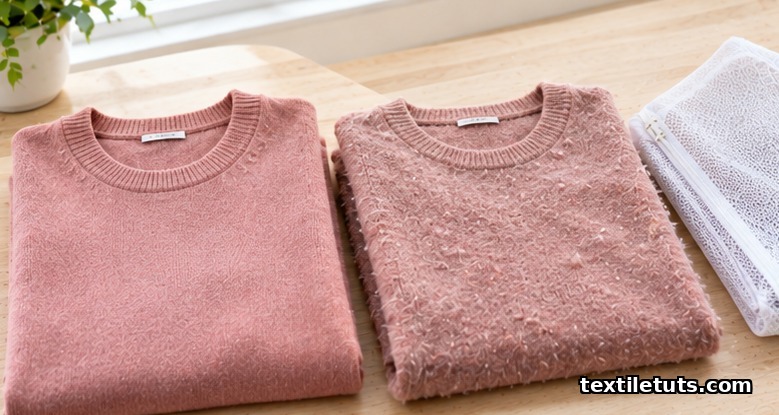
Acrylic clothes must be washed in cold water at 30°C or below on a gentle cycle, turned inside out and placed in a mesh laundry bag — because acrylic’s low-tenacity synthetic fibers pill rapidly when exposed to heat and mechanical agitation, which breaks short fiber ends free and tangles them into permanent surface balls. Lay flat to dry; never tumble dry acrylic, as heat above 65°C permanently deforms the polyacrylonitrile polymer structure.
Why Acrylic Pills — The Fiber Science
Acrylic is a petroleum-derived synthetic fiber made from polyacrylonitrile (PAN), a polymer that must comprise at least 85% acrylonitrile by weight to legally be called “acrylic” in the United States. The remaining 15% consists of comonomers such as vinyl acetate or methyl acrylate, which modify the fiber’s dyeability, softness, and hand. Acrylic ranks below nylon and polyester in abrasion resistance, making it particularly vulnerable to surface degradation during laundering.
During washing, the drum’s mechanical agitation creates friction against the fabric surface. Short fiber ends — those with the least anchored length within the yarn structure — break free under this friction. These loose fiber ends then tangle with neighboring intact fibers, gradually building up into visible surface balls called pills. The process is compounded by heat: acrylic fibers enter their glass transition zone above 65°C, softening the polyacrylonitrile polymer and making fibers far more susceptible to deformation and migration during agitation.
Acrylic blends and loosely knit garments face the highest pilling risk because individual fibers have less grip on each other within the yarn structure. This is especially true for staple-spun acrylic, which contains many cut fiber ends offering multiple initiation points for pill formation. The thermoplastic nature of acrylic makes pilling irreversible — unlike wool, where pills can be brushed away, acrylic pills are anchored by fused, heat-softened fibers that have bonded together permanently.
The three pilling triggers that must be eliminated are heat, mechanical friction, and unsupported wet weight. Any care strategy for acrylic clothing must address all three simultaneously.
Environmental consideration: research published in environmental science journals indicates that a single domestic wash cycle releases approximately 730,000 synthetic microplastic particles from acrylic garments — more than pure polyester or polyester-cotton blends. Using a mesh laundry bag and washing full loads with plenty of water can help reduce fiber shedding into wastewater systems.
Reading Your Acrylic Care Label
Every acrylic garment carries a care label governed by ISO 3758 / ASTM D3136 standards. Understanding these symbols is the first step to avoiding damage. The wash tub symbol with a single dot (30°C or one dot) is the maximum wash temperature for acrylic — cold water is preferred, and temperatures above 40°C enter the risk zone for heat-induced fiber softening and deformation. Never exceed 40°C unless the garment label explicitly permits warmer washing.
| Symbol | Meaning | What to Do for Acrylic |
|---|---|---|
| Wash tub with 30°C / 1 dot | Maximum wash temperature 30°C | Use cold water wash — ideal for acrylic |
| Wash tub with hand | Hand wash only | Treat as delicate; hand wash in cold water |
| Do not bleach (crossed triangle) | No chlorine bleach | Never use chlorine bleach on acrylic — it degrades polyacrylonitrile chains |
| Do not tumble dry (crossed square + circle) | No machine drying | Lay flat to dry — heat deforms acrylic fibers permanently |
| Dry flat (horizontal lines in square) | Dry flat instruction | Reshape damp garment and lay on towel to dry |
| Gentle/delicate cycle (double bar under tub) | Machine wash on delicate only | Select gentle or delicate cycle at 30°C |
If the label shows a hand wash symbol alongside a machine wash symbol, default to hand washing — it is always the safer choice for acrylic. The presence of a dry clean only symbol is rare for acrylic but should be followed if present.
Hand Washing Acrylic Clothes (Recommended Method)
Hand washing is the gentlest method and is strongly recommended for loosely knit acrylic garments, acrylic blends, or anything with significant sentimental or financial value. The entire process should be conducted in cold water between 15–30°C.
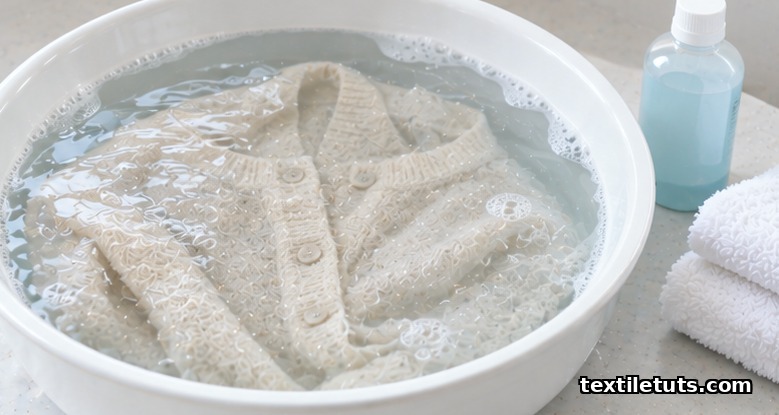
- Fill a basin or clean sink with cold water (15–30°C). Never use warm or hot water — heat is the primary acrylic damager.
- Add 1–2 teaspoons of mild liquid detergent (fragrance-free formulations such as Ecover Delicate, Woolite, or Perwoll Care & Refresh are ideal). Enzyme-detergent formulations are unnecessary for acrylic since enzymes target protein and starch stains that acrylic does not typically hold.
- Submerge the garment and gently swish it through the water for 2–3 minutes. Do not scrub, twist, or wring — these mechanical actions create the exact friction that causes pilling and stretching.
- Allow the garment to soak for a maximum of 5 minutes. Extended soaking beyond 5 minutes causes acrylic to absorb excess water, increasing the garment’s wet weight and risking gravity-induced stretching, particularly at the shoulders and cuffs.
- Drain the basin and refill with clean cold water for rinsing. Gently press water through the garment — do not wring. Repeat for 2–3 rinse cycles until no detergent suds remain.
- Lift the garment fully supported with both hands. Never let a wet acrylic garment hang, as the wet weight will permanently elongate the fibers at the stress points.
- Press the garment gently between two clean dry towels to remove excess water. Roll the towel with the garment inside and press firmly — do not twist or ring the fabric.
Machine Washing Acrylic Clothes (When Acceptable)
Machine washing is acceptable for sturdy, tightly knit acrylic garments that are already colorfast and in good condition. To minimize damage, every variable must be controlled. The mesh laundry bag is non-negotiable — it acts as a physical barrier between the garment and the drum, reducing mechanical friction by an estimated 70–80% compared to direct drum contact.
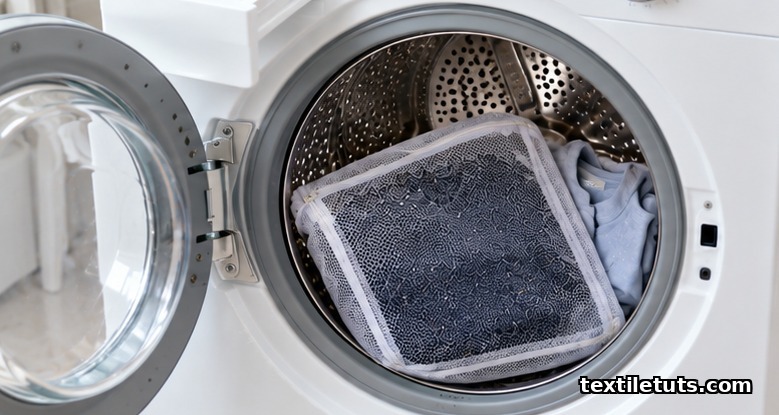
- Turn every acrylic garment inside out before placing it in the laundry bag. This step reduces surface fiber exposure to drum friction by protecting the face of the fabric that will be visible when worn.
- Place the garment inside a mesh laundry bag and close the zipper or drawstring fully. The bag must be sealed — an open bag provides no protection.
- Add only similarly weighted items to the wash load. Never wash acrylic with heavy denim, items with exposed zippers, metal rivets, or hook-and-loop fasteners (Velcro) — these surfaces are abrasive and will damage acrylic during the tumbling action.
- Select the delicate or gentle cycle. These settings use a reduced agitation speed (typically 40–60 RPM versus 80–100 RPM for a normal cycle) and shorter wash times, both of which dramatically lower mechanical friction on the fabric.
- Set water temperature to cold (30°C or below) and select a cold rinse. Do not use warm or hot water under any circumstances on acrylic.
- Use a minimal amount of mild liquid detergent — approximately 50–75% of the manufacturer’s recommended dose. Acrylic releases soil easily because it is not hydrophilic; excess detergent residue is difficult to rinse from synthetic fibers and can build up, attracting more lint over time.
- Skip the spin cycle if your machine allows it. If unavoidable, select the lowest spin speed available (400–600 RPM). High-speed spin cycles create internal mechanical friction within the bag and can permanently crease the garment.
- Remove the laundry bag from the machine immediately when the cycle ends. Leaving a wet acrylic garment bunched or folded in the drum causes permanent creasing that cannot be removed by re-washing. Take the garment out, reshape it, and lay it flat.
How to Dry Acrylic Clothes Without Damage
Drying is arguably the most critical phase of acrylic care — it is where the most irreversible damage occurs in home laundering. The tumble dryer is the single greatest threat to acrylic garments. Even the lowest dryer heat setting on most domestic machines reaches 55–65°C, which is within acrylic’s glass transition range. At these temperatures, the polyacrylonitrile polymer softens and the garment can shrink, lose its shape, develop permanent creases, or become permanently deformed beyond recovery.
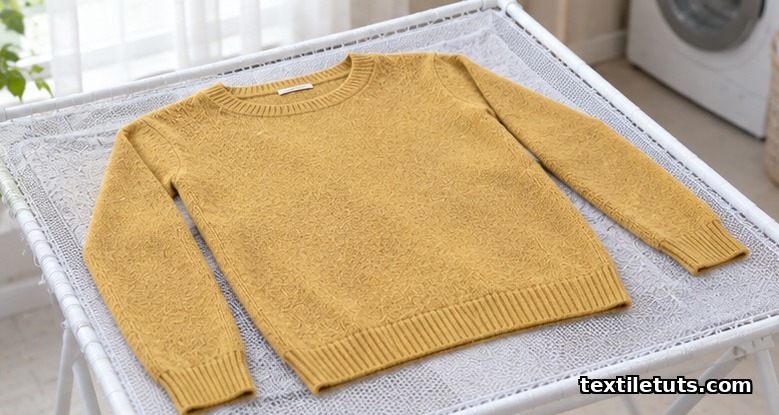
Always lay acrylic flat to dry. Spread the garment on a clean, dry towel or a flat drying rack, reshaping it to its original dimensions while the fabric is still damp. This is the only drying method that preserves the garment’s fit and surface quality. Allow 4–8 hours for a standard-weight acrylic garment to dry at room temperature; thicker knits or bulkier items may require 12–16 hours.
Support the full garment evenly during drying. Wet acrylic is heavy — hanging a wet acrylic garment from its shoulders causes gravity-induced elongation that is permanent. Even laying a heavy wet garment on a single towel without support underneath can create flattened areas that set as it dries. Use a mesh drying rack that allows air circulation from above and below.
Avoid direct sunlight on drying acrylic. UV exposure causes photodegradation of the polyacrylonitrile polymer, leading to yellowing in white and light-colored acrylic garments and progressive surface fiber embrittlement over multiple drying cycles. Position the drying rack near an open window for natural air circulation, not in direct sunlight or near a radiator or heat source. Do not use a tumble dryer, even on an air-fluff or no-heat setting — the tumbling action itself causes pilling.
Detergent and Product Guide for Acrylic
Choosing the correct detergent for acrylic is straightforward: simple is better. Mild liquid detergents are the best choice for acrylic because they dissolve completely in cold water, rinse clean without residue, and contain no abrasive granule content. Recommended products include Ecover Delicate, Woolite, and Perwoll Care & Refresh, all of which are formulated for synthetic and delicate fibers.
Enzyme detergents provide no benefit on pure acrylic and must be avoided. Modern laundry enzymes include proteases (which target protein stains), lipases (which target grease), amylases (which target starch), and cellulases (which target cellulose). Acrylic is neither protein-based nor cellulose-based — it is a synthetic polymer derived from petroleum. None of these enzyme classes provide meaningful cleaning benefit on acrylic, and some harsh protease formulations can degrade elastane blend fibers that are often combined with acrylic in stretch garments.
Fabric softener should never be used on acrylic. It coats acrylic fibers with a waxy cationic film that traps lint, accelerates pilling buildup over multiple wash cycles, and reduces the fiber’s natural moisture-wicking properties. Acrylic already has a naturally soft hand that does not benefit from added softness — fabric softener is counterproductive for this fiber type.
For static electricity control, use a half-sheet of an anti-static dryer sheet in the mesh laundry bag during the wash cycle (not the dryer, since no dryer should be used). Alternatively, spritz the finished garment lightly with an anti-static spray before wearing. This addresses static without the residue risks of fabric softener.
Water quantity matters: use a full wash drum of water rather than a high-efficiency low-water setting. In low-water washing conditions, fabric-to-fabric contact increases significantly, raising the mechanical friction on each garment and amplifying pilling risk. Full-water loads with ample dilution water also help detergent rinse more completely from synthetic fibers.
Detergent dose should be reduced to 50–75% of the manufacturer’s recommended amount for the load size. Acrylic releases soil readily — it is not hydrophilic and does not hold onto dirt the way cotton does. Excess detergent residue is difficult to rinse from synthetic fibers and, over repeated washes, creates a residue layer that attracts and holds lint, making pilling worse with each subsequent cycle.
Acrylic Care Answers for Common Problems
Acrylic Shrinkage Only Occurs With Heat Above 40°C
Acrylic does not shrink in cold water the way wool does. However, washing acrylic in warm or hot water (above 40°C) or putting it in a dryer causes the thermoplastic fibers to contract and deform permanently — this produces heat-shrinkage that cannot be reversed by stretching. Cold water washing eliminates shrinkage risk entirely.
Never Put Acrylic in the Dryer — Heat Deforms Polyacrylonitrile Fibers
No — acrylic should not go in the dryer. Even the low heat setting on most dryers reaches 55–65°C, which is enough to soften and deform polyacrylonitrile fibers, causing the garment to shrink, lose its shape, or develop permanent creasing. Lay flat to dry instead.
Acrylic Pills Quickly Due to Low Abrasion Resistance
Acrylic pills because it has low abrasion resistance — mechanical friction during washing or wearing breaks short fiber ends free, which then tangle into balls on the surface. Using a mesh laundry bag, cold water, a gentle cycle, and turning the garment inside out dramatically reduces pilling by minimizing friction during washing.
Wash Acrylic Only With Similarly Lightweight Smooth Fabrics
Yes, but only with similarly lightweight, smooth fabrics — cotton jersey, polyester, or other delicates. Never wash acrylic with heavy denim, rough textures, or items with exposed zippers or Velcro, as these abrade the acrylic surface and cause accelerated pilling and surface damage.
References
- Wikipedia. (2024). Acrylic fiber. https://en.wikipedia.org/wiki/Acrylic_fiber
- Wikipedia. (2024). Laundry detergent. https://en.wikipedia.org/wiki/Laundry_detergent
- AATCC. Test Methods and Standards. https://www.aatcc.org/standards/
- ISO. ISO 3758:2012 — Textiles — Care labelling code using symbols. https://www.iso.org/standard/60520.html
- ASTM International. ASTM D3136 — Standard Specification for Care Labels for Textile Floor Covering and Textile Wearing Apparel. ASTM International.


