
How to Wash Wool Clothes Without Shrinking Them

How to Wash Wool Clothes Without Shrinking Them
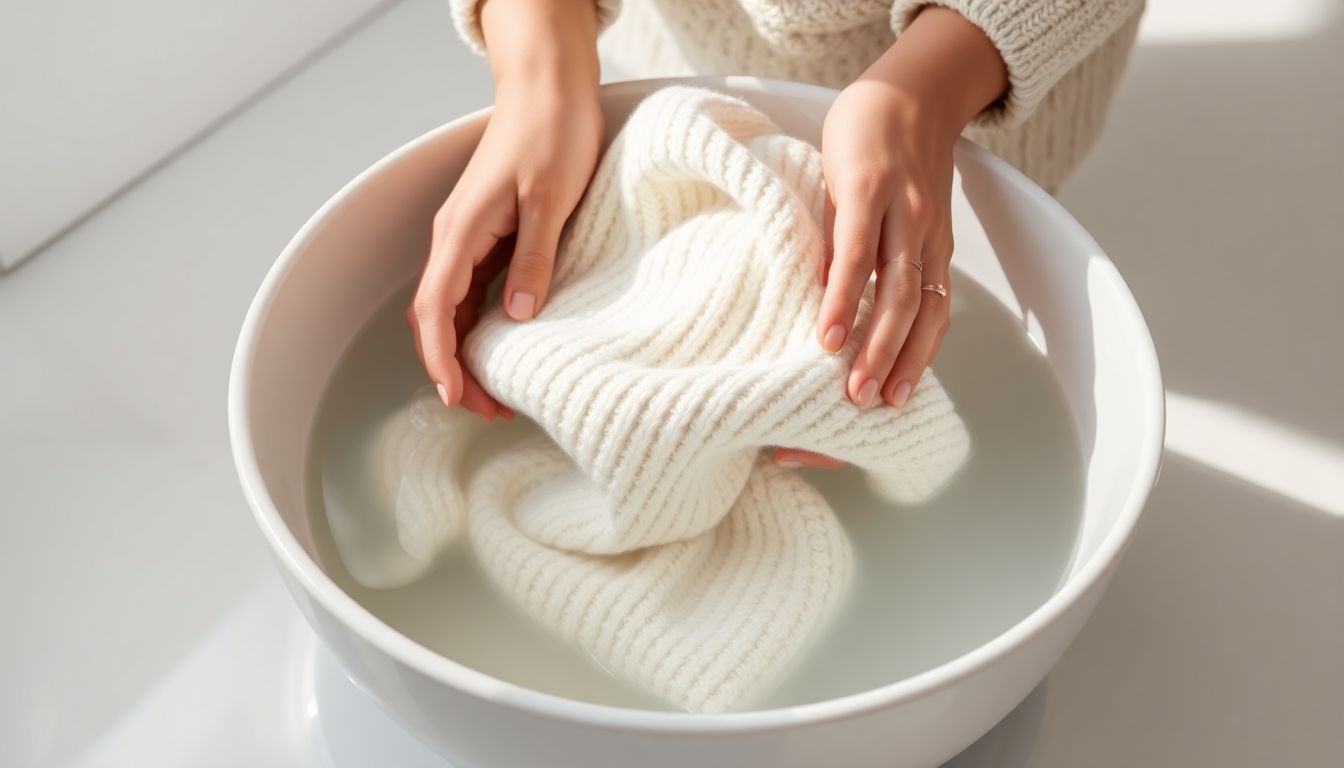
Washing wool without shrinking requires three rules: cold water only (under 30°C), minimal agitation, and wool-safe detergent. Wool shrinks through felting — when heat and friction cause the microscopic scales on wool fibers to interlock permanently. Once felted, wool cannot be unshrunk. The correct method is a 15-minute cold hand wash or a machine wool cycle with no spin, followed by flat drying.
Why Wool Shrinks in the Wash (The Felting Mechanism)
Wool fibers are covered in microscopic overlapping cuticle scales — similar to the scales on a strand of human hair. These cuticle scales are the key to understanding why wool shrinks. Under three conditions simultaneously — heat, moisture, and agitation — the scales open and interlock with neighboring fibers like hooks on Velcro. This process is called felting, and it is irreversible.
Heat causes the cuticle scales to lift and open. Agitation forces the open scales of one fiber into the open scales of adjacent fibers. Once interlocked, the fiber diameter contracts by 20–50% and the fabric permanently shrinks and thickens. Unlike relaxation shrinkage, which is reversible through blocking or steaming, felting shrinkage destroys the textile structure permanently. The International Wool Textile Organisation (IWTO) defines felting as “the irreversible entanglement of wool fibers due to mechanical action in the presence of heat and moisture.”
Superwash wool — developed in the early 1970s — avoids this problem through one of two treatments: either an acid bath that chemically removes the cuticle scales, or a polymer resin coating that fills the gaps between scales and prevents them from interlocking during washing. Both treatments allow Superwash wool to be machine washed without felting, though the wool/delicate cycle and cold water remain essential.
Checking Your Wool Label Before Washing
The care label is your first decision point. Woolmark-certified garments use standardized care symbols: a basin with a hand icon means hand wash only; a basin with a number (30, 40, 50) indicates the maximum wash temperature in Celsius; a circle means dry clean only; and an X over any symbol prohibits that treatment. Familiarize yourself with these symbols before laundering any wool garment.
Interpreting what you find: “Dry Clean Only” means do not wash at home under any circumstances — the fabric structure, lining, or interfacing may not tolerate water. Machine washable or Superwash labels with the machine wash symbol and a temperature number give you the green light for home machine washing. “Hand wash only” or the hand basin symbol means hand wash exclusively — never machine wash, even on delicate settings. For vintage garments or items with illegible labels, treat them as hand wash only, since fiber treatments from earlier decades are unknown and may not be compatible with machine washing.
Method 1: Hand Washing Wool (Recommended for All Wool)
Hand washing is the gold standard for every wool type because it gives you complete control over temperature and agitation. It takes 15–20 minutes and produces superior results compared to machine washing, even on Superwash fabrics.
Supplies for Hand Washing Wool
- Basin or clean sink
- Cold water (30°C or below)
- Wool-safe detergent (Woolite, Eucalan, The Laundress Wool & Cashmere Shampoo)
- Two to three clean dry towels
Step-by-Step Hand Washing Process
- Fill basin with cold water and add the detergent — typically one capful (15–20 ml) per garment. Swirl gently to disperse.
- Submerge the garment fully. Gently squeeze water through the fabric from the top to the bottom — no rubbing, no scrubbing, no twisting. Work the water through the garment with slow, deliberate compressions.
- Soak for 10–15 minutes without any agitation. The detergent works chemically during soaking; motion is counterproductive.
- Drain the basin. Refill with clean cold water. Gently squeeze rinse water through the garment to remove all detergent residue. Detergent residue is a leading cause of musty odors in dried wool.
- Do not wring — ever. Press water out gently by wrapping the garment in a towel and pressing firmly, or by pressing flat with both hands against the basin edge.
- Lay flat on a dry towel. Reshape to original dimensions using measurements taken before washing if available. Allow to dry fully — typically 24 hours for heavy knits — before moving or folding.
Critical Rules for Hand Washing Wool
-
Never change water temperature suddenly. A rapid shift from hot to cold or cold to hot causes the cuticle scales to react unpredictably and can trigger felting even without agitation.
Never wring or twist wet wool. Twisting applies torsional force that compresses and tangles fibers. The resulting deformation is permanent and cannot be blocked out during drying.
Never hang wet wool. The combination of water weight and gravity stretches the fibers beyond their elastic recovery. Shoulder bumps and elongated sleeves are the result. Flat drying eliminates this risk entirely.
Method 2: Machine Washing Wool (Superwash Only)
Machine washing is only safe for wool that has been treated to resist felting. If the label does not explicitly state “Superwash,” “machine washable,” or show a machine wash symbol, hand wash instead. Even Superwash wool benefits from extra precautions.
- Select the wool or delicate cycle — this cycle uses slower agitation and longer soak periods designed to mimic hand washing.
- Set temperature to 30°C maximum. The AATCC and ISO care standards for machine-washable wool specify 30°C as the threshold. Temperatures above this begin to relax cuticle scales significantly.
- Place the garment in a mesh laundry bag. The bag distributes agitation forces across the bag surface rather than concentrating them on the garment’s seams and knit structure.
- Use only wool-specific liquid detergent. Enzyme-based biological detergents — marketed for removing protein stains like blood or grass — contain protease that chemically digests wool’s keratin protein. This damage accumulates over multiple washes and weakens the fiber to the point of disintegration.
- Set spin to lowest speed or bypass spin entirely. Spin cycles generate thousands of drum rotations per minute; even Superwash wool can felt under sustained high-speed spin. A gentle 400–600 RPM spin or no-spin cycle is significantly safer.
After removing from the machine, reshape immediately and lay flat to dry. Do not leave Superwash wool balled up or in the laundry bag — moisture trapped in a compressed garment creates the conditions for mildew and fiber damage.
How to Dry Wool Without Damage
Drying is where many wool care efforts fail. Even when washing is done correctly, incorrect drying undoes all that work.
Never tumble dry wool. Heat from a tumble dryer — even on a low-heat air-fluff setting — raises the fabric temperature enough to open cuticle scales. Combined with the mechanical tumbling action, this produces felting shrinkage that can reduce a garment by one or two sizes in a single cycle. The Woolmark Company explicitly warns against tumble drying wool garments that are not explicitly labelled as tumble-dry safe.
Never hang wet wool. Wet wool fibers are in their most elastic and vulnerable state. Under the weight of water alone — before the garment has dried — the shoulder seams stretch, the body lengthens, and the sleeves droop. These distortions are permanent. Shoulder-shaped garment hangers do not prevent this; they merely distribute the stretch across the hanger’s shape rather than a clothesline.
Flat drying is the only correct method. After pressing out water without wringing, lay the garment on a clean, dry towel on a flat surface. Reshape it to its original dimensions — use the garment’s size label or measurements taken before washing as your guide. Allow it to dry undisturbed for up to 24 hours for heavy knitwear in moderate humidity. Flip the garment once during drying if the underside remains damp while the top surface is dry — this prevents the bottom layer from developing a musty odor.
Wool Detergent Guide
The detergent you choose has a measurable effect on wool fiber longevity. Standard laundry detergents are formulated for cotton and synthetic fibers — their pH and enzyme content are wrong for protein fibers.
| Detergent | Key Properties | Best For |
|---|---|---|
| Woolite Classic | Neutral pH (~7), enzyme-free, widely available | Everyday wool laundering; good all-purpose choice |
| Eucalan No-Rinse | No-rinse formula, lanolin-enriched, low-suds | Delicate knits, hand washing; reduces handling |
| The Laundress Wool & Cashmere Shampoo | Biodegradable surfactants, cedar or lavender scent, enzyme-free | Premium garments; cashmere and fine merino |
What to avoid: biological or enzyme laundry detergents contain protease — the same class of enzymes used in meat tenderizer — which breaks down the keratin structure of wool fibers. This damage is invisible after the first wash but accumulates progressively; the garment thins, pills excessively, and eventually develops holes at stress points like cuffs and underarms. Regular laundry detergents, even those marketed as “mild” or “color-safe,” are typically too alkaline (pH 9–10) for wool, which has an isoelectric point around pH 4.5–5. The alkaline shift swells and roughens the fiber surface, accelerating pilling and dulling the fabric. Fabric softener and dryer sheets coat wool fibers with a silicone or cationic polymer layer that reduces natural breathability and lanolin effectiveness.
How Often to Wash Wool
Wool requires washing significantly less often than cotton or synthetic fibers. The lanolin content of raw wool — which remains in the fiber even after scouring and processing — provides inherent antimicrobial and odor-resistant properties. Lanolin inhibits the growth of odor-causing bacteria, meaning wool garments resist absorbing and retaining body odor far more effectively than cellulosic or synthetic fibers.
A typical wearing schedule for wool is every 3–5 wears for base layers and everyday knits, and every 5–10 wears for outerwear like coats and suits, which are rarely exposed to the full garment contact with skin. Wash only when visibly soiled, when the garment has absorbed significant odor that does not air out overnight, or after heavy staining.
Between washes, air the garment in a well-ventilated area overnight — a humid bathroom works well as the moisture allows the wool fibers to relax and release trapped odors. Spot clean isolated marks with a damp cloth and a tiny amount of wool detergent, then blot dry. A soft garment brush used after wearing removes surface dust and refreshes the nap of woven wool fabrics. Over-washing accelerates fiber degradation from mechanical action and exposes wool to unnecessary detergent residue, which is the primary cause of premature wear and odor problems in wool garments.
Frequently Asked Questions
Can I wash wool in a washing machine?
Only if the label explicitly says “machine washable” or “superwash.” Regular wool must be hand washed. Even superwash wool should use the wool/delicate cycle on cold water with minimal spin.
What temperature should I wash wool at?
Maximum 30°C (86°F) — cold water is safer. Temperature above 30°C begins to relax the fiber scales enough to allow felting when combined with agitation. Cold water keeps scales closed.
Can I use regular detergent on wool?
No — regular laundry detergents are either too alkaline or contain protease enzymes that digest wool’s keratin protein. Use only pH-neutral, enzyme-free wool-specific detergent.
My wool sweater smells after washing — what went wrong?
Wool that smells musty after washing was either not fully rinsed (detergent residue) or was not dried flat quickly enough (mildew). Re-rinse in cold water and dry immediately in a well-ventilated area.
Washing wool correctly is a skill that protects one of the most durable and long-lasting natural fibers available. The felting mechanism is entirely preventable — unlike cotton shrinkage, which is a relaxation of cellulosic structure that can be reversed, wool felting is a permanent chemical and mechanical change to the protein structure of keratin fibers. By keeping water temperature below 30°C, minimizing agitation, using the right detergent, and always flat drying, a well-made wool garment can last decades. Superwash wool widens the options for busy schedules, but the temperature and detergent rules remain non-negotiable regardless of the treatment.
For premium wool varieties like cashmere, apply the same principles with extra attention to detergent quality and drying time — cashmere’s fiber diameter (15–19 microns) is finer than standard wool (30–40 microns) and is proportionally more vulnerable to mechanical and chemical stress. If a wool garment has already shrunk, the recovery process for unshrinking wool can partially restore fit, but prevention through correct washing is always preferable. For stain treatment before washing, always use a wool-safe stain removal approach applied with gentle dabbing rather than rubbing. Technical terms like felting, cuticle scales, keratin, and protein fibers are explained in the Textile Glossary. For a complete overview of fabric care across all fiber types, visit the Fabric Care Complete Guide.
References
- The Woolmark Company. (n.d.). How to Wash Wool. Woolmark.
- Wikipedia. (n.d.). Wool. Wikimedia Foundation.
- Wikipedia. (n.d.). Felting. Wikimedia Foundation.
- International Wool Textile Organisation. (n.d.). About IWTO. IWTO.
- American Association of Textile Chemists and Colorists. (n.d.). Technical Resources. AATCC.
- International Organization for Standardization. (n.d.). Textile Standards. ISO.


