
How to Wash Silk at Home Without Damage

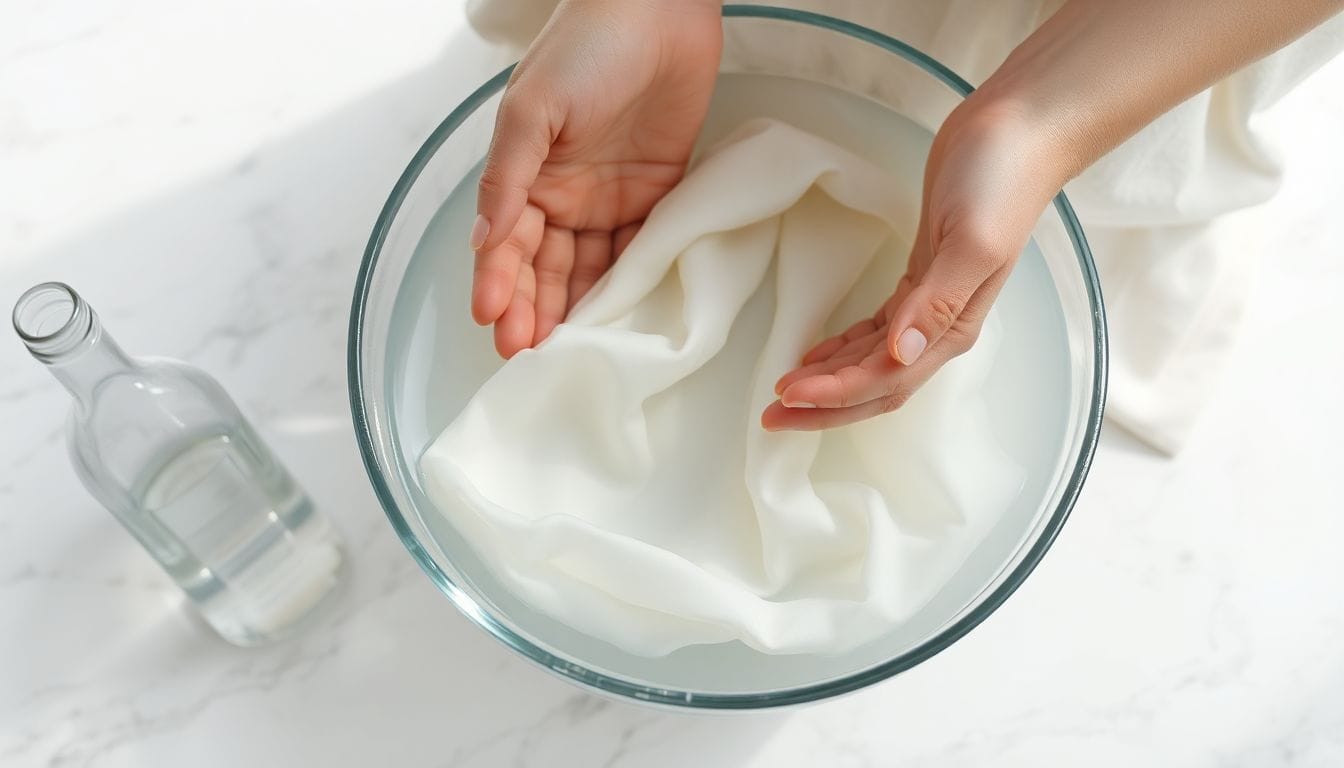
Silk garments can be hand washed safely when the correct method is followed. The “dry clean only” label on silk is frequently a manufacturer’s caution rather than a technical requirement. The three rules for washing silk without damage are: cold water only, pH-neutral or silk-specific detergent, and zero agitation. Silk loses its sheen and can shrink or pucker when exposed to alkaline detergents (like regular laundry liquid) or heat. Correct drying is equally critical — silk must be dried away from direct sunlight and never wrung.
Can You Really Wash Silk at Home?
Yes — most silk garments can be hand washed safely if the correct method is followed. The “dry clean only” label on silk is frequently a manufacturer’s caution rather than a technical requirement. Silk is a durable fiber; the label exists partly to protect manufacturers from liability when consumers use harsh methods.
There are, however, clear exceptions where professional dry cleaning is genuinely required:
- Heavily structured silk garments such as blazers and tailored jackets, where interfacing or internal padding can be damaged by water
- Embroidered silk, where stitching can loosen or bleed when submerged
- Silk with bonded linings, where adhesives may separate in water
- Vintage silk or items of unknown provenance, where fibers may already be degraded
The risks of home washing are specific and well-understood: color bleeding on dark or printed silk; shrinkage from elevated water temperatures; dullness and fiber damage from alkaline detergent; and water spotting on weighted silk (silk that has been treated with metallic salts to add body, making it more susceptible to water marks).
Understanding Why Silk is Delicate
Silk is a continuous protein filament produced by the silkworm (Bombyx mori), composed primarily of fibroin — a structural protein with remarkable tensile strength. Unlike cotton or linen, which are cellulosic plant fibers, silk is an animal protein fiber. This distinction defines every aspect of its care.
The fiber’s triangular cross-section is not merely an interesting fact — it is the structural reason silk catches and reflects light, producing its characteristic lustrous sheen. When this geometry is disrupted by heat, chemical exposure, or mechanical stress, the light-reflective property is permanently diminished. This is why damaged silk looks dull rather than simply worn.
Protein fibers are chemically vulnerable to four specific categories of damage:
- Alkaline pH (above 7): Alkaline conditions hydrolyze the peptide bonds in fibroin, weakening the fiber and causing progressive damage with each wash. Most conventional laundry detergents are alkaline (pH 8–10).
- Heat (above 30°C / 86°F): Elevated temperatures accelerate the hydrolysis of silk protein and can cause shrinkage. The AATCC (American Association of Textile Chemists and Colorists) specifies 30°C as the upper limit for silk care.
- UV light: Ultraviolet radiation causes photodegradation of fibroin, breaking down the protein chains and causing both strength loss and yellowing in white silk.
- Friction and agitation: Mechanical abrasion disrupts the fiber surface and can cause pilling, distortion, and loss of sheen.
Two specific substances must be avoided absolutely: chlorine bleach destroys silk protein through oxidation of the amino acid side chains, causing immediate fiber disintegration. Enzyme detergents — specifically protease enzymes, which are designed to digest protein-based stains — will actively digest silk fibroin. Always use a detergent specifically formulated for silk or other delicate protein fibers.
The Hand Washing Method for Silk
This section provides complete step-by-step instructions for hand washing silk garments, covering everything needed from pre-treatment testing through to proper drying. The method described below applies to all silk garments without “dry clean only” labels and those confirmed colorfast through preliminary testing.
What You Need
- A basin or clean sink — avoid metal sinks that may have detergent residue or scratches that can snag silk
- Cold water at or below 30°C (86°F)
- Silk-safe detergent — options include The Laundress Delicate Wash, Woolite Delicates, Heritage Park Silk Wash, or plain baby shampoo with a pH near neutral (6.5–7.0)
- A clean white towel — dark towels may transfer color to wet silk, and colored towels can bleed onto the fabric
Step-by-Step Instructions
- Test colorfastness first. Dampen a hidden area — the inner seam or hem — and press gently with a white cloth. If any color transfers, the garment should be sent to a dry cleaner rather than home washed.
- Fill the basin with cold water at or below 30°C. Add approximately 1 teaspoon of silk-safe detergent per garment — use less than you think necessary, as silk foams rapidly and less detergent is needed when there is no soil load to suspend.
- Submerge the garment completely and gently swish it through the water once or twice. No scrubbing, no rubbing, no twisting. Agitation is the primary cause of the dullness and pilling seen in machine-washed silk.
- Soak for a maximum of 5 minutes. Extended soaking weakens wet silk protein — the fibroin swells in water and prolonged immersion at any temperature begins to compromise the fiber structure.
- Rinse in fresh cold water at the same temperature as the wash. Temperature shock — washing in cold water and rinsing in warm — causes the fiber to contract unevenly, producing the characteristic puckering associated with improperly washed silk.
- Do not wring. Press the garment gently between your hands to coax out excess water. Alternatively, lay the garment on a clean towel, roll the towel and garment together, then unroll and reshape.
- Lay flat to dry on a dry towel in shade or indoors. Never hang silk — the weight of wet silk stretches the fibers, permanently distorting the garment’s shape.
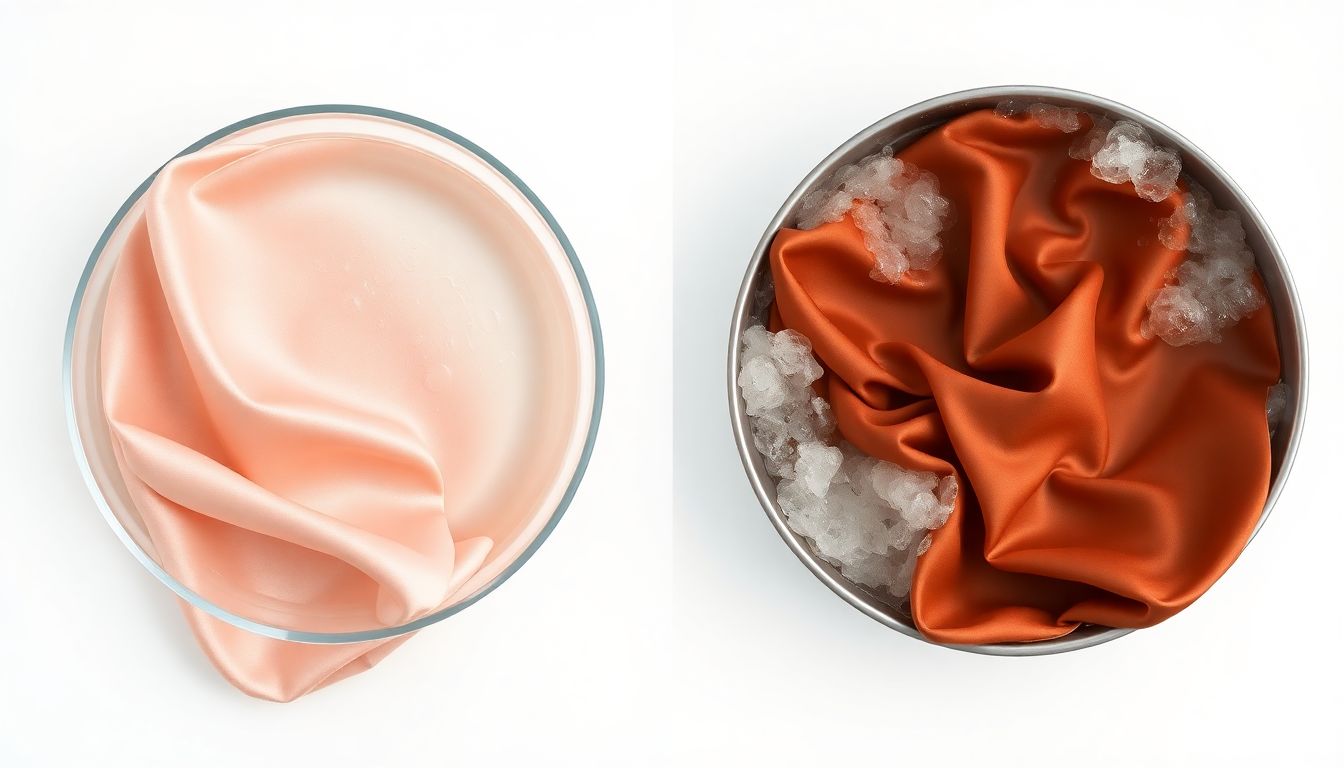
- ✓ Cold water below 30°C
- ✓ Gentle swish — no rubbing
- ✓ pH-neutral silk detergent
- ✓ Flat dry in shade
- ✓ Rinse at same temperature
- ✓ Press to remove water (no wringing)
- ✗ Hot or warm water
- ✗ Wringing or twisting
- ✗ Standard laundry detergent
- ✗ Direct sunlight drying
- ✗ Enzyme or protease detergent
- ✗ Prolonged soaking over 5 minutes
Can Silk Be Machine Washed?
Some silk items tolerate machine washing on a delicate or silk-specific cycle, but only under strict conditions. Hand washing remains the recommended method for all silk garments worn close to the body, where comfort and drape matter most.
Machine washing is acceptable only when all of the following apply:
- The garment label does not state “dry clean only”
- The silk is plain-woven — not embroidered, not printed with water-soluble inks, and not treated with metallic weighting agents
- A mesh laundry bag is used to prevent the silk from contacting the drum surface
Machine settings must be exact: cold water at 20–30°C, the delicate/silk/hand wash cycle, and the lowest spin speed available (or no spin). Even on the delicate cycle, the mechanical agitation in a front-loading machine is more vigorous than hand swishing. A mesh bag provides an essential barrier. The same pH-neutral silk detergent used for hand washing must be used in the machine — never regular laundry liquid, which remains too alkaline for silk even at low temperatures.
The trade-off is wear over time: each machine cycle, even on delicate, gradually stresses the fiber structure. Hand washing, done correctly, produces negligible fiber degradation over dozens of cycles. Machine washing, even gentle machine washing, produces measurably more.
How to Dry Silk Correctly
Drying is where many silk garments suffer irreversible damage. The rules are absolute:
- Never tumble dry silk. Heat from a tumble dryer destroys the fibroin protein’s crystalline structure, permanently destroying sheen and causing shrinkage. The ISO 3757 and AATCC TM 81 standards for silk care both specify no tumble drying.
- Never wring or twist. This distorts the fabric’s weave and permanently stretches individual fibers. The resulting sag cannot be reversed by re-washing.
- Never hang in direct sunlight. UV radiation causes photodegradation of silk protein. White silk yellows; colored silk fades. This damage accumulates and cannot be removed.
The correct method is flat drying in shade. Lay the garment on a clean, dry white towel, reshape it to its original dimensions, and allow it to dry slowly at room temperature. For items that require light pressing after drying — lined garments, structured pieces — iron on the lowest heat setting (silk setting, typically 110–120°C) with a pressing cloth (a clean white cotton cloth between the iron and the silk) while the garment is still slightly damp. Never iron silk when fully dry — the fiber scorches easily at high heat, and the pressing cloth is a non-negotiable safeguard.
Treating Silk Stains
Silk absorbs stains quickly due to its protein structure and smooth fiber surface. Act immediately — dried stains on silk are significantly harder to remove than on cotton, and the treatments required for set stains may themselves damage the fabric.
The first and universal rule: blot, never rub. Rubbing pushes the stain deeper into the fiber interstices and creates surface abrasion that shows as dull patches. Blotting lifts the stain by capillary action without disturbing the fiber surface.
For general stains, use cold water and a small amount of silk-safe detergent applied directly to the stain with a clean white cloth, then blot. For specific stain types:
- Oily stains (makeup, body oil, food grease): Apply a very small amount of clear dish soap directly to the stain, blot gently. Dish soap is designed to break down oils without alkaline builders.
- Protein stains (blood, sweat): Cold water only — enzyme-based stain removers must never be used on silk, as the protease will digest the silk fibroin itself.
- Ink stains: Blot immediately with cold water; for set ink, consult a professional dry cleaner. Home treatment risks both permanent staining and fiber damage.
Send the garment to a professional dry cleaner if the stain is large, affects the color of the fabric, or appears on delicate embroidered silk. Attempting to treat these at home creates a higher risk of permanent damage than the original stain.
Frequently Asked Questions
Can I use baby shampoo to wash silk?
Yes — baby shampoo is pH-neutral and enzyme-free, making it a safe substitute for dedicated silk detergent. Use a small amount (less than a teaspoon per garment) in cold water.
Why does silk pucker or wrinkle after washing?
Puckering is caused by temperature shock (washing in cold water, rinsing in warm), excessive agitation, or wringing the fabric. It is removed by reshaping while damp and ironing lightly with a pressing cloth on low heat.
How often should silk be washed?
Silk garments worn against skin (blouses, camisoles) should be washed after 2–3 wears. Silk items worn over other clothing (scarves, jackets) can go 5–10 wears between washing. Spot clean between washes to extend the interval.
Does silk shrink when washed?
Silk can shrink 5–10% if washed in warm water or exposed to heat drying. Cold water and flat drying prevent shrinkage. Pre-shrunk or pre-washed silk (often labelled “washable silk”) has minimal shrinkage risk.
References
- AATCC (American Association of Textile Chemists and Colorists). AATCC TM 81 — Colorfastness to Crocking. AATCC Technical Manual.
- ISO 3757:1978. Textiles — Silk — Determination of copper number. International Organization for Standardization.
- Gulrajani, M.L. (ed.). Silk: Processing, Properties and Applications. Woodhead Publishing Series in Textiles, 2013.
- Kyriakis, E. & Gandini, A. (2021). “Photodegradation of Silk Fibroin.” Journal of Cultural Heritage. https://www.sciencedirect.com/science/article/pii/S1296207421000287
- CottonWorks. Fiber Basics: Silk. https://www.cottonworks.com/en_US/topics/fiber-basics/silk/
- IWTO (International Wool Textile Organization). Care Labelling Code. IWTO Specifications.


