
How to Iron Velvet: The Right Way vs. The Wrong Way

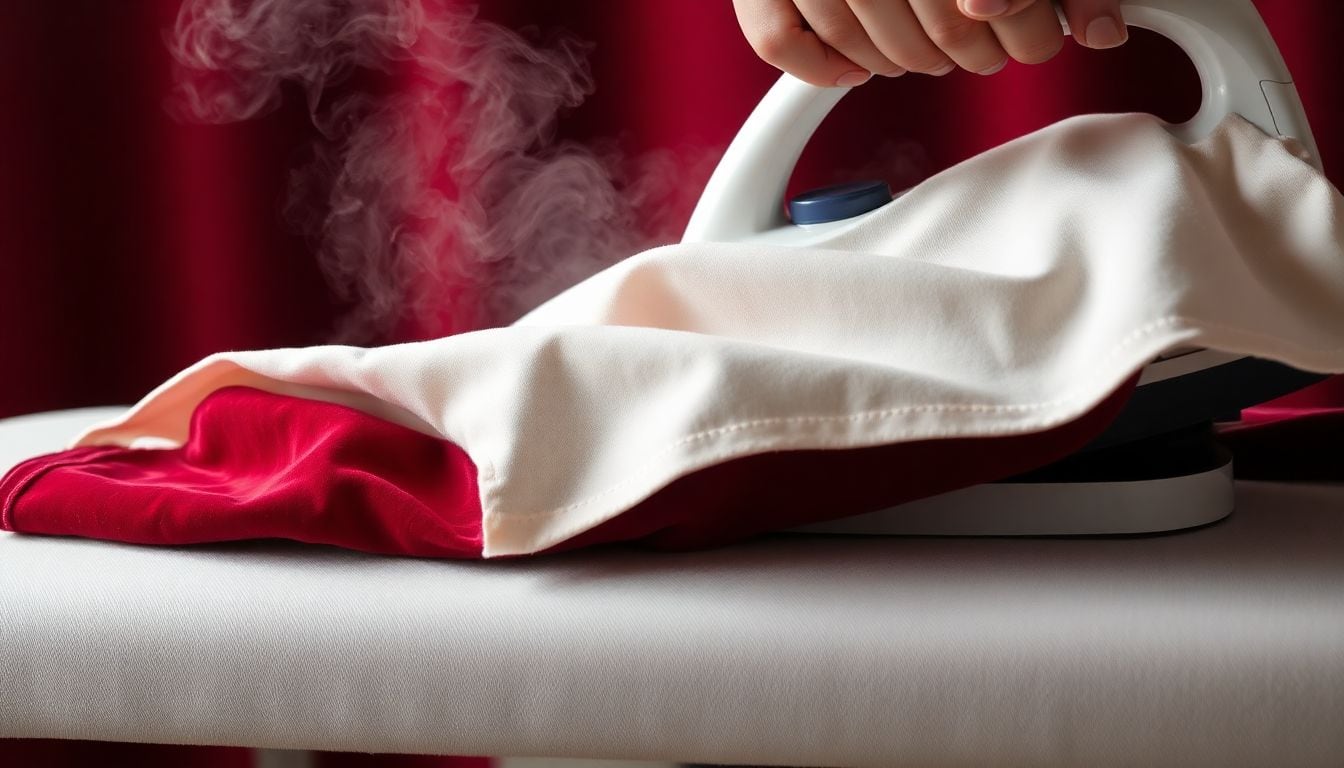
Velvet must be ironed inside-out on a padded surface at temperatures below 110°C with a pressing cloth — ironing the pile side directly crushes the fibers irreversibly and creates permanent shine marks called sear marks. The correct method preserves velvet’s texture and loft; the wrong method destroys the fabric’s visual depth and softness permanently.
Iron Temperature for Velvet: The Critical Numbers
Velvet demands iron temperatures below 110°C — the lowest heat setting, commonly labelled as the silk setting on most household irons. This is not a suggestion; it is a hard threshold. At temperatures above 150°C, velvet fibers begin to scorch, melt, and develop permanent shine that cannot be reversed. The International Textile Care Labelling Code (Ginetex) recommends the low-heat (one dot) symbol for velvet, corresponding to 110°C or lower on a conventional iron.
Steam is the enemy of velvet pile. Introduced moisture flattens the fibers, collapsing the loft that gives velvet its characteristic softness and visual depth. Always disable the steam function completely and use a dry iron only. Before applying any heat to a visible area, test on an inconspicuous spot — ideally the inside seam allowance — to check for colourfastness and fiber response.
Can You Iron Velvet Directly?
No. Never iron velvet pile side directly, not even on the lowest heat setting. The pile fibers are oriented vertically from the fabric base; they are sensitive to both direct pressure and heat. When an iron presses down on the pile, the fibers compress and bend irreversibly. Unlike woven fabrics where pressure redistributes across the surface, velvet’s upright fibers receive the full crushing force of the iron’s soleplate.
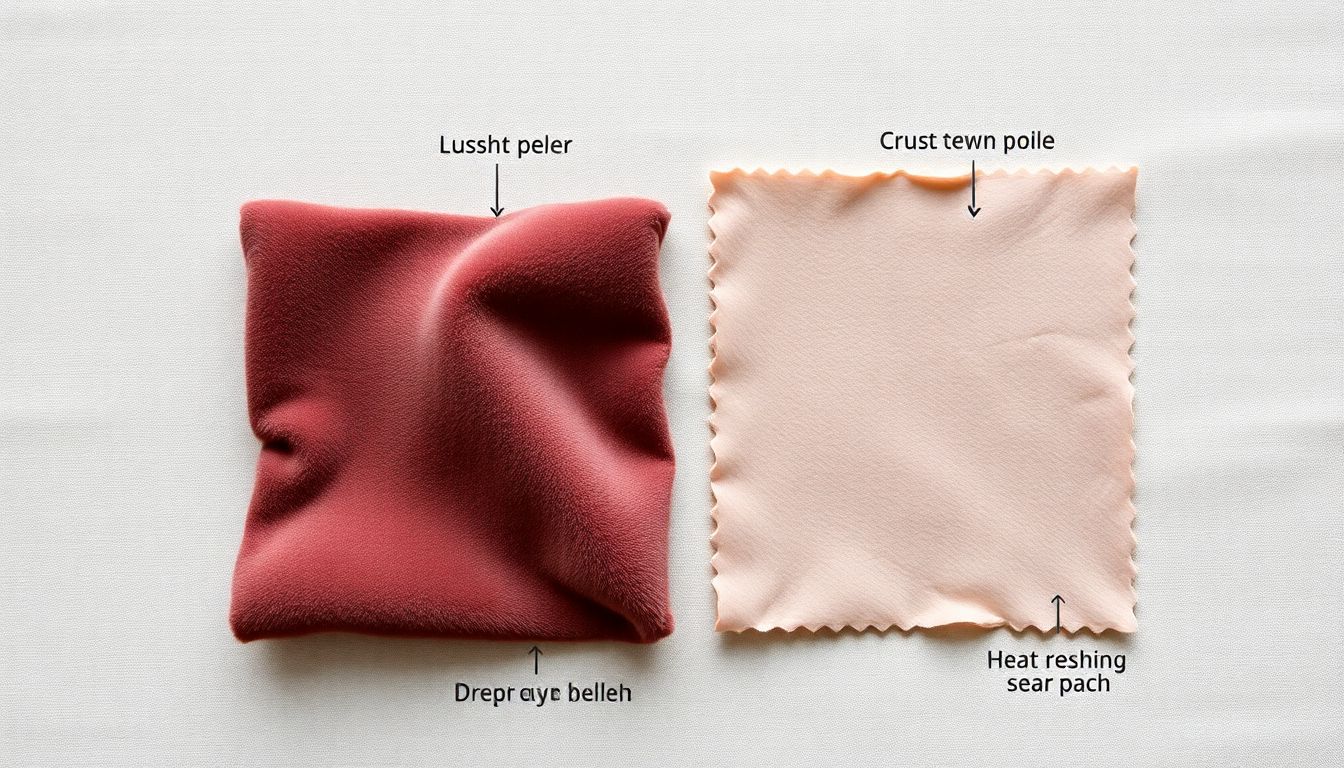
Direct pile ironing creates sear marks — shiny, flattened patches visible in direct light where fibers have been compressed and their surface reflection altered. According to textile care research from the Dry Cleaning and Laundry Institute, sear marks on velvet are classified as permanent fiber damage. They cannot be removed by subsequent steaming, brushing, or professional treatment. The only remedy is replacement of the damaged section.
The Right Way: Inside-Out Ironing Method
The inside-out method is the only safe ironing approach for velvet. By ironing the reverse side, heat and pressure reach the fabric base rather than the pile, smoothing wrinkles indirectly while protecting the visible surface. Follow these steps precisely:
- Prepare the padded surface. Lay the velvet garment inside-out on a clean, padded surface — a thick towel, velvet board, or folded quilt work equally well. The padding compresses slightly under pressure to support the fabric base without crushing the pile that sits on the opposite side.
- Set your iron correctly. Set to the lowest heat (below 110°C / silk setting). Disable the steam function completely. A dry iron only — no exceptions.
- Apply the pressing cloth. Place a clean white cotton pressing cloth (or a pillowcase) over the fabric’s reverse side. The pressing cloth distributes heat evenly across the surface and prevents direct contact between the iron soleplate and the fabric, eliminating hot spots that could cause localized damage.
- Press with short bursts. Press the iron down gently for 3–5 seconds; lift; move to the next section. Never slide the iron — sliding drags across the fabric and crushes pile fibers in the direction of movement. Work in overlapping sections, lifting and repositioning each time rather than dragging.
- Lift and assess. After pressing each section, hold the fabric up toward a light source to check for any crush marks or uneven areas. If marks appear, steam lightly from 15–20cm above while gently brushing the pile back into place with a soft velvet brush. Allow the fabric to cool completely before moving or folding.
Velvet Ironing Technique Comparison
Common Ironing Mistakes for Velvet
| Mistake | Result | Prevention |
|---|---|---|
| Ironing pile side directly | Permanent shine marks (sear marks) | Always turn inside-out |
| Using steam function | Moisture flattens pile | Disable steam completely |
| Sliding the iron | Fiber crushing in direction of movement | Lift and reposition only |
| Using high heat | Fiber scorching and melting above 150°C | Stay below 110°C |
| Ironing without pressing cloth | Uneven heat distribution and hot spots | Always use pressing cloth |
Steaming as the Preferred Alternative
Steaming is gentler than ironing for velvet and is the recommended first option before resorting to a dry iron. Steam relaxes wrinkles by introducing warmth and moisture to the fiber structure without applying direct pressure to the pile. Unlike ironing, steaming does not compress or crush the upright fibers.
The simplest steam method requires no equipment beyond a bathroom and a hot shower. Hang the velvet garment in a closed bathroom and run a hot shower for 10–15 minutes — the ambient steam will relax most wrinkles without any direct contact. For more targeted results, use a handheld steamer held at 15–20cm from the fabric, never touching the surface directly. The steam loosens wrinkles and revives the pile’s natural loft.
After steaming, brush the pile gently in one direction — nap-wise (with the pile direction) or against it, depending on the desired visual effect — using a soft velvet brush. This redistributes the fibers and restores the fabric’s characteristic sheen and softness. For stubborn wrinkles that survive steaming, use the inside-out pressing method described above as a targeted follow-up rather than a first resort. For more on caring for velvet garments, see our guide to washing velvet clothes.
Velvet Wrinkle Prevention Tips
The most effective way to deal with velvet wrinkles is to prevent them in the first place. Velvet’s sensitivity to heat and pressure means that wrinkles formed during storage are far easier to remove than those caused by improper ironing.
Store velvet hanging, never folded. Folding creates deep creases that compress the pile irreversibly along the fold line. Use velvet hangers — padded hangers or hanger clips with velvet-covered pads — to maintain the garment’s shape and distribute weight evenly across the shoulders. Never hang velvet under heavy garments that would compress the pile. For long-term storage guidance, see our article on proper garment storage techniques, which covers padded hangers and velvet-specific care.
Never press velvet with heavy objects or leave it compressed in a drawer or suitcase. Wrinkles caused by compression during storage are far easier to remove through steaming than damage caused by improper ironing. If velvet must be transported, roll the garment loosely rather than folding it, or place it in a breathable garment bag with tissue paper between layers to protect the pile. Heat damage — whether from an iron set too high or from a tumble dryer — carries the same permanent risk as direct pile ironing. See our article on heat damage to delicate fabrics for a broader discussion of thermal risks to velvet and similar pile fabrics.
Frequently Asked Questions
Q: Can you iron velvet without a pressing cloth?
A: No — a pressing cloth is essential when ironing velvet inside-out. Without it, heat and pressure concentrate unevenly, risking crush marks. The pressing cloth distributes heat evenly and provides a protective barrier between the iron and fabric.
Q: What happens if you iron velvet on the pile side?
A: Ironing velvet on the pile side creates permanent sear marks — shiny, flattened patches where fibers are crushed and melted by direct heat. These marks are irreversible and cannot be fixed with steaming or brushing. Always turn velvet inside-out before ironing.
Q: Can you use a steamer instead of an iron on velvet?
A: Yes — steaming is actually the preferred method for velvet and is gentler than ironing. Hang the garment and steam from 15–20cm distance without touching the fabric. The steam relaxes wrinkles without crushing the pile. Finish by brushing the pile gently to restore loft.
Q: What temperature is safe for ironing velvet?
A: Velvet should be ironed at temperatures below 110°C — the lowest (silk) setting on most irons. Never exceed this temperature, and never use the steam function. Test on an inside seam first to check colourfastness and fiber response.
References
- Dry Cleaning and Laundry Institute. Textile Care Labelling: Professional Guidelines for Velvet and Delicate Pile Fabrics. DCLI Technical Publications.
- Ginetex — International Care Labelling Association. Care Labelling Systems and the Ginetex Symbols Guide. https://www.ginetex.ch
- Cotton Incorporated. Fabric Care: Velvet and Pile Weaves. https://www.cottonworks.com
- British Standards Institution. BS EN ISO 3758:2012 — Textiles: Care Labelling Code Using Symbols. BSI.
- American Society for Testing and Materials. ASTM D3136 — Standard Care Label Language for Textile Floor Coverings and Software. ASTM International.


