
How to Wash Modal and Tencel: The Eco-Fiber Care Guide

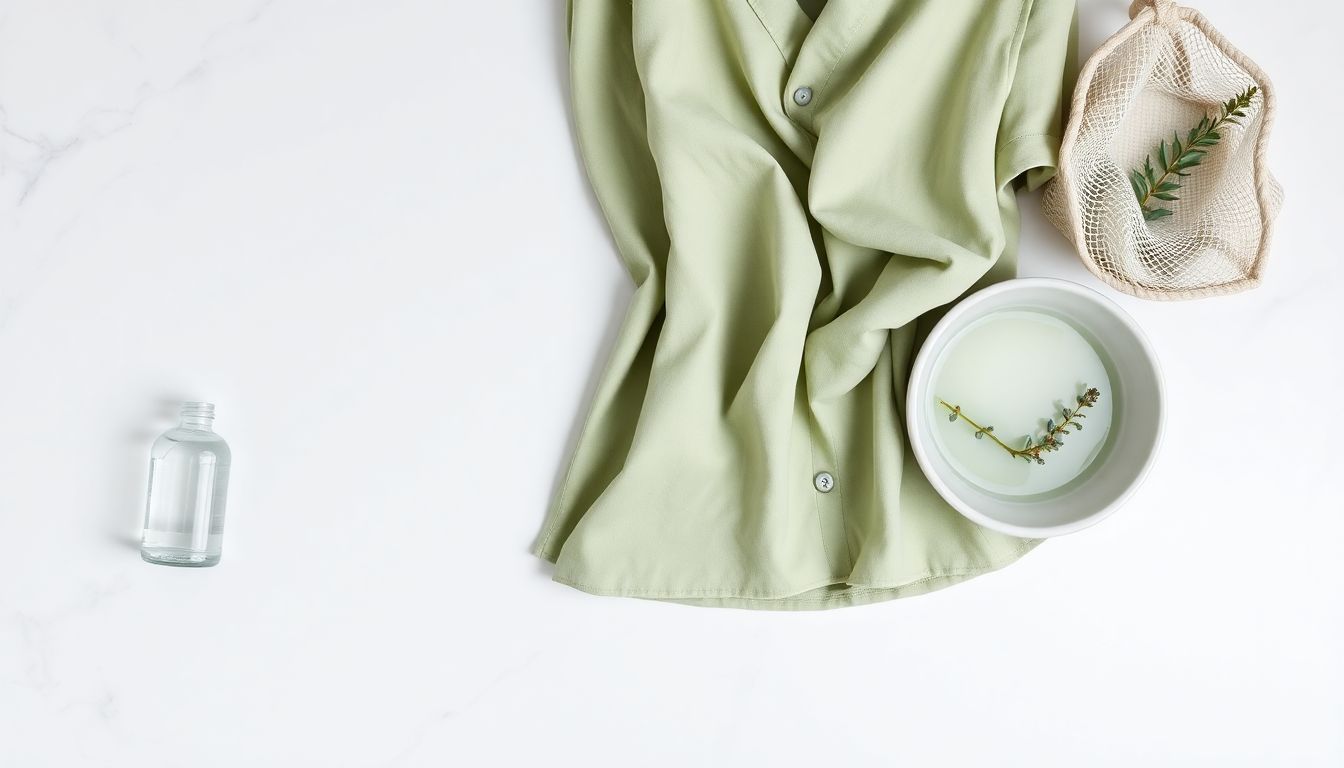
Modal and Tencel (lyocell) must be washed in cold to lukewarm water at 30°C maximum on a gentle or delicate cycle using a pH-neutral, dye-free detergent — both are regenerated cellulosic fibers that lose significant tensile strength when wet, making heat, mechanical agitation, and alkaline detergents the primary causes of fiber damage, pilling, and irreversible shrinkage. Tencel is additionally prone to fibrillation: wet agitation causes surface nanofibrils to separate and create a permanent fuzzy texture, which is why low spin speeds (400–600 rpm) and a mesh laundry bag are essential for every wash. Modal is more dimensionally stable than standard viscose but still shrinks 3–5% above 40°C; washing below 30°C maintains its shape.
Why Modal and Tencel Need Special Care
Modal and Tencel are both regenerated cellulosic fibers: wood pulp is dissolved in solvent, extruded through spinnerets, and reconstituted as continuous filament. Modal is produced exclusively from beech wood cellulose, while Tencel — the brand name for lyocell — is manufactured from sustainably sourced eucalyptus pulp in a closed-loop solvent process that recovers and reused 99% of the amine oxide solvent (N-methylmorpholine N-oxide, or NMMO). Neither fiber undergoes the heat-setting treatment that gives cotton its dimensional stability before garment assembly.
Modal is classified as a high-wet-modulus (HWM) rayon, meaning it retains considerably more strength when saturated than standard viscose. Even so, Modal loses approximately 20% of its dry tensile strength when wet — a reduction that makes mechanical agitation during washing a primary risk factor for pilling, surface distortion, and fiber breakage. Tencel presents an additional vulnerability: its unique nanofibril surface structure. Wet mechanical stress causes individual surface fibrils to detach from the fiber body, producing a soft fuzzy or “peach-skin” texture — a phenomenon called fibrillation. Unlike pilling, where short fibers ball up on the surface, fibrillation is an irreversible structural change to the fiber itself; once the fibrils separate and re-set, the texture cannot be restored to its original state.
Both fibers are chemically sensitive to alkaline pH. Detergents with a pH above 8–9 weaken cellulose polymer chains through hydrolytic scission, progressively degrading fiber integrity over repeated wash cycles. Heat above 40°C disrupts hydrogen bonding within the cellulose crystalline structure, causing the fibers to contract. Modal shrinks 3–5% when washed above this threshold; Tencel can shrink up to 8% under the same conditions. Because neither fiber is pre-shrunk during manufacturing, the first wash carries the highest shrinkage risk — a fact that makes correct first-wash temperature critical for garment longevity.
Reading the Care Label on Modal and Tencel Garments
Every modal and Tencel garment ships with a care label bearing standardized symbols defined by ISO 3758 (care labelling for textiles). Understanding these symbols prevents avoidable damage:
- Hand-wash symbol (bucket with a hand): Wash by hand only — no mechanical agitation whatsoever. Use this as an absolute instruction, not a preference.
- Gentle machine wash (bucket with a single underline): Machine wash permitted on the delicate, wool, or hand-wash program only.
- 30°C number in bucket: Maximum wash temperature is 30°C. Exceeding this temperature risks shrinkage and progressive fiber damage — the threshold is not a target but a ceiling.
- Do Not Bleach (crossed triangle): No chlorine bleach or oxygen bleach (sodium percarbonate). Both attack the cellulose polymer backbone, depolymerizing chains and causing loss of tensile strength. No bleach is ever safe on these fibers.
- Lay Flat to Dry (rectangle with a horizontal line): Air dry on a flat surface. Hanging wet Tencel or modal knits causes permanent stretch distortion as the weight of absorbed water pulls the fabric out of shape under gravity.
- Do Not Tumble Dry (circle with an X): No tumble drying under any heat setting. Low Heat only (circle with one dot): Tumble drying is permitted only on the air-fluff or lowest heat setting, and only for woven Tencel garments with explicit label approval.
If a label specifies dry-clean only, follow it. Some structured Tencel-blend garments — particularly those with fusible interlinings, basting stitches, or complex tailoring — cannot safely tolerate water immersion, and water shrinkage in those constructions is irreversible.
Hand Washing Modal and Tencel (Recommended Method)
Hand washing is the gold standard for both fibers — it eliminates mechanical agitation entirely and is the only method that fully prevents fibrillation in Tencel. Follow these steps precisely:
- Fill a basin or clean sink with cool water at 20–30°C. Use a thermometer to confirm the temperature — the “feels cool, not warm” test is unreliable when ambient temperature varies.
- Add 1 teaspoon (approximately 5 mL) of pH-neutral delicate liquid detergent such as Woolite Delicates, Ecover Delicate, or Perwoll Sensitive. Stir gently until fully dissolved before adding the garment — undissolved detergent can concentrate on fabric surfaces and cause local alkalinity damage.
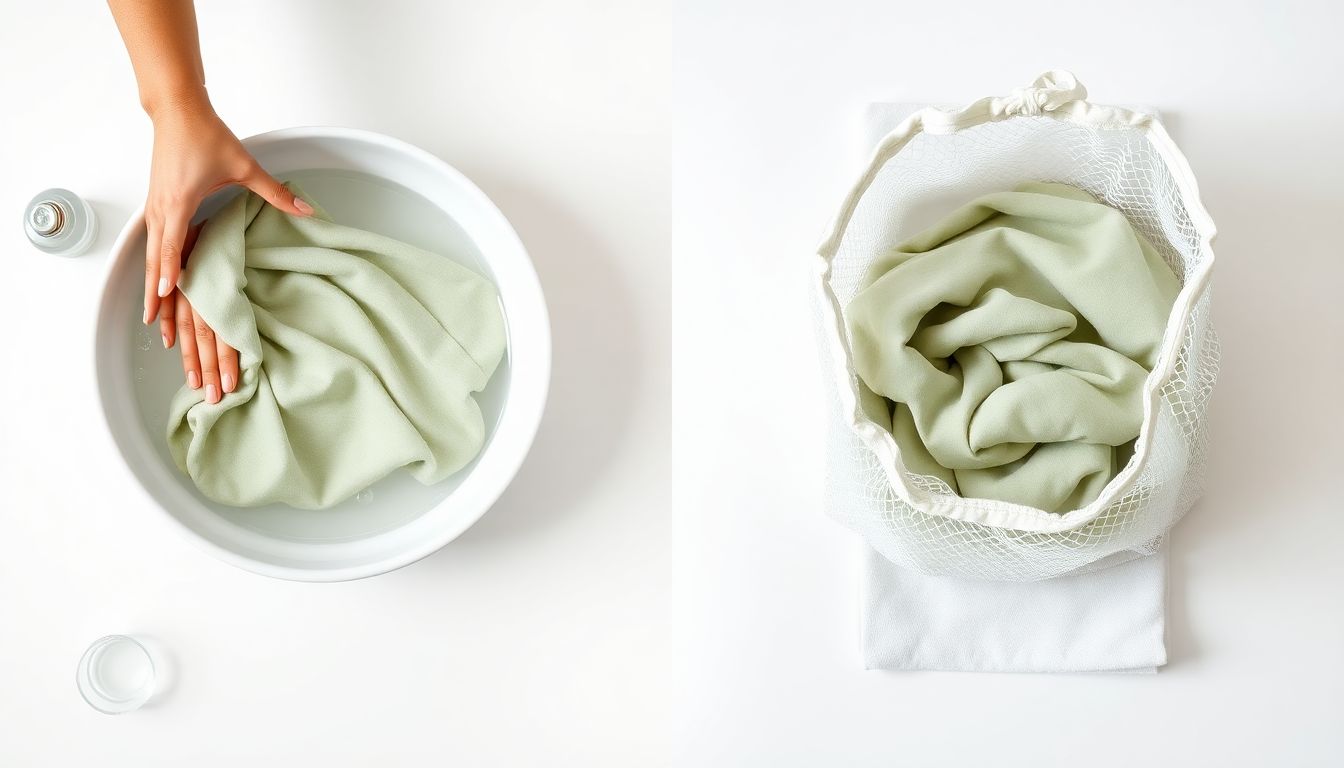
- Submerge the garment completely. Gently swirl and press the fabric against itself for 2–3 minutes. Never rub fabric against fabric, scrub with force, or wring — these actions generate the exact shear forces that cause Tencel fibrillation and Modal pilling.
- Allow to soak undisturbed for 10–15 minutes if the garment is heavily soiled or has underarm odor buildup. Soaking is safe; mechanical action is not.
- Drain the soapy water. Refill the basin with fresh cool water at the same temperature. Gently press the fabric to rinse — do not wring or twist.
- Repeat rinsing until water runs completely clear and no suds remain. Residual detergent left in cellulosic fibers stiffens the fabric over time and creates a substrate for optical brightener accumulation.
- Lift the garment by supporting its full surface area with both hands. Never lift by straps, waistband, or a single point — wet Modal and Tencel stretch easily at localized loads, and the resulting distortion is permanent once the fabric dries.
- Remove excess moisture by rolling the garment inside a clean dry towel and pressing firmly with both hands. Do not twist or wring. The towel roll extracts 60–70% of the water content without mechanical stress on the fibers.
Machine Washing Modal and Tencel (Acceptable with Conditions)
Machine washing is acceptable for Tencel and Modal when a mesh laundry bag is used and machine parameters are set within strict limits. Skipping any of the conditions below converts a safe wash into a fiber-damaging one:
- Use a mesh laundry bag: The bag creates a physical barrier between the garment and the washing machine drum, reducing direct mechanical contact and protecting Tencel’s nanofibril surface from friction-driven fibrillation. Use a fine-mesh bag (not a coarse net) for lightweight fabrics.
- Cycle selection: Select the Delicate, Gentle, Wool, or Hand-Wash program. Never use the Cotton, Normal, or Permanent Press cycle — these programs use higher agitation speeds, longer wash times, and warmer temperatures that are incompatible with fragile cellulosic fibers.
- Temperature: 30°C maximum. Cold water (20°C) is safer still, especially for the first wash of a new garment where maximum shrinkage risk exists. Never exceed 40°C — above this threshold, both fibers undergo irreversible cellulose hydrogen bond rearrangement and shrinkage.
- Spin speed: 400–600 rpm maximum. Standard machine spin cycles operate at 1,000–1,200 rpm, which subjects already-weakened wet fibers to centrifugal forces capable of deforming the fabric structure. Many front-loaders allow manual rpm setting; use it.
- Detergent: pH-neutral liquid formula only. Woolite Delicates, Ecover Delicate, and Perwoll Sensitive are reliable options. Enzyme-free detergents are safe for cellulosic fibers — protease and amylase enzymes are formulated for protein (cotton) and starch stains and are unnecessary on these fibers.
- Fabric softener: Skip entirely. Fabric softener deposits a waxy cationic residue on cellulosic fiber surfaces that progressively reduces their natural moisture-wicking and breathability — two properties that are central to why consumers choose Modal and Tencel in the first place.
- Load discipline: Wash with similar-weight delicate items only. Never combine with denim, heavy cotton towels, or garments with exposed metal hardware (zippers, hooks, clasps) that cause point-loading abrasion and can snag delicate knit structures.
How to Dry Modal and Tencel
Drying is where many modal and Tencel garments sustain irreversible damage — not from the drying action itself but from heat exposure and gravitational load on wet fibers. Follow these rules:
- Lay flat to dry (preferred for all knit constructions): Spread the garment on a clean dry bath towel on a flat surface. Gently reshape it to its original dimensions while still damp — this is when the fabric is most malleable and corrections are most effective. Allow to air dry completely: 2–4 hours for t-shirts and light tops; 6–8 hours for structured blouses and heavier knits.
- Hanging to dry: Acceptable for woven garments only (dresses, shirts, trousers). Never hang wet modal or Tencel knitwear — the weight of absorbed water (which can equal 200–300% of the fabric’s dry weight in cellulosic fibers) permanently stretches knit stitches beyond recovery.
- Tumble dry on low or air-only: Some manufacturers permit tumble drying for Tencel woven garments; check the label first. When permitted, use the air-fluff or lowest heat setting exclusively. Remove the garment while still slightly damp (approximately 70% dry) to allow final reshaping and air drying flat — this eliminates the final 30% of drying time under zero heat.
- Never use high heat: Modal shrinks 5–8% and Tencel 5–10% on high heat tumble settings, and this shrinkage is cumulative — each subsequent heat exposure compounds the previous. Even garments that have survived multiple washes without shrinkage are not immune; the damage is progressive and additive.
- Avoid direct sunlight: Modal and Tencel are dyed with reactive dyes that are susceptible to fade under UV exposure. Extended sunlight during drying also accelerates hydrolytic degradation of the cellulose polymer chain. Dry in shade or in a well-ventilated indoor space.
Modal and Tencel Product Care Guide
| Product Type | Recommended | Avoid |
|---|---|---|
| Detergent | pH-neutral liquid: Woolite Delicates, Ecover Delicate, Perwoll Sensitive | Bio/enzyme detergents (Ariel Bio, Persil Bio, Bold), bleach, fabric softener |
| Water temperature | 20–30°C (cold to cool) | Above 40°C — initiates irreversible cellulose bond rearrangement |
| Spin speed | 400–600 rpm (gentle/delicate program) | Standard spin at 1,000+ rpm — centrifugal damage to weakened wet fibers |
| Laundry tools | Fine-mesh laundry bag, clean dry towel for moisture removal | Hard brushes, abrasive scrub cloths, bleach pens, wringing or twisting |
| Stain pre-treatment | Diluted pH-neutral detergent, cold water spot-treatment only | Bleach, hydrogen peroxide, hot water application, enzyme pre-soak |
| Drying method | Flat air dry on towel; low-temp tumble (if label permits) for wovens | High heat tumble, hanging knits while wet, direct sunlight |
Two categories of detergents require specific avoidance. Bio/enzyme detergents such as Ariel Bio, Persil Bio, and Bold contain protease and amylase enzymes at alkaline pH — these enzymes are effective on cotton’s protein-based stains but are unnecessary and actively harmful to cellulosic fibers. Over repeated washes, the elevated pH from these detergents progressively weakens the Tencel nanofibril surface structure. Optical brighteners and fragrance additives found in many mainstream detergents accumulate on the rough surface of cellulosic fibers and are difficult to rinse out completely. Once accumulated, they create a coating that yellows under UV light exposure and progressively reduces the fabric’s natural moisture-wicking capacity.
Frequently Asked Questions
Q: Can you put modal in the dryer?
A: Modal can be tumble dried on a low-heat or air-only setting if the care label explicitly permits it, but high heat causes irreversible 5–8% shrinkage even in garments that have been washed before. The safest drying method for modal is always flat air drying — reshape the garment while damp and allow it to dry on a clean towel. Always check the specific care label before using any heat.
Q: Does Tencel shrink when washed?
A: Tencel shrinks 3–8% when washed above 40°C or tumble-dried on high heat, depending on the garment construction and whether it was pre-washed during manufacture. Washing at 30°C or below on a gentle cycle and air drying flat maintains dimensional stability. The first wash carries the highest shrinkage risk — wash new Tencel garments at 20–30°C to minimize it.
Q: Can you wash modal and Tencel together in the same load?
A: Yes — modal and Tencel share identical washing requirements (30°C or below, gentle cycle, pH-neutral detergent, 400–600 rpm spin) and can be washed together in a single load without issue. Use a mesh laundry bag for Tencel garments specifically, and avoid mixing with heavier fabrics like denim or items with exposed metal hardware.
Q: What detergent is best for Tencel?
A: A pH-neutral liquid detergent formulated for delicates is best for Tencel — Woolite Delicates, Ecover Delicate, and Perwoll Sensitive are reliable options. Avoid any detergent labeled “bio,” “biological,” or “active enzymes,” and avoid those containing optical brighteners or bleach activators, which raise pH and degrade Tencel’s nanofibril surface structure over repeated washes.
References
- Lenzing AG. (2024). Modal Fiber — Properties and Applications. Lenzing AG. https://www.lenzing.com/fibers/modal
- Lenzing AG. (2024). Tencel Lyocell — Production and Properties. Lenzing AG. https://www.tencel.com
- Cotton Incorporated. (2024). Fabric Care: Modal and Lyocell Fibers. Cotton Incorporated. https://www.cottonworks.com/fabric-care/
- Textile Exchange. (2023). Lyocell Fiber Market Data and Sustainability. Textile Exchange. https://textileexchange.org
- ISO. (2012). ISO 3758:2012 — Textiles — Care Labelling Code Using Symbols. International Organization for Standardization. https://www.iso.org/standard/63554.html
- AATCC. (2024). AATCC Test Method 124 — Appearance of Fabrics after Repeated Home Laundering. American Association of Textile Chemists and Colorists. https://www.aatcc.org


