
How to Wash Denim Jeans Without Fading or Shrinking

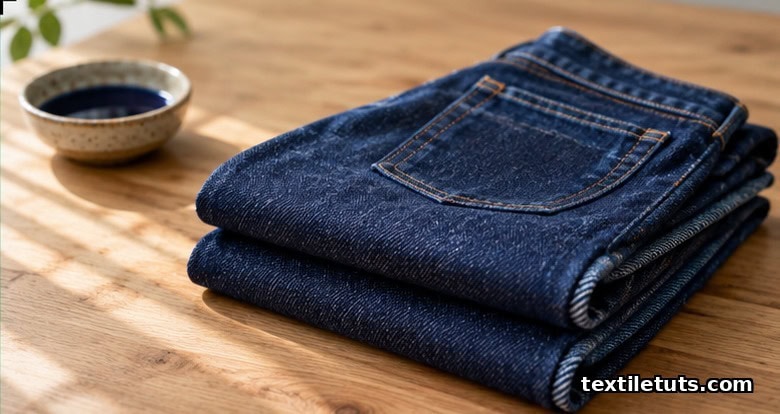
Denim fades primarily from washing—the indigo dye that gives denim its blue color is a surface dye that sits on the outside of cotton yarn rather than penetrating through it. Every wash removes some indigo. The approach that minimizes fading: wash jeans inside-out in cold water with a small amount of liquid detergent as infrequently as possible (most denim can go 5–10 wears between washes). Raw denim enthusiasts go months without washing to develop natural fade patterns.
Why Denim Fades in the Wash (The Indigo Chemistry)
To understand why denim fades, you need to understand what indigo actually is and how it bonds to cotton. Indigo is an organic compound with the chemical formula C&sub16;H&sub10;N&sub2O&sub2;—a dark blue crystalline powder that is insoluble in water in its standard form. The dyeing process requires chemically reducing indigo to “white indigo” (leuco-indigo), which dissolves in the dyebath. When fabric is removed and exposed to air, the leuco-indigo rapidly oxidizes back to insoluble blue indigo on the fiber surface. Approximately 3–12 grams of indigo dye are used on a single pair of jeans.
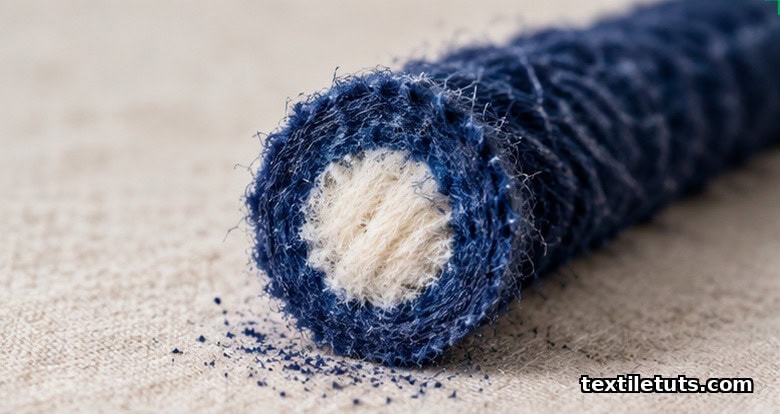
The critical issue for fade resistance is that indigo is a vat dye applied using a ring-dyeing process. In ring dyeing, cotton yarn is passed repeatedly through indigo vats and allowed to oxidize between dips. This creates a characteristic structure: the outer surface of each yarn is dyed blue, while the inner core of the yarn remains undyed (white or natural cotton). The indigo-dyed weft threads are arranged so that the colored outer face is what you see from the outside of the fabric.
Each wash mechanically abrades indigo molecules off the fiber surface—this is physical removal, not chemistry. Hot water gives dye molecules more thermal energy and accelerates their release from the fiber. Friction from the wash agitation also strips away surface indigo. Washing inside-out is so effective because the undyed inner face of the yarn takes all the abrasive friction, leaving the outer indigo surface protected. Cold water slows molecular movement, reducing how readily indigo releases from the fiber.
The conjugated double-bond structure of the indigo molecule, while responsible for its vivid color, also makes it susceptible to oxidation and abrasion over time. The color you see at 613 nm (orange-red absorption) sits on the fiber exterior. Once enough of that surface dye wears away, the white cotton core becomes visible—and that is what fading looks like.
How Often Should You Wash Jeans?
The standard recommendation from virtually every major denim brand is 5–10 wears between washing. Levi’s CEO and other major manufacturers officially recommend washing jeans as infrequently as possible. The idea that jeans must be washed after every wear is a modern habit—denim is far more durable than most fabrics, and frequent washing accelerates wear rather than preventing it.
Raw and selvedge denim owners take this principle to an extreme: many go 6 months to a year without machine washing. The goal is to develop natural fade patterns unique to the wearer’s body and habits—honeycomb fading at the knees, whiskering at the thighs, and combs at the back hem. These patterns, created by the fabric molding to the body and fading where it creases, cannot be replicated by washing and are considered a mark of personal authenticity in raw denim culture.
Between washes, take these maintenance steps to extend the time between full washes: spot clean visible marks immediately with a damp cloth; hang jeans indoors or outside for 30–60 minutes after wearing to allow moisture and odor to dissipate; and freeze jeans overnight in a sealed bag to kill odor-causing bacteria when needed. A wash is genuinely necessary only when jeans are visibly soiled, have persistent odor that air cannot resolve, or carry a significant stain.
Step-by-Step: How to Wash Jeans
Follow these steps in sequence for optimal fade prevention on any indigo-dyed denim:
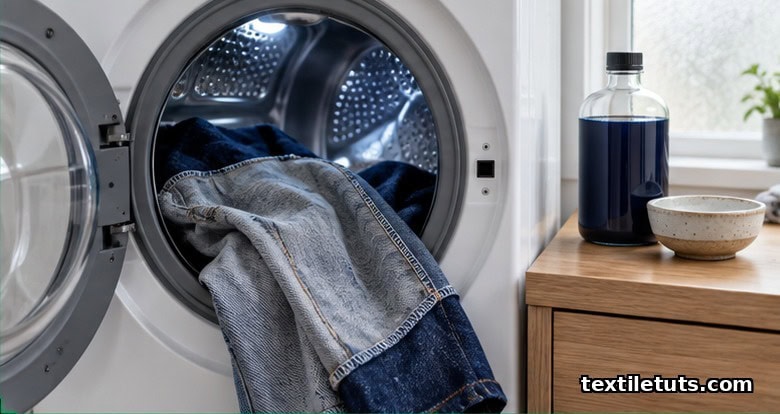
- Turn jeans inside-out completely — this is the single most important step for fade prevention. The undyed inner face of the yarn absorbs all mechanical friction.
- Separate from white and light-colored items — denim bleeds indigo dye strongly during the first 10 or more washes. Combined with other clothing, this will cause dye transfer.
- Select cold water setting — 20–30°C maximum. Cold water is always best. Hot water accelerates indigo release from fibers and causes cotton relaxation shrinkage of 3–5%.
- Choose the gentle cycle — reduces mechanical abrasion on the indigo-dyed fiber surface. Heavy-duty or normal cycles create more fiber-on-fiber friction.
- Use a small amount of dark-color or denim-specific liquid detergent — products like Woolite Dark or dedicated denim detergents are formulated to clean effectively at low temperatures without harsh surfactants. Reduce the quantity below your normal dose.
- Skip fabric softener — softener coats cotton fibers and builds up in the denim weave over time. This interferes with the fabric’s ability to breathe and can trap odor-causing bacteria.
- Remove promptly when the cycle ends — denim wrinkles badly if left damp in the wash drum. Hang or lay flat immediately to finish drying.
Why Washing Causes Denim Fading: Indigo Ring Dyeing Explained
indigo-dyed yarn
Inner core (white): Undyed cotton fiber
Why fading happens: Each wash abrades the outer indigo ring. Once enough surface dye is removed, the white core shows through — this is visible fading. Washing inside-out protects the blue outer ring by exposing only the undyed inner core to friction.
Drying Denim Jeans
Drying method matters as much as washing method for preserving denim color and fit. High heat is the enemy of indigo: it accelerates fading and causes cotton relaxation shrinkage of 3–5% perexposure.

Line drying (best option): Hang jeans inside-out in shade or indoors. Direct sunlight UV light fades denim even when turned inside-out—UV breaks down the conjugated double bonds in indigo molecules just as effectively as mechanical abrasion. Indoor air drying in indirect light preserves indigo longest.
Tumble drying (use low heat only): If you must tumble dry, set to low heat and remove jeans while still slightly damp. Finish drying by hanging or laying flat. High heat causes both shrinkage and accelerated indigo loss. The combination of heat and mechanical tumbling is particularly damaging to raw denim’s fiber structure.
Lay flat to dry: For very structured or heavy denim (selvedge, heavyweight 16oz+ denim), hanging can cause the fabric to stretch lengthwise. Lay flat on a clean towel to dry, flipping jeans once halfway through. This is the preferred method for heavy raw denim that might distort under its own weight when hung.
Raw Denim vs. Pre-Washed Denim: Different Rules
Not all denim behaves the same way in the wash. Understanding whether your jeans are raw or pre-washed determines what kind of shrinkage and fading response to expect.
Pre-Washed Denim (Most Mass-Market Jeans)
The majority of jeans sold today are made from pre-washed denim. During manufacturing, the fabric undergoes a sanforization process—a controlled mechanical treatment with moisture and heat that pre-shrinks the fabric and stabilizes its dimensions. Most first-wash shrinkage has already been removed. However, 3–5% additional relaxation shrinkage remains possible if you wash at high temperatures. Follow the standard washing instructions above: cold water, gentle cycle, inside-out.
Raw/Dry/Rigid Denim (Unwashed)
Raw denim arrives from the mill with its original starch and sizing intact. It has not been washed or treated in any way after dyeing. This means the first wash will cause 5–10% shrinkage in both length and width as the fabric releases its tensions and the cotton fibers absorb water and contract. If you buy raw denim in your true size, expect the jeans to shrink to a smaller fit after their first wash.
Some raw denim owners never machine wash at all—instead they hand wash in a basin or spot-clean specific areas. The goal is maximum control over how fading develops. For those who want a custom fit, the “hot soak” method involves submerging in a bathtub of hot water while wearing the jeans, shrinking the fabric directly to the body’s shape—a technique pioneered with the Levi’s 501 “Shrink to Fit” line.
After the first wash and wear cycle, treat raw denim the same as pre-washed denim: cold water, inside-out, gentle cycle, minimal detergent. For more on intentional denim shrinkage, see our guide to how to shrink jeans intentionally. And if you accidentally shrink a favorite pair too much, our guide to how to unshrink jeans covers recovery methods.
For a deeper technical explanation of why raw denim shrinks and how much, read our article: Does denim shrink?
Removing Specific Denim Stains Without Full Washing
Not every stain requires a full wash cycle. Targeted spot treatment is faster, gentler on the indigo surface, and avoids the cumulative fading effect of full washes.
Light dirt and dust: Use a soft clothing brush (a natural-bristle shoe brush works well) to dry-brush the affected area. Brush in one direction, not back and forth, to avoid embedding particles deeper into the weave. This is the standard method raw denim owners use between soaks to keep the fabric clean without washing.
Small liquid stains: Blot immediately with a clean, cold, damp cloth. Do not rub—blotting spreads the stain less. Apply a tiny amount of liquid detergent directly to the stain, work it in gently with your fingertip, then blot again with cold water. Allow to air dry fully before wearing.
Grease or oil stains: Act fast. Cover the stain immediately with cornstarch, talcum powder, or baking soda. Let it absorb for a minimum of 30 minutes—longer for larger spills—then brush off with a soft brush. If the stain persists, apply a small drop of dish soap (designed to cut grease) directly to the spot, work in gently, and blot with cold water. Dish soap is more effective on oil than standard laundry detergent because it is specifically formulated to emulsify fatty acids.
Frequently Asked Questions
How do you wash black jeans without fading?
Wash inside-out in cold water (20°C) with a detergent formulated for darks. Black denim is dyed with sulfur or reactive dye rather than indigo, but it fades by the same abrasion mechanism. Partially restore color with a commercial dye refresher product designed for dark fabrics.
Can you wash jeans in hot water?
Hot water accelerates fading significantly and causes 3–5% shrinkage of the cotton fibers. Cold water is always the recommended choice for indigo-dyed denim. If you must sanitize jeans due to exposure to bacteria or insects, a brief hot water wash is an exception—but expect noticeable fading and shrinkage.
How do you get the smell out of jeans without washing them?
Hang jeans outside in fresh air for several hours on a clothesline or hanger. Alternatively, seal jeans in a plastic bag and place in a freezer overnight—the cold kills the bacteria that cause body odor. A light spritz of diluted vodka (50/50 with water) is also an effective odor eliminator; the alcohol evaporates quickly, leaving no residue.
Should you wash new jeans before wearing?
For pre-washed jeans: washing before first wear is optional. For raw/rigid denim: most owners skip the first wash intentionally to allow natural fading patterns to develop from the very first wear. If hygiene is a concern, turn inside-out and wash in cold water before first wear—this will still trigger first-wash shrinkage, so factor that into your sizing decision.
References
- Wikipedia. (2024). Indigo dye. Wikimedia Foundation.
- Wikipedia. (2024). Denim. Wikimedia Foundation.
- Cotton Works. CottonWorks — Technical Resource for Cotton. Cotton Incorporated.
- International Wool Textile Organisation. IWTO — Global Authority for Wool Textile Standards.
- AATCC. AATCC Test Methods and Procedures. American Association of Textile Chemists and Colorists.


