
How to Wash Synthetic Fabrics (Polyester, Nylon, Spandex)

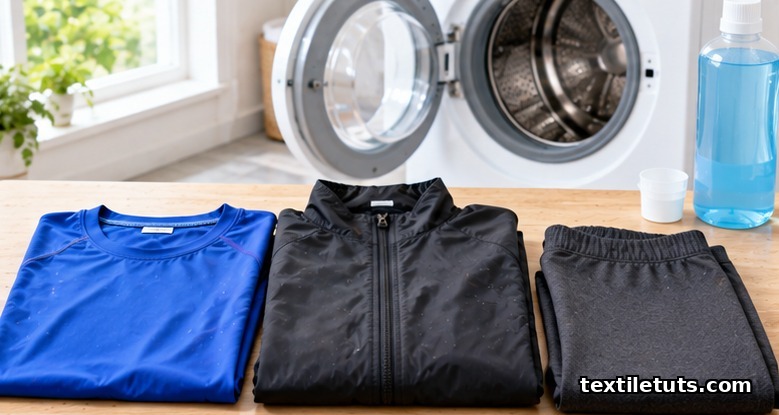
Synthetic fabrics are the most durable and wash-friendly category of textiles — polyester, nylon, acrylic, and spandex resist shrinkage, tolerate machine washing, and dry quickly. The care challenges for synthetics are different from natural fibers: odor retention in polyester activewear, pilling in acrylic, elastic degradation in spandex from heat, and static buildup in all synthetics. Washing at 30–40°C on a gentle cycle handles most synthetics; high heat is the primary risk to avoid.
Synthetic Fabric Overview: Key Care Properties
Five primary synthetic fabrics dominate consumer textiles: polyester, nylon, acrylic, spandex/elastane, and microfiber. Each behaves differently in the laundry environment. The table below summarizes the critical care characteristics for these five synthetic fabrics.
| Fiber | Shrink Risk | Heat Sensitivity | Odor Retention | Pilling Risk |
|---|---|---|---|---|
| Polyester | Very low | Moderate (melts above 160°C) | High | Low-moderate |
| Nylon | Very low | Moderate (yellows with UV) | Low | Low |
| Acrylic | Low | Moderate | Low | High |
| Spandex/Elastane | None | High (elastic degradation above 40°C) | Moderate | Low |
| Polyester/cotton blend | Low | Moderate | Moderate | Low |
General Rules for All Synthetics
Universal guidelines for synthetic fabrics dictate temperature caps, cycle selections, and product restrictions that apply across all five fiber types. Violating these rules consistently shortens garment lifespan and degrades performance properties.
- Temperature: 30–40°C; never hot wash synthetics. Heat causes pilling in acrylic and polyester, generates static in all synthetics, and can cause delicate fibers to melt or deform. Polyester melts at approximately 160°C, but sub-boiling temperatures still accelerate fiber damage over repeated cycles.
- Cycle: Use the gentle or delicate setting on your washing machine. This reduces mechanical friction that causes pilling in polyester and acrylic. High-speed agitation is the enemy of synthetic fabric longevity.
- Detergent: Use liquid detergent only — never powder. Powder detergents can leave mineral residue embedded in the tight fiber structure of synthetics, reducing moisture-wicking performance and causing skin irritation. Liquid detergents dissolve completely and rinse clean.
- No fabric softener: Liquid fabric softener coats synthetic fibers with a waxy residue that blocks the open fiber channels responsible for moisture-wicking and breathability. This is particularly damaging for athletic activewear where these properties are engineered into the fabric. Instead of softener, add ¼ cup white vinegar to the rinse compartment occasionally to soften naturally.
- Drying: Never tumble dry on high heat. Synthetics dry extremely quickly without heat — typically 20–60 minutes air drying at room temperature. High heat causes pilling in polyester and acrylic, degrades elastic in spandex, and creates static charge in all synthetic fibers.
Washing Polyester
Polyester is the world’s most widely used synthetic fiber, prized for its durability, wrinkle resistance, and quick-drying properties. Polyester is highly hydrophobic (repels water) and oleophilic (attracts and retains oils). This oleophilic nature is the root cause of polyester’s most common laundry problem: odor retention. To learn whether polyester shrinks in the wash, see our guide to does polyester shrink.
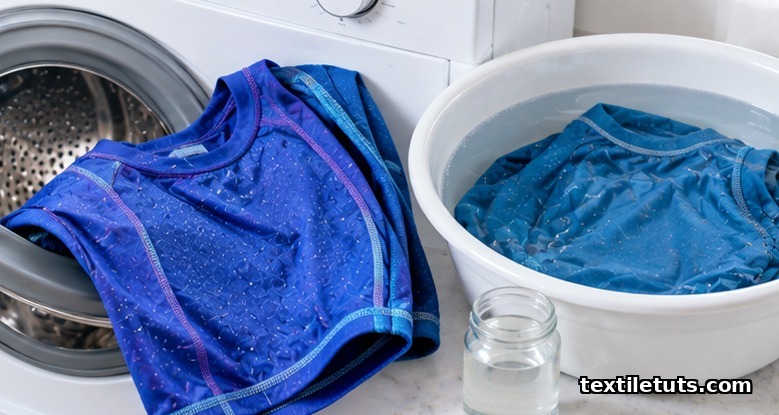
The Odor Problem: Why Polyester Activewear Smells After Washing
Standard washing often fails to fully remove odor from polyester activewear. The reason is scientific: polyester’s oleophilic (oil-attracting) surface binds to the fatty acids in body oils, and the bacteria that cause odor (primarily Staphylococcus epidermidis and Corynebacterium species) become trapped within the fiber structure. These odor-causing bacteria survive standard wash cycles because regular detergent cannot fully penetrate polyester’s hydrophobic fiber matrix.
Solutions for heavily odorous polyester:
- Sports-specific detergents are formulated with enzymes and surfactants designed to penetrate synthetic fiber structures. Products like Nikwax Tech Wash, Sport Suds, and Win Detergent contain odor-neutralizing compounds that regular laundry detergents lack.
- White vinegar pre-soak: Soak odorous polyester garments in cold water with ¼ cup white vinegar for 30 minutes before washing. The acetic acid in vinegar breaks down the fatty acid deposits that harbor bacteria.
- Inside-out washing: Always turn polyester activewear inside-out before washing. This exposes the sweat-contact side of the fabric — where body oils and bacteria accumulate — directly to detergent action.
- Temperature adjustment: If the garment label permits, increase wash temperature to 40°C. Warmer water improves detergent efficacy and bacterial kill rates, though this accelerates fabric wear with repeated high-temperature cycles.
Standard Polyester Washing Process
- Turn the garment inside-out and close all zippers to prevent snagging.
- Select a gentle or delicate cycle at 30°C with cold water preferred for dark colors.
- Add liquid detergent — use a sports-specific formula for activewear with odor issues.
- Run an extra rinse cycle to ensure all detergent residue is removed. Detergent residue in polyester fiber structure actually contributes to future odor retention by providing a nutrient base for bacteria.
- Air dry or tumble dry on low heat. Polyester dries in 30–60 minutes at room temperature — do not use high heat.
Washing Nylon
Nylon is stronger than most other synthetic fibers and significantly more resistant to abrasion and tearing. However, nylon has specific vulnerabilities that require adjusted care compared to polyester. For detailed washing instructions, see our guide to how to properly wash nylon.
- Temperature sensitivity: Nylon yellows with prolonged UV exposure and high washing temperatures. Always wash at 30°C on a gentle cycle with regular liquid detergent.
- Chlorine sensitivity: Never expose nylon to chlorine bleach — it degrades the fiber polymer, causing yellowing, weakening, and eventual fabric breakdown. If whitened nylon is needed, use oxygen bleach (sodium percarbonate) instead.
- Extremely fast drying: Nylon dries faster than any other fabric type — typically 20–30 minutes air drying. Take advantage of this by never using heat in the dryer.
- Hosiery protection: Nylon hosiery, tights, and stockings must always be washed in a mesh laundry bag. Nylon snags easily on zippers, buttons, and Velcro, causing ladder runs that destroy the garment.
- Swimwear care: Athletic nylon swimwear and shorts should be rinsed with cold water immediately after chlorine pool exposure. Chlorine degrades nylon faster than any other cause — pool chemicals cause significant fiber damage even in short exposures. Wash cold with mild detergent after each use.
Washing Spandex and Elastane Blends
Spandex (also called elastane or by the brand name Lycra) is prized for its extraordinary elasticity — it can stretch up to five times its original length and return to its original shape. However, this unique polymer structure is also highly sensitive to degradation from multiple common laundry exposures.
Spandex degrades rapidly from:
- Heat above 40°C: The elastic polymer backbone breaks down with repeated heat exposure. This is why tumble drying spandex garments — even on low heat — accelerates elastic failure.
- Chlorine bleach: Pool chlorine and household chlorine bleach cause immediate and irreversible damage to spandex fibers, destroying elasticity permanently.
- Fabric softener: The waxy coating from softener penetrates spandex blends and degrades the elastic polymer, causing loss of stretch recovery.
- Prolonged body oil exposure: Body oils and sweat accelerate spandex degradation. This is why swimwear and athletic wear containing spandex require more frequent washing than the average garment.
Critical care rules for spandex:
- Most garments are blends: Most clothing labeled as “spandex” is actually a blend — polyester/spandex, nylon/spandex, or cotton/spandex. Always wash according to the care requirements of the primary fiber.
- Never tumble dry: Even low-heat tumble drying significantly accelerates spandex elastic breakdown. Air dry every time — spandex dries relatively quickly.
- Never wring out: Mechanical wringing distorts the elastic polymer structure. Instead, press water out gently by rolling the garment in a towel.
- Swimwear protocol: Rinse immediately after pool or ocean use. Wash with cold water immediately after wearing. Air dry away from direct sunlight. Store flat, not folded.
- Washing frequency: Wash spandex garments after every wear. Body oils accumulate in the fiber matrix and accelerate elastic degradation — the damage from “one more wear” is measurable.
Washing Acrylic
Acrylic is the synthetic fiber most prone to pilling — the formation of small fiber balls on the fabric surface that make garments look worn and rough. Pilling in acrylic is caused by mechanical abrasion during washing and wear, and while it doesn’t damage the garment structurally, it dramatically affects aesthetics.
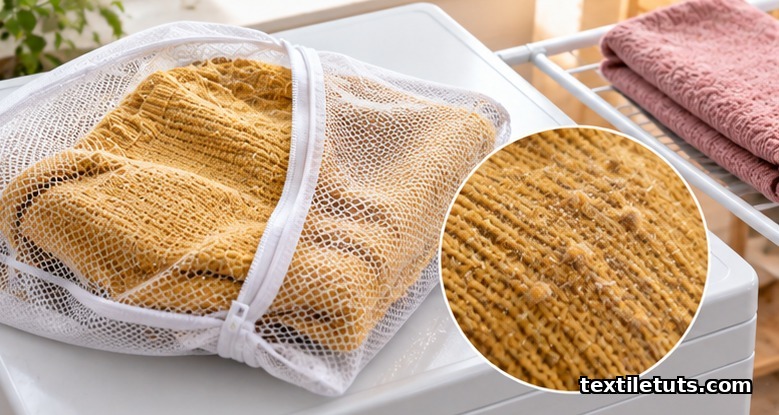
- Wash acrylic inside-out in a mesh laundry bag on the gentle cycle at 30°C maximum.
- Use the lowest spin speed setting to minimize mechanical agitation.
- Air dry or tumble dry on low heat — never warm or hot.
- Acrylic fibers actually soften in texture with lower wash temperatures — paradoxically, washing cooler extends garment aesthetics.
- Acrylic sweaters are machine-washable alternatives to wool and behave similarly visually, but they lack wool’s natural antimicrobial properties and require more careful laundry handling.
Microfiber Care: A Special Case
Microfiber fabric — made from ultra-fine polyester or polyamide fibers — requires distinctly different care than microfiber cleaning cloths. This section covers both consumer microfiber products and the environmental consideration of microfiber shedding.
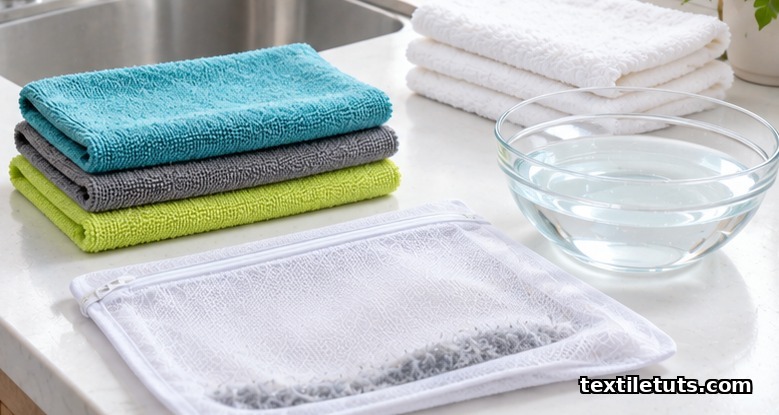
Washing Microfiber Cleaning Cloths
- Wash separately from all clothing. Microfiber sheds plastic microfibers during washing — keeping them separate prevents transfer of ultrafine fibers to garments.
- Never wash microfiber with cotton. Cotton lint clogs the ultrafine fiber structure, destroying the cloth’s cleaning ability permanently. Once cotton fibers lodge in microfiber loops, the cloth becomes ineffective.
- Use cold water only. Heat damages the ultrafine fiber structure, causing the material to lose its effectiveness at trapping dirt and dust.
- Never use fabric softener. Softener coats the fiber surfaces and eliminates the static charge that allows microfiber to attract and hold particles.
- Air dry only. Heat destroys the ultrafine fiber structure.
Reducing Microfiber Shedding from Synthetic Clothing
Synthetic clothing sheds microplastic fibers during every wash cycle. Research indicates a single polyester garment can release up to 496,030 microfibers per average wash load. These microplastics enter waterways and accumulate in aquatic ecosystems.
To reduce microfiber shedding from synthetic garments:
- Wash synthetic garments in a Guppyfriend bag — a specially designed wash bag that captures shedding microfibers. The captured fibers can be disposed of in trash rather than wastewater.
- Wash full loads at lower temperatures to reduce mechanical stress on fibers.
- Use liquid detergent instead of powder, which causes more fiber breakage.
- Consider replacing aging synthetic garments — older garments shed significantly more fibers as the fiber structure degrades.
For more information on microfiber as a fiber type, see our guide: Does Microfiber Shrink?
Frequently Asked Questions
Can you wash polyester and cotton together?
Yes — polyester/cotton blends are common and can be washed together. Use the more sensitive fiber’s settings: 30–40°C, gentle cycle, and avoid high heat drying. Never use hot water on blends, as the cotton component may shrink slightly while polyester will not, creating distortion.
Why does my polyester activewear still smell after washing?
Polyester’s oleophilic (oil-attracting) surface binds to the fatty acids in body oils, and odor-causing bacteria become trapped within the fiber structure. Regular detergent cannot fully penetrate polyester’s hydrophobic matrix. Use a sports-specific detergent, wash inside-out, pre-soak with ¼ cup white vinegar for 30 minutes, and if the label permits, increase wash temperature to 40°C. An extra rinse cycle also helps.
Can you put synthetic fabrics in the dryer?
Yes, on low heat or air-only settings only. High heat causes pilling in polyester and acrylic, degrades elastic in spandex, and creates static charge in all synthetics. Since synthetics dry very quickly — typically 20–60 minutes at room temperature, air drying is usually more practical and gentler on the garments.
For more fabric care guidance, see the Complete Fabric Care Guide hub. To remove specific stains from synthetic fabrics, see our guide to removing stains from polyester.
References
- Wikipedia. (2025). Polyester — Textile Science and Properties. Wikimedia Foundation.
- Wikipedia. (2025). Elastane — Elastic Properties and Degradation. Wikimedia Foundation.
- Cotton Works. (2025). Laundering and Care Guidelines for Textile Fabrics. Cotton Incorporated.
- Nikwax. (2025). Technical Guide: Synthetic Fabric Care and Waterproofing. Nikwax Ltd.
- Guppyfriend. (2025). Microfiber Shedding and Prevention Technology. Guppyfriend.


