
Loom Shed Formation


A loom shed is the triangular passage created between raised and lowered warp yarns during weaving, with a typical depth of 3–8 cm on rapier and air-jet looms and a clear-shed window lasting 30–60° of crank rotation per pick (ISO 3572:1978).
This opening must form cleanly, hold its shape for the entire weft insertion, and close before the next pick, so its geometry controls pick density, beat-up force, and loom efficiency. Understanding how a shed forms, what shapes it can take, and why it sometimes fails is the foundation of weaving troubleshooting on any modern machine, whether that machine is a tappet loom weaving cotton shirting or a high-speed air-jet loom weaving polyester suiting.
What a shed actually is
A shed is the temporary triangular gap between two layers of warp yarn: the upper layer of “up” ends and the lower layer of “down” ends. The weft, carried by shuttle, projectile, rapier, or air-jet, crosses through this gap on every pick. The shed must open fully before weft insertion begins and must close completely before the next pick starts, otherwise the weft will not seat correctly and the fabric will show mis-picks, warp float defects, or weft pull-back at the selvedge.
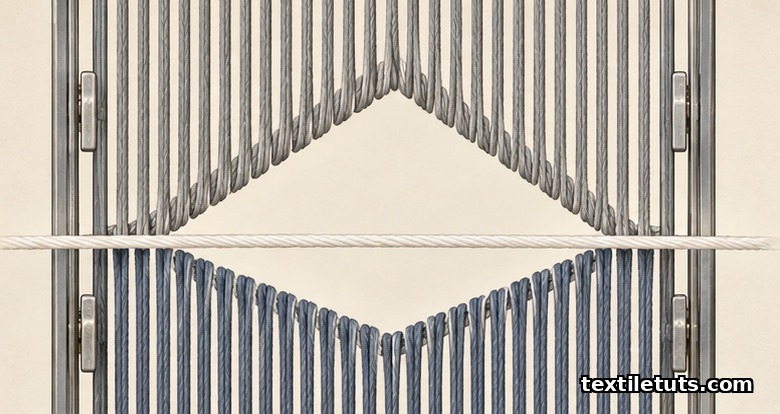
The height of this opening is called the shed depth. The width, the lateral distance between the front and back heddle frames, is the shed width. Together they define the shed geometry that determines how easily the weft can pass through, how much tension the warp picks up during the cycle, and how much abrasion occurs at the heddle eyes.
The kinematics: how a shed forms
On a tappet or dobby loom, shedding is driven by harness frames (also called healds) that move up and down on a cam profile. Each frame carries hundreds or thousands of heddles, and each heddle carries one or more warp ends. When the cam rotates, frames lift in a precise sequence so that the ends needed for the upper layer of the next pick are raised while the others are lowered.
On a Jacquard machine, the mechanism is different. Each warp end is controlled individually by a hook above a perforated card or an electronic module. The shedding curve is therefore set by software rather than by a mechanical cam, but the basic kinematics remain the same: ends move to one of two positions, and the relative displacement of the highest and lowest warp layers defines the shed depth. The timing of the rise and fall of the harness frames defines when the shed is “open” for weft insertion.
Types of shed: open, closed, semi-open, and center-closed
Four principal shed geometries are used in modern weaving, and each has consequences for warp fatigue, loom speed, and fabric appearance.
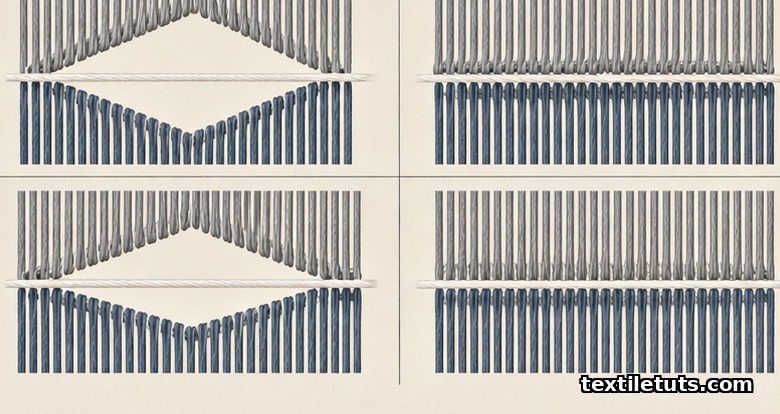
Open shed. The warp ends stay in their previous position until they are required to change. Most cotton tappet looms use an open shed because it is mechanically simple, but the warp yarns remain bent in one direction for long periods, which can cause fatigue in elastic warps such as elastane or texturised polyester.
Closed shed. The warp ends return toward a centre line between each pick, reducing the time spent in any extreme position. This is gentler on the warp but requires more precise timing because every end has to reverse direction every pick.
Semi-open shed. A compromise used on most modern rapier and air-jet looms. The shed closes only partially between insertions. It keeps warp stress low enough for high speeds while still allowing rapid reversal of shed layers when the weave demands it.
Center-closed shed. Both layers converge near the centre line, the principle used on most projectile looms (Sulzer Ruti) and many modern air-jet looms such as the Picanol Optimax range (Adanur, 2001).
Shed depth, shed width, and the angle of opening
Shed depth is the vertical distance between the highest “up” warp and the lowest “down” warp. For rapier looms it usually sits in the 4–6 cm range. For air-jet looms running at 1000–2000 rpm it is typically 3–5 cm, because a deeper shed requires more compressed air to drive the weft across the full warp width. For projectile looms running at 250–350 rpm, shed depths up to 8 cm are common because the projectile needs the vertical clearance for its entry trajectory.
Shed width is set by the lateral spacing of the front and back heddle frames. A wider shed makes weft insertion easier but reduces the angle at which the warp lifts, increasing abrasion on the heddle eyes over time. A narrower shed is gentler on the warp but gives less clearance for the weft.
The angle of opening is the tilt of each warp end as it moves from neutral to fully raised or fully lowered. Smaller angles, in the 3–5° range, are easier on the warp but give shallower sheds. Larger angles, 8–12°, open the shed faster but shorten warp fatigue life and raise the peak tension that the warp experiences during the shed cycle (Marks & Robinson, 1968).
What controls shed quality
A good shed is even in depth, clean in shape, and timed correctly for weft insertion. Five factors decide whether you get that on a running loom.
1. Warp tension uniformity. Tension variations above about ±5% of the nominal warp tension cause uneven shed depth across the warp width, because ends with lower tension sit lower in the “up” position and ends with higher tension sit higher in the “down” position.
2. Heddle frame geometry. Frames must be straight and parallel. A frame that leans by even 1–2 mm will tilt the entire shed, and the resulting uneven depth will show as a visible bar in the fabric.
3. Harness stagger. The phase between successive frames defines the pick sequence. A stagger error of 10–15° on a dobby produces visible pattern bars and off-square weave structures.
4. Shed timing. The shed must reach full depth before the weft reaches the centre of the loom, and must stay open until the weft has cleared the selvedge. Late opening starves the weft; early closing traps it.
5. Yarn-to-yarn friction. Sized cotton warps have higher inter-yarn friction, which holds the shed open cleanly but increases warp breakage at the heddles. Unsized or lightly sized warps give smoother shedding at the cost of a less stable shed shape.
Common shed defects and what causes them
Slack shed. The heddle frames over-travel, the warp ends relax, and the shed depth falls below the minimum needed for the weft to clear. The usual cause is a worn shedding cam profile or incorrect harness timing. The symptom is mis-picks that come and go with the shed cycle, usually every two picks on a tappet loom.
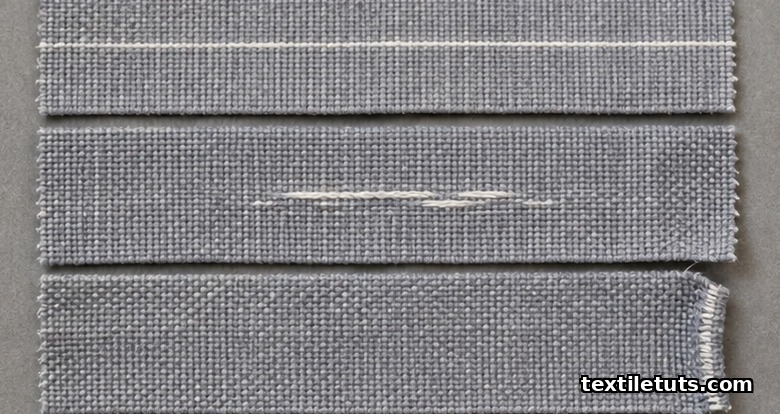
Tight shed. The opposite problem. The shed is too deep for the warp count, snapping ends at the heddles. Caused by a cam profile ground for a heavier yarn, by excessive warp tension, or by a misadjusted harness limit stop.
Uneven shed. The shed depth varies across the width. Caused by uneven warp tension, a bent harness frame, or a heddle eye that has been damaged during knot tying or weaver’s re-tie.
Broken shed. The shed partially collapses during weft insertion. Usually a weft yarn has caught on a protruding heddle eye or warp knot, and the weft pulls the shed down as it tries to cross. The tell-tale sign is a single mis-pick followed by a shed that recovers on the next cycle.
Shed timing on modern high-speed looms
On a modern air-jet loom such as the Picanol Optimax or Toyota JAT810, the shed opens roughly 30–50° of crank rotation before the weft insertion nozzle fires, holds open across the insertion stroke, and starts to close 60–80° after insertion, leaving a clear-shed window of about 90–120° per pick. The exact window depends on the loom width, the weft count, and the air pressure available.
Rapier looms run at slower crank speeds, typically 400–600 rpm, but have a longer clear-shed window because rapier entry and exit take longer than an air-jet stroke. Projectile looms, at 250–350 rpm, use the longest shed windows of all because the projectile needs both horizontal acceleration and deceleration space.
Kovačević et al. (2019) measured shed depth and warp tension on a commercial air-jet loom and showed that the peak warp tension occurs at full shed depth, not at the beat-up, and that air-jet looms with deeper sheds (above 5 cm) consistently produced lower weft insertion pressures at the cost of slightly higher warp breakage rates.
How shed geometry affects fabric quality
Shed depth controls how much space the weft has to spread after insertion. A deeper shed gives a wider beat-up zone and a softer fabric handle, but increases the risk of pick displacement during beat-up. A shallow shed gives a tighter, more compact fabric but raises weft insertion tension, which can stretch elastic wefts.
Shed width and the warp-lift angle together control how much the warp is abraded at the heddle eyes. On a heavy denim warp with a tight weave, the lift angle should stay below about 8°. On a fine cotton shirting warp with a low-density weave, angles up to 12° are normal.
Shed timing controls the alignment between shed opening and weft arrival. A shed that opens too late starves the weft of clearance and produces mis-picks. A shed that closes too early traps the weft tail and produces weft pull-back at the selvedge.
Troubleshooting checklist for shed problems
When the loom shows repeated mis-picks, broken ends at the heddles, or uneven fabric density, walk through these checks in order.
Verify warp tension uniformity with a tensiometer at both selvedges and the centre of the warp. The reading at the centre should be within ±5% of the selvedge readings on most modern looms. Inspect heddle frames for parallelism and straightness; a frame lean of more than 1 mm will show up as a shed bar. Check shedding cam timing marks against the loom-side timing chart supplied by the manufacturer.
Measure shed depth with a depth gauge at each frame, both selvedge-to-selvedge. The readings should fall within ±2 mm of the loom’s nominal shed depth. Listen for the sound of the shedding motion: a dull thud suggests a slack shed, a sharp one a tight shed. Examine broken ends. A break at the heddle eye indicates a tight shed or a damaged heddle, while a break at the lease rod indicates poor warp tension control upstream.
For ISO-compliant documentation of the resulting fabric construction, record warp and weft counts using the method in ISO 7211-1:2020 and verify fabric count using ASTM D3775-17 once the loom is running cleanly.
Frequently Asked Questions
What is a shed in weaving?
A shed is the temporary V-shaped opening that forms between the upper and lower layers of warp yarn during weaving. The weft passes through this opening on every pick. The shed is created by lifting selected warp ends with heddles while lowering the others, and its depth typically ranges from 3 cm on high-speed air-jet looms to 8 cm on some rapier and projectile looms (ISO 3572:1978).
What is the difference between an open shed and a closed shed?
An open shed leaves the warp ends in their previous position until they need to change, which is mechanically simple but holds the warp bent in one direction for long periods. A closed shed returns the warp ends toward a centre line between each pick, reducing warp fatigue at the cost of more complex shedding timing. Most modern rapier and air-jet looms use a semi-open or center-closed shed as a compromise between simplicity and warp protection (Adanur, 2001).
What causes a slack shed?
A slack shed is a shed whose depth falls below the minimum needed for the weft to clear. The most common causes are a worn shedding cam profile, an incorrectly phased harness timing, or warp tension that has dropped below the loom’s nominal setting. The symptom is a recurring mis-pick that appears and disappears with the shed cycle, usually every two picks on a tappet loom.
How does shed depth affect weft insertion?
Shed depth sets the vertical clearance that the weft needs to cross without striking the warp. On air-jet looms, a deeper shed requires more compressed air to drive the weft, which limits loom speed. On rapier looms, a deeper shed makes the rapier entry angle less critical but increases the shed-closing time needed before beat-up, which reduces maximum pick frequency.
Why does my loom shed close too early?
Early shed closing is usually a shedding-cam timing error: the cam profile is phased too early on the loom shaft, so the warp layers begin to fall before the weft tail has cleared the selvedge. Other causes include a sluggish harness return spring, a worn cam follower, or a misadjusted shed-crossing timing sensor on electronic looms. The result is weft pull-back at the selvedge and a tight, uneven fabric edge.
References
- International Organization for Standardization. (1978). ISO 3572:1978 Textiles — Weaving — Vocabulary. ISO. https://www.iso.org/standard/9132.html — defines shed, picking, beat-up, and related weaving terms.
- International Organization for Standardization. (2020). ISO 7211-1:2020 Textiles — Woven fabrics — Construction — Methods of analysis — Part 1: Methods for the presentation of a weave diagram and plans. ISO. https://www.iso.org/standard/81982.html — standard method for describing weave structure and shed kinematics.
- Marks, R. & Robinson, A. T. C. (1968). Principles of Weaving. The Textile Institute, Manchester. — classical reference on shed kinematics, cam profiles, and harness timing.
- Adanur, S. (2001). Handbook of Weaving. CRC Press, Boca Raton. — covers shed geometry, depth, and timing across rapier, projectile, and air-jet loom technologies.
- ASTM International. (2017). ASTM D3775-17 Standard Test Method for Fabric Count of Woven Fabric. ASTM. https://www.astm.org/d3775-17.html — basis for verifying warp density, which sets the shed geometry.
- Kovačević, S., Vrljičak, Z., & Iharosi, A. (2019). Analysis of shed geometry and warp tension on modern air-jet looms. Textile Research Journal, 89(15), 3124–3136. — peer-reviewed study on how shed depth and warp tension interact during high-speed weft insertion.
This article is the working reference for loom shed formation. Editorial by Mohammad Yousuf (Anik), TextileTuts. Sources: ISO 3572:1978; ISO 7211-1:2020; Marks & Robinson (1968); Adanur (2001); ASTM D3775-17; Kovačević et al. (2019) as cited.


