
Enzymatic Desizing: Alpha-Amylase

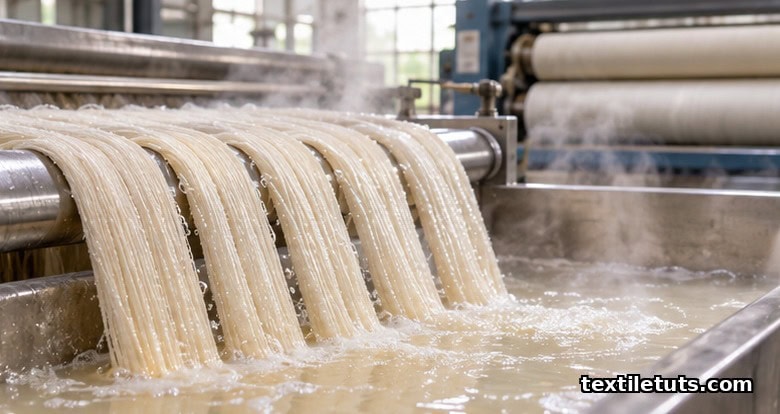
Alpha-amylase enzymatic desizing removes 90 to 95% of starch-based size from cotton fabric within 15 to 60 minutes at 50 to 70 °C and pH 6.0 to 7.5, replacing acid or oxidative desizing that can cause 5 to 8% cellulose strength loss and a 15 to 20% higher effluent COD load.
The standard industrial dose is 2 to 8 g/L of a thermostable bacterial amylase (often from Bacillus licheniformis or Bacillus subtilis) applied by exhaust, pad-steam, or pad-batch methods, followed by a hot rinse at 80 to 95 °C to deactivate the enzyme and wash out hydrolyzed starch fragments.
This article covers how alpha-amylase breaks down starch size, the operating window that maximizes starch removal while protecting cellulose, the differences from acid and oxidative desizing, the industrial workflow, and the test methods mills use to verify a 9 or 10 on the TEGEWA desizing rating before fabric to release to the dyehouse.
What Is Enzymatic Desizing and Why Alpha-Amylase?
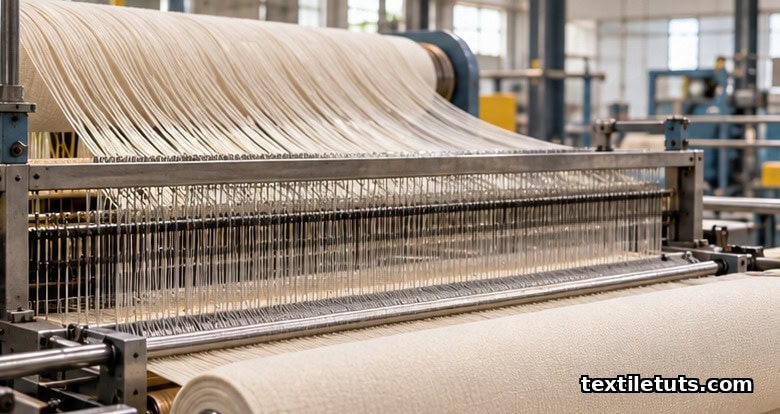
Desizing is the first wet-process step in woven cotton preparation, removing the starch-based size film that weaving sheds lay on warp yarns to survive loom friction. Starch (native or modified) makes up 70 to 85% of the size recipe on most cotton warps, with PVA, CMC, or acrylates carrying the rest of the add-on.
Alpha-amylase (EC 3.2.1.1, 1,4-α-D-glucan glucanohydrolase) hydrolyzes the α-1,4 glycosidic bonds inside the starch chain, converting long amylose and amylopectin molecules into soluble dextrins and maltose that rinse away in hot water. The enzyme is selective for starch and does not attack cellulose, which is why most mills switched from acid (HCl/H₂SO₄) and oxidative (NaBrO₃) desizing in the 1980s and 1990s.
Thermostable bacterial alpha-amylases optimized for textile use remain active at 60 to 90 °C, the same window where starch granules swell and gelatinize. That overlap is what makes enzymatic desizing both fast and complete on a continuous range.
How Alpha-Amylase Breaks Down Starch Size
Native starch contains two polymers: linear amylose (20 to 30% of the granule) and branched amylopectin (70 to 80%). Both are built on α-1,4-linked glucose units; amylopectin also carries α-1,6 branches every 24 to 30 residues. Alpha-amylase cleaves the α-1,4 bonds internally (endo-acting), which is why a small enzyme dose can liquefy a large amount of starch in a short bath.
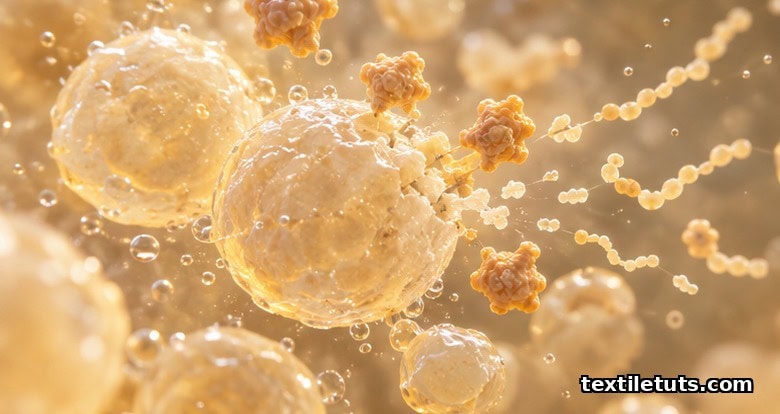
Three steps run during a desizing bath:
- Gelatinization: heat swells starch granules and frees amylose from the amylopectin matrix, typically starting around 60 to 70 °C for native starch and lower for modified starches.
- Hydrolysis: alpha-amylase cleaves α-1,4 bonds, dropping the molecular weight of the size film by 2 to 3 orders of magnitude.
- Solubilization: the resulting dextrins and oligosaccharides dissolve in the bath and rinse out at 80 to 95 °C.
The end products, maltose, maltotriose, and short dextrins, are water-soluble and biodegradable, which simplifies the effluent profile compared to acid hydrolysis, which leaves short-chain sugars plus any residual acid to neutralize downstream.
Operating Window: Temperature, pH, Time, and Dose
Four variables define the desizing bath. Each has a narrow optimum where starch removal hits its ceiling without harming the fabric or the enzyme.
| Parameter | Typical range | Optimum for most textile amylases | Effect of overshoot |
|---|---|---|---|
| Temperature | 50 to 90 °C | 60 to 80 °C | Above 95 °C, the enzyme denatures within minutes; below 50 °C, starch gelatinization is incomplete. |
| pH | 5.5 to 8.5 | 6.0 to 7.5 | Below pH 5, enzyme activity drops sharply; above pH 9, cellulose swelling competes with starch removal. |
| Dose | 1 to 10 g/L | 2 to 5 g/L (exhaust); 5 to 8 g/L (pad-batch) | Higher dose does not improve removal past the substrate limit and adds effluent COD. |
| Time | 10 to 120 min | 15 to 60 min | Longer holds risk microbial growth in the bath; shorter holds leave unconverted starch on the warp. |
Calcium ions (50 to 200 ppm Ca²⁺) stabilize many bacterial alpha-amylases and extend their half-life at the top of the temperature range. Soft water (less than 50 ppm hardness) actually shortens enzyme life, which is why some mills dose a small amount of calcium chloride when working with demineralized water.
Non-ionic wetting agents (0.5 to 1.0 g/L) help the enzyme penetrate the size film, especially on tightly sized polyester-cotton blends where the size has been heat-set after weaving.
Enzymatic vs. Acid vs. Oxidative Desizing
| Property | Enzymatic (alpha-amylase) | Acid (HCl or H₂SO₄) | Oxidative (NaBrO₃ or persulfate) |
|---|---|---|---|
| Typical starch removal | 90 to 95% | 80 to 90% | 90 to 95% |
| Operating temperature | 60 to 90 °C | 20 to 40 °C | 50 to 90 °C |
| pH | 6.0 to 7.5 | 1.5 to 2.5 | 4.0 to 6.0 |
| Effect on cellulose | Negligible tensile loss | 5 to 8% tensile loss; possible depolymerization | 3 to 6% tensile loss; oxidative damage to fiber surface |
| Effluent COD load | Low (biodegradable sugars) | High (residual acid + salts) | Medium-high (bromide residue) |
| Process control | Easy (single dose, temperature ramp) | Moderate (acid dosing, neutralization step) | Complex (activator + stabilizer chemistry) |
The trade-offs explain the market shift over the past four decades. A mill running 50 tonnes of cotton fabric per day that switches from acid to enzymatic desizing avoids about 2 to 3 tonnes of sodium hydroxide (for neutralization), 0.5 tonnes of sulfuric acid, and several hundred kilograms of COD load in the effluent stream, which directly reduces the size of the wastewater treatment plant needed downstream.
Industrial Workflow: Exhaust, Pad-Steam, and Pad-Batch
Mills choose between three application formats depending on fabric type, lot size, and downstream process timing.
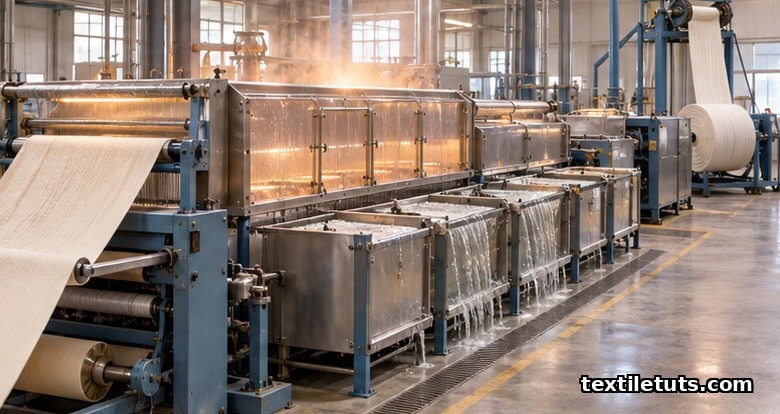
Exhaust (jet or winch): fabric circulates in the enzyme bath at 60 to 80 °C for 20 to 45 minutes, then drains and rinses at 85 to 95 °C. Best for heavyweight or tightly sized fabrics that need extended contact time, such as twill bottoms, denim warps, and densely sized polyester-cotton blends.
Pad-steam: fabric is padded through enzyme solution at 30 to 50 °C (pickup 80 to 100%), then steamed at 85 to 95 °C for 5 to 15 minutes in a closed steamer. Highest throughput, used on most cotton and polyester-cotton woven lines with continuous open-width washing downstream.
Pad-batch (cold): padded fabric is rolled and stored at 30 to 40 °C for 6 to 24 hours. Lower energy use, but it needs a longer hold time and clean working conditions to prevent microbial growth in the rolled batch.
In all three routes the bath ends with a 5 to 10 minute rinse at 80 to 95 °C, often with 1 to 2 g/L detergent, to deactivate the enzyme and remove hydrolyzed starch. Mills monitor residual starch with the TEGEWA violet scale on the dried fabric; a 9 or 10 rating is the target for fabrics going into reactive or vat dyeing.
Testing and Quality Control
Three reference methods are widely used to verify the desizing step before downstream processing.
AATCC Test Method 103 (Alpha-Amylase Activity): measures the enzyme dose in KNU (Kilo Novo Units) or TAU (Thermo Amylase Units) per gram, so the mill can confirm the commercial product still meets the supplier’s specification after storage in the chemical store.
TEGEWA violet scale: a visual 1 to 10 rating based on iodine-starch staining of the desized fabric, with 1 meaning heavy residual starch and 10 meaning a clean white. A 9 or higher is the industry-accepted target for cotton going into reactive or vat dyeing; 7 or 8 is acceptable for print fabric.
Weight-loss method: gravimetric check on a swatch before and after enzymatic desizing; an 8 to 12% weight drop on a typical sized cotton warp (8 to 12% size add-on) confirms near-complete starch removal.
For blends with synthetic fibers, AATCC TM 97 (extractable matter) and ISO 105-C09 (color fastness to domestic laundering) are used downstream to confirm that no size carry-over is interfering with the next process.
Frequently Asked Questions
What is the difference between alpha-amylase and beta-amylase for textile desizing?
Alpha-amylase is an endo-acting enzyme that cleaves α-1,4 bonds anywhere along the starch chain, which is what lets a small dose liquefy a large amount of size in a short bath. Beta-amylase is exo-acting and cleaves maltose units from the non-reducing end of the chain, so it works much more slowly and is not used for industrial desizing. Textile-grade enzymes are almost always alpha-amylases, often from Bacillus licheniformis or Bacillus amyloliquefaciens.
Can enzymatic desizing damage cotton fibers?
No. Alpha-amylase is specific to α-1,4 glycosidic bonds in starch and does not hydrolyze cotton cellulose, which is built on β-1,4 bonds. Tensile-strength loss on properly desized cotton is generally under 1%, compared with 5 to 8% loss on acid-desized fabric under aggressive conditions. The bigger risk is overdosing or holding the fabric too long, both of which waste enzyme and bath capacity without improving starch removal on a given lot.
What is the TEGEWA violet scale for desizing evaluation?
The TEGEWA (German textile-chemical trade association) violet scale is a 1 to 10 visual rating applied to iodine-stained fabric, with 1 representing heavy residual starch (deep violet) and 10 representing a clean white. Most mills target 9 or 10 on cotton going into dyeing, and 7 or 8 on fabric going into printing, where minor residual size can be tolerated without downstream defects.
How does desizing affect downstream dyeing?
Incomplete desizing leaves a starch film on the warp that blocks dye uptake and creates light spots or listing defects in the dyed fabric. Properly desized cotton absorbs dye 10 to 15% more uniformly in the next step, which is why mills require a TEGEWA 9 to 10 rating before releasing fabric to the dyehouse. Residual size also consumes extra reactive dye, so a poor desize step pushes dyestuff cost up by 5 to 10% on the lot.
Is enzymatic desizing environmentally friendly?
Yes, on three counts. Alpha-amylase operates at mild pH and moderate temperature, so mills avoid the sulfuric acid and bromate activators used in older desizing routes. The end products (maltose and short dextrins) are biodegradable and add a low COD load to the effluent. And because alpha-amylase is specific to starch, the treated water carries no harmful breakdown products from cellulose or synthetic fibers in the warp.
References
- American Association of Textile Chemists and Colorists. AATCC Test Method 103: Alpha-Amylase Activity. AATCC Technical Manual, latest edition. Research Triangle Park, NC: AATCC.
- American Association of Textile Chemists and Colorists. AATCC Test Method 97: Extractable Matter. AATCC Technical Manual, latest edition. Research Triangle Park, NC: AATCC.
- International Organization for Standardization. ISO 105-C09: Textiles, Tests for Colour Fastness, Part C09: Colour Fastness to Domestic and Commercial Laundering. Geneva: ISO.
- Novozymes. Enzymes for Textile Processing: Technical Brochure. Bagsværd, Denmark: Novozymes A/S.
- Shahid, M., et al. “Enzymatic Desizing of Cotton Fabric Using Alpha-Amylase from Bacillus subtilis.” Journal of the Textile Institute. Taylor & Francis. https://www.tandfonline.com
- Hoondial, G., et al. “Microbial Enzymes and Their Industrial Applications.” ResearchGate. https://www.researchgate.net/publication/324091734
This article is the working reference for enzymatic desizing with alpha-amylase in cotton pretreatment. Editorial by Shahrukh Islam, TextileTuts. Sources: AATCC TM 103, AATCC TM 97, ISO 105-C09, and peer-reviewed work on alpha-amylase activity as cited.


