
Causticizing Process

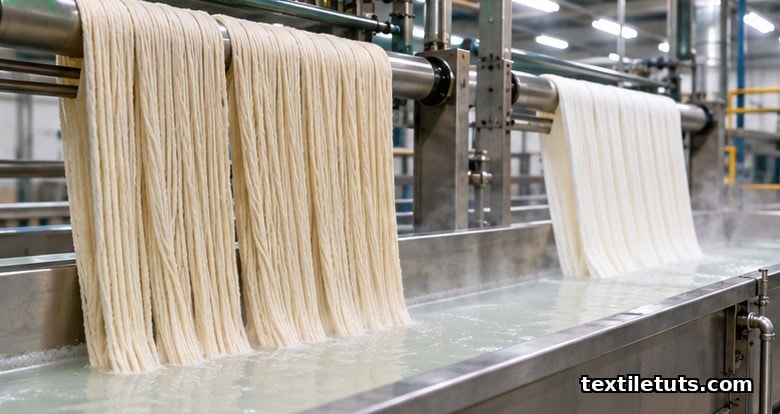
The causticizing process treats cotton yarn or fabric with sodium hydroxide (NaOH) at concentrations of 18–25% w/w and temperatures of 15–30 °C for 30–90 seconds, increasing fiber tensile strength by up to 25%, improving dye uptake by 20–30%, and producing the characteristic silky luster that defines mercerized cotton.
Industrial textile engineers call this process causticizing because the active reagent is “caustic soda,” the common industrial name for sodium hydroxide. In cotton finishing, causticizing is the operation that converts dull, weak, yarn into a smooth, strong, dye-receptive material suitable for premium shirting, knitwear, and sewing thread.
What follows explains the chemistry that makes the treatment work, the process variables an engineer controls on the production floor, the equipment that delivers uniform impregnation, and the quality tests that confirm a properly causticized fabric before it moves to dyeing.
What the Causticizing Process Actually Does to Cotton
Cotton is cellulose, a linear polymer of β-1,4-linked glucose units. Native cellulose has a tightly packed, crystalline structure (Cellulose I) that resists penetration by water, dyes, and finishes. When cotton fibers are immersed in concentrated NaOH, the hydroxide ions break the inter-chain hydrogen bonds and rearrange the polymer into Cellulose II, a more thermodynamically stable, less crystalline form.
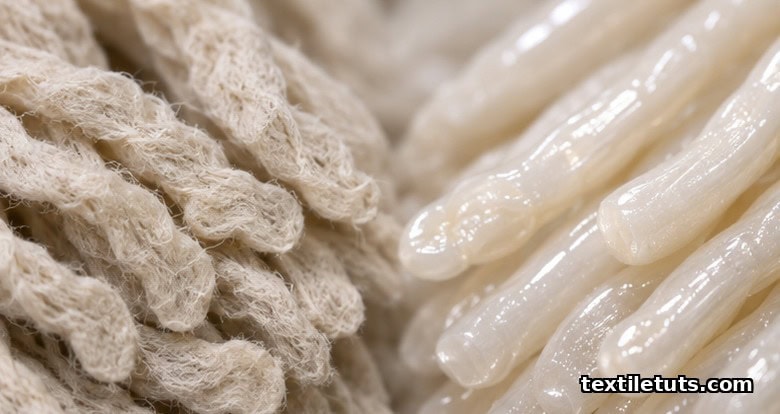
Three measurable property changes follow this structural conversion:
- Tensile strength increases by 15–25% because the rearrangement aligns cellulose chains along the fiber axis and reduces internal stress.
- Dye affinity rises by 20–35% for reactive and direct dyes because the more open Cellulose II structure exposes hydroxyl groups for dye fixation.
- Surface luster improves because tension during causticizing (process tension roughly 0.5–2.0 cN/dtex on warp yarns) flattens the kidney-bean cross-section of cotton into a rounder profile that reflects light more uniformly.
The combined effect is what gives “Egyptian cotton” sheets and premium knit T-shirts their bright, glassy sheen, even though the underlying cotton is the same botanical species as ordinary upland cotton.
Process Variables: NaOH Concentration, Temperature, and Time
A causticizing recipe is defined by four parameters, and small deviations cause large property drift. Engineers optimize these empirically against incoming cotton lot characteristics.
Caustic concentration
Commercial mercerization runs at NaOH concentrations between 18% and 25% w/w. Below 15%, the structural change is incomplete and the gains in luster and dye uptake fade. Above 30%, the risk of oxidative damage to the cellulose chain rises sharply and the fiber yellows. Most modern lines settle near 22% as the practical compromise.
Treatment temperature
Cold mercerization at 15–20 °C gives the strongest luster and tensile response because lower temperatures minimize the saponification and hydrolysis side reactions that consume NaOH without rearranging cellulose. Hot mercerization at 30–60 °C is faster but produces duller results and is reserved for fabrics where luster is secondary.
Contact time
Penetration of NaOH into the cotton fiber is a diffusion-limited process. Pad-steam and pad-batch ranges hold the fabric in caustic for 30–90 seconds for yarn, and 10–60 seconds for woven fabric in continuous lines. Wet cotton takes up caustic more evenly than dry cotton, so pretreatment scour is performed before causticizing.
Tension: slack vs. tension mercerization
Tension mercerization (chains held at controlled extension) keeps the yarn or fabric from shrinking, producing luster and dimensional stability. Slack mercerization allows free shrinkage, producing stretchy, bulky yarns used in knitwear and stretch denim. Most woven fabric plants run tension mercerization at 0.5–2.0 cN/dtex; most knit yarn plants run slack mercerization with relaxation shrinkage of 15–25%.
Equipment Configurations for Industrial Causticizing
Three machine layouts dominate the industry. Each matches a different form factor of cotton material.
Yarn mercerization machines
Yarn is processed in hank form on a chain mercerizing machine. Hanks are dipped into a NaOH trough, stretched between rollers and counter-rollers, washed, neutralized with dilute sulfuric or acetic acid (typically 4–6 g/L), washed again, and dried. Output ranges are 200–600 kg/h on standard lines.
Fabric mercerization ranges
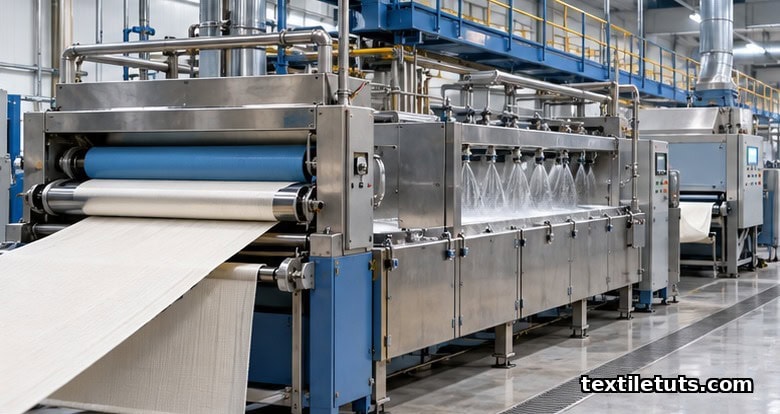
Woven and knit fabric is treated on a tenter or chain-and-roller range. The fabric passes through an impregnation trough (wet-out padder), a reaction chamber with controlled dwell time (typically 30–45 seconds under pad-roll wraps), a wash zone, an acid neutralization zone, and a final rinse. Line speeds commonly reach 40–80 m/min.
Caustic recovery systems
Dilute NaOH from the wash zones is collected, evaporated in multi-effect evaporators to about 50% w/w, and re-strengthened to working concentration for the impregnation trough. Recovery rates of 90–95% are economically necessary because virgin NaOH costs roughly USD 350–500 per metric ton and a single 22% mercerization bath consumes thousands of liters per shift.
Pre- and Post-Treatment: Why Scouring Comes First
Raw cotton carries 4–12% non-cellulosic material: waxes, pectins, proteins, and motes. These impurities coat the cuticle and repel water, which means NaOH applied directly to raw cotton gives patchy, uneven results. A hot scour with sodium hydroxide (5–10 g/L) and a surfactant at 90–100 °C removes the wax barrier before causticizing.
Bleaching typically follows causticizing, not precedes it, because bleaching with hydrogen peroxide (H₂O₂) on already-mercerized cotton is faster and more uniform than on unmercerized cotton. The order in a continuous pretreatment range is therefore: singeing → desizing → scouring → causticizing → bleaching → drying.
Wetting agents (anionic surfactants such as alkyl sulfonates at 1–3 g/L) are added to the NaOH bath to ensure rapid, even impregnation. A typical mercerization bath formulation reads: 220 g/L NaOH, 2 g/L wetting agent, 0.5 g/L sequestering agent, balance water.
Quality Control: Testing for Properly Mercerized Cotton
The textile industry quantifies causticizing through two well-established tests. Both are required for export contracts in most markets.
ISO 3060 – barium activity number
ISO 3060 measures the “barium activity number,” which reflects the accessibility of cellulose hydroxyl groups. Properly causticized cotton gives values above 110–130. The test exploits the swelling power of barium hydroxide on the treated fiber.
AATCC TM 89 and barium chloride index
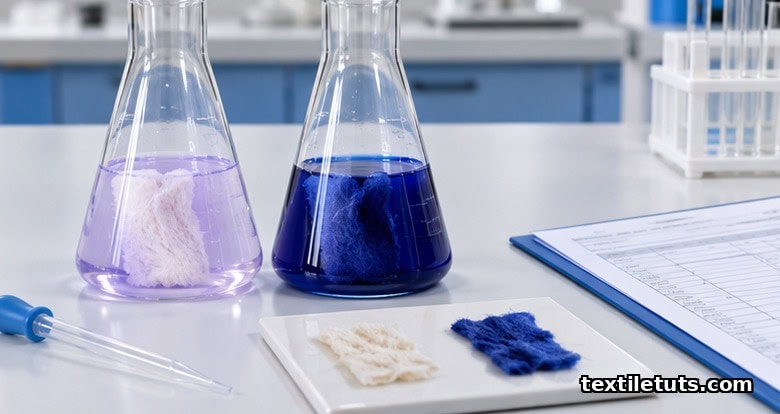
AATCC TM 89 (“Mercerization in Cotton”) uses barium chloride absorption to produce a relative index of mercerization. Field operators often run an in-line spot test using iodine/calcium chloride staining, where fully mercerized cotton turns a deep blue and undermercerized cotton turns only pale violet.
Other supporting measurements include tensile strength per ASTM D5034, moisture regain per ASTM D2654, and dye uptake efficiency against a standard reactive dye at the mercerization recipe’s target shade depth.
Frequently Asked Questions
Is causticizing the same as mercerization?
Yes, in textile processing the two terms refer to the same operation: treating cotton with concentrated sodium hydroxide to convert Cellulose I into Cellulose II. “Causticizing” is the engineer’s term because the reagent is caustic soda; “mercerization” is the historical name, after John Mercer who patented the process in 1850. Both words are used in the same technical literature and refer to identical chemistry.
What NaOH concentration is required for effective causticizing?
An effective mercerizing bath contains 18–25% w/w NaOH. Below 15% the cellulose restructuring is incomplete and the gains in luster and dye uptake fall below useful industrial thresholds; above 30%, oxidative yellowing and fiber embrittlement outweigh the benefits. Most modern production lines target 22% w/w.
Can causticizing be performed on knit fabrics without distortion?
Yes, on a slack mercerization range where the knit is allowed to relax during impregnation. The fabric shrinks 15–25% in both warp and weft, recovers its loop structure, and gains bulk and stretch. Circular knit fabrics intended for premium T-shirts and innerwear are routinely slack-mercerized.
Why is caustic recovery economically necessary?
Sodium hydroxide is consumed in proportion to the moisture content of the treated fabric, and dilute NaOH from the wash stage cannot be discarded as wastewater because of tightening effluent regulations. Multi-effect evaporators concentrate the dilute wash liquor back to working strength, recovering 90–95% of the NaOH and dramatically cutting the chemical cost per kilogram of mercerized fabric.
Does causticizing damage the fiber?
Properly controlled causticizing at 18–25% NaOH and 15–30 °C strengthens cotton rather than degrades it. However, exposure to temperatures above 60 °C, NaOH above 30%, or extended dwell times of several hours causes oxidative chain scission, which reduces molecular weight and tensile strength. Quality assurance monitors the barium activity number and tensile strength to catch drift before defective rolls reach the dyehouse.
References
- International Organization for Standardization. ISO 3060:2015 — Textiles: Cotton — Determination of Mercerization (Barium Activity Number). iso.org — the official index of mercerization extent in cotton.
- American Association of Textile Chemists and Colorists. AATCC Test Method 89 — Mercerization in Cotton. aatcc.org — defines the barium index test protocol used across quality-control labs.
- ASTM International. ASTM D1695 — Standard Terminology for Cellulose and Cellulose Derivatives. astm.org — vocabulary reference for mercerized and unmercerized cellulose forms.
- Turbak, A. F., ed. Cellulose Chemistry and Its Applications. Wiley, 1980 — comprehensive reference covering Cellulose I to Cellulose II transition mechanics.
- MDPI Polymers. “Effect of Mercerization on the Tensile and Morphological Properties of Cotton Fiber.” mdpi.com — peer-reviewed study confirming the 20–25% tensile-strength gain in causticized cotton.
- ResearchGate. “Mercerization of Cotton: Process, Chemistry, and Properties.” researchgate.net — open-access review of NaOH concentration versus mercerization efficiency.
This article is the working reference for the causticizing process in textile pretreatment. Editorial by Shahrukh Islam, TextileTuts. Sources: ISO 3060:2015; AATCC TM 89; ASTM D1695; Wiley cellulose chemistry; MDPI Polymers; ResearchGate, as cited.


