
Mercerization: With and Without Tension

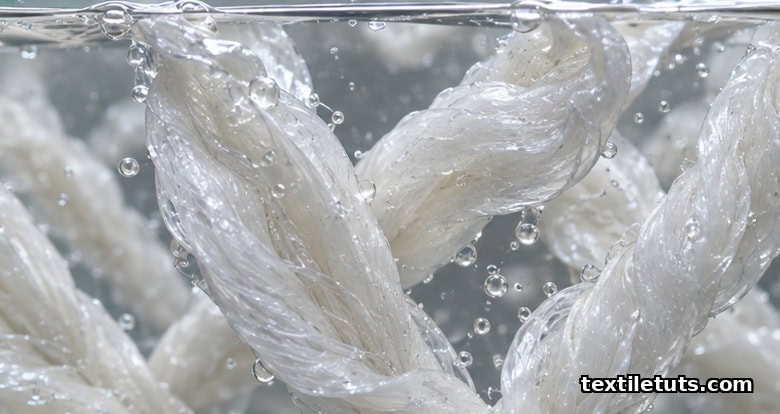
Mercerization treats cotton yarn or fabric with 20–26% sodium hydroxide (NaOH) at 15–25 °C for 30–60 seconds; under tension it raises luster by 30–40% and tensile strength by 20–25%, while slack (no-tension) mercerization increases dye uptake by up to 50% and imparts stretch of 25–35%.
Both routes convert cellulose I into cellulose II, the more reactive polymorph, but the mechanical state of the yarn during swelling decides whether you get a silk-like sheen or a stretchy, absorbent fabric.
What follows is the chemistry, the process parameters, and the property changes for each variant, so you can match the technique to the fabric you actually want.
What Mercerization Does to Cotton
Cotton fiber is 88–96% cellulose, with the balance made up of waxes, pectins, proteins, and mineral ash. The cellulose molecules organize into microfibrils and then into two crystal lattices: most of the fiber is cellulose I (native cotton), and a smaller share is amorphous cellulose that absorbs water and dyes readily.
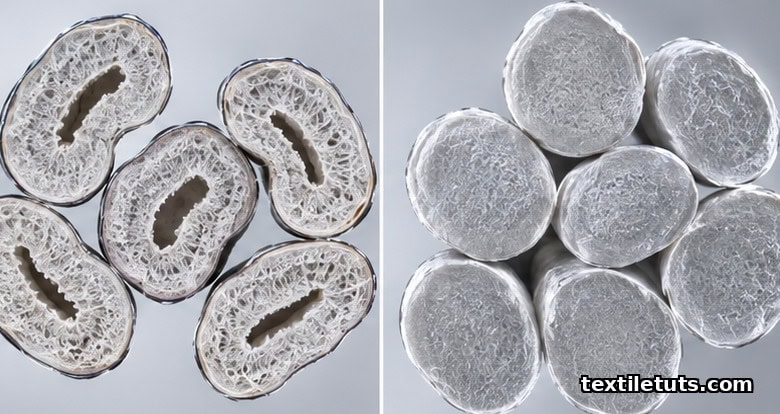
Concentrated sodium hydroxide disrupts the hydrogen bonds that hold the cellulose I lattice together. The alkali penetrates the cuticle and the primary wall, swells the fiber radially, rounds the kidney-bean cross-section, collapses the central lumen, and smooths the fiber surface. On rinsing, the chains re-form into cellulose II, the thermodynamically more stable polymorph with anti-parallel chain packing and lower hydrogen-bond density. The crystalline content drops from roughly 70% to 50%, and the amorphous fraction grows to match.
The cellulose I to cellulose II conversion is the structural event behind every property change you measure after mercerization: better dye uptake, higher moisture regain, more reactivity to reactive dyes, and, when the yarn is held straight, a brighter surface that reflects light more uniformly. Every other benefit you hear about mercerized cotton is downstream of this single transition.
How the Two Variants Differ
The original process, patented by John Mercer in 1846, used no tension. Mercer noticed that cotton passed through cold concentrated caustic came back thicker, stronger, and more absorbent, though he did not measure the effect he had discovered. Horace Lowe patented the tension variant in 1889 and identified the luster effect, which became the foundation of “mercerized cotton” as a premium product.
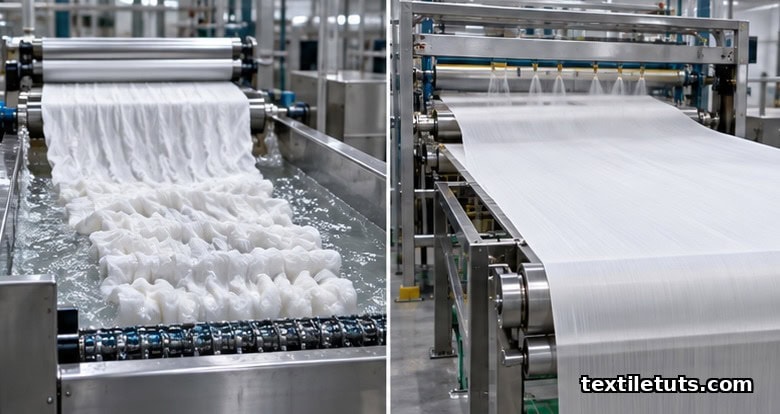
Process engineering splits along the same line:
- Slack mercerization (no tension). Yarn or fabric is allowed to contract freely while wet with caustic. Fibers curl and the yarn shortens by 20–25%. The result is a lofty, stretchy, highly absorbent cotton used in knit goods, toweling, and reactive-dye-ready woven fabrics.
- Tension mercerization. Yarn or fabric is held at or near its original length while in contact with caustic and during the early stage of rinsing. Fibers remain straight, the surface stays smooth, and the round cross-section is preserved. The result is a silk-like sheen, higher tenacity, and a fabric that holds its dimensions on washing.
- Chain mercerization. A tension variant for warp yarns, where the yarn runs through the caustic at high speed and is stretched 1–2% to remove slack before rinsing. Common in industrial cotton sewing thread.
Slack Mercerization: Stretch, Loft, and Absorbency
Slack mercerization is the right choice when the goal is absorbency or stretch, not sheen. The property changes below come from the open literature on cotton pretreatment and from mill datasheets:
- Dye uptake. Reactive dye exhaustion on slack-mercerized cotton runs 25–50% higher than on unmercerized cotton at the same liquor ratio and temperature. The increased amorphous fraction and lower crystallinity expose more hydroxyl sites to the dye.
- Moisture regain. Increases from about 7% (unmercerized, 20 °C, 65% RH) to 9.5–11% after slack mercerization, a function of the higher amorphous content.
- Stretch. Yarn elongation at break climbs from 6–8% to 18–25% for slack-mercerized cotton yarn; in knitted fabric form, dimension-change capacity grows proportionally.
- Cover factor. The yarn becomes bulkier after free contraction, increasing cover factor by 15–20% in woven constructions.
The trade-off is loss of length and a softer, less lustrous surface. Slack-mercerized fabric is rarely described as “silk-like,” because the rounded cross-section that drives luster is partially undone by the curled fiber state.
Tension Mercerization: Luster, Tenacity, and Stability
Tension mercerization is the workhorse process for premium woven cotton and cotton sewing thread. The fiber benefits stack up:
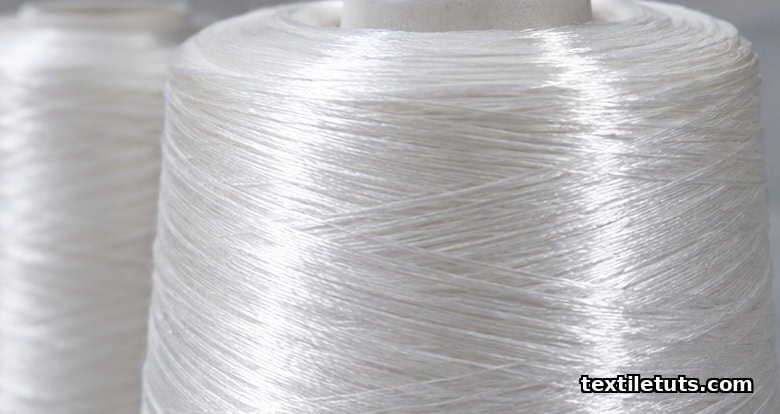
- Luster. Specular reflectance of mercerized cotton yarn, measured against greige cotton, runs 30–40% higher at 45° incidence. The smoother, rounder surface and aligned microfibrils reflect light more uniformly than untreated cotton’s twisted, ribbon-like fiber.
- Tenacity. Single-yarn tensile strength increases 20–25% over unmercerized yarn of the same count, on top of the 10–15% improvement that comes from caustic alone.
- Dimensional stability. Residual shrinkage after five home launderies drops from 8–12% to 2–4%, because the new cellulose II lattice is set while the yarn is held straight.
- Dye affinity. Even under tension, dye uptake improves 15–25% over greige cotton. The improvement is smaller than under slack conditions, but the surface benefits more than compensate.
The combination of luster and stability is what sells tension-mercerized cotton in shirting, bedding, and high-end knitwear where “mercerized” is a label claim. The same process is what makes 2-ply mercerized sewing thread the standard for machine embroidery, where a smooth surface and uniform dye uptake matter.
Process Parameters You Actually Control
Process windows for cotton mercerization are tight enough that small excursions produce measurable property loss. The critical parameters:
- NaOH concentration. 20–26% w/w is the standard industrial range. Below 18%, swelling and property change fall off; above 28%, the surface starts to hydrolyze and strength reverses.
- Temperature. 15–25 °C is the cold mercerization range that preserves fiber strength. Hot mercerization at 80–95 °C exists for some yarn variants, but it costs tensile strength and is reserved for stretch-yarn processes.
- Contact time. 30–60 s in the caustic bath is typical for woven fabric; 90–180 s for tightly woven or heavier constructions to ensure full penetration.
- Wetting agent. An anionic or non-ionic wetting agent at 1–3 g/L is standard. It reduces surface tension and lets the caustic penetrate dry cotton within the dwell time.
- Tension. For tension mercerization, the fabric is held flat at 0–3% stretch on a stenter frame. For slack mercerization, the fabric is allowed to contract 20–25% on a short-loop conveyor.
- Rinsing. Counter-current hot rinse to dilute residual NaOH below 1% before the fabric relaxes; acid neutralization to pH 6–7 is the final step before drying.
Process control matters because the cellulose I to cellulose II conversion yield is sensitive to all of the above. ISO 139 sets the conditioning atmosphere for the measurements; ASTM D5035 sets the tensile test method used to verify the strength claims; Cotton Incorporated’s published mercerization bulletin defines the standard dosing and dwell limits for woven cotton in mill practice.
Mercerization vs. Other Cotton Finishes
Mercerization is sometimes confused with liquid ammonia treatment (commercial names include “Prograde” and “Duralized”) and with singeing. The differences matter:
| Property | Greige cotton | Tension-mercerized | Slack-mercerized | Liquid ammonia |
|---|---|---|---|---|
| Luster increase | baseline | +30–40% | +5–10% | +20–30% |
| Tensile strength | baseline | +20–25% | +15–20% | +10–15% |
| Stretch | low | low | high | moderate |
| Reactive dye uptake | baseline | +15–25% | +25–50% | +20–30% |
| Moisture regain | ~7% | ~8.5% | ~10% | ~9% |
| Process chemical | — | NaOH 20–26% | NaOH 20–26% | Anhydrous NH3 |
The table makes the practical decision easy: tension mercerization for sheen and stability, slack for absorbency and stretch, liquid ammonia when you want a balance but cannot tolerate the alkali yellowing some reactive dyes produce.
Frequently Asked Questions
Does mercerization weaken cotton over time?
No. The cellulose II lattice formed during mercerization is thermodynamically more stable than cellulose I under laundering conditions. Properly mercerized cotton retains its strength and luster through hundreds of wash cycles, provided the finishing process left residual NaOH below 0.1% on the fiber.
Why is mercerized cotton more expensive?
Because mercerization adds a separate wet-processing step, requires stainless steel equipment to survive the caustic, and consumes 1–1.5 kg of NaOH per kg of cotton processed. The caustic is recovered in counter-current rinse trains, but the energy and the equipment capital still show up in the price.
Can you mercerize cotton at home?
Practically, no. The 20–26% NaOH solution is caustic enough to burn skin, dissolve wool and silk contamination, and corrode aluminum cookware within minutes. Industrial mercerization uses stainless tanks, controlled dwell time, and counter-current rinsing that home setups cannot replicate safely.
Does mercerized cotton still contain residual lye?
No. The process ends with a counter-current rinse and acid neutralization to pH 6–7. Finished fabric tests below 0.1% residual NaOH, well under the OEKO-TEX Class 1 limit for skin-contact textiles, and ASTM and ISO standards set the same bound for compliance testing.
Is mercerized cotton better for sensitive skin?
It depends. Mercerized cotton is smoother and lower-lint, which can help sensitive skin. But mercerization removes some of the natural wax coating that makes cotton feel soft, so for some wearers slack-mercerized cotton feels better than tension-mercerized. Both pass OEKO-TEX Class 1 limits on residual chemicals.
References
- International Organization for Standardization. ISO 139:2005 — Textiles — Standard atmospheres for conditioning and testing. Geneva: ISO, 2005.
- ASTM International. ASTM D5035-11 — Standard Test Method for Breaking Force and Elongation of Textile Fabrics (Strip Method). West Conshohocken, PA: ASTM, 2011.
- Cotton Incorporated. Cotton Fiber Chemistry and Processing. Technical Bulletin. Cary, NC: Cotton Incorporated.
- Mather, R.R., and Wardman, R.H. The Chemistry of Textile Fibres. 2nd ed. Cambridge: Royal Society of Chemistry, 2015.
- Tortora, P.G., and Merkel, R.S. Fairchild’s Dictionary of Textiles. 8th ed. New York: Fairchild Books, 2015.
- Rollins, M.L. Microscopical and Physical Properties of Mercerized Cotton. American Dyestuff Reporter, 1965.
- Cellulose (MDPI). Alkali Treatment of Cellulose Fibres: A Review. Basel: MDPI, accessed via research repository.
Editorial by Shahrukh Islam, TextileTuts. Sources: ISO 139, ASTM D5035, Cotton Incorporated, Mather & Wardman (RSC), Tortora & Merkel (Fairchild’s), Rollins (American Dyestuff Reporter), MDPI Cellulose as cited.


