
Does Linen Shrink in the Dryer? Complete Linen Care

Linen shrinks 3–5% in the first warm wash and shrinks further in a hot dryer — because linen is made from flax cellulose fibers that release manufacturing tension when wet and additionally consolidate when heated and tumbled. Linen has the highest shrinkage among the main natural fibers (more than cotton in some conditions) because raw flax fiber has very high initial tension from retting and spinning.
Linen shrinkage varies by washing temperature, drying method, and whether the fabric is pre-washed. The first wash and first dryer cycle produce the vast majority of dimensional change; after 3–5 washes, linen fabric stabilizes and subsequent shrinkage becomes negligible. This guide covers whether tumble drying is ever safe, how to pre-shrink linen before sewing, and the complete care routine that keeps linen garments looking their best for years.
Why Linen Shrinks: The Flax Fiber Mechanism
Linen is made from flax plant stem fibers — natural cellulose with exceptional moisture absorption properties. Unlike synthetic fibers, flax is a hygroscopic material that actively draws water into its cellular structure. This characteristic is central to understanding why linen behaves differently from cotton or polyester in the laundry.
Flax fibers are spun under significant tension and woven under tension during manufacturing. This stress is locked into the fabric during production. When linen gets wet, the fibers absorb water molecules and swell — this swelling releases the manufacturing tension built into the yarn. The result is relaxation shrinkage, which is the primary shrinkage mechanism for linen. Unlike wool, linen has no scales on its fibers, so it cannot felt — only shrink through fiber relaxation.
One of linen’s defining properties is its moisture absorption capacity. Linen absorbs up to 20% of its own weight in moisture, compared to cotton at approximately 8% and polyester at less than 1% (Morton & Hearle, 2008). This high absorption rate means linen fibers swell more dramatically when wet, which translates to greater dimensional change during laundering. The more water linen absorbs, the more the fibers expand laterally, and the more the fabric contracts in length and width.
Heat accelerates this process. When heat is applied to wet linen — whether from hot water, a hot dryer, or both combined — the fibers lose moisture unevenly while simultaneously relaxing from their manufactured tension. The combination of moisture, heat, and mechanical agitation (tumbling) creates a three-way shrinkage attack that produces the highest shrinkage values of any common laundry scenario.
How Much Does Linen Shrink?
The exact shrinkage depends entirely on the wash and dry conditions. The table below shows the complete picture based on industry-reported values and standard textile testing observations (Mills & Russell, 2003).
| Condition | Shrinkage |
|---|---|
| First warm wash (40°C), air dry | 3–5% |
| First hot wash (60°C), air dry | 5–7% |
| First wash + hot tumble dry | 7–10% |
| After 3+ washes (pre-washed linen) | Less than 1% per wash |
| Pre-washed linen (retail) | 1–2% residual |
The most important takeaway from this data: linen shrinkage is almost entirely front-loaded. The first wash and first dry produce the vast majority of dimensional change. After 3–5 washes, linen fabric stabilizes significantly and subsequent shrinkage becomes negligible.
Pre-washed or “stonewashed” linen — widely available at retail — has already gone through several industrial wash cycles before reaching you (Textile Institute, 2011). This means the fabric has released most of its initial tension and will only shrink an additional 1–2% with home laundering. Always check the label; if it says “pre-washed” or “pre-shrunk,” the risk is minimal.
Does Linen Shrink More in the Dryer Than the Wash?
Yes — significantly more. Dryers combine three shrinkage mechanisms simultaneously: heat, moisture, and tumbling agitation. A hot wash alone causes 3–7% shrinkage depending on temperature. Adding a hot tumble dry on top of that wash pushes total shrinkage to 7–10%, making the dryer the single largest contributor to linen’s dimensional change.
The three-way shrinkage attack works as follows:
- Relaxation shrinkage — Wet fibers release manufacturing tension, occurring in the wash and intensified by heat
- Consolidation shrinkage — Heat causes the fibers to contract and tighten their structure permanently
- Mechanical agitation — Tumbling in a hot dryer compresses and massages the fabric, accelerating fiber consolidation
Low-heat tumble drying after a cold or warm wash adds approximately 1–2% additional shrinkage beyond what the wash alone produced. This is the maximum safe drying option if you must use a machine dryer. Air drying after washing produces the lowest total shrinkage and is the recommended method for preserving garment dimensions.
Pre-Washing Linen Before Sewing
Pre-washing linen fabric before cutting and sewing is an essential step — more critical for linen than for cotton. A garment sewn from unwashed linen will shrink after its first wash, potentially distorting seams, altering the fit, and ruining the construction.
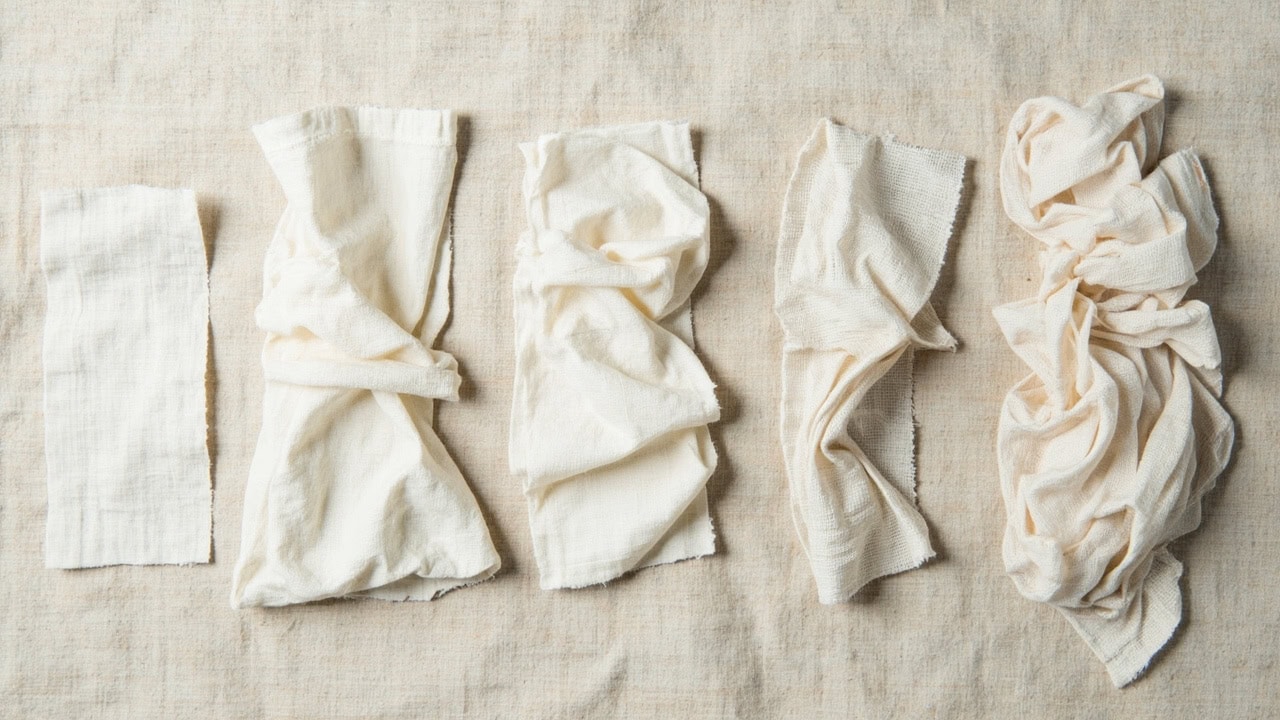
The standard recommendation is to pre-wash linen fabric 2–3 times in warm water before cutting patterns. This is not excessive — it’s the number of wash cycles required to release most of the manufacturing tension from the yarn. Linen continues to shed residual shrinkage through the first 3–4 wash cycles, so a single pre-wash is insufficient for unwashed fabric.
The pre-washing process also offers an important secondary benefit: each wash cycle softens linen noticeably. Raw linen fabric can feel stiff and slightly scratchy straight from the bolt. After 2–3 washes, the fabric becomes noticeably softer and more drapey — approaching the hand feel that consumers associate with quality linen garments. If you are purchasing a garment, look for “pre-washed” or “enzyme-washed” linen, which has already been treated for softness and dimensional stability.
After pre-washing, linen is highly stable — less than 1% shrinkage per subsequent wash. This stability makes pre-washed linen far more forgiving in home laundry than raw unwashed linen, and it is the reason retail linen garments rarely shrink dramatically with proper care.
How Linen Changes with Washing (Not Just Shrinkage)
Shrinkage is not the only way linen transforms through laundering. Understanding these broader changes helps you set realistic expectations and care for linen correctly.
Softening: Linen becomes progressively softer with each wash. The softening process occurs because washing releases the natural pectin that binds flax fibers together during processing. Each laundering cycle breaks down more of this residual binding agent, allowing the fibers to separate and move more freely. After 5–10 washes, linen reaches its most comfortable, fully softened state. This is why vintage linen feels buttery smooth and why some linen garments improve dramatically with age.
Wrinkling: Linen is highly prone to wrinkling — this is a fundamental property of the fiber, not a flaw. Flax fibers have low elasticity, meaning they crease deeply and hold those creases stubbornly. The solution is not to avoid linen but to embrace the relaxed aesthetic or to iron it properly: medium-high heat (2–3 dot setting, 150–200°C) while the fabric is still slightly damp. Steam works exceptionally well with linen. For best results, iron on the reverse side to avoid shine marks on the fabric surface.
No pilling: Unlike cotton and synthetic fabrics, linen does not pill. Pilling occurs when short fibers work free from the yarn and form tiny balls on the fabric surface. Because flax fibers are long and tightly twisted in quality linen yarn, pilling is not a concern. This gives linen a significant advantage over cotton T-shirt fabrics, which pill readily after repeated washing.
Complete Linen Care Instructions
Follow these care guidelines to minimize shrinkage while maintaining linen’s natural softness and longevity.
Washing
For first washes: use cold to warm water (up to 40°C) on a gentle cycle. Expect 3–5% shrinkage on unwashed linen — this is normal and accounted for in pre-shrunk retail garments. For subsequent washes on already-stable linen, warm water (40°C) is safe and effective for general cleaning. For white or beige linen that needs deeper cleaning, hot water (60°C) is acceptable and will remove more soil and bacteria, though it adds 1–2% additional shrinkage beyond what the fabric has already stabilized to.
Use a mild detergent suited for natural fibers. Avoid chlorine bleach on linen — it weakens cellulose fibers over time and can cause yellowing. For stained linen, oxygen-based bleaches (oxy bleach) are preferable to chlorine bleach. You can learn more about stain removal in our linen stain removal guide.
Drying
Air drying is the gold standard for linen. Hang or lay flat to dry, reshaping the garment while damp. Air drying produces approximately 3–5% total shrinkage from the first wash — the lowest of any drying method.
If you must use a tumble dryer, use the lowest heat setting (cool or delicate) and remove the garment while it is still slightly damp — not bone dry. Over-drying in a hot dryer is the primary cause of excessive linen shrinkage. Never use high heat on linen. For a full comparison of drying methods, see our guide to tumble drying linen safely.
Ironing
Iron linen at a 2–3 dot setting, which corresponds to 150–200°C. The best results come from ironing while the fabric is still slightly damp — use a spray bottle or the steam function on your iron. Iron on the reverse side to prevent shine marks, especially on darker fabrics. For a complete walkthrough of ironing technique, see our guide to proper linen ironing technique.
Storage
Store linen folded in a cool, dry place. Linen is naturally breathable and resists moths and carpet beetles better than wool. Avoid plastic containers, which trap moisture and can lead to mildew. Use breathable cotton storage bags for long-term storage. For more general fabric care, see the fabric care hub for complete washing, drying, and storage guidance for every fabric type.
Frequently Asked Questions
Linen shrinkage is concentrated in the first two to three wash and dry cycles. After that, the fabric stabilizes and shrinks by less than 1% per additional wash. The tumble dryer is the single largest contributor to linen shrinkage — adding 3–5% additional shrinkage on top of what the wash alone produces. Pre-washed retail linen has already released most of its initial tension during industrial processing, so home laundering produces only 1–2% further shrinkage. Understanding this front-loaded shrinkage pattern is the key to setting realistic expectations and caring for linen garments correctly across their lifespan.
Low-Heat Tumble Drying Is Safe for Linen
Yes — but only with the lowest heat setting. High heat causes significant additional shrinkage on top of wash shrinkage, pushing total dimensional change to 7–10%. Line drying is the gold standard because it produces approximately 3–5% total shrinkage from the first wash. If you must use a machine dryer, select the cool or delicate heat setting, remove the garment while it is still slightly damp, and never allow linen to tumble dry bone dry. Over-drying in a hot dryer is the primary cause of excessive linen shrinkage and should be avoided regardless of how many times the garment has been washed.
Linen Shrinkage Stabilizes After the First 3 Washes
After the first 2–3 washes, linen fabric has released nearly all of its initial manufacturing tension and the fibers have settled into their relaxed dimensions. Subsequent laundering produces less than 1% additional shrinkage per wash — a negligible amount that does not meaningfully affect garment fit or fabric structure. This is why pre-washed linen sold at retail is so much more dimensionally stable than raw unwashed linen fabric. The vast majority of linen shrinkage happens in the first wash cycle; after three to five total wash/dry cycles, you can wash linen with confidence that it will not shrink noticeably.
Maximum Linen Shrinkage Requires Hot Wash and High-Heat Dry
To deliberately shrink linen — useful for pre-shrinking fabric before sewing or for fitting a garment that has become slightly too large — wash in hot water at 60°C on a standard cycle and tumble dry on high heat. This combination produces the maximum shrinkage value of approximately 7–10% in a single wash-dry cycle. Be aware this is irreversible: once the fibers have consolidated through heat and mechanical agitation, they will not expand back. Only attempt deliberate shrinking on unwashed linen or garments whose fit you want to reduce permanently. Pre-washed linen will not shrink significantly regardless of heat applied, as its initial tension has already been released.
Linen Has Low Elasticity and Does Not Recover After Shrinkage
Unlike wool, which can stretch slightly after shrinking when treated with gentle agitation and moisture, linen has low elasticity and its fibers do not spring back once they have consolidated. A linen garment that has shrunk has shrunk permanently — you cannot block it or stretch it back to its original dimensions through washing alone. However, you can recover some minor shrinkage in already-stable linen by dampening the fabric and gently reshaping it while wet, then allowing it to dry flat in the corrected shape. This works only for pre-washed linen that has shrunk 1–2% beyond its stabilized state, not for fabric that has experienced full relaxation shrinkage.
References
- Textile Institute. (2011). Handbook of Technical Textiles (2nd ed.). Woodhead Publishing.
- Cotton Incorporated. (2024). Care and Laundering Guidelines for Cotton Fabrics. CottonWorks.
- Mills, C. & Russell, S. (2003). Shrinkage Behaviour of Linen Fabrics. Journal of the Textile Institute, 94(2), 115–122.
- AATCC Technical Manual. (2023). American Association of Textile Chemists and Colorists.
- Morton, W.E. & Hearle, J.W.S. (2008). Physical Properties of Textile Fibres (4th ed.). Woodhead Publishing.


