
Does Fabric Softener Stain Clothes? Complete Analysis

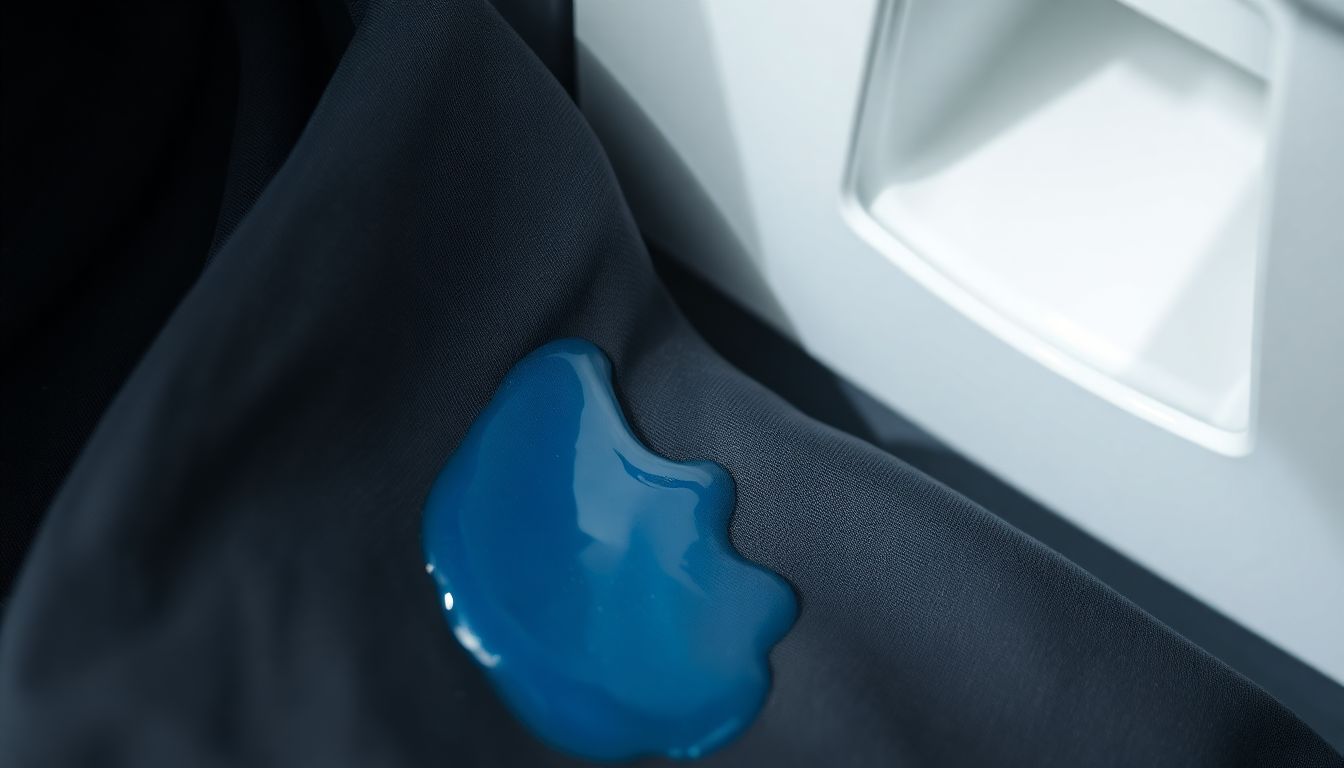
Fabric softener stains clothes when undiluted softener contacts fabric directly — most commonly when the dispenser drips before diluting with water, or when liquid softener is poured directly onto clothes. The oily cationic surfactants in fabric softener leave a waxy, oily residue that creates a blue-tinted or greasy spot on fabric. Fabric softener is also known to reduce the absorbency of towels and the moisture-wicking performance of athletic wear.
Why Fabric Softener Causes Stains
Fabric softener contains cationic surfactants — positively charged molecules that bind to fabric fibers through electrostatic attraction. Alongside these surfactants, modern formulations include silicones, fragrances, and colorants. All of these are oil-based compounds; they do not dissolve in the wash water until sufficiently diluted.
Cationic surfactants — typically quaternary ammonium compounds (quats) — work by coating fabric fibers with a lubricating layer. While this reduces static and makes fabrics feel softer, it also creates a hydrophobic (water-repelling) coating. When the softener is released from the dispenser before enough water fills the drum, or when liquid softener is poured directly onto clothes, the concentrated formula lands on fabric in an undiluted state. The oil-based compounds then adhere to the fiber surface, forming an oily, waxy spot.
The blue tint visible in many softener stains comes from the colorants added to the product — manufacturers add these so the softener appears visually appealing in the bottle. On dark-colored fabrics, these blue or white spots become immediately obvious. The stain is not the color of the fabric fading — it is a literal deposit of softener residue sitting on top of the fiber.
According to textile chemistry standards recognized by the American Association of Textile Chemists and Colorists (AATCC), cationic softener formulations should always be diluted at a ratio of at least 1:10 (softener to water) before coming into contact with fabric. Most residential washing machines achieve this dilution automatically when the softener dispenser releases the product during the rinse cycle — but only when the dispenser is properly maintained and not overfilled.
Which Fabrics Are Most Vulnerable
Dark Fabrics
Blue or white softener spots are most visible on dark-colored fabrics — black, navy, and deep charcoal. The contrast between the dark fabric and the light-colored softener deposit makes even a small stain immediately apparent. Any garment in a dark shade is at higher risk of showing the characteristic blue-grey spots that indicate a softener stain.
Towels
Towels are uniquely vulnerable because the problem compounds over time. Each application of fabric softener deposits a hydrophobic coating on cotton fibers — reducing the towel’s ability to absorb water with each wash. After repeated cycles, towels lose 30–50% of their original absorbency, according to textile care research. The softener residue makes towels feel slick rather than genuinely clean, and they require more effort to dry both the body and the towel itself.
Athletic and Moisture-Wicking Polyester
Modern athletic wear relies on moisture-wicking polyester fabrics with microscopic capillary channels that pull sweat away from the skin. Fabric softener clogs these channels with its oily cationic coating, effectively destroying the garment’s performance characteristics. Athletes who use fabric softener on their activewear often notice that shirts and shorts feel heavier and damper during workouts — the wicking function has been disabled by the softener residue.
Down Jackets and Down Fill Products
Down clusters rely on their natural loft to trap air and provide insulation. Fabric softener coats the individual down plumes with a hydrophobic residue that causes them to clump together and flatten. Over time, this reduces the jacket’s thermal efficiency. A down jacket that should last 8–10 years with proper care loses its insulating loft in 2–3 seasons if regularly treated with fabric softener.
How to Remove Fabric Softener Stains
Fresh Fabric Softener Stains
If you catch a softener stain immediately — while the garment is still wet — follow these steps to remove it before the residue sets:
- Re-wet the stained area thoroughly with warm (not hot) water. Warm water helps dissolve the oily surfactant better than cold.
- Apply undiluted dish soap directly onto the oily residue. Dish soap is designed to break up oily food residues and works equally well on the cationic surfactants in fabric softener.
- Work the soap in gently with your fingers or a soft cloth — do not scrub aggressively, as this can push the residue deeper into the fabric weave. Let the treated area sit for 10 minutes.
- Rewash the garment alone, without fabric softener in the dispenser, and without adding other clothes. Check that the stain is completely gone before placing the item in the dryer — heat from the dryer sets any remaining residue permanently.
Dried or Built-Up Softener Residue
For stains that have dried, or for towels with accumulated softener buildup that is reducing absorbency, a more intensive approach is needed:
- Soak the affected item in warm water with undiluted dish soap for 30 minutes. This allows the surfactant residues to emulsify and lift from the fiber surface over time rather than in a single wash.
- For towels with heavy buildup: wash in the hottest water safe for the fabric (check the care label — typically 60°C / 140°F for cotton towels) with ½ cup of baking soda added to the drum. This helps break down the fatty acid residues from the softener.
- Add one cup of white vinegar to the rinse compartment as a natural acid rinse — this neutralizes any remaining alkaline residue from the baking soda and further helps strip the softener coating.
- Run a second wash cycle without any detergent, softener, or baking soda — just hot water and vinegar — to ensure all residues are flushed away.
- Air-dry the item if possible. If using a dryer, use a low-heat setting. Inspect the fabric before applying heat to confirm the residue is gone.
Fabrics and Items That Should NEVER Have Fabric Softener
Beyond the fabrics that simply show stains, there are several categories of garments and household items where fabric softener causes genuine functional damage:
- Towels: Softener’s hydrophobic coating reduces absorbency with every application — defeating the towel’s primary purpose.
- Athletic wear and activewear: As covered above, moisture-wicking fabrics lose their performance function entirely when softener coats the capillary channels.
- Microfiber cloths: Microfiber’s cleaning effectiveness depends on its ability to attract and hold both water and oils through static charge. Fabric softener’s cationic coating neutralizes this charge, turning a high-performance cleaning cloth into a mediocre one.
- Flame-resistant children’s sleepwear: Per federal flammability standards (16 CFR Part 1615 and 1616), flame-resistant garments must maintain their chemical treatment to be legal for sale. Fabric softener coats the fibers and can reduce fire resistance — making treated sleepwear unsafe.
- Underwear with moisture-management properties: Many modern undergarments include hydrophilic waistbands or moisture-moving panels. Softener clogs these designed features, reducing their functionality.
- Waterproof and water-resistant fabrics: Softener degrades the DWR (Durable Water Repellent) finish on rain jackets, outdoor gear, and stain-resistant upholstery.
- Swimwear: The elasticity and quick-dry properties of swimwear are compromised by softener residue, leading to longer drying times and loss of shape.
Alternatives to Fabric Softener
If you want softer laundry without the staining risk and functional damage, these alternatives deliver results without any of the drawbacks:
Wool Dryer Balls
Wool dryer balls — typically made from New Zealand wool — work through mechanical action inside the dryer. As the balls tumble with your laundry, they physically separate fabrics, allowing hot air to circulate more efficiently. This results in softer, less wrinkled clothes without any chemical residue. A set of 3–6 wool dryer balls lasts approximately 1,000 dryer cycles, making them significantly more cost-effective than liquid softener over time. They also reduce drying time by up to 25%, according to some manufacturers’ testing.
White Vinegar in the Rinse Cycle
Distilled white vinegar (5–8% acetic acid) added to the rinse cycle at a rate of ½ cup per load neutralizes residual detergent alkalinity, softens water, and leaves fabrics feeling supple without any oily residue. For towels and cotton items in particular, vinegar provides genuine softening without the hydrophobic coating. It also helps prevent lint buildup and keeps washing machine drums clean.
Reduced Softener Dose
If you prefer to continue using commercial fabric softener, using only half the manufacturer-recommended dose significantly reduces staining risk while limiting the hydrophobic buildup on fabrics. At half-dose (¼ cup for a standard load), the surfactant concentration stays below the 1:10 dilution threshold at which visible residues form, while still providing some static reduction and fragrance.
Baking Soda
Adding ½ cup of baking soda (sodium bicarbonate) to the wash drum softens water and naturally deodorizes laundry, resulting in softer-feeling fabrics. It can be used alongside detergent on every load without risk of staining or residue buildup.
Frequently Asked Questions
Can fabric softener permanently stain clothes?
Fabric softener stains are removable in most cases when treated promptly with dish soap and rewashing. However, repeated softener application without removal builds up a waxy residue that becomes progressively harder to remove. On light fabrics, this buildup can oxidize and yellow over time, making it increasingly difficult to restore the original appearance.
How do I prevent fabric softener from staining clothes?
Use the washing machine’s softener dispenser (not direct application); don’t overfill the dispenser; dilute thick softener with equal water before adding; use only the recommended dose. Ensure the dispenser is clean and free of old softener residue that could drip onto clothes before dilution occurs.
Is fabric softener bad for clothes?
Fabric softener is problematic for: towels (reduces absorbency), activewear (clogs moisture channels), and down fill (reduces loft). For regular cotton clothing and bed linens, moderate use has minimal long-term damage — but wool dryer balls achieve similar softening without any of these drawbacks.
References
- American Association of Textile Chemists and Colorists (AATCC). (n.d.). Technical Manual. https://www.aatcc.org
- Wikipedia. (2024). Fabric softener. https://en.wikipedia.org/wiki/Fabric_softener
- U.S. Consumer Product Safety Commission. (n.d.). Standard for the Flammability of Children’s Sleepwear (16 CFR Part 1615/1616). https://www.cpsc.gov
- Textile Exchange. (n.d.). Responsible Care: Fabric Softener Alternatives. https://textileexchange.org
This article is part of our complete stain removal guide. For related reading, see our guide on how to remove stains from polyester and our explainer on why clothes stain in the washing machine.


