
Natural Dyeing: How to Dye Fabric with Plants, Food, and Minerals

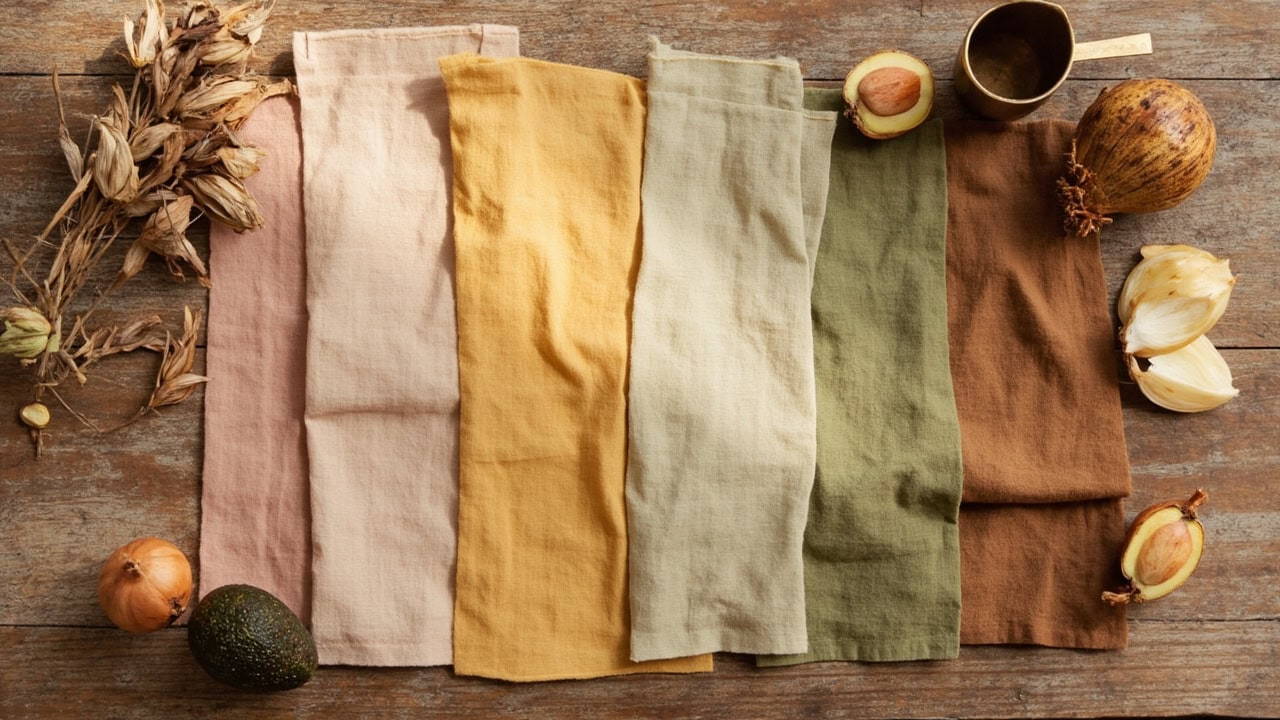
Natural dyeing fabric with plants, food waste, and minerals produces unique, earth-toned colors that cannot be replicated with synthetic dyes — avocado pits yield dusty rose, onion skins create golden yellows, and black beans produce soft blue on mordanted fabric. Success requires a mordant (alum, iron, or tannin) to bind the natural pigment to the fiber, as plant-based dyes are not inherently colorfast without this chemical fixative.
The global textile dyeing industry is the second-largest water polluter in the world, making natural dyeing an increasingly attractive alternative for crafters seeking to reduce environmental harm. Unlike synthetic dyes, which rely on petroleum-based chemicals and heavy metals, natural dyes use biodegradable pigments extracted from food waste and plant material — and they produce colors that deepen and evolve over time rather than fading uniformly.
What Is Natural Dyeing and What Results Can You Achieve?
Natural dyeing is the process of extracting color from plants, food waste, and minerals to color fabric and yarn. Unlike synthetic dyes, which contain petroleum-based pigments and require chemical fixatives, natural dyes produce subtle, variegated results that are unique to each individual batch — no two naturally dyed pieces are ever identical, even when using the same materials and process.
The color outcomes achievable through natural dyeing span a broad spectrum, though all tend toward softer, more muted tones than their synthetic counterparts:
- Yellows — onion skins, turmeric, marigold flowers
- Pinks and peaches — avocado pits and skins, madder root
- Blues — black beans (fermented), woad, indigo
- Greens — mint leaves, eucalyptus, spinach, nettle
- Browns — walnut husks, tea, coffee, osage orange
- Gray-greens and olives — iron-mordanted tannins
- Blue-purples and reds — red cabbage (pH-sensitive), beetroot (fades quickly)
Lightfastness — the resistance of a dyed material to fading from light exposure — varies significantly by dye source and mordant used. According to AATCC testing methodology, natural dyes generally score 3–5 on the 1–8 blue wool scale for lightfastness, compared to 6–8 for many metallized synthetic dyes. Onion skin dye with an alum mordant consistently achieves the highest lightfastness ratings among common natural dye sources, while beetroot and red cabbage dyes fade more rapidly regardless of mordant selection.
Materials and Equipment Needed
Before beginning natural dyeing, gather the essential equipment. Most of these items are likely already in your kitchen — no specialized equipment is required for home natural dyeing.
| Equipment | Purpose |
|---|---|
| Large stainless steel or enamel pot | Dye bath preparation — avoid aluminum for mordant solutions |
| Wooden spoons or stirrers | Stirring fabric during dyeing — dedicated utensils only |
| Measuring cups and spoons | Measuring dye materials and mordants accurately |
| Cheesecloth or muslin bag | Containing plant materials in the dye bath for easy straining |
| Rubber gloves | Protecting hands from mordants and concentrated dye |
| Heat source (stove or hot plate) | Simmering dye bath to extract pigment |
| Digital scale | Accurate mordant measurements by weight of fabric |
Beyond equipment, the dye source itself is the most important material. The following table summarizes the most reliable natural dye sources and the colors they produce:
| Common Dye Sources | Color Produced |
|---|---|
| Avocado pits and skins | Dusty pink, peach, soft rose |
| Onion skins (yellow or red) | Golden yellow, orange-gold |
| Black beans (soaked, not cooked) | Light blue (after fermentation) |
| Turmeric | Bright golden yellow |
| Spinach or nettle leaves | Soft sage green |
| Walnut husks | Rich chocolate brown |
| Red cabbage | Blue-purple (pH-sensitive — shifts with vinegar or baking soda) |
| Beetroot | Deep red-purple (fades quickly without strong mordant) |
| Coffee or tea | Warm tan and brown tones |
Step-by-Step Natural Dyeing Process
Follow these five stages for consistent, colorfast natural dye results. Each step is critical — skipping or rushing any stage will compromise the final color quality and longevity.
Step 1: Prepare Your Fabric (Scouring)
Scouring is the process of removing oils, waxes, sizing agents, and natural impurities from fabric before dyeing. Raw fabric — whether newly purchased or taken from thrift stores — carries a factory coating that will repel dye and produce uneven, patchy results if not removed first.
Wash fabric in hot water (60°C–80°C / 140°F–176°F) with a mild detergent. For protein fibers such as wool and silk, add 1–2 tablespoons of white vinegar to the wash water to protect the fiber cuticle. For cellulose fibers such as cotton and linen, hot water with detergent alone is sufficient. Rinse thoroughly and allow the fabric to dry until damp — it should be wet but not dripping when entering the dye bath.
Step 2: Mordant the Fabric
A mordant is a metallic salt that acts as a chemical bridge between the natural dye pigment and the fiber. Without mordanting, most natural dyes will wash out within a few laundering cycles — the color may appear vibrant initially but will fade to nothing within weeks. The mordant is not optional; it is the foundation of colorfast natural dyeing.
Three mordants are most commonly used by home natural dyers:
- Alum (potassium aluminum sulfate) — The most widely used mordant for natural dyeing. It produces bright, long-lasting colors with minimal risk to the fiber. Use at 15% weight of fabric (WOF): for 100g of fabric, use 15g of alum dissolved in hot water. Safe for home use and FDA-approved for food contact surfaces.
- Iron (ferrous sulfate) — Shifts existing dye colors toward gray-green, olive, and charcoal. Use at 2–5% WOF. Iron can weaken protein fibers over time with repeated use, so reserve it for cellulose fibers or for overdyeing already-dyed fabric to deepen muted tones.
- Tannin (tannic acid) — Essential as a pre-treatment for cellulose fibers (cotton, linen, bamboo) before applying other mordants. Cellulose has no natural affinity for tannin molecules, so without this pre-treatment, subsequent dye uptake will be poor. Sources include oak galls, sumac, and black tea.
To mordant with alum: Dissolve alum in boiling water, add to a pot of warm water, fully submerge the clean damp fabric, and simmer at 80°C–90°C (176°F–194°F) for 60 minutes. Turn off the heat and allow the fabric to cool completely in the mordant solution — this slow cooling period improves mordant absorption. Remove, wring out gently, and use immediately or store dried mordanted fabric for later use.
Step 3: Prepare the Dye Bath
The dye bath is where the pigment is extracted from your plant material or food waste. Different materials require different preparation approaches:
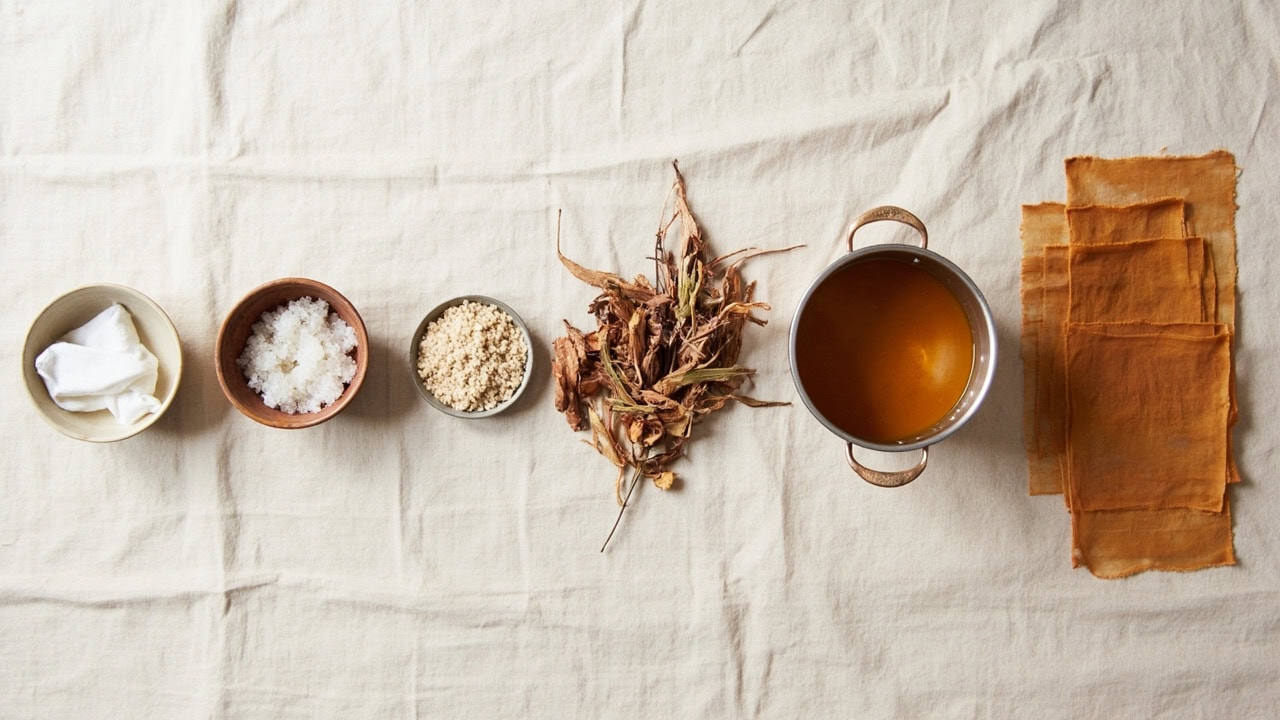
- Fresh plant material — Roughly chop leaves, stems, or flowers; cover with water; simmer at 80°C–90°C for 60 minutes; strain through cheesecloth into a clean pot.
- Dried plant materials — Soak in cold water overnight before simmering for 60 minutes to rehydrate and fully extract pigment.
- Food waste (avocado pits, onion skins) — Use 100–200g of material per 100g of dry fabric. Cover with water, simmer 1–2 hours until the liquid takes on a deep color, then strain. Many dye baths improve with longer simmering — up to 3 hours for stubborn materials like walnut husks.
A properly prepared dye bath smells earthy, vegetal, and slightly plant-like. If the bath smells rotten or sulfurous, discard it and start fresh — this indicates bacterial breakdown of the organic material rather than pigment extraction.
Step 4: Dye the Fabric
Wet your mordanted fabric slightly before introducing it to the dye bath — dry fabric will float and produce uneven dyeing. Fully submerge the fabric in the strained dye bath, ensuring it is completely covered by the liquid.
Simmer on low heat at 60°C–80°C (140°F–176°F) — below boiling — for 30–60 minutes. Stir the fabric every 10–15 minutes to promote even dye distribution. For deeper, more saturated color, turn off the heat and allow the fabric to remain in the bath overnight at room temperature. This slow dyeing method (sometimes called “exhaust dyeing”) can produce 20–40% deeper color than brief simmering alone.
Remove the fabric from the bath using clean wooden spoons or tongs, allowing excess dye to drip back into the pot. The dye bath can often be reused 3–5 times before the pigment is exhausted — simply add fresh dye material or simmer longer to refresh it.
Step 5: Rinse and Dry
Initial rinsing must be in cool water only — never use detergent on the first rinse, as the alkaline environment can shift freshly-fixed natural dyes. Gently squeeze out excess water without wringing, which can distort the fabric’s shape.
Hang dyed fabric to dry away from direct sunlight. UV radiation is the primary cause of natural dye fading — even lightfast dyed fabric will fade faster in direct sun than in shade. Once dry, wash separately in cool water with mild detergent for the first 3–5 washes to remove any unbound pigment before laundrying with other items.
Common Mistakes and Troubleshooting
Even experienced natural dyers encounter challenges. Most failures trace back to one of a handful of common causes — and all are correctable.
| Problem | Cause | Solution |
|---|---|---|
| Colors are pale or wash out quickly | Insufficient mordant; mordant not fully absorbed; too short mordanting time | Increase mordant to 15–20% WOF; extend mordanting time to 2 hours; ensure fabric cools in mordant bath |
| Colors are uneven or streaky | Fabric not fully submerged; insufficient stirring during dyeing; air pockets in folded fabric | Fully bury fabric in dye bath; stir every 10–15 minutes; unfold and redistribute fabric sections during dyeing |
| Fabric feels stiff or harsh after dyeing | Excess mordant; over-dyeing (fabric left in bath too long); mineral buildup from hard water | Reduce mordant time; rinse finished fabric in water with 1 tablespoon white vinegar to soften; use filtered water |
| Color is brownish instead of expected hue | Iron mordant overused; old or degraded dye material; high iron content in water supply | Use less iron (2% maximum); use fresher dye material; test water for mineral content |
| Dye bath stops producing color | Exhausted dye bath; plant material already spent; bath temperature too low | Add more fresh plant material; simmer longer (up to 3 hours); some dye baths yield 3–5 uses before exhaustion |
| Fading after first wash | No mordant used; insufficient mordant fixation; washing in water that is too hot | Always mordant before dyeing; verify mordant ratio at 15% WOF for alum; wash naturally dyed items in cold water only |
Fiber Compatibility for Natural Dyeing
Not all fibers respond equally to natural dyes. The protein structure of animal fibers (wool, silk) naturally accepts plant pigments more readily than the cellulose structure of plant fibers (cotton, linen, bamboo). Understanding fiber type is essential to achieving good results and selecting the right mordant sequence.
| Fiber Type | Mordant Required | Best Dye Sources | Notes |
|---|---|---|---|
| Wool (protein) | Alum preferred; iron okay in moderation | Most plant dyes work well — madder, onion skin, walnut, avocado | Takes dye deeply; retains soft hand after dyeing; do not agitate vigorously when hot or it will felt |
| Silk (protein) | Alum or tannin | Avocado, onion skin, tea, pomegranate | Produces brilliant colors due to fiber’s triangular structure; wash gently in cool water after dyeing to preserve luster |
| Cotton (cellulose) | Tannin pre-treatment, then alum or iron | Black beans, turmeric, walnut, onion skin | Requires tannin pre-treatment for adequate uptake; may need longer dye time (2–4 hours) than protein fibers |
| Linen (cellulose) | Tannin pre-treatment, then alum or iron | Same as cotton — black beans, turmeric, walnut | Similar behavior to cotton; generally dyes 10–20% lighter than cotton due to shorter fiber length |
| Bamboo (cellulose) | Tannin pre-treatment, then alum | Black beans, onion skin, avocado | Often dyes lighter than cotton; increasingly popular as a sustainable alternative to cotton |
For a complete guide to understanding fabric types and their properties, see our Fabric Types hub. For guidance on washing dyed items correctly, see our Fabric Care Complete Guide.
Sustainability Benefits of Natural Dyeing
Natural dyeing offers meaningful environmental advantages over conventional synthetic dye processes. The textile dyeing and finishing industry is the second-largest polluter of water globally, responsible for approximately 20% of global industrial water pollution, according to data compiled by the International Union of Dye stuff and Organic Compounds (IUDC). Synthetic dyes contain petroleum-derived aromatic compounds, heavy metal fixatives, and formaldehyde-based bonding agents that persist in waterways and accumulate in aquatic organisms.
Natural dyeing addresses these concerns through several mechanisms:
- Uses food waste — Avocado pits, onion skins, black bean soaking water, coffee grounds, and tea bags are all dye sources that would otherwise enter landfill. In the United States alone, households discard approximately 40% of purchased food, generating 21% of total landfill volume (EPA). Natural dyers redirect this waste stream into a value-creating craft.
- No microplastic runoff — Unlike synthetic dyed polyester and nylon, which shed plastic microfibers with every wash, naturally dyed natural fibers are fully biodegradable at end of life and contribute no microplastic pollution to oceans or waterways.
- Non-toxic for home dyers — Synthetic dye facilities expose workers to volatile organic compounds (VOCs), coal tar intermediates, and heavy metals including chromium, copper, and nickel. Home natural dyeing with plant materials and food waste involves no VOCs and no toxic fixatives beyond standard mordant salts.
- Unique, non-replicable colorways — Because natural dyes respond to pH, temperature, fiber type, mordant concentration, and timing in complex, non-linear ways, each naturally dyed piece has a unique color signature. This “living color” quality increases the perceived value and collectibility of handcrafted dyed textiles.
Frequently Asked Questions
Q: Can you naturally dye fabric without a mordant?
A: Some dye sources — particularly black beans and certain berries — will deposit some color without mordant, but the color will wash out within a few laundering cycles. True natural dyeing always requires a mordant for colorfastness. Alum is the safest and most effective mordant for home natural dyers.
Q: Which natural dye produces the most colorfast results?
A: Onion skins with an alum mordant produce one of the most wash-fast natural colors — golden yellows that hold up well over years of laundering. Avocado pits with alum also produce reasonably colorfast pink tones that rate 4–5 on the AATCC gray scale for wash fastness. Iron-mordanted tannins produce very fast gray-greens and olives, though excess iron can degrade fiber over time.
Q: Can you natural dye with food scraps from the kitchen?
A: Yes — avocado pits and skins, onion skins, black beans, beet peels, turmeric, coffee grounds, and tea all work as natural dyes. Use 100–200g of material per 100g of fabric. Most food-scraps dyes produce softer, more muted tones than fresh plant materials but are completely free and reduce household food waste. Black beans produce a light blue after 24–48 hours of fermentation in the soaking water.
Q: How do you store naturally dyed fabric to prevent fading?
A: Store naturally dyed items away from direct sunlight, which is the primary cause of fading in natural dyes. Wash in cold water with mild detergent, and avoid prolonged soaking. Some naturally dyed fabrics — particularly reds and purples from beetroot or red cabbage — fade faster than others regardless of care, and this should be accepted as part of the living-color nature of natural dyes.
References
- Botanical Colors. (n.d.). Natural Dye Information and Recipes. Retrieved from https://www.botanicalcolors.com/
- CottonWorks. (n.d.). Sustainability — Environmental Impact. Cotton Incorporated. Retrieved from https://www.cottonworks.com/
- AATCC. (n.d.). Colorfastness Testing Methods. American Association of Textile Chemists and Colorists. Retrieved from https://www.aatcc.org/
- International Union of Dye stuff and Organic Compounds (IUDC). (n.d.). Environmental Impact of Textile Dyeing. Retrieved from https://www.iwto.org/
- U.S. Environmental Protection Agency. (n.d.). Textile Dyeing Industry — Trends and Updates. Retrieved from https://www.epa.gov/
- Textile Exchange. (n.d.). Knowledge Hub — Sustainable Textile Resources. Retrieved from https://www.textileexchange.org/
- Cotton Incorporated. (n.d.). Fiber Guide — Cotton Fiber Properties. Retrieved from https://www.cottoninc.com/


