
Salt in Fabric Dyeing: Why Sodium Chloride Improves Cotton Dye Uptake

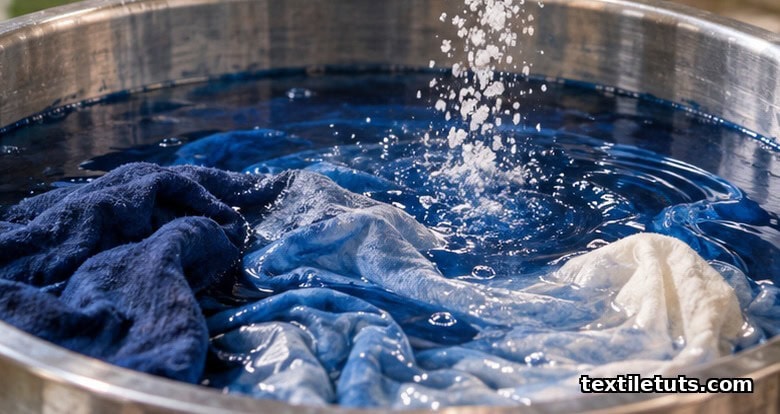
Salt (sodium chloride, NaCl) is essential in cotton reactive dye baths because it acts as an electrolyte that screens the negative charges on both cellulose fibers and dye molecules, reducing electrostatic repulsion and driving more dye onto the fabric. Typical concentrations range from 20–80 g/L depending on dye depth, and adding salt can improve dye exhaustion by 30–50% compared to dyeing without it. This simple additive is one of the most cost-effective ways to boost color yield, reduce dye waste, and lower wastewater treatment burden in both industrial and home dyeing operations.
What Is Salt’s Role in Fabric Dyeing?
Salt in fabric dyeing refers specifically to sodium chloride (NaCl) — the same compound as common table salt. In dye chemistry, salt is classified as an electrolyte, and it functions as a dyeing auxiliary or leveling agent in reactive and direct dye applications. Its primary benefit is improving dye exhaustion — the percentage of dye that transfers from the bath onto the fiber.
Without salt, many dyes — especially reactive dyes and direct dyes on cotton — yield poor color build-up, dull tones, and uneven coverage. In industrial textile processing, omitting salt from a reactive dye recipe can cut color yield by half, forcing operators to use more dye to achieve the same depth. This makes salt not just a performance aid but an economic and environmental necessity.
The Chemistry: Why Salt Works (Electrolyte Effect)
The mechanism behind salt’s effectiveness lies in fundamental textile chemistry. Cellulose fibers (cotton) carry a slight negative surface charge in water due to deprotonated hydroxyl groups on the fiber surface (Cell-O⁻). Reactive dyes are anionic — also negatively charged — in aqueous solution. Two species bearing the same charge repel each other, which physically limits how close dye molecules can approach the fiber surface. This electrostatic barrier is the central obstacle to efficient dye fixation.
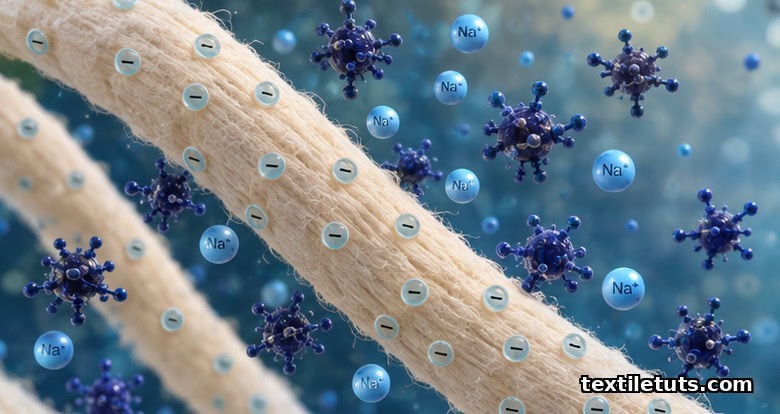
Adding salt (NaCl) to the dye bath releases Na⁺ (sodium) and Cl⁻ (chloride) ions into solution. The positively charged Na⁺ ions accumulate near the negatively charged fiber surface, partially neutralizing the surface charge. This phenomenon is called increasing ionic strength or electrolyte screening. With the electrostatic barrier reduced, dye anions can approach, adsorb onto, and react with the fiber more effectively — driving higher exhaustion and improved levelness.
Salt Electrolyte Screening Mechanism
Key Numbers: Salt Concentrations and Dye Exhaustion Data
The appropriate salt dose varies by dye system, target depth, and application method. The table below summarizes industry-accepted ranges for common dye classes used on cotton and other cellulose fibers.
| Dye Type | Salt Concentration (g/L) | Typical Exhaustion Increase | Purpose |
|---|---|---|---|
| Reactive dyes (cold batch) | 40–80 | +30–50% | Electrolyte assist |
| Reactive dyes (exhaust at 60°C) | 20–40 | +20–40% | Exhaust improvement |
| Direct dyes | 5–15 | +15–25% | Leveling and exhaustion |
| Vat dyes (less common) | 0–10 | Minimal | Primarily for suspension |
For reactive dyes on cotton, the standard industry dose is 60 g/L for medium depths and up to 80 g/L for deep shades. Lighter shades may require only 30–40 g/L. Salt is added in stages — fractional addition over 20–30 minutes — to promote level dyeing and prevent striee (banding or uneven color). Adding all the salt at once for deep shades causes rapid exhaustion at the fabric surface, producing uneven color.
Water quality directly affects salt performance. Water hardness — calcium (Ca²⁺) and magnesium (Mg²⁺) ions — competes with Na⁺ at the fiber surface and reduces the electrolyte screening effect. Soft water is strongly preferred for predictable, reproducible results in both industrial and home dyeing.
Step-by-Step: How to Add Salt in Cotton Reactive Dyeing
- Prepare dye bath at 30–40°C with soft water. Pre-warm the water to ensure the salt and dye dissolve completely.
- Add pre-dissolved reactive dye to the bath; circulate for 10 minutes to ensure even distribution before adding any auxiliary chemicals.
- Add salt in 2–3 portions over 20–30 minutes (never all at once for deep shades) to promote level levelness and prevent striee.
- Raise temperature to target (40–60°C depending on the dye system). Cold-batch reactive dyes (Procion MX type) are typically held at 40°C; high-exhaust reactive systems may target 60°C.
- Hold at target temperature for 30–60 minutes for dye fixation. Maintain gentle circulation throughout to prevent marking or barreling.
- Rinse thoroughly with cold water to remove unfixed dye from the surface. This prevents dye tendering and crocking after the fabric is dry.
- Wash with hot water (70–80°C) and a neutral detergent to remove hydrolyzed dye (unfixed dye that has reacted with water rather than the fiber). This wash step is critical for color fastness.
Common Mistakes When Using Salt in Dyeing
- Adding salt too quickly — causes striee (banding or uneven color) because dye exhausts onto the fabric surface faster than it can migrate and level out.
- Using too little salt — results in poor exhaustion, dull colors, and wasted dye. If the color looks washed out, insufficient electrolyte is often the cause.
- Using excessive salt — above 100 g/L can cause salting-out, where the dye becomes less soluble and may precipitate from the bath, resulting in spotting, caking, or poor exhaustion.
- Adding salt before dye is fully dissolved — leads to mottled results and inconsistent color across the batch.
- Ignoring water hardness — calcium and magnesium ions (Ca²⁺, Mg²⁺) compete with Na⁺ ions at the fiber surface, reducing salt’s electrolyte effectiveness. Always use softened water or account for hardness when dosing salt.
Practical Implications for Home Dyeists
Home fabric dyeing with fiber reactive dyes — such as Procion MX (used by Dharma Trading Co.) or Jacquard Procion — follows the same electrolyte principles as industrial dyeing, just at smaller scale. Salt is especially critical when dyeing cotton, linen, or rayon — less important for protein fibers like wool and silk.
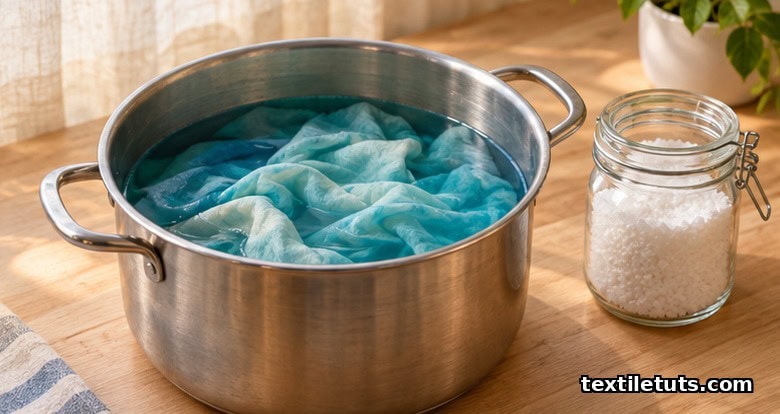
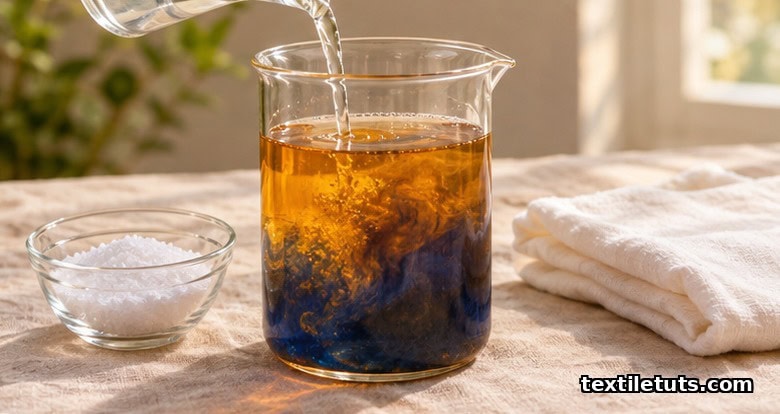
- Use 1/2 to 1 cup of salt per pound of fabric in a cold water bath for fiber reactive dyes. This approximates the 40–80 g/L range used in industrial practice.
- Never use salt with acid dyes on wool or silk — acid dyes require an acidic bath (pH 4–6) where the fiber carries positive charges, so electrolyte screening is not needed and can disrupt the dye-fibre interaction.
- Pre-dissolve salt in warm water before adding to the dye vat to ensure complete dissolution and even distribution.
- Commercial dyeing operations increasingly use salt recycling systems to reduce wastewater salt content — an important environmental consideration for large-scale processing.
Frequently Asked Questions
Q: Why is salt needed for dyeing cotton but not wool?
A: Cotton (cellulose fiber) carries negative surface charges in water that repel anionic dyes. Wool (protein fiber) has a different surface chemistry — acid dyes are applied from an acidic bath where the fiber carries positive charges, so electrolyte screening is not needed. Salt is unnecessary and potentially harmful to wool dye processes.
Q: Can you use too much salt when dyeing fabric?
A: Yes. Excessive salt (above 100 g/L) can cause salting-out, where the dye becomes less soluble and may precipitate from the bath — resulting in poor exhaustion, spotting, or caking on the fabric. Follow dye manufacturer guidelines for optimal salt concentrations.
Q: Does the type of salt matter for fabric dyeing?
A: Sodium chloride (NaCl) is the standard. Rock salt or solar salt works fine if pure. Avoid salt with anti-caking agents or iodine added — these can introduce contaminants. For critical color matching, analytical grade NaCl ensures consistent results.
Q: How does salt affect different dye types on cotton?
A: Salt has the greatest impact on reactive dyes (30–50% exhaustion improvement) and direct dyes (15–25%). Vat dyes and sulfur dyes are applied differently and benefit less from electrolyte addition. Always check the dye system’s technical data sheet for specific auxiliaries.
References
- Broadbent, A. D. (2001). Basic Principles of Textile Coloration. Society of Dyers and Colourists. https://doi.org/10.1002/jctb.601
- Clark, M. (Ed.). (2011). Handbook of Textile and Industrial Dyeing. Woodhead Publishing. https://www.sciencedirect.com/book/9780857094914/handbook-of-textile-and-industrial-dyeing
- Hunger, W. (Ed.). (2003). Industrial Dyes: Chemistry, Properties, Applications. Wiley-VCH. https://onlinelibrary.wiley.com/book/10.1002/3527602016
- International Organization for Standardization. (2023). ISO 105-C06: Textiles — Tests for colour fastness — Part C06: Colour fastness to domestic and commercial laundering. ISO. https://www.iso.org/standard/77253.html
- Shore, J. (1998). Colorants and Auxiliaries: Organic Chemistry and Application Properties. Society of Dyers and Colourists.


