
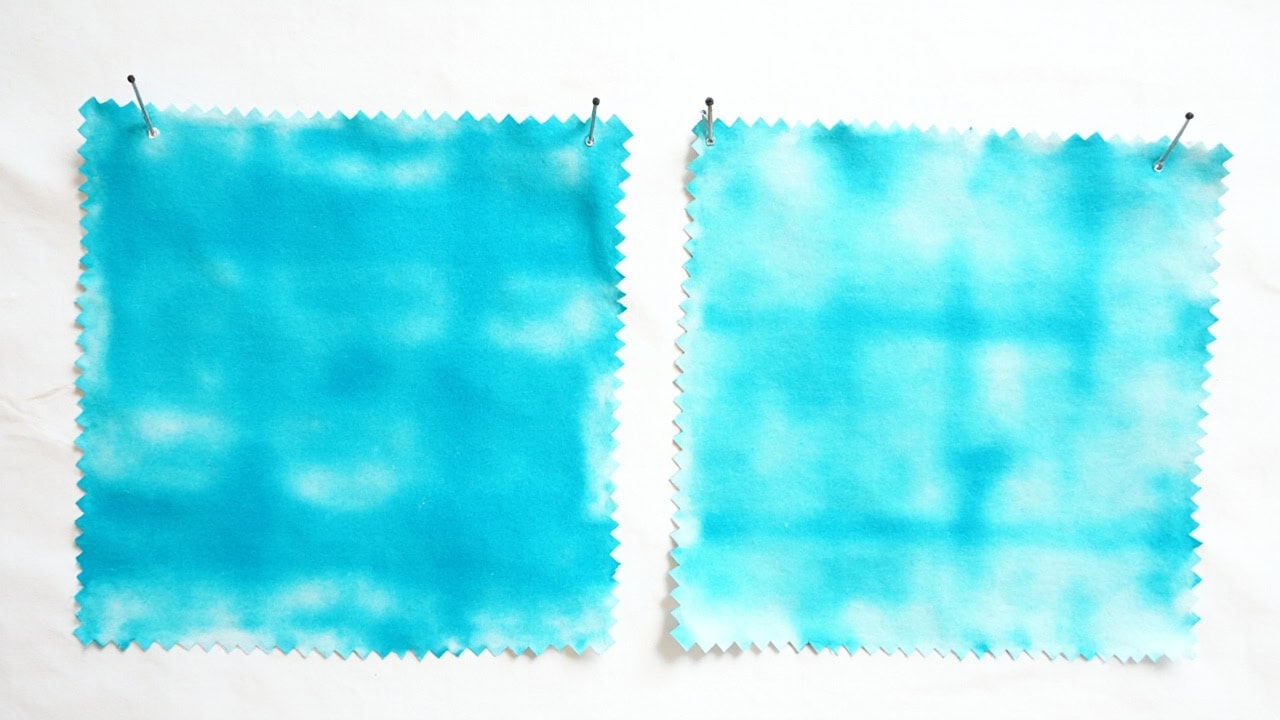
Fiber Reactive Dye vs. All-Purpose Dye: Which Should You Use?

Fiber reactive dye creates permanent covalent bonds with cellulose fibers (cotton, linen, rayon) when activated with soda ash at pH 12, achieving colorfastness that withstands repeated washing — all-purpose dye relies on surface bonding and fades significantly after 5–10 washes. For cellulose fibers, fiber reactive dye is the only choice that produces true, lasting color; all-purpose dye is only suitable for synthetic fabrics or temporary coloration. Understanding the fundamental chemical difference between these two dye types is essential for achieving professional-quality results in any fabric dyeing project.
What Is Fiber Reactive Dye?
Fiber reactive dye is a cold-water dye that forms covalent chemical bonds directly with cellulose (plant) fibers. The chemistry involves a reactive group — typically dichlorotriazine — that bonds to the hydroxyl groups (-OH) present on cellulose polymer chains. When the dye bath is raised to approximately pH 12 using soda ash (sodium carbonate), the cellulose fibers develop negatively charged sites, and the reactive dye groups become activated, enabling a permanent covalent bond to form between dye molecule and fiber [1].
The fixation process, called “exhaustion,” proceeds progressively as dye molecules bond to available fiber sites until saturation is reached. Salt (sodium chloride or sodium sulfate) is added to the dye bath to drive this exhaustion by shielding the negative charges on both dye molecules and cellulose fibers, encouraging them to come together rather than remaining suspended in the water [2]. The result is color that becomes physically part of the fiber itself — not a coating or surface treatment. Once cured and rinsed, fiber reactive dye produces results rated “excellent” on AATCC wash fastness scales, surviving 50 or more wash cycles with minimal fading [3].
What Is All-Purpose Dye?
All-purpose dye is typically a direct dye or acid dye blend that bonds through surface adhesion rather than chemical reaction. It works on both natural and synthetic fibers but creates no covalent bond with the substrate. The color sits on the fiber surface — mechanically retained like paint rather than chemically bonded. All-purpose dye dissolves in warm water and requires no activation chemicals, making the process faster and simpler than fiber reactive dyeing [4].
The trade-off for this convenience is significantly reduced colorfastness. All-purpose dye typically rates “poor to fair” on standardized wash fastness tests, with visible fading occurring after just 5–10 machine washes [5]. This makes all-purpose dye suitable for decorative or short-term applications, but it cannot produce the permanent, colorfast results required for garments or items that will be laundered regularly. There is no chemical fixative that can upgrade all-purpose dye to fiber reactive dye performance — the bonding mechanism itself is fundamentally different.
Side-by-Side Comparison
| Property | Fiber Reactive Dye | All-Purpose Dye |
|---|---|---|
| Bond Type | Covalent chemical bond | Surface adhesion |
| Best Fibers | Cotton, linen, rayon, bamboo | Polyester, nylon, wool, silk |
| Wash Fastness | Excellent (50+ washes) | Poor to fair (5–10 washes) |
| Color Brightness | Vibrant, true tones | Muted, often darker-looking |
| Application Temp | Room temperature (20–25°C) | Hot water (near boiling) |
| Set Chemicals | Soda ash + salt | None required |
| Curing Time | 24 hours | None (heat sets) |
| Cost per Project | Higher | Lower |
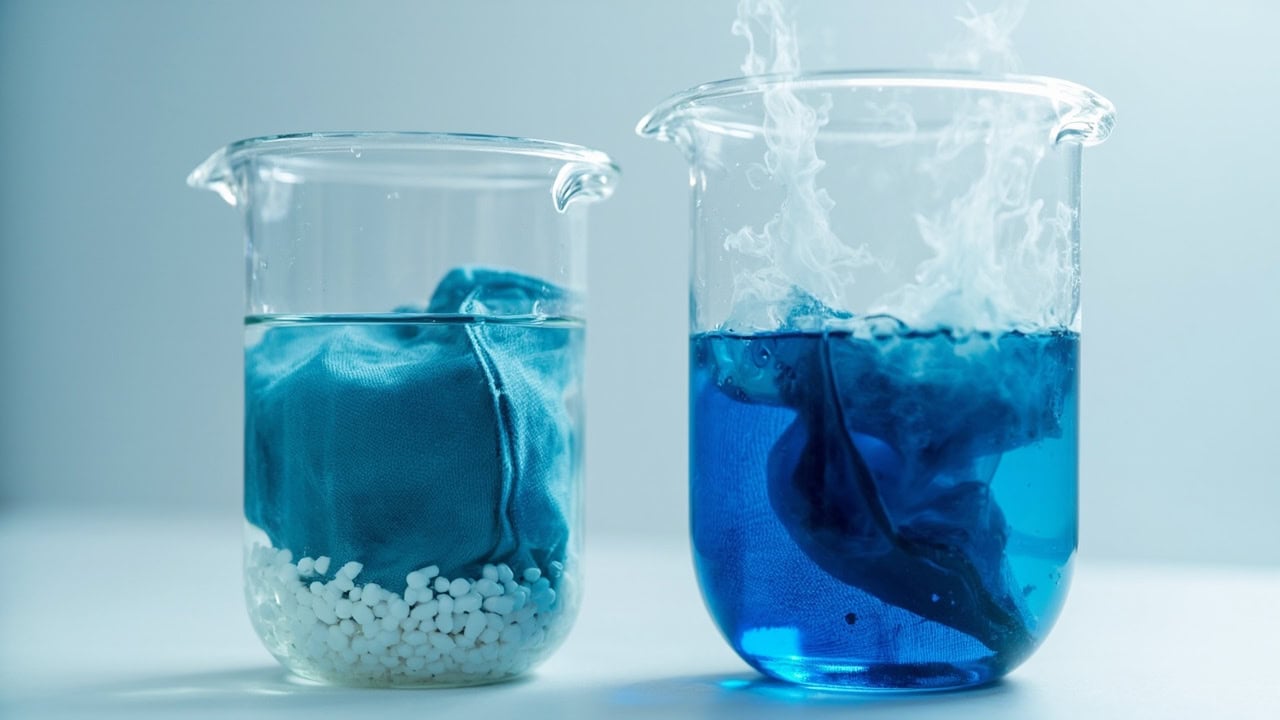
When to Choose Fiber Reactive Dye
Fiber reactive dye is the definitive choice for dyeing natural cellulose fibers including cotton, linen, hemp, rayon, bamboo, and Tencel. The covalent bonding mechanism produces colorfastness that withstands 50 or more wash cycles with minimal fade — rated “excellent” on the AATCC wash fastness scale (Level 4–5) [6]. Any project requiring colorfast results — garments, frequently washed items, or pieces exposed to sunlight — demands fiber reactive dye.
Vibrant, true colors are a hallmark of fiber reactive dye. Because the dye molecules bond chemically within the fiber rather than sitting on the surface, the resulting hues are brighter and more saturated than those achievable with surface-adhesion dyes. This makes fiber reactive dye essential for tie-dye, shibori, and immersion dyeing projects where sharp pattern definition and vivid color are non-negotiable. The dye also offers superior UV resistance — important for items that will be exposed to sunlight during use or display [7].
The 24-hour cure time and multi-step process are justified by the permanence of the results. A garment dyed with fiber reactive dye and properly fixed maintains its color for the practical lifetime of the fabric — the covalent bond cannot be washed out, only potentially abraded off through years of heavy wear [8]. For any project where color longevity matters, the additional preparation and wait time are worthwhile investments.
When to Choose All-Purpose Dye
All-purpose dye is appropriate when dyeing synthetic fibers — particularly polyester, acrylic, and blends — for which fiber reactive dye is ineffective. Polyester requires a disperse dye (such as Rit DyeMore for Synthetics) that can penetrate the synthetic polymer structure under high heat; fiber reactive dye has no bonding affinity for polyester whatsoever [9]. All-purpose dye is also suitable for quick craft projects where longevity is not a concern, such as decorative items, costume pieces, or one-time event use.
The absence of activation chemicals makes all-purpose dye more accessible for beginners or casual use. No soda ash, no salt, no extended cure time — the process is essentially dissolve dye in hot water, add fabric, stir, rinse, and done. This simplicity comes at the cost of wash fastness: expect visible fading within 5–10 machine washes, and recognize that the result is inherently temporary [10]. All-purpose dye also serves well for subtly altering an existing color shade or touching up small areas where a perfect color match is not required.
How to Use Fiber Reactive Dye
- Pre-wash fabric in hot water with Synthrapol or washing soda to remove fabric finishes, sizing, and contaminants that would block dye absorption
- Dissolve dye powder in warm water (not hot — use approximately 1 tablespoon per yard of fabric for medium color saturation)
- Add soda ash to the dye bath at a rate of 2 tablespoons per gallon of water — this raises pH to approximately 12, activating the covalent bonding mechanism [11]
- Add salt to the dye bath at a rate of 1 cup per gallon — this drives the exhaustion process by neutralizing electrical charges between dye and fiber
- Add damp, pre-wet fabric to the dye bath; stir occasionally for 30–60 minutes while maintaining room temperature (20–25°C)
- Remove fabric and seal in a plastic bag for a 24-hour extended cure period to maximize bond fixation
- Rinse fabric in cold water until rinse water runs completely clear; machine wash separately with Synthrapol to remove unfixed dye
- Result: Colorfast, fade-resistant color that maintains vibrancy through 50+ wash cycles and resists UV fading for years of use [12]
How to Use All-Purpose Dye
- Pre-wash fabric to remove finishes; put on rubber gloves to protect hands from stain
- Fill a stainless steel pot with enough water to fully submerge the fabric (or use a washing machine for large items like bed sheets)
- Add dye to hot water and stir until fully dissolved — the dye must be completely dispersed before adding fabric
- Add fabric and maintain hot water temperature (just below boiling, approximately 85–95°C) for 30–60 minutes, stirring frequently to ensure even color distribution
- Remove fabric and rinse in warm water, gradually cooling to cold — sudden temperature shocks can cause uneven dye uptake
- Machine wash separately in warm water with mild detergent to remove excess surface dye
- Result: Visible color change that will begin fading noticeably after 5–10 washes; not colorfast for serious garment use [13]
Common Dyeing Mistakes and Troubleshooting
Fiber Reactive Dye Problems
- Dye bleeding or fading: Insufficient soda ash or inadequate cure time — always use the full 24-hour cure and verify soda ash quantity. If the pH is too low, the covalent bond never fully forms.
- Uneven color: Inadequate stirring during application allows dye to concentrate in low-circulation zones; insufficient salt reduces exhaustion efficiency. Move fabric more frequently and ensure salt is fully dissolved.
- Color too light: Not enough dye for the fabric weight; fabric had residual finish (wax, silicone, or water-repellent coating); dye bath was exhausted before all fabric was saturated. Pre-wash with Synthrapol and increase dye quantity.
- Staining on non-fabric surfaces: Fiber reactive dye is permanent on most materials — protect all work surfaces with plastic sheeting and have a dedicated dye-only sponge for cleanup [14].
All-Purpose Dye Problems
- Color not taking: Wrong fiber type for the dye (e.g., trying to dye polyester with standard all-purpose dye); water-repellent finish on fabric; water temperature too low for that dye type. Verify fiber content before selecting dye.
- Color much darker than expected: Too much dye relative to fabric weight; fabric not thoroughly wet before immersion, causing uneven dye concentration on dry spots. Start with less dye — you can always overdye.
- Uneven streaking: Inconsistent stirring during dyeing; fabric not moved or rotated sufficiently in the dye bath. Maintain steady, frequent agitation throughout the process.
- Washes out quickly: This is an expected characteristic of all-purpose dye’s surface-bonding mechanism, not a mistake. There is no fix — the fundamental bonding limitation means this dye type cannot produce colorfast results on cellulose fibers [15].
Fiber Compatibility: Which Dye for Which Fabric?
| Fabric Type | Best Dye | Why |
|---|---|---|
| Cotton, linen, hemp | Fiber reactive dye | Cellulose fibers have hydroxyl groups (-OH) that form covalent bonds with fiber reactive dye chemistry [16] |
| Rayon, Tencel, bamboo | Fiber reactive dye | Same cellulose structure as cotton and linen — same reactive dye bonding applies |
| Wool, silk | Acid dye (not all-purpose dye) | Protein fibers require acid dye chemistry, not the cellulose-reactive process or surface adhesion of all-purpose dye |
| Polyester | Disperse dye (e.g., Rit DyeMore) | Both fiber reactive and all-purpose dye fail on polyester — only disperse dye formulated for synthetics can color it [17] |
| Nylon | Acid dye or Rit All-Purpose | Nylon responds to acid dye chemistry and some all-purpose formulations; test on a swatch first |
| Acrylic | Disperse dye (difficult) | Acrylic is among the most challenging fabrics to dye at home; requires high heat and specialized disperse dyes |
| Cotton/polyester blend | Overdyeing or two-bath process | Blends contain both cellulose and synthetic components — results are typically unsatisfactory with any single dye type |
Frequently Asked Questions
Q: Can you use fiber reactive dye on polyester?
A: No — fiber reactive dye only bonds with cellulose fibers that have hydroxyl groups (-OH). Polyester is a synthetic polymer with no available bonding sites for reactive dyes. To dye polyester, use a disperse dye specifically formulated for synthetic fabrics, such as Rit DyeMore for Synthetics.
Q: Why does fiber reactive dye need soda ash?
A: Soda ash (sodium carbonate) raises the pH of the dye bath to approximately 12, which activates the reactive groups on the dye molecules and generates negatively charged sites on the cellulose fibers. This creates the conditions for a covalent bond to form between dye and fiber — without soda ash, fiber reactive dye behaves identically to direct dye and produces no colorfast results.
Q: How long does fiber reactive dye last compared to all-purpose dye?
A: Fiber reactive dye lasts for the practical lifetime of the fabric — 50+ washes with minimal fading if properly fixed and cured. All-purpose dye typically begins fading noticeably after 5–10 washes and continues to fade with each subsequent wash, making it suitable only for temporary or decorative applications.
Q: Can you mix fiber reactive dye with all-purpose dye in the same project?
A: No — they require different pH conditions and application temperatures to work. Fiber reactive dye needs an alkaline environment (pH 12) at room temperature; all-purpose dye works in neutral to slightly acidic hot water. Mixing them would neutralize the fiber reactive dye’s activation chemistry, producing poor results from both.
References
- Wikipedia. (2025). Reactive dye. Wikimedia Foundation.
- Wikipedia. (2025). Colorfastness. Wikimedia Foundation.
- American Association of Textile Chemists and Colorists (AATCC). Test Methods and Standards. AATCC.
- International Organization for Standardization. ISO Textile Standards. ISO.


