
Why pH Matters in Fabric Dyeing: The Science Behind Reactive Acid and Vat Dyes

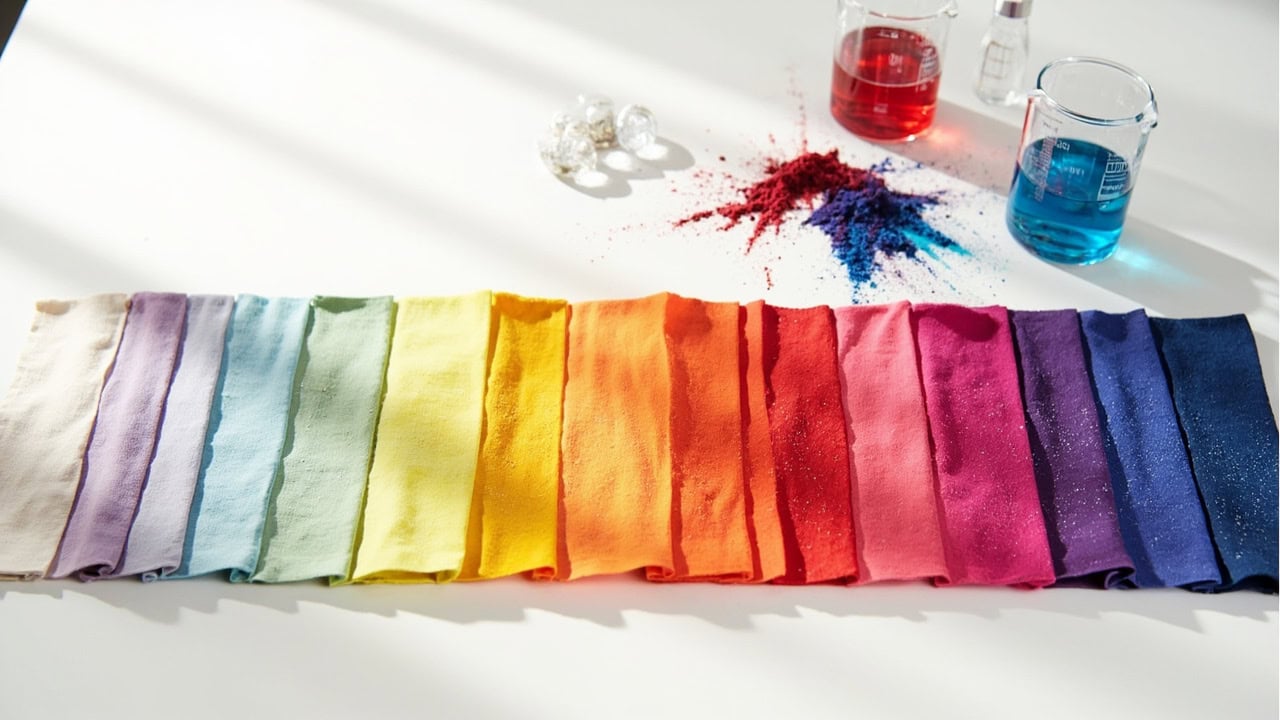
pH is the controlling factor in fabric dyeing because it determines whether dye molecules form ionic bonds with fiber proteins — reactive dyes require an alkaline pH of 10–12 to activate and bond, while acid dyes need an acidic pH of 2–6 to protonate fiber sites and attract dye anions. In vat dye processes, strong alkali (pH 11–14) keeps the dye in its soluble leuco form before oxidation fixes it to cotton fibers.
What Is pH and Why Does It Matter in Fabric Dyeing?
pH measures hydrogen ion concentration on a 0–14 scale where 0 represents most acidic, 14 represents most alkaline, and 7 represents neutral. In dyeing, pH controls the electrical charge on both fiber surfaces and dye molecules. This fundamental relationship governs every successful dye-fabric interaction, making pH measurement and control essential for achieving consistent, vibrant, and colorfast results.
Fiber surfaces carry different charges at different pH levels — this charge differential determines whether dye molecules can physically bond to the fiber. pH also controls dye solubility, exhaustion rate (how completely dye transfers from bath to fiber), and fixation efficiency (how permanently the dye attaches). Small pH deviations of as little as 0.5 units can dramatically change dye uptake and color yield, making precise pH control the difference between professional results and disappointing failures.
For dyers working with any fiber type, understanding pH is non-negotiable. Whether you’re treating cotton with reactive dyes, protein fibers with acid dyes, or cotton with vat dyes, the pH of your dye bath dictates every chemical interaction that follows. Getting this single variable right means the difference between colors that wash out after a single laundering and colors that remain vivid for the life of the fabric.
The Chemistry of pH in Reactive Dyeing
Reactive dyes use a chemical reaction to form covalent bonds with cellulose fibers — the primary component of cotton, linen, and rayon. At high pH (10–12), cellulose fibers become deprotonated and carry negative charges. Anionic dye molecules (also negative) are normally repelled by these fiber surfaces, but a carefully formulated pH buffer system creates the specific conditions needed for bonding to occur.
The dye’s reactive group — typically a dichlorotriazine (DCT) or vinyl sulfone — activates only at alkaline pH levels. This activation allows the dye to form a permanent covalent bond with the cellulose molecule. Simultaneously, alkali breaks the fiber’s hydrogen bonds, causing the fiber to swell and allowing dye molecules to penetrate deeply into its structure for better colorfastness.
After the reaction completes, pH must be neutralized to halt further reaction and prevent fiber damage from prolonged alkaline exposure. Key pH values for cotton reactive dyeing are pH 10.5–11.5 for vinyl sulfone dyes and pH 11–12 for DCT (dichlorotriazine) dyes. These ranges represent the optimal balance between dye activation and fiber preservation — below these ranges, dye fixation is incomplete; above them, both dye and fiber begin to degrade.
The Chemistry of pH in Acid Dyeing
Acid dyes are applied to protein fibers including wool, silk, cashmere, and mohair, as well as nylon. The chemistry here is the inverse of reactive dyeing: where reactive dyes need alkalinity, acid dyes require an acidic environment to bond effectively. This is because protein fibers carry both amino (-NH₂) and carboxyl (-COOH) groups that behave differently depending on pH.
At low pH (2–4), carboxyl groups become protonated (-COOH), effectively removing their negative charges. Simultaneously, amino groups become protonated (-NH₃⁺), creating positive charges on the fiber surface. Anionic acid dye molecules containing sulfonic acid groups (-SO₃⁻) are powerfully attracted to these newly created positive sites. This ionic bonding mechanism is called “salt linkage” formation, and it is the primary force driving acid dye fixation to protein fibers.
pH 4–6 is used for leveling acid dyes, which offer better penetration and more uniform color distribution but with less color intensity. pH 2–4 is reserved for milling acid dyes, which sacrifice some levelness for higher color yield and superior wash fastness. The lower pH drives more dye onto the fiber, creating deeper, more vivid colors that withstand repeated laundering.
Acid Dyeing pH by Fiber Type
| Fiber Type | Optimal pH Range | Why This pH |
|---|---|---|
| Wool | 4–6 | Mildly acidic preserves fiber scales and luster |
| Silk | 4–5 | Slightly acidic matches silk’s isoelectric point |
| Nylon | 5–6 | Nylon has fewer amino groups than wool |
| Mohair/Cashmere | 4–5 | Same as wool — protein fiber chemistry |
The Chemistry of pH in Vat Dyeing
Vat dyes are water-insoluble pigments used primarily on cotton, valued for their exceptional colorfastness and resistance to washing, light, and chemicals. The vatting process relies entirely on pH-controlled chemistry to convert these insoluble pigments into a form that can penetrate fibers, then revert them back to their insoluble state for permanent fixation.
In strongly alkaline conditions (pH 11–14) combined with a reducing agent, vat dyes undergo a chemical transformation called “vatting.” The dye converts to its leuco form — a water-soluble state that can penetrate cotton fibers as they swell in the alkaline environment. The leuco form is absorbed into the fiber’s interior, positioning the dye molecules for permanent attachment.
After fiber absorption is complete, air oxidation or chemical oxidizing agents convert the leuco form back to the original insoluble pigment. This conversion traps the dye permanently within the fiber structure, creating the exceptional wash fastness for which vat dyes are renowned. Indigo, one of the oldest and most celebrated vat dyes, is reduced at pH 10–11 using sodium hydrosulfite or urea/thiourea dioxide. Anthraquinone vat dyes require stronger alkali (pH 12–14) for reduction.
If pH drops too low during vat dyeing — below 10 for indigo — the dye will not fully reduce and cannot penetrate the fiber. Instead, it precipitates out of solution and causes uneven staining. Maintaining alkaline pH throughout the vatting and absorption phases is essential, with only controlled reduction to neutral pH permitted during the final oxidation stage.
Key pH Values Every Fabric Dyer Must Know
| Process | Optimal pH | Critical Range | What Happens Outside Range |
|---|---|---|---|
| Reactive dyeing (cotton) | 10.5–11.5 | 10–12 | Below 10: poor fixation; Above 12: fiber damage |
| Acid dyeing (wool/silk) | 4–6 | 2–6 | Below 2: fiber degradation; Above 6: poor exhaustion |
| Vat dyeing (cotton) | 11–14 | 10–14 | Below 10: dye won’t reduce; Above 14: fiber damage |
| Neutralization rinse | 6–7 | 5–8 | Outside range: dye bleeding or residual alkali |
Industry Standards and Testing Methods
The textile industry has established rigorous standards for pH testing to ensure consistent quality across all dyeing operations. AATCC TM 82 (Colorfastness to Laundering) includes pH verification of dye baths as part of its comprehensive colorfastness assessment. This test method evaluates how dyed fabrics withstand repeated laundering under standardized conditions, with dye bath pH being a critical controlled variable.
ISO 105-C06 (Machine wash colorfastness) is an international standard that tests wash stability at standardized pH levels representative of real-world laundering conditions. This standard ensures that dyed fabrics maintain their color when exposed to the slightly alkaline environment typical of household laundry detergents.
pH meters used in professional dyeing operations must be calibrated with buffer solutions at pH 4.0, 7.0, and 10.0 before each use. This three-point calibration ensures accuracy across the full range of dyeing pH values. Fabric pH testing is conducted according to AATCC TM 92 — the extract method measures surface pH by extracting residual chemicals from fabric and measuring the extract’s hydrogen ion concentration.
The ideal fabric pH after dyeing is 6.0–7.5, which closely matches skin’s natural pH of 5.5. Fabrics with residual alkalinity (pH above 7.5) can cause skin irritation, while excessively acidic fabrics (pH below 5.5) may degrade over time. Professional dyers always include a final neutralization rinse to bring dyed fabric into this safe, skin-compatible range.
Common pH-Related Dyeing Problems and Solutions
Problem: Uneven color, patchy results
The cause is pH fluctuations during dyeing that create differential exhaustion — some areas of fabric absorb more dye than others. This typically occurs when pH drifts during the dyeing cycle due to inadequate buffering or insufficient monitoring. The fix is to use buffer systems (sodium acetate, phosphates, or proprietary buffer blends) to maintain stable pH throughout the entire dyeing process. Continuous pH monitoring with a calibrated meter allows adjustments before drift becomes visible in the final product.
Problem: Poor color yield, dull appearance
The cause is incorrect pH for the dye type — pH too low for reactive dyes means the dye is not fully activated and cannot bond, while pH too high for acid dyes means there are insufficient positive fiber sites to attract dye anions. The fix is to adjust pH in 0.5 unit increments using a calibrated pH meter to verify each adjustment. For reactive dyes, adding soda ash raises pH; for acid dyes, adding white vinegar lowers it.
Problem: Dye bleeding in first wash
The cause is insufficient fixation due to wrong pH during the critical fixation stage. When pH is not in the optimal range for the specific dye-fiber combination, dye molecules bond weakly and release during laundering. The fix is to verify that final pH during fixation is correct for the dye type and add electrolyte (salt such as sodium chloride or sodium sulfate) to improve exhaustion. Salt drives additional dye onto the fiber by increasing the ionic strength of the bath.
Problem: Fiber damage, fabric strength loss
The cause is pH too extreme for the fiber type — especially pH above 12 for cotton or pH below 2 for wool. At these extremes, alkaline degradation breaks down cellulose chains in cotton, while acid hydrolysis degrades the keratin protein in wool. Both result in reduced tensile strength, harsh hand feel, and premature fabric failure. The fix is to monitor pH continuously throughout processing, use buffer systems to prevent accidental drift into extreme ranges, and reduce exposure time when extreme pH is temporarily required.
Practical pH Control for Home Dyers
Home dyers can achieve professional-quality results by following the same pH principles used in industrial dyeing, with appropriate modifications for smaller-scale equipment. The most critical starting point is using distilled or deionized water — tap water contains dissolved minerals (calcium, magnesium, iron) that buffer pH and can interfere with precise dye bath control. Starting with pH-neutral water eliminates this variable from the outset.
For reactive dyes on cotton, add soda ash (sodium carbonate) to your dye bath to achieve alkalinity in the target range of pH 10.5–11. Dissolve the soda ash completely before adding dye, and add salt (sodium chloride) at 5–10% by weight to improve exhaustion. For acid dyes on wool or silk, use white vinegar (acetic acid) to lower pH to the 4–5 range. Both additives should be added gradually with continuous pH verification.
pH strips (litmus paper) provide rough measurement suitable for approximate control, but digital pH meters offer the precision needed for consistent professional results. Buffered pH indicator strips with 0.2–0.5 pH unit gradations provide adequate accuracy for most home dyeing. Buffer chips — pre-mixed pH solution tablets that dissolve in water — help maintain consistent pH in large dye baths by resisting accidental pH drift.
Always rinse dyed fabric thoroughly with cool water after dyeing to remove residual alkali or acid. A final rinse with a small amount of white vinegar for alkalinely-dyed fabric (or a pinch of soda ash for acidly-dyed fabric) brings the fabric to a neutral pH of 6–7. This neutralization step prevents dye bleeding during future laundering and ensures the fabric is safe for skin contact.
Frequently Asked Questions
Q: Can you dye fabric without controlling pH?
A: No — without pH control, dye molecules and fiber surfaces lack the electrical conditions needed for bonding. Reactive dyes need alkaline activation; acid dyes need acidic conditions to attract dye anions to fiber. Uncontrolled pH produces weak color, poor wash fastness, and uneven results.
Q: What happens if reactive dye bath pH is too high?
A: At pH above 12.5, cotton fibers begin to undergo alkaline degradation — cellulose chains break down, reducing tensile strength and causing a harsh, weak hand feel. The dye also becomes over-activated and may hydrolyze in the bath rather than bond to fiber, reducing color yield.
Q: Why do wool dyes need acid and not alkali?
A: Wool is a protein fiber (keratin) with amino groups that carry positive charges in acidic conditions. These positive charges attract the anionic (negatively charged) acid dye molecules through ionic bonding. In alkaline conditions above pH 8–9, wool scales open and the fiber begins to felt — causing shrinkage and damage.
Q: How do you correct pH if your dye bath is wrong?
A: To lower pH: add white vinegar (acetic acid) gradually, checking with pH strips. To raise pH: add soda ash (sodium carbonate) or caustic soda (NaOH) in small amounts. Make adjustments in 0.5 unit increments and re-measure after each addition. Never pour chemicals directly into the dye bath — dilute first.
For a comprehensive guide to fabric dyeing techniques, including detailed instructions for dye chemistry fundamentals, explore our complete fabric dyeing guide. If you’re specifically looking to dye cotton with reactive dyes, our dedicated spoke article covers pH control as an essential step in that process. For troubleshooting existing dye problems, our acid dye troubleshooting guide addresses pH-related issues and their solutions. Understanding how fabric pH affects overall fabric care is essential knowledge for every textile enthusiast.
References
- AATCC Technical Manual. (2024). AATCC TM 82 — Colorfastness to Laundering. American Association of Textile Chemists and Colorists.
- AATCC Technical Manual. (2024). AATCC TM 92 — Fabric pH Testing: Extract Method. American Association of Textile Chemists and Colorists.
- ISO 105-C06:2010. Textiles — Tests for colour fastness — Part C06: Colour fastness to domestic and commercial laundering. International Organization for Standardization.
- Reserve, T. & Broadbent, A. D. (2002). Basic Principles of Textile Coloration. Society of Dyers and Colourists.
- Shore, J. (1998). Colorants and Auxiliaries: Organic Chemistry and Application Properties. Society of Dyers and Colourists.
- CottonWorks. (2024). Dyeing Basics: Fiber-Reactive Dyes. CottonWorks Learning Hub.


