
Mercerization: The Sodium Hydroxide Treatment That Transforms Cotton Dyeability

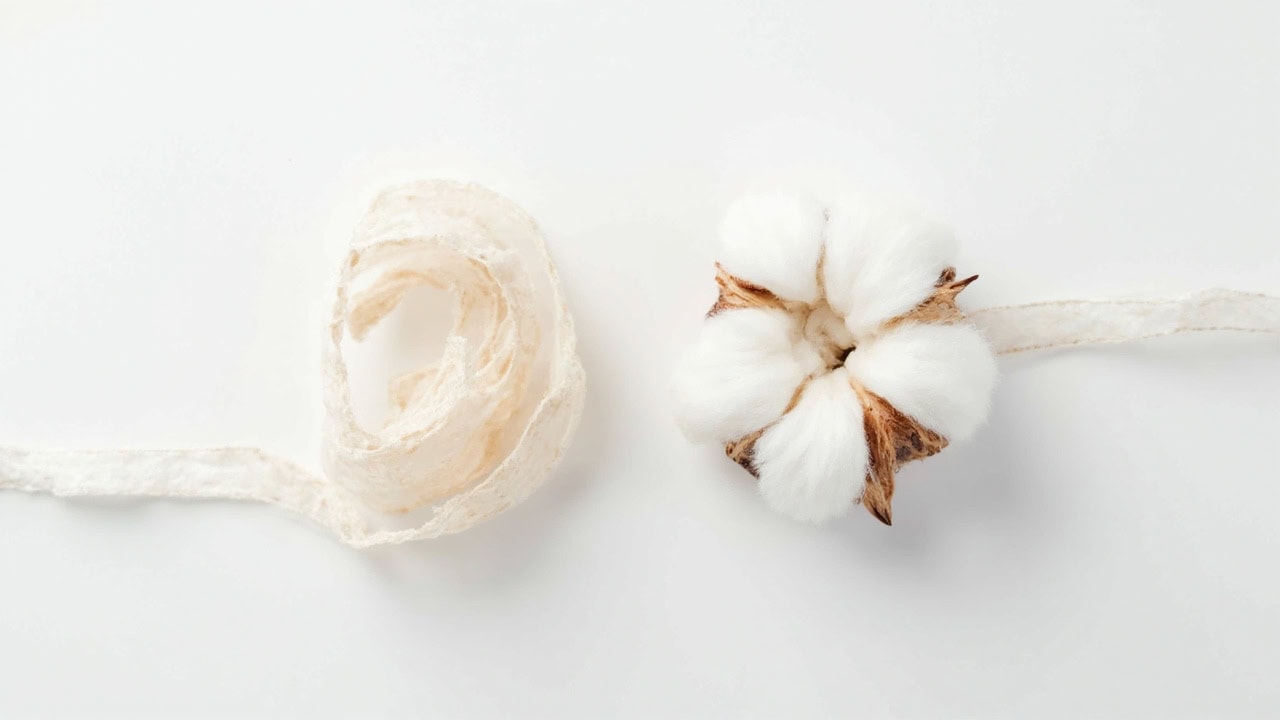
Mercerization is a textile finishing treatment that immerses cotton yarn or fabric in a concentrated sodium hydroxide solution (18–22% NaOH) at 15–20°C for 20–60 seconds, causing the cotton fibers to swell irreversibly and increase their dye uptake capacity by 25–50% compared to untreated cotton. This treatment also produces a permanent silk-like luster by straightening the cellulose microfibers and reducing light scattering at the fiber surface. The process was invented accidentally by John Mercer in 1844 when he observed that cotton treated with caustic soda became notably stronger and more lustrous. Today, mercerized cotton is the preferred material for premium sewing thread, high-end home textiles, sportswear, and any application where deep, colorfast coloration is non-negotiable.
What Is Mercerization and Why It Transforms Cotton
When John Mercer patented his caustic soda treatment in 1844, he had no idea he was fundamentally altering cotton’s molecular architecture. Mercer’s original process required stretching the fabric during treatment to prevent shrinkage — a cumbersome step that limited commercial adoption. It was not until 1889, when Horace Lowe discovered that applying tension during treatment produced a permanent silk-like luster, that mercerization became commercially viable for luxury textiles. This refinement transformed mercerized cotton from a purely functional industrial material into a premium finishing option used in some of the world’s finest fabrics.
The treatment permanently converts cotton from a matte, low-affinity fiber into one with dramatically improved dye receptivity and a lasting silky sheen. Unlike surface coatings or optical brighteners that wash out over time, mercerization physically reshapes the fiber itself — the improvement is locked into the cellulose structure for the life of the garment. This permanent transformation makes mercerized cotton particularly valuable for products that undergo repeated laundering, such as bed sheets, towels, and premium apparel.
Modern mercerization is applied in two primary forms: tension mercerization, which maintains or slightly increases fabric dimensions through mechanical stretching during treatment, and tensionless mercerization, which allows 3–5% shrinkage — acceptable for many end-use applications where dimensional precision is less critical. The choice between these methods depends on the required dimensional stability and the specific performance requirements of the final product.
The Chemistry: How Sodium Hydroxide Swells Cotton Fibers
Cotton cellulose is a linear polymer of β-D-glucose units connected by (1→4) glycosidic linkages. These polymer chains organize into crystalline regions that alternate with amorphous regions along the fiber length, creating cotton’s characteristic twisted, kidney-shaped cross-section. In untreated cotton, the crystalline regions provide strength and rigidity, while the amorphous regions contain more accessible hydroxyl (–OH) groups available for chemical reactions — including dye bonding.
When cotton is immersed in 18–22% sodium hydroxide (caustic soda, NaOH), the concentrated alkali penetrates the amorphous regions and disrupts the hydrogen bonding network between cellulose chains. Water molecules hydrate the Na+ and OH– ions, and these hydrated ions carry water deep into the fiber structure. The result is a dramatic swelling: fiber diameter increases from approximately 5–6 μm to 8–10 μm — a 40–50% increase in cross-sectional area. Under microscopy, the characteristic collapsed “dog bone” cross-section of untreated cotton becomes nearly circular.
During this swelling, the natural convolutions (twist) of the cotton fiber straighten. The central lumen channel — which collapses in untreated cotton due to the twisted structure — remains open and circular after mercerization. This open lumen structure increases the effective surface area of the fiber by 20–30%, providing significantly more sites for dye molecules to bond. Simultaneously, the crystalline structure of cotton undergoes a phase change: native cellulose I is converted to cellulose II, a more thermodynamically stable allotropic form with a different crystal lattice arrangement that further improves dye accessibility.
After the prescribed 20–60 second dwell time, the fiber is rinsed thoroughly and neutralized with dilute acetic acid or water to bring the pH to 6–7. This rinsing step removes residual alkali and arrests the swelling process in its expanded state. The structural change is permanent and irreversible — subsequent washing, bleaching, or dyeing cannot revert the fiber to its original morphology. Studies show water sorption in mercerized cotton decreases from approximately 13.37% to 7.26%, indicating a more stable, less hygroscopic fiber structure.
Key Numbers: Concentration, Temperature, Time, and Tension
Mercerization is highly sensitive to process parameters. Deviating outside the optimal window reduces effectiveness and can cause permanent fiber damage. The following table summarizes the critical control points:
| Parameter | Standard Value | Acceptable Range |
|---|---|---|
| NaOH concentration | 20% | 18–22% |
| Treatment temperature | 15–20°C | 10–25°C |
| Contact time | 30–45 sec | 20–60 sec |
| Final pH after rinse | 6–7 | 5.5–7.5 |
The NaOH concentration is measured as 18–22% by weight, equivalent to approximately 18° Baumé (Bé) — the standard industrial notation for caustic soda solutions in textile processing. Temperature is critical: mercerization must be performed cold, ideally 15–20°C. Warmer solutions above 25°C reduce the degree of fiber swelling and can initiate alkaline hydrolysis, causing tendering — a progressive loss of fiber strength that may not become apparent until after multiple wash cycles. This is why industrial mercerizing ranges often incorporate cooling systems to maintain consistent cold temperatures even in warm environments.
Dwell time in the NaOH bath is typically 20–60 seconds. Times shorter than 20 seconds produce incomplete swelling and uneven treatment; times beyond 90 seconds begin to degrade cellulose chain length through progressive hydrolysis, compromising tensile strength. The neutralization step is equally critical: residual NaOH left in the fiber will continue degrading the cellulose during storage or subsequent high-temperature processes like dyeing or steaming, leading to catastrophic strength loss. Open-width mercerizing machines (J-box or chain stenter configurations) are preferred over rope machines because they ensure uniform treatment and precise dimensional control.
Fiber Compatibility: Which Fabrics Can Be Mercerized
100% cotton is the primary target for mercerization and responds best to the treatment. All cotton yarn, woven, and knit constructions benefit — the degree of improvement is proportional to the cotton content in the blend. The mercerization effect is purely a property of the cellulose fiber; synthetic fibers such as polyester or nylon are unaffected by NaOH under these conditions.
Cotton-polyester blends (such as 65% polyester / 35% cotton) can be mercerized, but the effect is reduced proportionally to the cotton fraction. Only the cotton component swells and improves dye receptivity; the polyester portion remains unchanged. Operators expecting full cotton-level dye uptake improvements from blended fabrics will be disappointed — the benefit is limited to the cotton component only.
Linen (flax fiber) responds similarly to cotton but the mercerization effect is less dramatic due to linen’s higher crystalline content and different lignin composition. The fiber swells and improves in dye receptivity, but the magnitude of improvement is smaller than cotton.
Viscose and rayon (regenerated cellulose fibers) can technically be mercerized, but the effect is less permanent because these fibers have lower initial crystallinity. The swelling effect is partially lost during laundering, making mercerization a less durable finish for viscose compared to native cotton cellulose.
Wool and silk are not suitable for mercerization — concentrated NaOH is highly alkaline and will hydrolyze protein fibers, causing severe strength loss and fiber dissolution. These animal proteins require acid-based treatments instead, such as acetylation for wool or acid mercerization for silk.
What Happens During Mercerization: Step by Step
The industrial mercerization process follows six distinct stages, each requiring precise control to achieve optimal fiber transformation:
- Prepare the NaOH bath: Mix technical-grade sodium hydroxide (caustic soda flakes or solution) with softened water to achieve 18–22% concentration by weight. Cool the bath to 15–20°C if necessary — this cooling step is critical, as hot NaOH damages cotton fibers and reduces mercerization efficiency. Many mills use shell-and-tube heat exchangers to maintain precise temperature control.
- Impregnate the fabric: Pass cotton fabric or yarn through the NaOH bath using a J-box, chain stenter, or rope mercerizing machine at speeds calibrated to achieve 20–60 seconds dwell time. Complete saturation is essential — air entrapment in the fiber structure creates unmercerized streaks and uneven treatment. Vacuum impregnation units are used for high-quality technical fabrics where uniformity is paramount.
- Apply tension (optional): For tension mercerization, maintain fabric width using expanding chain stretchers or stenters during treatment. This mechanically prevents shrinkage and preserves or slightly increases dimensional stability. For tensionless mercerization, allow the fabric to shrink freely — this is acceptable for many end uses and reduces mechanical complexity.
- Hold dwell time: Maintain the fabric in the NaOH bath for 20–60 seconds. Longer dwell times do not improve dye uptake and begin degrading fiber strength. Modern mercerizing ranges use programmable speed controls to precisely target the optimal dwell time for each fabric construction.
- Neutralize and rinse: Rinse the fabric thoroughly with water to remove the bulk of caustic soda, then treat with dilute acetic acid (0.5–1% solution) or another mild acid to neutralize residual NaOH. A final water rinse brings the fabric to pH 6–7, the safe range for subsequent processing and storage. pH testing (using indicator paper or automated inline sensors) should confirm neutralization before the fabric proceeds.
- Dry: Machine dry or stent dry the fabric to final dimensions. The mercerized fiber structure is now permanently set — subsequent wet processing, dyeing, or laundering will not reverse the structural changes achieved during treatment.
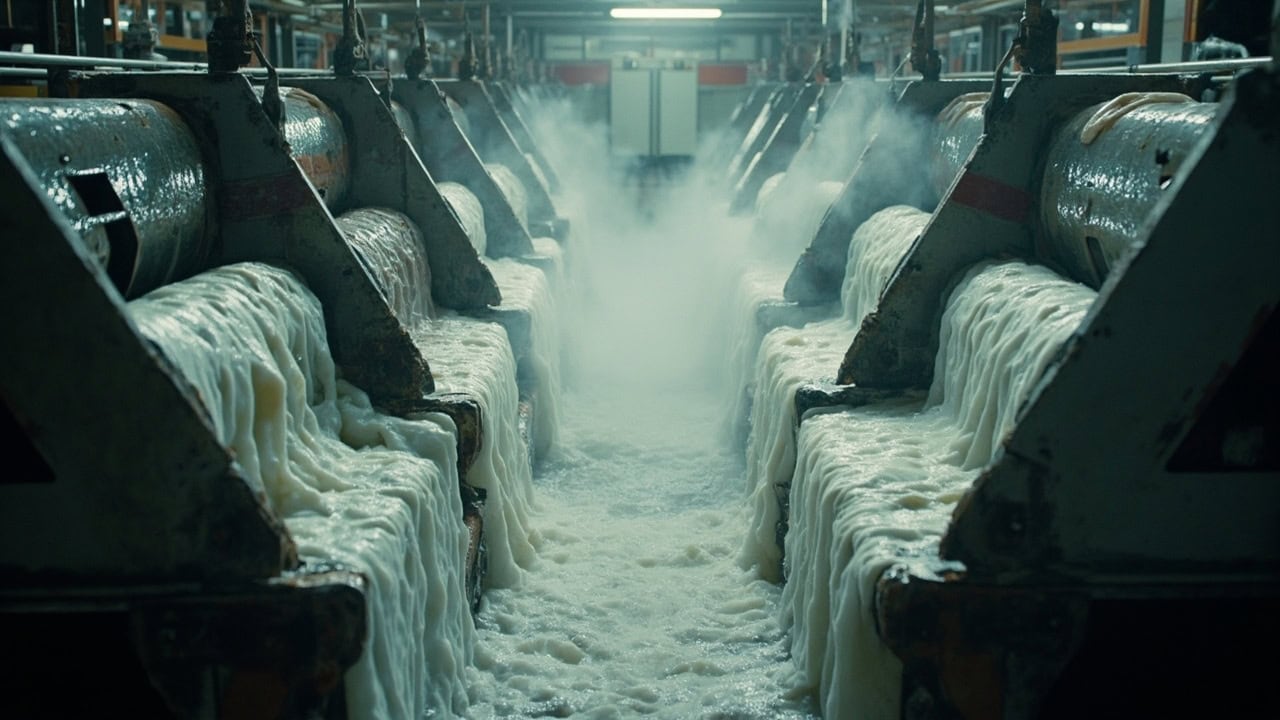
Common Mistakes and Troubleshooting in Mercerization
Insufficient NaOH concentration (below 18%): Produces incomplete fiber swelling and a measurably reduced improvement in dye uptake. Fabric will dye to a lighter shade than properly mercerized material, with color depth typically 10–15% below target. Solution: verify caustic concentration with a hydrometer or titration before each run, and recharge the bath as dilution occurs from fabric moisture carryover.
Treatment temperature above 25°C: Warm NaOH is less effective at swelling cotton and actively promotes alkaline hydrolysis of the cellulose chain. Over time, this leads to tendering — a gradual loss of tensile strength that may not appear until after several wash cycles. The fabric feels normal initially but weakens progressively. Solution: install cooling equipment on the mercerizing bath and monitor temperature continuously.
Uneven impregnation and air entrapment: Dry spots or air bubbles in the fabric during immersion cause unmercerized streaks — areas that retain the original matte appearance and lower dye affinity. These defects are impossible to detect visually before dyeing, but they produce visible streaking in the finished dyed fabric. Solution: use vacuum impregnation for critical fabrics, ensure fabric is thoroughly scoured before mercerization, and maintain proper tension to keep the fabric open and saturated.
Incomplete neutralization: Residual NaOH trapped in the fiber continues reacting with cellulose during storage or subsequent high-temperature processes, causing progressive degradation. Fabrics left with pH above 8 will progressively lose strength — sometimes 20–30% tensile loss within weeks. Solution: always verify final pH with indicator paper or automated sensors before batching, and do not delay neutralization if production is interrupted.
Excessive dwell time (beyond 90 seconds): The mercerization reaction is complete within 20–60 seconds; extending contact time provides no additional benefit and begins degrading the cellulose polymer chain through hydrolysis. Solution: calibrate line speed to match the target dwell time, and verify periodically with a stopwatch during production runs.
Applying mercerization to polyester-cotton blends with unrealistic expectations: Expecting full cotton-level dye uptake improvements from a 65/35 polyester-cotton blend ignores basic fiber chemistry — only the cotton component responds to NaOH treatment. The result is a blended effect, not a pure mercerization benefit. Solution: adjust dye formulations and expectations to reflect the actual cotton content receiving treatment.
Industry Applications and Standards for Mercerized Cotton
Mercerized cotton serves demanding applications across the textile industry where superior dye depth, strength, and visual appearance justify the additional processing cost:
Premium sewing thread is one of the most demanding applications for mercerized cotton. The treatment increases tensile strength by 30–40% by straightening the microfibers and reducing stress concentrations at fiber convolutions. Uniform dye uptake eliminates barreé defects (skewed dyeing patterns) in visible seams of quality garments. Mercerized cotton thread is the standard for designer apparel, tailoring, and any application where seam appearance is scrutinized.
Denim manufactured with mercerized cotton warp yarns produces deeper, more colorfast indigo shades with significantly reduced crocking (color transfer from fabric to skin or furniture). The swelled fiber holds more indigo dye molecules and bonds them more securely, extending the lifespan of the garment’s color without sacrificing the characteristic fading that denim enthusiasts value. Major denim mills routinely mercerize warp yarns as a standard process enhancement.
Sportswear and swimwear benefit from mercerized cotton’s improved moisture absorption and dramatically increased dye depth for pigment-dyed activewear. The lustrous finish of mercerized cotton also conveys a premium visual quality that supports higher price points in the sportswear market.
Home textiles — particularly bed sheets — are a large market for mercerized cotton. The characteristic silky luster and superior color saturation distinguish premium sheets from standard cotton products. Consumers readily perceive the visual difference, and the colorfastness advantage means these products maintain their rich appearance through hundreds of laundering cycles.
Industry standards governing mercerized cotton include ASTM D1763 (Standard Specification for Cotton Fibers) and ISO 105/Part E06 (Colorfastness testing for mercerized fabrics). These standards define testing protocols for colorfastness to washing, light, and crocking, providing quality benchmarks that mills and brands use to specify mercerized cotton in supply contracts.
Frequently Asked Questions
Q: Does mercerization make cotton stronger?
A: Yes — mercerization increases cotton’s tensile strength by 20–40% by straightening the cellulose microfibers and reducing stress concentrations at fiber convolutions. This strength increase is permanent and remains after multiple wash cycles.
Q: Is mercerized cotton better for dyeing?
A: Mercerized cotton absorbs 25–50% more dye than untreated cotton because the swelled fiber structure provides more surface area and more accessible hydroxyl groups for dye molecule bonding. This means deeper, more colorfast shades with the same amount of dye.
Q: How can you tell if cotton is mercerized?
A: Mercerized cotton has a characteristic lustrous, silk-like sheen that is permanent and does not wash out. Under microscopy, mercerized cotton shows a circular cross-section rather than the kidney-shaped “dog bone” of untreated cotton. The burn test (slower, more orange flame than untreated cotton) can also indicate mercerization.
Q: Can you mercerize cotton at home?
A: Industrial mercerization requires 18–22% NaOH solution at controlled cold temperatures with proper rinsing and neutralization — this is hazardous without proper equipment and chemical handling procedures. Home dyers can achieve a partial “mock mercerization” effect using concentrated NaOH solutions on cotton, but results will be inferior and safety risks are significant.
References
- CottonWorks. (n.d.). Mercerization. https://www.cottonworks.com/topics/processes/mercerization/
- ASTM International. (n.d.). ASTM D1763 – Standard Specification for Cotton Fibers. https://www.astm.org/d1763-00.html
- ISO. (n.d.). ISO 105 – Textiles: Tests for Colour fastness. https://www.iso.org/standard/34892.html
- ScienceDirect. (n.d.). Mercerization. https://www.sciencedirect.com/topics/materials-science/mercerization


