
How to Remove Sunscreen Stains from Clothes

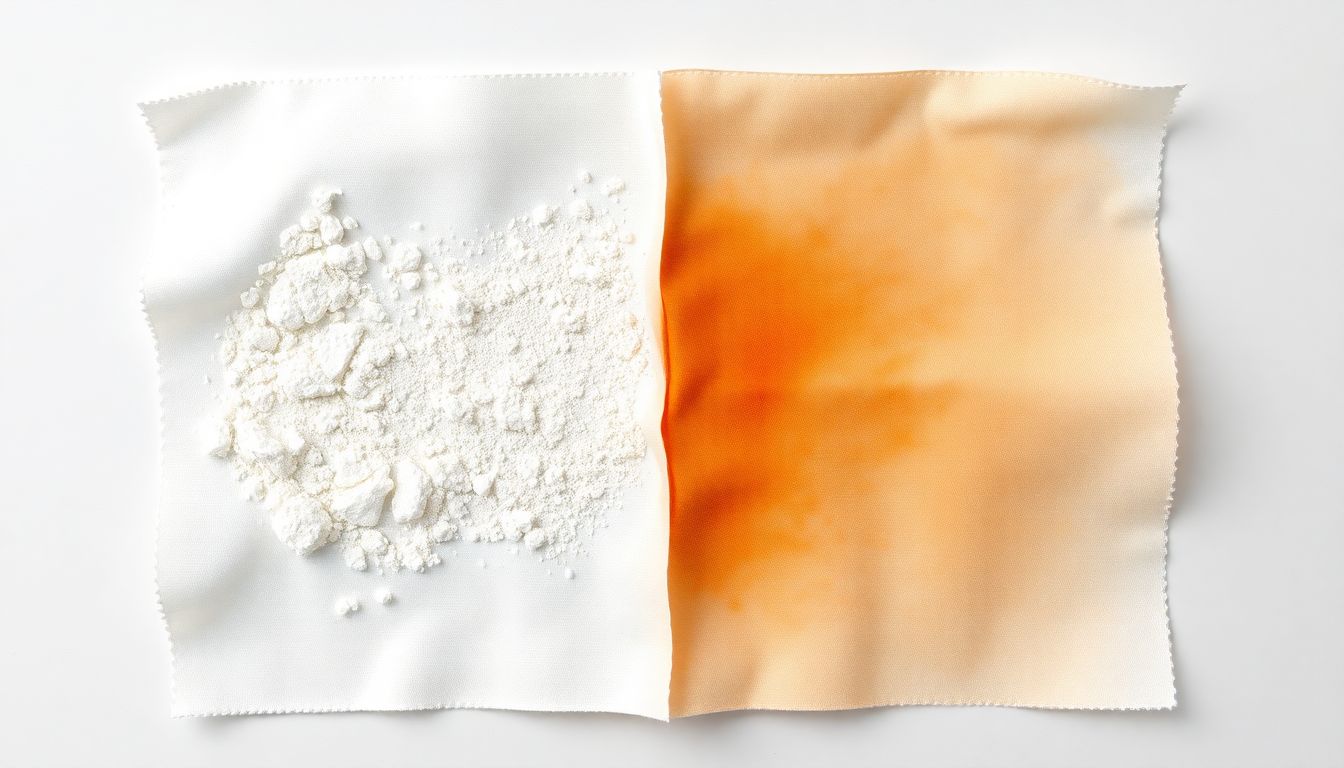
Sunscreen stains come in two forms: white residue from physical (mineral) sunscreens containing titanium dioxide or zinc oxide, and orange/yellow discoloration from chemical sunscreens containing avobenzone — which reacts with iron in water and fabric to create stubborn orange stains. The treatment differs significantly between these two types, and using the wrong approach can set the stain further.
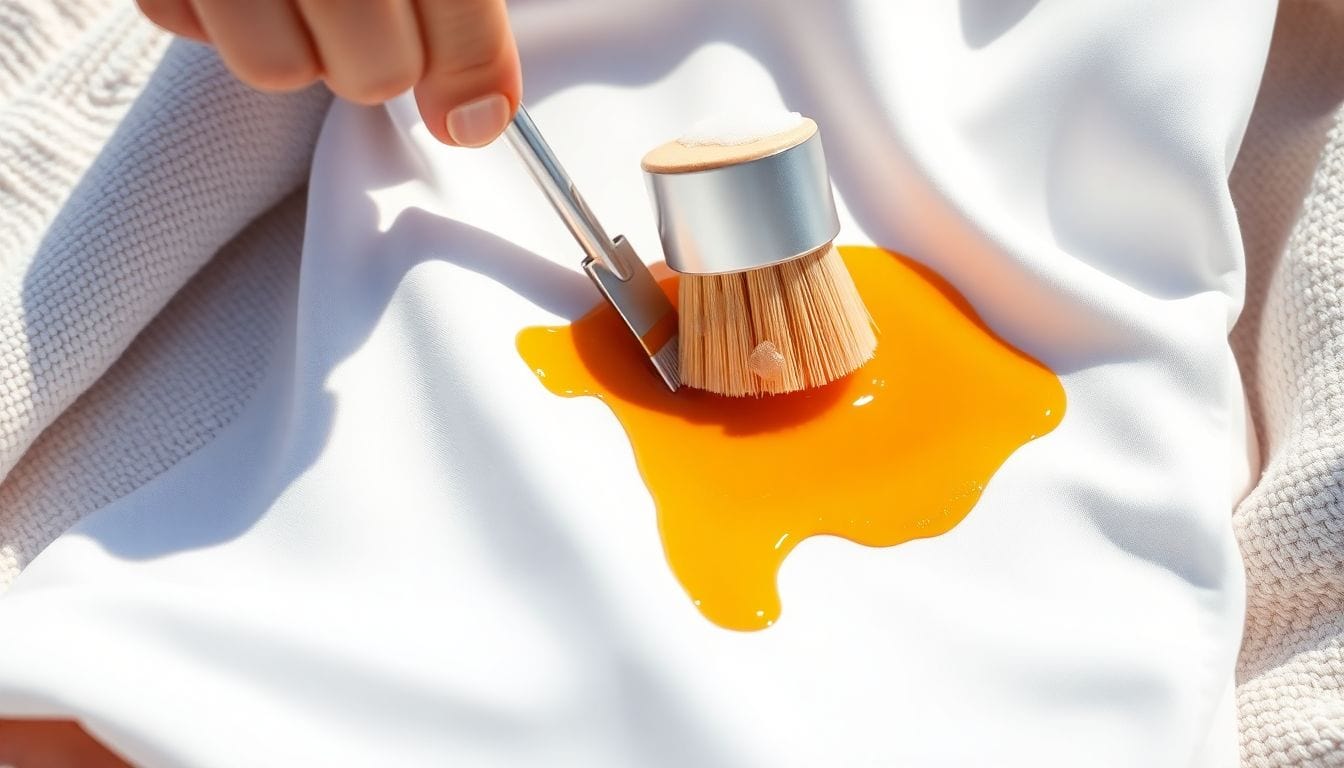
Two Types of Sunscreen Stains
Understanding which type of sunscreen stain you are dealing with is essential before attempting removal. The wrong treatment can permanently set the stain into the fabric, making recovery significantly more difficult — or impossible.
Type 1: White or Chalky Residue (Mineral/Physical Sunscreens)
Mineral sunscreens use titanium dioxide (TiO₂) or zinc oxide as their active UV-blocking agents. Both compounds are white, opaque, naturally occurring minerals that work by physically scattering and absorbing UV radiation rather than chemically filtering it. When these formulations transfer onto fabric — whether from skin contact or from applying sunscreen with wet hands — the mineral particles embed themselves in the fabric weave.
Titanium dioxide is widely used as a pigment in cosmetic formulations precisely because of its exceptional whiteness and opacity. According to the公报 of mineral chemistry, TiO₂ in powder form acts as “a widely used pigment for lending whiteness and opacity,” which explains why even small transfers onto dark fabric can produce a visible chalky white film. This residue is relatively easy to remove because no chemical reaction has taken place between the mineral and the fabric — it is simply a physical deposit of particulate matter.
The key to removing mineral sunscreen residue is preventing the oils in the sunscreen’s carrier formula from bonding to fabric fibers. Most mineral sunscreens use emollient oils (such as coconut oil, shea butter, or synthetic silicones) as their vehicle. These oils can leave a faint discoloration even after the mineral particles are removed, which is why a surfactant-based dish soap remains the first-line treatment even for mineral sunscreen stains.
Type 2: Orange or Yellow Discoloration (Chemical Sunscreens with Avobenzone)
Chemical sunscreens rely on organic compounds — most notably avobenzone (butyl methoxydibenzoylmethane) — to absorb UVA radiation. Avobenzone is unique among UV filters because it absorbs across the full UVA spectrum, making it a prized ingredient in broad-spectrum formulations. However, avobenzone is also susceptible to photodegradation: studies show approximately 49% degradation after just 3.3 hours of UV irradiation exposure. When avobenzone absorbs UV radiation, it undergoes tautomerization from its chelated enol form to a diketo form, producing secondary compounds including benzoic acids, benzaldehydes, and benzils.
The orange staining problem occurs when avobenzone reacts with iron ions present in hard water or within the fabric itself. This iron-avobenzone complex produces a vivid orange-yellow chromophore — a colored compound that bonds chemically to cellulose and protein fibers. Unlike the purely physical deposition of mineral sunscreen residue, the avobenzone-iron reaction creates a covalent-type bond that resists conventional washing. The yellow-orange color deepens with repeated exposure to both sunlight and chlorine, which is why swimwear is particularly vulnerable to this type of staining.
The stain becomes progressively more difficult to remove the longer it remains set in the fabric. Immediate treatment is critical — allowing an avobenzone-iron stain to age for more than 24 hours significantly reduces the likelihood of full removal without specialized bleaching agents.
How to Remove White Mineral Sunscreen Stains
Mineral sunscreen stains respond well to a straightforward treatment protocol. Because no chemical bonding has occurred between the titanium dioxide or zinc oxide and the fabric, the primary challenge is physical removal of the particulate residue plus dissolution of the oily carrier base.
- Allow to dry completely. If the stained area is damp, let the fabric air dry. Attempting to brush off wet mineral residue presses the particles deeper into the fiber gaps and can spread the stain.
- Brush off the dry residue. Use a soft-bristled brush (a clean toothbrush or dedicated garment brush works well) to gently loosen and lift the powdered mineral deposit from the fabric surface. Brush in one direction rather than in circular motions to avoid grinding the particles further into the weave.
- Apply dish soap to the oily carrier. The sunscreen’s emollient base — not the mineral content — is what bonds to fabric fibers. Apply a concentrated drop of grease-cutting dish soap (formulated with surfactants such as sodium lauryl sulfate or similar anionic surfactants) directly to the stain. Work it in with your fingertips or a soft brush, ensuring full coverage of the affected area.
- Rinse thoroughly with cold water. Cold water prevents any remaining oils from being heat-set into the fabric. Rinse from the reverse side of the fabric to flush the loosened particles away from the fiber structure rather than pushing them deeper.
- Wash as normal. Launder the garment in the warmest temperature safe for the fabric type, using a standard laundry detergent. Check the stain before placing the garment in a dryer — heat from a dryer permanently sets any remaining residue. Repeat the treatment if the stain persists after the first wash cycle.
How to Remove Orange Chemical Sunscreen Stains
Avobenzone-iron stains require a more aggressive, multi-step approach. The chemical bond between the avobenzone degradation products and fabric fibers cannot be broken by soap and water alone. The following protocol uses a combination of surfactant pre-treatment and oxidizing bleach to progressively degrade and dissolve the stain.
- Apply undiluted dish soap. Apply a full-strength grease-cutting dish soap directly to the stained area. The surfactant in the dish soap works on the oily carrier component of the sunscreen, beginning the process of emulsifying and lifting the stain from the fiber. Do not dilute — concentrated surfactant is necessary to penetrate the full depth of the stain.
- Allow 20–30 minutes of dwell time. Let the dish soap sit on the stain for at least 20 minutes. This gives the surfactant molecules time to penetrate the fabric weave and begin breaking the oil-fiber bond. Do not exceed 30 minutes on delicate fabrics such as silk or wool, as prolonged surfactant exposure can damage natural protein fibers.
- Rinse thoroughly with cold water. Rinse the treated area from the reverse side with cold water to flush away the initial layer of lifted stain compounds.
- Apply an OxiClean paste. OxiClean (sodium percarbonate — 2 Na₂CO₃ · 3 H₂O₂) is an oxygen-based bleaching agent that releases hydrogen peroxide when dissolved in water. The released hydrogen peroxide (H₂O₂) acts as an oxidizing agent, breaking down the conjugated double-bond structure of the avobenzone-iron chromophore that produces the orange color. Mix OxiClean powder with just enough water to form a thick paste (approximately 3:1 powder to water ratio). Apply the paste generously over the entire stained area.
- Soak for 1–2 hours. Allow the OxiClean paste to work on the stain for a minimum of one hour. For moderate stains, two hours provides noticeably better results. Place the garment in a basin or bucket to prevent the paste from drying out during the soak period. The sodium percarbonate concentration in commercial OxiClean (approximately 35–40% active sodium percarbonate yielding about 5% active oxygen) provides sufficient oxidizing power to fade even established avobenzone-iron stains without damaging most fabric colors when used as directed.
- For stubborn stains: white vinegar soak for 30 minutes. If the stain persists after the OxiClean treatment, a dilute white vinegar solution (approximately 1 part distilled white vinegar to 4 parts cool water) can be applied. The mild acetic acid helps break the remaining avobenzone-iron bond by lowering the pH and chelating the iron ions. This step is particularly effective on cellulosic fibers such as cotton and linen, where the iron-avobenzone complex tends to bond most strongly.
- Wash at the highest safe temperature for the fabric. Launder the garment at the maximum temperature recommended on the care label. Higher wash temperatures improve the effectiveness of the oxidation reaction still occurring in the fabric and help flush the degraded stain compounds from the fiber. Always check the care label first — temperatures above 40°C (104°F) can cause shrinkage in natural fibers or damage spandex-blend fabrics.
Swimwear and Sunscreen Stains
Swimwear presents a uniquely challenging case for sunscreen stains because of the combination of fabric composition and environmental exposure. Most commercial swimwear is constructed from a spandex (elastane) and polyester blend — a combination that offers the four-way stretch and chlorine resistance demanded by active swim use. However, spandex is particularly susceptible to both chlorine degradation and staining from the avobenzone-iron reaction.
When sunscreen oils come into contact with chlorinated pool water on swimwear fabric, a accelerated yellowing reaction occurs. The chlorine acts as an oxidizing agent on the spandex polymer chains, while the avobenzone from any sunscreen residue simultaneously undergoes photodegradation under UV exposure. The combined effect produces a deep yellow-brown discoloration that can penetrate both the spandex and polyester components of the fabric. This reaction is progressive — the longer swimwear sits with sunscreen residue before washing, the more severe and permanent the staining becomes.
Rinsing swimwear in cold fresh water immediately after leaving the pool or beach is the single most effective step you can take to prevent sunscreen stains on swimwear. The cold water flushes away both the chlorine residue and the surface layer of sunscreen before the chemical reactions that cause staining can begin. Washing swimwear no later than the same evening — never allowing it to sit overnight with sunscreen residue — preserves the fabric’s structural integrity and color.
For dark swimwear specifically, OxiClean is the preferred stain treatment because it is color-safe on polyester and nylon blends. Chlorine bleach (sodium hypochlorite) must be avoided entirely on spandex-containing swimwear — it rapidly degrades the elastane polymer chains, causing loss of stretch recovery and fabric deterioration. Dish soap applied directly to sunscreen-affected areas on dark swimwear for 20 minutes before washing effectively removes the oily carrier component without risk of color loss or fabric damage.
How to Prevent Sunscreen Stains
Prevention is considerably more effective than treatment when it comes to sunscreen stains — particularly the avobenzone-iron type, which can become permanent if not addressed within hours of forming.
- Allow sunscreen to fully dry before dressing. Most sunscreen formulations require 10–15 minutes after application to reach full film formation and for the carrier solvents to evaporate. Dressing too soon after application transfers the uncured sunscreen film directly onto clothing. Waiting the full recommended time significantly reduces the transfer rate.
- Use spray sunscreen for clothing contact situations. Spray-on sunscreen formulations generally deposit less overall product volume per application compared to lotion formats, and the finer particle size produces thinner, less visible films on fabric. However, spray sunscreens still contain avobenzone and can produce orange stains — they reduce, but do not eliminate, the risk.
- Rinse sunscreen from fabric before full laundering. If sunscreen has contacted clothing but no visible stain has formed yet, rinsing the affected area with cold water immediately after returning indoors can flush away the avobenzone before the iron-avobenzone reaction completes. This is particularly effective for swimwear and beach cover-ups.
- Apply a barrier layer. For situations where sunscreen application to exposed skin near clothing is unavoidable, applying sunscreen over a base layer of clothing (rash guard, cover-up) creates a physical barrier between the sunscreen film and your primary garments.
Why Do Sunscreen Stains Turn Orange?
The orange color in sunscreen stains comes exclusively from chemical sunscreens containing avobenzone. When avobenzone absorbs UVA radiation — which occurs both on skin and on fabric exposed to sunlight — it undergoes tautomerization and partial photodegradation, producing reaction byproducts including benzoic acids and benzils. These degradation products, when combined with iron ions naturally present in many water supplies and in some fabric dyes, form a strongly colored iron-avobenzone coordination complex. This complex produces the characteristic orange to yellow-orange hue and, critically, bonds to fabric fibers through a chemical interaction that requires oxidizing agents (such as hydrogen peroxide from sodium percarbonate) to break.
Mineral sunscreens containing titanium dioxide or zinc oxide cannot produce orange stains — they only produce white or chalky residue. If your fabric stain is orange or yellow-orange in color, it is an avobenzone-iron stain and must be treated with the chemical stain removal protocol rather than simple brushing or rinsing.
Frequently Asked Questions
Q: Why do sunscreen stains turn orange?
A: The orange color comes from avobenzone (a chemical UV filter) reacting with iron present in hard water and fabric. The resulting iron-avobenzone complex is yellow-orange and bonds to fabric fibers through a chemical interaction that requires oxidizing agents to break.
Q: Does OxiClean remove sunscreen stains?
A: Yes — OxiClean (sodium percarbonate / oxygen bleach) is effective on organic sunscreen stains and helps lift avobenzone discoloration. When dissolved in water, sodium percarbonate yields hydrogen peroxide, which oxidizes the conjugated double-bond structure of the avobenzone-iron chromophore, breaking its color-producing mechanism. Combine with dish soap for the best results — the dish soap handles the oily carrier base while OxiClean addresses the chemical stain.
Q: How do I remove sunscreen from dark swimwear?
A: OxiClean is color-safe and effective for removing sunscreen from dark fabric because it releases oxygen rather than chlorine, which prevents color stripping on polyester and nylon blends. Avoid chlorine bleach entirely on spandex-containing swimwear — it degrades elastane polymer chains. Dish soap applied directly and left for 20 minutes before washing removes the oily carrier component. For best results on dark avobenzone stains, apply dish soap, let it dwell 20 minutes, rinse, then apply an OxiClean paste and soak for one to two hours before laundering in cold water.
References
- Buchholz, H. (2024). Titanium Dioxide. Encyclopædia Britannica. https://www.britannica.com/science/titanium-dioxide
- Kaur, A. &进出口, (2022). Avobenzone Photochemistry and Photostability. ScienceDirect. https://www.sciencedirect.com/topics/chemistry/avobenzone
- National Center for Biotechnology Information. (2024). Sodium Percarbonate — PubChem Compound Summary. PubMed/NLM. https://pubchem.ncbi.nlm.nih.gov/compound/Sodium-percarbonate
- Petrol. (2024). Sunscreen and Sun Protection — Wikipedia. Wikimedia Foundation. https://en.wikipedia.org/wiki/Sunscreen
- Cotton Incorporated. (2024). Fabric Care Resources. Cottonworks.com. https://cottonworks.com/en-US/topics/care/


