
How to Remove Grease and Oil Stains from Clothes

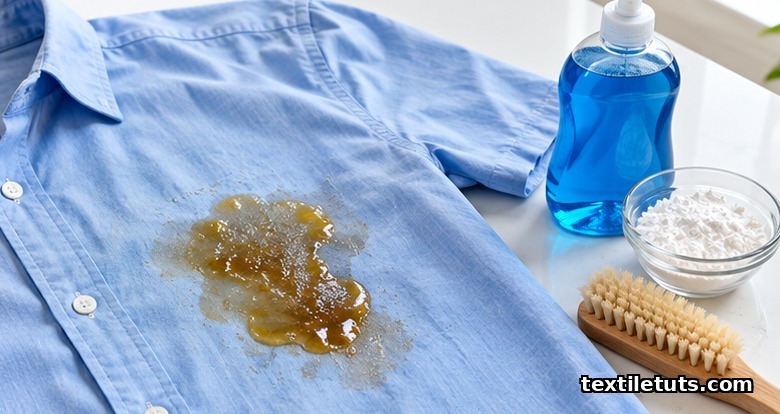
Grease and oil stains are hydrophobic—they repel water, which is why rinsing with water alone makes no difference. The solution is a surfactant (dish soap) which has a water-attracting head and an oil-attracting tail, forming a bridge between the grease molecule and water to lift it from the fabric. Dish soap applied directly without dilution is the most effective first treatment for any grease or cooking oil stain.
Whether you caught a stain from cooking oil, motor grease, or buttery food, acting fast and using the right technique determines whether the stain disappears completely or becomes permanent. This guide covers the 5-step process recommended by textile experts, specialized methods for old or set stains, and fabric-specific advice for cotton, polyester, silk, and wool.
Why Oil and Grease Are Different from Other Stains
Grease and oil stains behave differently from water-based stains because they are non-polar and hydrophobic. When water contacts grease, the water molecules cannot bond with the oil molecules—the water beads up and rolls off, leaving the stain intact. This is the same reason oil and water do not mix in nature.
The solution lies in surfactant chemistry. Surfactants are amphiphilic compounds, meaning they possess both a hydrophilic (water-attracting) head and a hydrophobic (oil-attracting) tail. When applied to a grease stain, the hydrophobic tails bind to the oil molecules while the hydrophilic heads face outward toward the water, effectively forming a bridge between the two. This action creates micelles—tiny spherical structures that encapsulate the oil particles, suspending them in water so they can be rinsed away.
According to Encyclopaedia Britannica, surfactants are compounds that decrease surface tension between liquids and are “among the most widespread and commercially important chemicals,” used extensively as detergents and cleaning agents. Anionic surfactants (containing sulfate, sulfonate, or carboxylate groups) are particularly effective for grease removal because their charged heads create strong water attraction while their hydrocarbon tails penetrate and bind to oil molecules.
The 5-Step Grease Removal Process
Follow this process immediately upon discovering a grease stain for the best chance of complete removal. Each step builds on the previous one to progressively break down and lift the oil from fabric fibers.
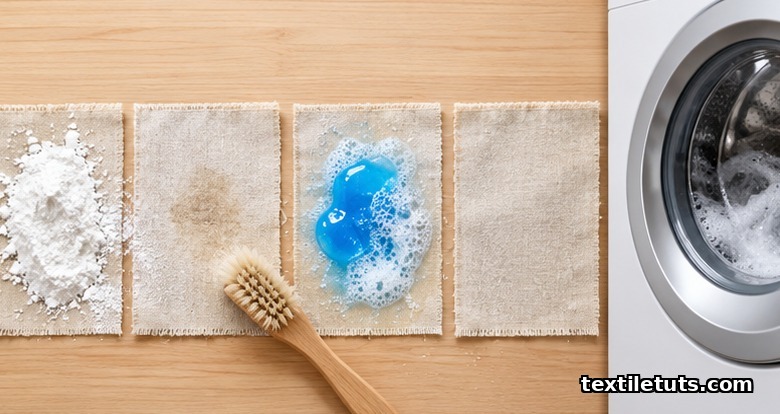
Step 1: Absorb (Act Fast)
For fresh grease stains, the first priority is absorbing as much excess oil as possible before it penetrates deeper into the fabric. Pour an absorbent powder—cornstarch, baking soda, or talcum powder—generously over the stained area. These powders work by drawing the oil up through capillary action, similar to how a sponge absorbs liquid.
Allow the powder to sit for 10–15 minutes. During this time, the absorbent pulls the grease toward the surface and into the powder particles. Once the waiting period is complete, brush or shake off the powder gently. The critical rule here: do not rub the stain. Rubbing pushes grease deeper into the fiber gaps and can spread the stain to a larger area. Light brushing in one direction is sufficient.
Step 2: Apply Dish Soap (Or Liquid Laundry Detergent)
After absorbing the excess grease, apply undiluted dish soap directly to the remaining stain. Dawn (in the US) and Fairy (in the UK) are widely recommended by cleaning experts because they contain high concentrations of anionic surfactants specifically formulated to break down fats and oils. Any standard dish soap with similar surfactant concentration will work.
Work the soap into the fabric gently using a soft brush, your fingertips, or a clean cloth. Use circular motions or gentle back-and-forth strokes—the goal is to distribute the surfactants throughout the stained area. Do not scrub aggressively, as this can damage delicate fibers and spread the stain.
Step 3: Let Sit
Allow the dish soap to remain on the stain for 10–30 minutes. During this dwell time, the surfactant molecules bond with the oil molecules and begin breaking the stain apart at the molecular level. For older stains that have already begun to set, extend this period to one hour or more.
Important: do not let the treated area dry out completely. A dried-on stain is harder to remove than a damp one. If you are waiting longer than 30 minutes, lightly mist the area with water to keep it slightly damp, or cover it with a damp cloth to maintain moisture.
Step 4: Wash
Wash the garment at the highest temperature that is safe for the fabric. Heat is beneficial for oil stains because it melts the grease slightly, making it easier for surfactants to emulsify and lift. Unlike protein stains (which require cold water to avoid setting), grease responds well to warm or hot water.
Use the full recommended dose of laundry detergent. After washing, check the stain before proceeding to the next step—do not assume it is gone, as oil stains can be deceptive and appear faded even when oil remains in the fibers.
Step 5: Check Before Drying
Heat from a dryer sets oil stains permanently. Once dryer heat bonds the remaining oil to fabric fibers, no amount of re-treatment will fully remove it. Before placing the garment in the dryer, inspect it under good lighting (bright sunlight or a lamp held close) to confirm the stain is completely gone.
If any trace of the stain remains, repeat the treatment process from Step 2 onward. It is better to run the washer again on a short cycle than to ruin the garment with a permanently set stain. Only move to the dryer when you are absolutely certain the stain has been eliminated.
The diagram above illustrates how surfactant molecules position themselves at the oil-water interface: hydrophobic tails embed in the oil droplet while hydrophilic heads face outward toward the water, enabling the oil to be suspended and rinsed away.
Method for Old or Set Grease Stains: WD-40
WD-40 is effective because it re-liquefies dried, solidified grease within fabric fibers, converting it from a solid back to a liquid state where it can be flushed out with dish soap and water. Old, dried grease has bonded to fabric fibers—WD-40 breaks that bond by dissolving the oil, allowing surfactants to then wash it away.
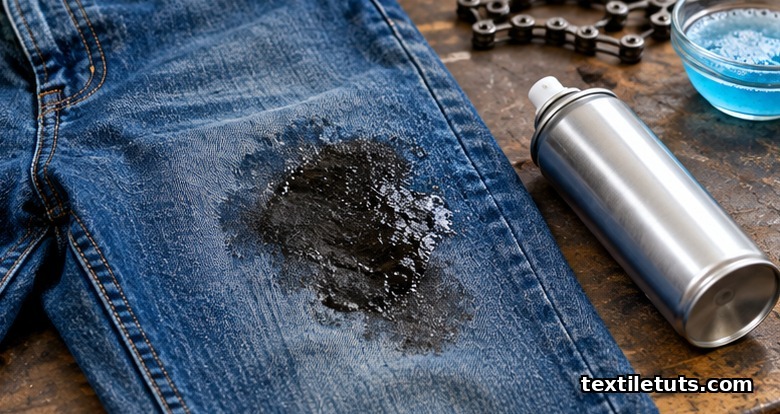
This method works particularly well for set motor oil, bicycle grease, automotive grease, and cooking fat that has been through the dryer multiple times. To apply: spray WD-40 directly onto the stain and allow it to penetrate for 15–20 minutes. The fresh oil in WD-40 bonds with the old, dried oil and brings it back into solution.
After the dwell time, apply undiluted dish soap over the WD-40-treated area and work it in gently. The dish soap then emulsifies both the WD-40 and the released grease, allowing both to be rinsed away. Wash the garment immediately after treatment. Multiple treatment cycles are typically necessary for heavily set stains—expect to repeat this process 2–3 times for old motor oil stains.
Waterless Pre-Treatment Products
When you do not have access to water or a washing machine, several solvent-based products can serve as effective pre-treatments for grease stains:
- Lestoil: A heavy-duty solvent-based pre-treatment solution effective on grease, motor oil, and baked-on food stains. Apply directly to the stain and allow it to penetrate before washing.
- Pine-Sol (diluted): A disinfectant-based cleaning agent that functions as a pre-treatment for cooking grease and kitchen stains when diluted with water at a 1:1 ratio for fabric application.
- Goo Gone: An adhesive-dissolving cleaner specifically formulated to dissolve sticky residues and greasy deposits. Particularly useful for removing the greasy residue left behind by stickers, labels, or tape.
Always test these products on an inconspicuous area of the garment first to check for colorfastness. Solvent-based cleaners can affect certain fabric dyes and finishes.
Grease Stains by Fabric Type
Different fabrics respond differently to grease stain treatment. The fiber structure, heat tolerance, and chemical sensitivity all influence which method is safest and most effective.
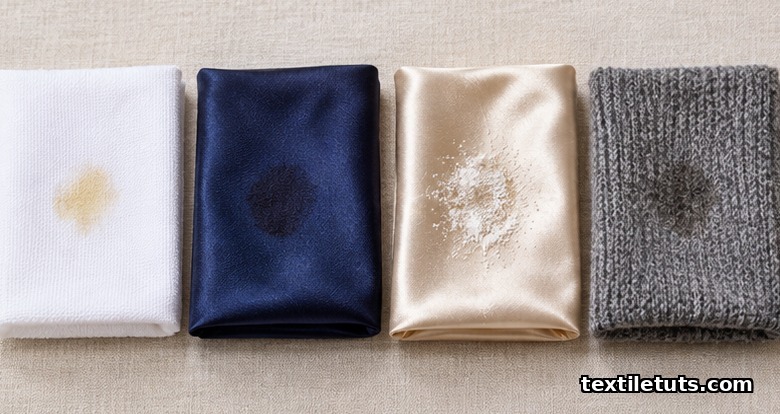
| Fabric Type | Recommended Method | Water Temperature | Notes |
|---|---|---|---|
| Cotton | Dish soap + wash | Hot (up to 95°C) | Cotton tolerates high heat; repeat treatment if needed |
| Polyester | Dish soap + wash | Warm (up to 60°C) | Avoid temperatures above 70°C to prevent fiber damage |
| Silk | Cornstarch absorption only | N/A | Do not apply dish soap directly; professional dry cleaning recommended |
| Wool | Dry cleaning powder or cornstarch | N/A | Full removal typically requires professional dry cleaning |
| Delicates | Cornstarch absorption only | N/A | Professional cleaning for complete stain removal |
Cotton is the most forgiving fabric for grease stain removal. Its absorbent fibers allow deep penetration of both the grease and the cleaning solution. Dish soap applied directly followed by a hot wash (up to 95°C/203°F) typically eliminates the stain in one cycle. If the stain persists after washing, repeat the treatment without drying—the second application is often more effective on cotton.
Polyester responds well to the standard dish soap method but requires cooler water temperatures. Polyester fibers can begin to soften and deform at temperatures above 70°C (158°F), and excessive heat can create a permanent shine on the fabric surface. Use warm water (40–60°C) and a regular laundry detergent.
Silk requires special care because its protein-based fibers are damaged by both harsh chemicals and agitation. For grease stains on silk, apply cornstarch or talcum powder only—let it absorb the oil, then brush off gently. For any dish soap or wet treatment, consult a professional dry cleaner to avoid damaging the fabric’s natural luster and texture.
Wool is similarly sensitive as a protein fiber. Dry cleaning powder (available at fabric stores) absorbs grease without requiring water. Work the powder into the stain, let it sit, and brush out. For persistent wool stains, professional dry cleaning is the safest option.
Common Grease Stain Types and Special Notes
Different grease sources have unique properties that affect how they should be treated. Understanding what caused the stain helps you choose the right approach.
Cooking Oil (Olive, Vegetable, Coconut)
Standard dish soap treatment is highly effective for plant-based cooking oils. These oils have relatively low viscosity and respond quickly to surfactant emulsification. Treat immediately with undiluted dish soap, let sit for 10–15 minutes, and wash at the highest safe fabric temperature. One treatment is usually sufficient for fresh cooking oil stains.
Butter and Dairy Fat
Butter and dairy fats behave similarly to cooking oils but contain more saturated fats, which solidify at room temperature. This makes them slightly more stubborn initially—the solid fat must warm and melt before surfactants can fully penetrate. Use the standard dish soap method, but ensure the water temperature is warm enough to keep the fat in liquid form during washing.
Motor Oil and Automotive Grease
Motor oil is formulated to adhere to metal surfaces and resist removal—exactly the properties that make it difficult to remove from fabric. The WD-40 method is the most effective approach for automotive grease stains. Expect to repeat the treatment 2–3 times for full removal. For fresh motor oil on cotton, hot water washing immediately after absorbent treatment can be surprisingly effective.
Makeup and Foundation
Many foundations and makeup products contain oil as a base, making them behave like grease stains. Liquid foundation, concealer, and cream blush should be treated with dish soap using the standard method. Some makeup also contains pigments and binding agents, so adding an enzyme-based laundry detergent to the pre-soak can improve results by breaking down the protein-based binders.
Sunscreen
Sunscreen stains are particularly challenging because sunscreens contain a combination of oil (for water resistance) and metallic oxides (like zinc oxide or titanium dioxide) for UV protection. The oil component responds to dish soap, but the metallic particles can leave a gray or white residue. OxiClean added to the wash cycle helps break down these mineral deposits. Pre-treat with dish soap, soak in OxiClean solution for 30 minutes, then wash as normal.
Frequently Asked Questions
What dish soap is best for grease stains?
Dawn (US) and Fairy (UK) are widely considered the most effective for grease stains because of their high surfactant concentration and formulation specifically for cutting grease. Any standard dish soap with similar concentration works.
Why does oil stain persist after washing?
If the grease is not pre-treated before washing, the water and regular detergent do not dissolve the oil—they just dilute it. The stain spreads and becomes less visible but is still present; heat from the dryer then permanently sets it.
Can you remove a grease stain after drying?
Yes—use the WD-40 method to re-liquefy dried grease, then dish soap to remove. Multiple treatment cycles are typically necessary. Success rate decreases with each drying event.
References
- Encyclopaedia Britannica. (2024). Surfactant. Encyclopaedia Britannica.
- WikiHow Contributors. (2024). How to Remove Grease Stains from Clothes. WikiHow.


