
How to Remove Deodorant Stains from Dark Shirts

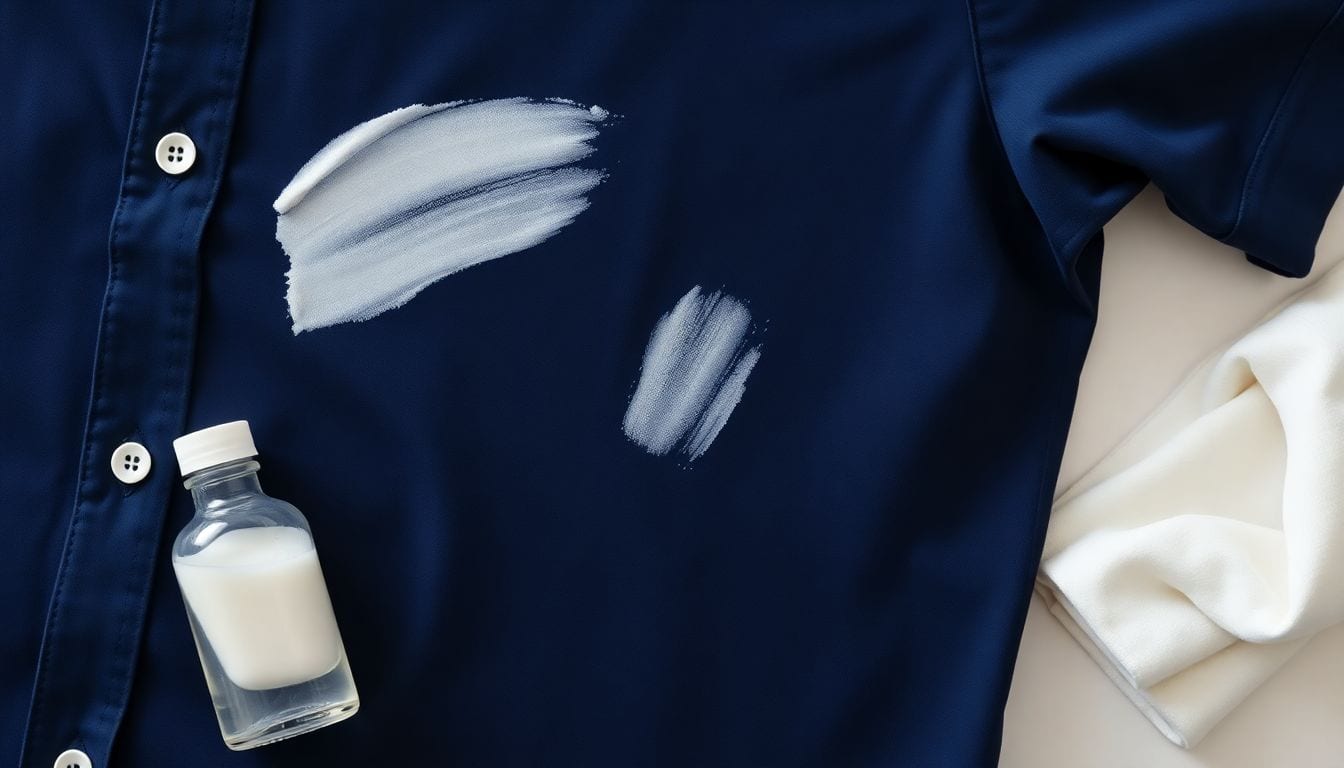
Deodorant leaves two distinct types of stains on dark shirts: immediate white chalky smears caused by wax, talc, and powder components transferring to fabric on contact, and gradual grey or white build-up resulting from aluminum compounds in antiperspirants accumulating alongside detergent residue through repeated washing cycles. The immediate white smear can be removed within minutes using a nylon stocking, damp cloth, or foam sponge applied with gentle friction. The built-up grey residue requires chemical treatment with white vinegar or a commercial chelating product designed to dissolve the aluminum-detergent complex bonded to fabric fibers.
Two Types of Deodorant Stains on Dark Shirts
Deodorant stains on dark shirts divide into two categories based on how the stain forms. Type 1 stains are fresh white smears that occur immediately when deodorant transfers onto fabric during dressing—these surface deposits contain wax, talc, and powder components that sit on top of fabric fibers without bonding. Type 2 stains are grey or white build-up that accumulates through repeated washing cycles when aluminum-based antiperspirant compounds react with detergent residue and sweat to form a persistent mineral-organic complex embedded in fabric fibers. Identifying which type of stain you have determines which removal method will be effective—Type 1 responds to mechanical friction while Type 2 requires chemical treatment.
Type 1: Immediate White Smear
White smears occur when the wax, talc, or powder components of deodorant transfer directly onto dark fabric during dressing. These smears are purely cosmetic surface deposits—the aluminum chlorohydrate and aluminum zirconium tetrachlorohydrex gly compounds in antiperspirants (active ingredients that temporarily block sweat ducts) have not yet bonded with sweat or detergent residue. This Type 1 stain responds well to mechanical removal methods because the wax and powder components sit on top of the fabric rather than penetrating within it. The critical window for treating fresh white smears is within 5 minutes of the smear occurring; after this window, the wax components begin settling into the fabric weave and require more intensive treatment. Many people discover these smears hours after getting dressed, when the shirt has already been worn and potentially washed.
Type 2: Grey/White Build-up
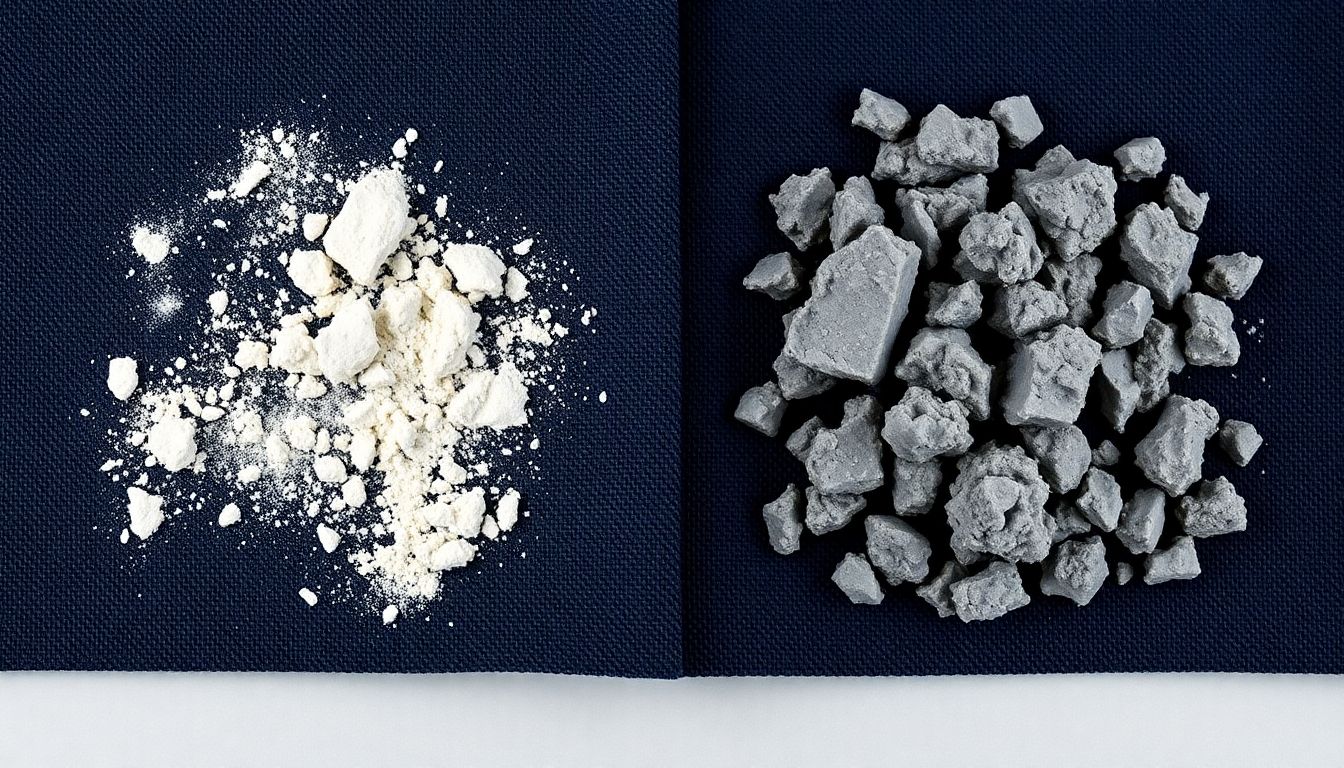
Grey and white build-up stains form through a chemical reaction that occurs during laundering. Aluminum compounds—particularly aluminum chlorohydrate (a aluminum salt that dissolves in sweat) and aluminum zirconium tetrachlorohydrex gly (an aluminum zirconium compound that temporarily blocks sweat glands)—combine with components in laundry detergent and sweat to form a persistent fabric build-up that adheres strongly to fabric fibers. This Type 2 stain becomes progressively more visible on dark fabrics because the light-coloured mineral deposit creates contrast against the dark dye. Chemistry research on antiperspirant formulations confirms that aluminum zirconium compounds react with sweat during washing cycles to create yellow discoloration on clothing (source: chemistry research on antiperspirant formulations)—the same mechanism that causes greyish marks on dark fabrics. The reaction forms aluminium hydroxide and aluminium phosphate complexes that embed themselves within the fiber structure during washing, particularly in warm, agitated washing machine environments.
Removing Fresh White Deodorant Smears (Type 1)
Type 1 fresh white smears respond to mechanical friction methods that lift surface deposits without requiring chemical treatment. These methods work because the wax and powder components of fresh deodorant smears have not yet penetrated the fabric or bonded with other substances through repeated washing. The key to successful removal is using a gentle, textured surface that creates enough friction to dislodge particles while remaining safe for fabric fibers. Three proven mechanical methods work effectively for fresh white smears on dark shirts: nylon stocking, damp cloth, and foam sponge.
Method A — Nylon Stocking
A clean nylon stocking worked in circular motions over the white mark provides effective mechanical abrasion without damaging fabric fibers. The smooth, textured surface of nylon creates enough friction to dislodge wax and powder particles while remaining gentle enough for most fabric types. To apply this method: roll a clean nylon stocking into a tight ball, then rub the white smear using small circular motions for 30–60 seconds. Inspect the area and repeat if necessary. This technique works best when the garment is still damp from wear—dry smears may require additional friction or a pre-treatment with warm water.
Method B — Damp Cloth
A slightly damp cloth pressed against the smear and lifted—without rubbing—removes most fresh deodorant marks, particularly those from gel deodorants. The dampness helps dissolve the water-soluble components of the deodorant while the lifting action draws them away from the fabric surface rather than grinding them deeper into the weave. For this method, dampen a clean microfiber cloth with warm water, press it firmly against the smear, and lift. Repeat 3–5 times with fresh sections of the cloth. Avoid wiping back and forth, as this spreads the deodorant residue rather than removing it.
Method C — Foam Sponge
A barely damp foam sponge rubbed gently over the smear lifts wax components through mild abrasion. The open-cell structure of foam sponges captures and holds the removed particles, preventing re-deposition on the fabric. This method is particularly effective for larger smears that span several centimeters of fabric. Use a clean, lightly dampened foam sponge (excess water squeezes out) and rub in gentle circular motions. Rinse the sponge frequently during treatment to prevent transferred residue from causing new smears.
Removing Grey Build-up Stains (Type 2)
Type 2 grey build-up stains require chemical treatment to dissolve the aluminium-detergent compound that binds the stain to fabric fibers. Surfactants in regular laundry detergent cannot break down this mineral-organic complex, which is why build-up persists through normal washing cycles. The chemical bond between aluminum compounds and fabric fibers forms during warm water washing and agitation, creating a stain that is invisible after each wash but accumulates progressively until it becomes visible as grey or white discoloration on dark fabrics. Three treatment methods effectively remove this build-up: white vinegar pre-soak, baking soda paste, and commercial chelating products.
Method 1 — White Vinegar Pre-Soak
Undiluted white vinegar applied to the affected underarm area and left to soak for 1 hour effectively dissolves aluminium-based fabric build-up. The acetic acid in vinegar (5–8% concentration) reacts with and breaks down the aluminium hydroxide complexes that anchor the stain to fabric fibers. Pour white vinegar directly onto the grey build-up areas of both underarms, ensuring complete saturation. Allow the garment to soak in a basin or plastic bag for 1 hour. After soaking, launder as normal with enzyme-based laundry detergent. Repeat this process 2–3 times for complete removal of heavy build-up.
Method 2 — Baking Soda Paste
For additional cleaning power after vinegar treatment, apply a baking soda paste to remaining discolouration. Mix 4 tablespoons of baking soda with 2 tablespoons of water to create a thick, spreadable paste. Apply directly to the build-up areas and allow to sit for 30 minutes. Baking soda provides both mild abrasion and alkaline chemistry that helps break down the acidic aluminium compounds in the build-up. The physical scrubbing action of applying the paste, combined with its chemical properties, addresses both the surface residue and deeper penetration into fabric fibers. After the 30-minute dwell time, scrub gently with a soft-bristled brush and launder as normal.
Method 3 — Commercial Chelating Products
Chelating agents are compounds that bind to metal ions (including aluminium) through a claw-like molecular structure, suspending them in solution where they can be rinsed away. Products specifically formulated for deodorant and antiperspirant stain removal—such as “Deo Go” and similar chelating formulations—target the specific mineral-organic complexes that form in fabric underarm areas. These chelating products work by surrounding metal ions in the aluminium-detergent build-up, breaking their bond with fabric fibers so they can be removed during washing. Follow the product manufacturer’s instructions for application and dwell time, as formulations vary in concentration and recommended use.
Prevention for Dark Shirts
Preventing deodorant stains on dark shirts requires addressing both the application of deodorant and the laundering practices that contribute to build-up accumulation. Five proven prevention strategies eliminate the conditions that cause both Type 1 fresh smears and Type 2 cumulative build-up. Implementing these practices eliminates the need for reactive stain removal and extends the life of dark shirts by preventing the fabric damage that accompanies repeated stain treatment.
- Allow deodorant to dry fully before dressing: Wait 1–2 minutes after applying deodorant before putting on your shirt. The wax and powder components need time to set on your skin rather than transferring to fabric.
- Use clear or gel deodorant formulas: These formulations contain modified wax and pigment compositions that leave minimal visible residue on dark fabrics. Products labeled “invisible” or “clear” are specifically designed to avoid white marks.
- Switch to aluminium-free deodorant if stains persist: Antiperspirants containing aluminium zirconium compounds are the primary source of the grey build-up staining. Aluminium-free deodorants eliminate this staining mechanism entirely, though they may not reduce perspiration as effectively.
- Pre-treat underarm areas before every wash: Apply a small amount of undiluted white vinegar to underarm areas and let it penetrate for 10–15 minutes before laundering. This prevents the accumulation of fabric build-up that leads to grey staining over time.
- Wash in cold water (below 30°C/85°F) and air-dry or use low-heat drying: Heat permanently sets aluminium-based stains. Always use the coldest appropriate wash cycle and air-dry or use low-heat settings for garments prone to deodorant staining.
Frequently Asked Questions
How do I remove deodorant build-up from dark shirts?
Pre-soak the stained area in undiluted white vinegar for 1 hour to dissolve the aluminium-detergent compound. Then apply a paste of 4 tablespoons baking soda mixed with 2 tablespoons water for 30 minutes, scrub gently with a soft brush, and launder as normal. Repeat 2–3 times for heavy build-up. Commercial products containing chelating agents, such as Deo Go, are also effective at binding and removing aluminium compounds from fabric fibers.
Why do deodorant stains appear after washing on dark shirts?
Washing makes deodorant build-up more visible on dark fabrics by spreading the aluminium-detergent residue more evenly across the fabric surface. The light-coloured mineral deposit creates contrast against the dark dye. Pre-treating the underarm area before washing with undiluted white vinegar prevents the build-up from accumulating and becoming visible.
Do dark shirts need special deodorant?
Some deodorants are formulated to be invisible on dark fabrics, labeled as clear, invisible solid, or transparent gel formulas. These contain modified wax and pigment compositions that do not leave white marks during application. However, they do not prevent all staining from repeated use, and aluminium-heavy antiperspirants will still cause cumulative build-up that appears as grey discolouration after multiple wash cycles.
For more comprehensive coverage of stain removal techniques across all fabric types and stain categories, consult the complete stain removal guide. If you’re dealing with the opposite problem—yellow sweat stains on white shirts—see the guide on removing sweat stains from white shirts.
References
- Wikipedia. (2024). Deodorant. Wikipedia.
- WikiHow. (2024). Methods for Removing Deodorant Stains. WikiHow.
- Persil UK. (2024). Deodorant Stain Removal Guide. Persil.
- AATCC. (2024). Textile Testing Standards and Test Methods. American Association of Textile Chemists and Colorists.


