
How to Dye Nylon Fabric: Step-by-Step Guide

Nylon fabric is dyed using acid dyes in a hot water bath at 80–95°C with pH held between 4 and 6 — the ionic bond between acid dye molecules and nylon’s free amino groups creates color that resists fading through 50+ wash cycles. Unlike cotton (which requires reactive dyes) or polyester (which requires disperse dyes at 130°C+), nylon’s synthetic polymer structure responds specifically to acid dye chemistry at moderate temperatures that won’t damage the fabric. Home dyers can achieve professional-grade, colorfast results using nothing more than a stainless steel pot, a kitchen thermometer, white vinegar, and acid dye powder obtainable from any craft supplier.
What Is Acid Dyeing on Nylon and What Results to Expect
Acid dyes bond to nylon through ionic (electrostatic) attraction between the dye’s sulfonate groups (–SO₃⁻) and nylon’s terminal amino groups (–NH₃⁺). This chemical bond forms at temperatures between 80°C and 95°C in an acidic bath, and it is remarkably durable — achieving an ISO 105-C06 wash fastness rating of 4 to 5 out of 5. That rating means properly dyed nylon loses minimal colour through 50 or more wash cycles at 40°C, outperforming almost every other home-dyeing method available.
Nylon takes acid dye more readily than any other synthetic fibre. Results are noticeably more vivid and uniform on nylon than on polyester, which requires disperse dyes at temperatures exceeding 130°C. The full colour spectrum is achievable — deep blacks, bright primaries, and delicate pastels alike — though there is one important limitation: pale or pre-fabricated colours cannot be dyed to a significantly darker shade. Overdyeing a light colour works far better than attempting a dramatic dark shift on a pale base.
Materials and Equipment Needed
Before beginning, gather every item on this list. Home acid dyeing requires no specialised professional equipment — a well-equipped kitchen suffices — but material choice matters. Using the wrong pot material, for example, will destroy the dye bath entirely.
| Item | Purpose |
|---|---|
| Acid dye (powder or liquid) | Primary colouring agent |
| White distilled vinegar or citric acid | pH adjuster to create acidic bath |
| Stainless steel or enamel pot (not aluminium) | Dyeing vessel — aluminium reacts destructively with acid |
| Stainless steel spoon or stirring rod | Agitating the dye bath evenly |
| Kitchen scale (for powder dye) | Measuring precise dye amounts by weight |
| Thermometer (0–100°C range) | Monitoring and maintaining bath temperature |
| Rubber gloves | Protecting hands from dye and acid |
| Plastic sheet or old towels | Protecting work surface from spills |
| Timer | Tracking immersion duration |
| pH test strips (range 1–14) | Verifying bath pH is within 4–6 range |
Dye Quantity Guide (for 100g of Fabric)
Dye quantity is calculated as a percentage of the fabric’s weight — this is known as owf (on weight of fabric). Weighing the fabric before dyeing and using the table below ensures consistent, predictable results every time.
| Desired Shade | Dye % owf |
|---|---|
| Light shades | 0.5–1% owf |
| Medium shades | 1–2% owf |
| Dark shades | 2–4% owf |
| Black | 4–6% owf |
Step-by-Step: How to Dye Nylon with Acid Dye
Follow each step in sequence. Skipping steps or improvising — particularly around pH and temperature — is the primary cause of poor results in home nylon dyeing.
Step 1: Prepare the Fabric
Wash the nylon fabric in warm water with a mild detergent to strip any sizing, fabric finishes, or oils that may be present from manufacturing or handling. Rinse thoroughly. Do not wring the fabric — gently squeeze out excess water to avoid stretching or distorting the fibres. Critically, wet the fabric in warm water before adding it to the dye bath. Dry nylon absorbs dye unevenly, producing patchy, streaked colour that cannot be corrected in subsequent rinses.
Step 2: Set Up the Dye Bath
Fill a stainless steel or enamel pot with enough water to allow the fabric to move freely. A water-to-fabric ratio of approximately 20:1 is standard — too little water and the dye cannot distribute evenly; too much water dilutes the dye concentration and weakens the final colour. Heat the water to 40–50°C before adding any dye or chemicals.
While the main bath heats, pre-dissolve powder acid dye in a small container with a small amount of hot water. Stir until the powder is fully dissolved — undissolved dye particles will appear as spots or specks on the finished fabric and cannot be removed. Add the dissolved dye to the main bath and stir thoroughly to distribute it evenly before adding fabric.
Step 3: Adjust pH and Add Fabric
Add white distilled vinegar at a rate of approximately 3–5ml per litre of bath water — or citric acid dissolved in warm water — to lower the pH into the 4–6 range. Use pH test strips to verify the result: the bath must register as acidic (pH 4–6). If the bath is neutral or alkaline, the acid dye will not bond to the nylon fibres and will simply wash out. This step is non-negotiable; without proper acidification, the entire process fails.
Carefully add the wet nylon fabric to the prepared bath. The fabric must be fully submerged and laid out flat or loosely gathered — never bunched or crumpled. Any folded or stacked areas will not receive dye uniformly, producing white or light streaks that cannot be fixed after the fact.
Step 4: Heat and Dye (80–95°C for 30–60 Minutes)
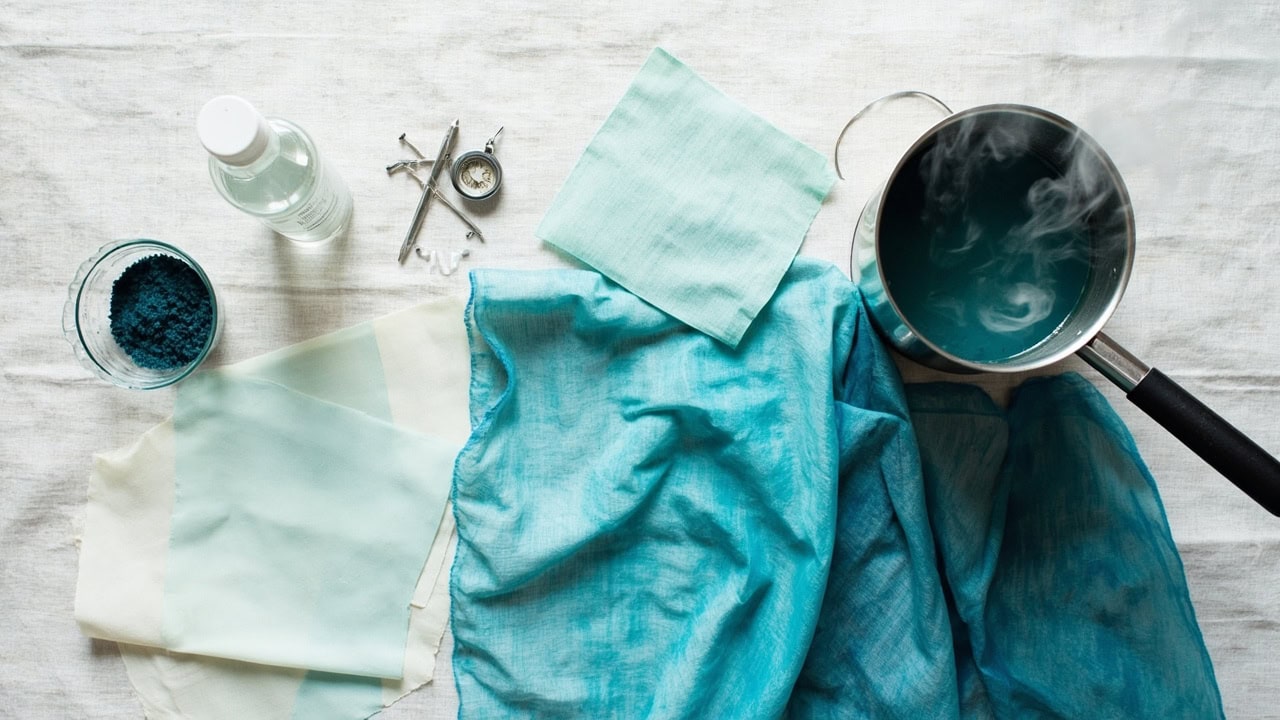
Place the pot on a heat source and bring the bath temperature to 80–95°C — a slow simmer, with wisps of steam and occasional small bubbles at the edges, not a vigorous rolling boil. Maintain this temperature range throughout the entire dyeing session. Use a thermometer to monitor; do not guess.
Stir the fabric gently every 5–10 minutes using a stainless steel spoon or rod, ensuring all surfaces are exposed to the dye bath equally. Total exhaustion time depends on the target shade depth: 30 minutes for light shades, 45–60 minutes for medium to dark shades. As dye molecules bond to the nylon fibres, the bath will progressively lighten — this is normal and desirable. It indicates that exhaustion is occurring as intended.
Step 5: Rinse and Finish
Turn off the heat and allow the bath to cool to approximately 50–60°C before removing the fabric. Removing fabric from an extremely hot bath causes thermal shock, which can result in uneven dye uptake or surface damage. Wearing rubber gloves, lift the fabric from the bath and rinse it first in warm water, then gradually cool to cold water. Continue rinsing until the water runs completely clear — any coloured runoff indicates unfixed dye that would bleed in the wash.
Wash the finished fabric in warm water with a mild detergent, then rinse once more. Lay the fabric flat or hang it to dry. Do not tumble dry immediately after dyeing — allow a full 24 hours for the dye to set fully within the fibre matrix before any heat exposure. This resting period makes the difference between colour that lasts 10 washes and colour that lasts 50+ washes.
Common Mistakes and Troubleshooting
The table below addresses the five problems most frequently encountered in home nylon acid dyeing. Each has a clear cause and a straightforward solution — nearly all of them trace back to skipping the preparation steps or failing to monitor temperature and pH.
| Problem | Cause | Solution |
|---|---|---|
| Uneven colour or patchy areas | Fabric was dry when added; insufficient stirring | Always wet fabric before dyeing; stir every 5–10 minutes |
| Colour weaker than expected | Insufficient dye quantity; pH too high | Increase dye % owf; verify pH is 4–6 with test strips |
| Dye bleeding in wash | Fixation time too short; temperature too low | Extend immersion time; ensure 80°C+ maintained throughout |
| Fabric appears damaged or shiny | Bath boiled vigorously; wrong pot material | Use gentle simmer; never boil; use stainless steel only |
| White streaks or spots | Fabric bunched during dyeing | Ensure fabric is loose and spread flat; stir gently |
Pro Tips for Deeper, More Even Colour
- Never use aluminium pots — acid reacts with aluminium, ruining the dye bath and potentially damaging the fabric. Stainless steel or enamel-coated cookware only.
- Do not rush the cooling process. Removing fabric from a very hot bath causes thermal shock and uneven results.
- For deeper shades, a second dyeing session — after the fabric is fully dried — produces more saturated colour than simply doubling the dye quantity in one session.
- Adding a small amount of white vinegar to the final rinse (1–2ml per litre) helps close the fibre structure and lock in colour.
Fiber Compatibility: Which Fabrics Can Be Acid Dyed?
Understanding which fibres respond to acid dyes is essential before attempting any dyeing project. The dye chemistry that works on nylon will not work on every fabric — using the wrong dye class on a given fibre produces poor results at best and complete failure at worst.
| Fibre | Acid Dye Compatibility | Notes |
|---|---|---|
| Nylon (all types) | Excellent | This article’s focus; takes acid dye more readily than any other synthetic |
| Wool | Excellent | Acid dyes bond to wool proteins via the same ionic mechanism; use 60–80°C to prevent felting |
| Silk | Excellent | Use cooler temperatures (60–80°C) to preserve the fibre’s natural luster and tensile strength |
| Polyester | Not suitable | Requires disperse dyes at 130°C+; acid dyes wash out immediately |
| Cotton / linen | Not suitable | Cellulose fibres require reactive dyes, not acid dyes |
| Acrylic | Not suitable | Requires cationic or basic dyes; acid dyes produce poor, fleeting results on acrylic |
If you are working with a nylon-wool blend or nylon-silk blend, the acid dye bath will colour both fibre types — and both are chemically compatible with this method. However, blends containing cotton, polyester, or acrylic will dye unevenly or not at all, because those fibres require different dye classes that cannot coexist in the same bath.
Frequently Asked Questions
Q: Can you dye nylon fabric at home without a professional setup?
A: Yes — home acid dyeing of nylon requires only stainless steel cookware, a kitchen thermometer, white vinegar for pH adjustment, and acid dye powder available from craft suppliers. The process is safe when conducted with proper ventilation and rubber gloves.
Q: What temperature is needed to dye nylon fabric?
A: Nylon must be dyed at 80–95°C in an acidified water bath. Temperatures below 80°C result in poor dye exhaustion and weak colour; temperatures above 100°C (boiling) risk damaging the fabric’s structural integrity and cause shiny patches.
Q: Can you dye nylon that is blended with cotton or polyester?
A: Nylon-cotton blends will dye unevenly — the cotton portions require reactive dyes while nylon takes acid dyes, and these dye classes are incompatible in the same bath. Nylon-polyester blends dye the nylon component only, leaving polyester fibres undyed, creating a heathered appearance.
Q: How wash-fast is acid dye on nylon?
A: Properly dyed nylon with acid dye achieves ISO 105-C06 wash fastness rating of 4–5 (out of 5) — meaning minimal colour loss through 50+ wash cycles at 40°C. This exceeds the fastness of most home dyeing methods on other fibre types.
References
- International Wool Textile Organisation (IWTO). Guidelines for Testing Colour Fastness of Textiles. https://www.iwto.org/resources
- ISO. (2019). ISO 105-C06:2019 — Textiles — Tests for colour fastness — Part C06: Colour fastness to domestic and commercial laundering. International Organization for Standardization. https://www.iso.org/standard/72383.html
- Cotton Incorporated. Technical Resources: Dyeing Synthetic Fibres. https://www.cottoninc.com/technical-resources
- Textile Exchange. Responsible Dyeing Methodology Guidelines. https://textileexchange.org
- Clark, M. (2011). Handbook of Textile and Industrial Dyeing: Principles, Processes and Types of Dyes. Woodhead Publishing (Elsevier).


