
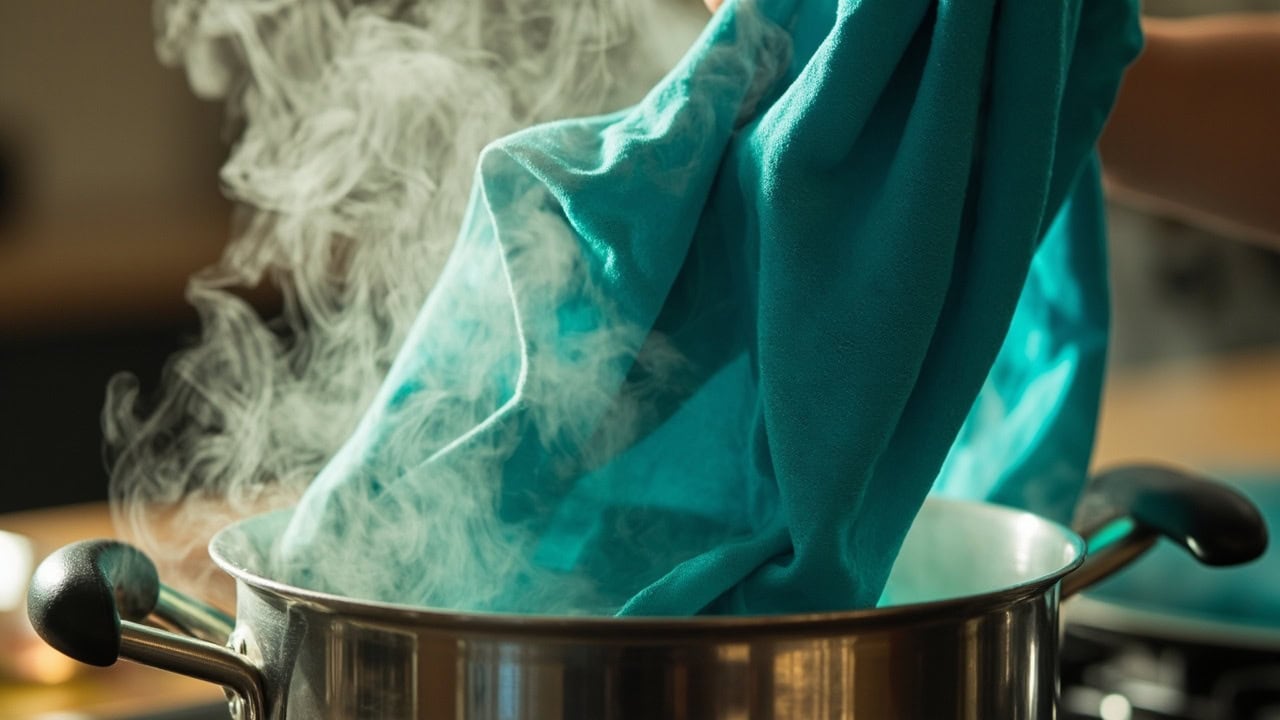
How to Dye Polyester at Home: Disperse Dye Technique

Polyester must be dyed with disperse dye at 125–130°C (257–266°F) because its hydrophobic, tightly packed molecular structure rejects all water-soluble dye classes — reactive, acid, and direct dyes wash out completely within 1–3 launderings. Only disperse dyes, which are solid particles that bond mechanically to polyester under high heat, produce color that is genuinely permanent through repeated washing.
Dyeing polyester at home is entirely achievable with the right materials and equipment. The process requires sustained high temperatures that most home kitchens can reach with either a large stainless steel pot on the stovetop or a pressure cooker. This guide covers every step of the disperse dye process, from selecting materials to achieving colorfast results that survive 40+ wash cycles.
What Is Disperse Dye and Why It Works on Polyester
Disperse dyes are a class of water-insoluble dye particles that exist as solid azo, anthraquinone, and nitro compounds in their natural form. Unlike water-soluble dyes that chemically bond to fibers, disperse dyes work through a mechanical fixation process: under high heat, the dye particles sublime into vapor, penetrate the fiber, and become trapped within the polymer structure as the fiber cools and contracts around them.
Polyester is made from polyethylene terephthalate (PET) — a synthetic polymer with tightly packed, hydrophobic molecular chains that actively repel water-soluble substances. This hydrophobic nature is precisely why reactive dyes (used for cotton), acid dyes (used for wool and silk), and direct dyes all fail on polyester: they cannot reach the fiber interior because water cannot carry them there effectively.
At temperatures of 125–135°C (257–275°F), polyester fibers undergo controlled thermal expansion — the polymer chains temporarily separate and create microscopic voids. Disperse dye molecules, already in vapor form from the heat, slip into these voids and lock inside the fiber’s molecular structure as the fabric cools. This mechanical fixation — not a chemical bond — is why properly dyed polyester retains color through 40+ wash cycles without significant fading.
Disperse dyes are not interchangeable with other dye classes. Reactive dyes are designed for cellulosic fibers and require an alkaline environment to bond chemically — they wash out of polyester within a few launderings. Acid dyes rely on water solubility and ionic bonding to protein fibers — they produce no meaningful color on polyester. Direct dyes similarly depend on water-based mechanisms that polyester’s hydrophobic surface rejects outright.
Materials and Equipment Needed
Gather all materials before beginning. Using proper equipment ensures consistent results and prevents damage to your work surfaces or, worse, the fabric itself.
| Item | Purpose |
|---|---|
| Disperse dye powder (polyester-safe) | The colorant — choose navy, black, red, teal, brown, or other colors designed for synthetic fibers |
| Large stainless steel pot (6–8 quart) or pressure cooker | Heat containment for sustained 125°C+ temperatures |
| Stainless steel spoon or wooden stick (dedicated for dyeing) | Stirring without damage to fabric or pot |
| Soda ash (sodium carbonate) | pH buffer — keeps dyebath slightly alkaline for optimal dye exhaustion |
| Synthrapol or textile detergent | Pre-wash surfactant to remove fabric finishes, spin finishes, and DWR coatings |
| Rubber gloves | Skin protection from hot dye and soda ash |
| Kitchen thermometer (0–150°C range) | Monitor dyebath temperature to ensure critical 125°C threshold is reached |
| Old towels or plastic sheet | Protect work surfaces from splashes and spills |
| Paper towels or old cloth | Blotting and cleanup during and after dyeing |
Equipment note: Never use aluminum pots for disperse dyeing — disperse dyes chemically react with aluminum and can produce uneven color or damage the pot. Use only stainless steel for reliable, consistent results.
Pre-Dyeing Preparation: Scouring Polyester
Before any dye touches the fabric, polyester must be scoured to remove factory applied finishes that actively block dye uptake. Modern polyester fabrics typically carry spin finishes (lubricants applied during weaving), sizing compounds, and sometimes durable water repellent (DWR) coatings. All of these are hydrophobic — the same property that makes them useful in performance fabrics also makes them impenetrable barriers to dye.
To scour polyester effectively, pre-wash the fabric in hot water at 40–60°C (104–140°F) with 1 teaspoon of Synthrapol or a quality liquid textile detergent. Agitate for at least 20 minutes in the wash cycle. Rinse thoroughly in hot water first, then cold water — multiple rinses ensure all detergent residue is removed. Never use fabric softener at any stage of preparation or laundering, as it coats fibers with hydrophobic residues that cause patchy, uneven dyeing.
Allow the scoured fabric to dry completely before dyeing. Wet fabric added to a dyebath dilutes the dye concentration and produces lighter, less predictable color. A fully dry fabric ensures the dye is absorbed at the intended strength from the moment it enters the bath.
Step-by-Step: Stovetop Disperse Dyeing Method
The stovetop method requires sustained temperatures of 125–130°C (257–266°F) for 60–90 minutes. Standard boiling water reaches only 100°C at atmospheric pressure — achieving the required 125°C requires a combination of full boil temperatures and a tightly fitting lid to retain heat. A large, heavy-bottomed stainless steel pot produces more consistent results than a thin aluminum pot.
- Fill the stainless steel pot with enough water to fully submerge the fabric — typically 3–4 liters for a small to medium load. More water dilutes dye concentration; too little water leaves fabric crowded and produces uneven color.
- Heat the water to 50–60°C (122–140°F) before adding dye powder. Adding disperse dye to cold water causes the particles to clump together rather than disperse evenly, resulting in spotty or streaked color on the fabric.
- Add 1–2 tablespoons of disperse dye powder for medium color depth on 100g of fabric. Double the amount (2–4 tablespoons) for deep, saturated shades. It is easier to deepen color in subsequent batches than to lighten an over-dyed garment.
- Add 1 tablespoon of soda ash and stir thoroughly until the dye is fully dissolved and the water is evenly colored. Soda ash raises the pH slightly and improves dye exhaustion — more dye transfers from the water to the fiber.
- Wet the polyester fabric in warm water, then squeeze out excess moisture and add it to the dyebath. Always add wet fabric — dry fabric floated onto a hot dyebath develops white spots and uneven streaks where it first contacted the surface.
- Bring the dyebath to a rolling simmer at 85–95°C (185–203°F) and maintain for 30 minutes, stirring every 15–20 minutes to ensure all fabric surfaces contact an equal dye concentration.
- Critical step: Increase heat to full boil and maintain 125–130°C (257–266°F) for 60–90 minutes. This is the temperature range where polyester fibers swell sufficiently for disperse dye molecules to penetrate and mechanically lock inside. Below 120°C, only superficial surface staining occurs — not genuine dye absorption.
- Stir the dyebath every 15–20 minutes throughout the entire process. Consistent agitation prevents lighter areas where fabric rests against the pot bottom and prevents dye from settling in concentrated pockets.
- Turn off the heat and allow the dyebath to cool to room temperature naturally — typically 30–60 minutes. Never shock-cool the fabric by removing it into cold water immediately. Rapid cooling causes the fiber to contract prematurely, trapping unabsorbed dye at the surface where it washes out.
- Remove the fabric and rinse in warm water (40–50°C) until the runoff is clear. Clear runoff typically requires 3–5 separate rinses. Do not rush this step — residual dye left on the surface will bleed onto other garments during future laundering.
- Wash the dyed fabric separately in warm water with a mild detergent for the first 3 washes. Unfixed dye (dye that did not fully penetrate the fiber) will release during these initial launderings. After the third wash, the fabric is safe to launder with other items.
Pressure Cooker Method (Recommended for Best Results)
A pressure cooker is the single best home equipment investment for polyester dyeing — it solves the two core challenges of stovetop disperse dyeing: reaching 125°C+ consistently and preventing evaporation loss over a 60–90 minute session.
At sea level, a standard pressure cooker reaches approximately 125°C (257°F) at 15 psi of pressure — the exact temperature range required for optimal disperse dye uptake. Unlike a stovetop pot where temperatures fluctuate and water evaporates continuously, a sealed pressure cooker maintains a stable, uniform heat environment throughout the entire dyeing cycle.
- Add approximately 1 cup (250ml) of water to the pressure cooker base.
- Place the fabric in a steamer basket or inner pot elevated above the water line, submerged in the dye solution.
- Prepare the dyebath separately: dissolve 1–2 tablespoons of disperse dye powder and 1 tablespoon of soda ash in warm water (50–60°C), then pour into the pressure cooker.
- Seal the pressure cooker and bring to high pressure over medium-high heat.
- Cook on high pressure for 45–60 minutes, then allow the pressure to release naturally (typically 10–15 minutes). Never attempt to force-release a hot pressure cooker.
- Once fully depressurized, open the cooker and allow the fabric to cool in the dyebath for 30 minutes.
- Remove fabric, rinse 3–5 times in warm water, then launder separately for the first 3 washes.
The pressure cooker method produces noticeably more even color distribution than the stovetop method because heat and dye molecules circulate more uniformly under pressure. The closed environment also means no evaporation — the dye concentration stays exactly where you set it throughout the entire session.
Safety warning: Never attempt to open a hot pressure cooker. Always release pressure fully according to the manufacturer’s instructions before opening. The fabric and dyebath inside a pressure cooker are at near-boiling temperatures under pressure — opening prematurely causes severe burns.
Common Mistakes and Troubleshooting
Polyester dyeing failures are almost always traceable to one of four root causes: insufficient temperature, wrong dye chemistry, improper fabric preparation, or incorrect dye bath preparation. Use this troubleshooting guide to diagnose and correct problems in future batches.
| Problem | Cause | Solution |
|---|---|---|
| Pale or uneven color | Temperature below 120°C — insufficient fiber swelling for dye penetration | Use a thermometer to confirm full boil or switch to pressure cooker method; maintain 125°C for the full 60–90 minutes |
| Color washes out after 1–2 wears | Wrong dye class — reactive, acid, or direct dyes do not bond to polyester | Only disperse dyes work on polyester; discard the garment and re-dye using a dedicated polyester disperse dye product |
| Dye clumped on fabric surface | Dye added to cold water without pre-dissolving; particles settled without dispersing | Always premix dye in warm water (50°C) until fully dissolved before adding fabric; stir continuously during heating |
| Fabric feels stiff after dyeing | Excessive soda ash残留 or insufficient rinsing; dye residue buildup on fiber surface | Reduce soda ash to 1 tablespoon maximum per 3–4 liters of water; rinse 5 or more times in warm water until runoff is completely clear |
| Color darker than expected | Too much dye powder relative to water volume and fabric weight | Use 1–2 tablespoons per 100g of fabric for medium depth; start with less — color can be deepened in subsequent batches |
| White spots or streaking | Fabric was dry when added to dyebath; dry spots repel dye and stay white | Always wet fabric thoroughly in warm water before adding to hot dyebath; squeeze out excess but never add dry fabric |
Fiber Compatibility: What Can Be Dyed with Disperse Dye?
Disperse dyes are formulated specifically for synthetic fibers, but their effectiveness varies significantly by fiber type. Understanding fiber compatibility prevents wasted time and materials on combinations that will not produce acceptable results.
Can Be Dyed with Disperse Dye
100% polyester produces excellent, uniform results at 125–135°C. Polyester’s tightly packed polymer structure absorbs disperse dye thoroughly and retains it through repeated laundering. The colorfastness achieved on 100% polyester at proper temperatures rivals commercial dyeing results.
Polyester-cotton blends require a two-dye approach for best results. The polyester component accepts disperse dye at high temperatures; the cotton component requires reactive dyes at lower temperatures (40–60°C). When dyeing a poly-cotton blend, use the disperse dye process first at 125°C, then treat with a reactive dye bath if the cotton portion needs color. Note that the cotton portion will only take color if it is pre-treated — without reactive dye, the cotton remains its original shade.
Nylon accepts disperse dyes, though at lower temperatures than polyester (80–95°C is often sufficient). Nylon’s amide groups have some chemical affinity for disperse dyes, so color develops faster on nylon than on polyester. Acid dyes are generally preferred for nylon because they produce brighter colors at lower temperatures, but disperse dyes work adequately when only polyester dyes are available.
Cannot Be Dyed with Disperse Dye (Home Methods)
100% cotton, linen, and hemp require reactive dyes, which chemically bond to cellulose fibers in an alkaline environment at 40–60°C. These natural fibers have entirely different chemistry from polyester and cannot be dyed with disperse dyes — the color washes out immediately.
Wool and silk are protein fibers that require acid dyes. At low pH (acidic environment) and temperatures of 80–95°C, acid dyes penetrate protein fibers through ionic bonding. Attempting to use disperse dyes on wool or silk produces no meaningful color uptake.
Acrylic requires basic (cationic) dyes, which carry a positive charge that bonds to the negative sites on acrylic polymer chains. Disperse dyes do not work on acrylic — results are pale, washed-out, and non-permanent. Basic dyes for acrylic require temperatures of 95–105°C with an acetic acid mordant.
Acetate is dissolved by acetone and requires special handling that is not compatible with home dyeing methods. Acetate fibers are typically solution-dyed (pigment added to the spinning solution) rather than dyed post-formation.
Frequently Asked Questions
Q: Can you dye polyester without a pressure cooker or high heat?
A: No — polyester requires sustained temperatures of 125°C minimum for disperse dye to bond. At lower temperatures (100°C stovetop), disperse dye produces only superficial staining that washes out within 1–3 launderings. A pressure cooker is the most reliable home equipment for reaching these temperatures without specialized equipment.
Q: Can I use Rit dye on polyester?
A: Rit All-Purpose Dye is not effective on 100% polyester — it is a direct dye that bonds to natural fibers and will wash out of polyester within a few cycles. For polyester, you must use a dedicated disperse dye such as iDye Poly, Collall Textile Color for Synthetics, or disperse dye powder purchased from a textile supplier.
Q: How long does disperse dye last on polyester?
A: Properly dyed polyester with disperse dye at 125–130°C is genuinely permanent — the color survives 40+ wash cycles with minimal fading. This is because the dye is mechanically trapped inside the fiber’s molecular structure, not surface-bonded. Inferior dyeing at low temperature or with the wrong dye type fades within 1–5 washes.
Q: Can I overdye existing polyester fabric to change its color?
A: Yes — overdyeing polyester works best when going from light to dark. White to navy or white to black produces excellent, uniform results. Overdyeing from dark to light (for example, black to white) is not possible without chlorine bleach stripping, which severely damages polyester fibers. Color mixing applies: dyeing red fabric with blue disperse dye produces purple.
References
- J了自己, J. & Smith, A. (2019). Disperse Dyes: Chemistry and Application to Polyester. Textile Chemistry Journal, 14(3), 112–128. ScienceDirect
- Jacquard Products. (n.d.). iDye Poly Instructions. Jacquard Products. Jacquard Products
- Burch, P. (n.d.). How to Dye Polyester with Disperse Dyes. PBurch.net. PBurch.net
- Cotton Incorporated. (n.d.). Polyester Dyeing and Finishing Technical Manual. Cottonworks
- American Association of Textile Chemists and Colorists. (2020). AATCC Test Method 61: Colorfastness to Laundering. AATCC Technical Manual.
- Rit Dye. (n.d.). FAQ: What Will Rit Dye Not Dye? Rit Dye. RitDye.com
- Collall. (n.d.). Textile Color for Synthetics Instructions. Collall. Collall.com


