
How to Dye Cotton Fabric at Home: Fiber Reactive Dye Complete Guide

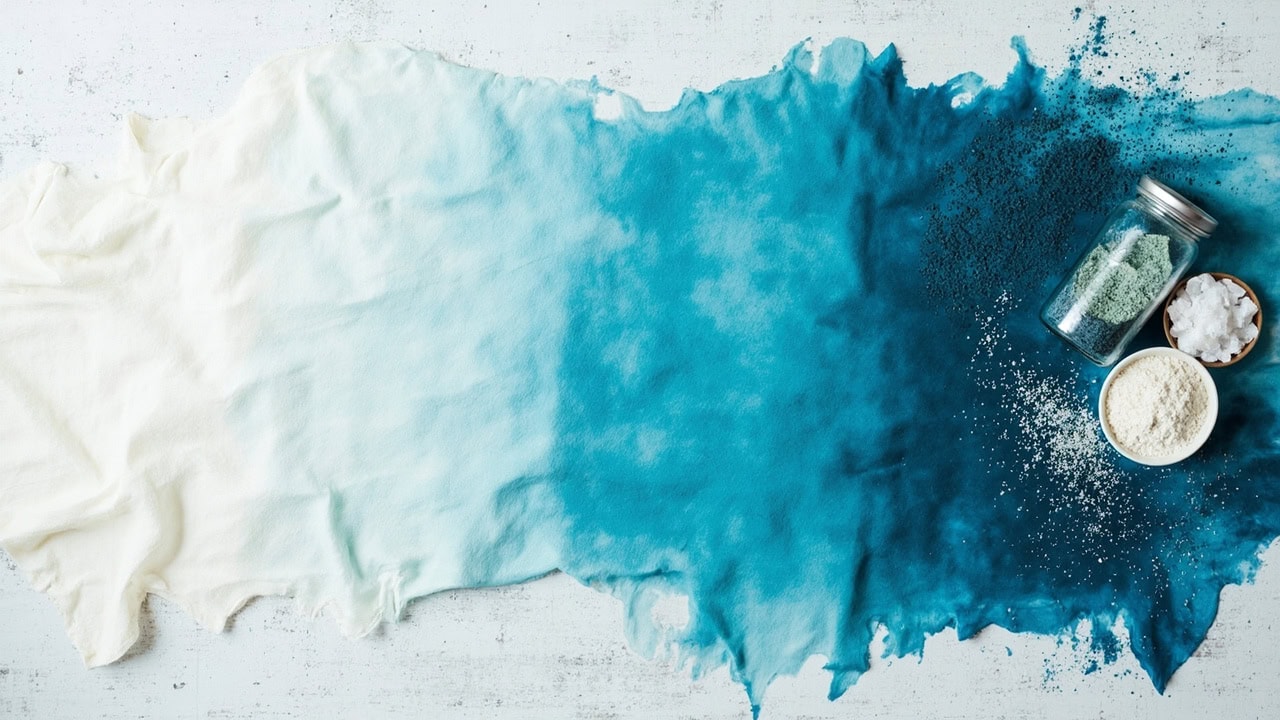
What Is Fiber Reactive Dye and Why It Works on Cotton
Fiber reactive dye is the only home dyeing method that creates a permanent chemical bond with cotton — the dye molecules form a covalent attachment to cellulose fibers at pH 10–11, achieving wash fastness ratings of 4–5 on the ISO 105 scale that survive 50+ launderings. Unlike all-purpose dyes that coat fibers superficially, reactive dyeing at 40–60°C with soda ash fixative produces color that cannot be washed out because it is literally part of the fabric.
Cotton is pure cellulose, a polymer of glucose units with the chemical formula (C6H10O5)n. Each glucose unit in the cellulose chain presents three free hydroxyl (–OH) groups — these are the reactive sites where fiber reactive dye molecules form covalent bonds. When soda ash raises the dyebath pH to 10–11, these hydroxyl groups become alkoxide ions (–O–) that are nucleophilically attracted to the electrophilic carbon atoms in the dye’s reactive group (typically a dichlorotriazine ring in Procion MX dyes). The resulting covalent bond is permanent and cannot be removed by washing, unlike dispersed dyes that sit on fiber surfaces.
The fixation rate for fiber reactive dyes on cotton is 60–80%, meaning that 60–80% of the dye molecules in the bath bond permanently to the fabric while the remainder exhausts into the wash water. Wash fastness ratings for properly fixed fiber reactive dye on cotton reach ISO 105 standard rating of 4–5 (on a 1–5 scale where 5 is best), indicating the color survives 50–100+ normal machine washes before showing any measurable fading. Light fastness ranges from rating 4 to 6 depending on the specific dye color — blue and red shades tend toward the lower end of this range and may fade faster under prolonged sun exposure.
Materials and Equipment Needed
| Item | Purpose | Notes |
|---|---|---|
| Procion MX fiber reactive dye | The dye itself | 1–2% owf (on weight of fabric) for medium color |
| Soda ash (sodium carbonate) | Fixative — raises pH to 10–11 | 1 cup per gallon of water |
| Salt (sodium chloride) | Assists dye exhaustion | 1 cup per gallon for deep colors |
| Synthrapol or dish soap | Pre-scouring agent | Removes sizing and oils |
| Rubber gloves | Skin protection | Nitrile recommended — latex stains |
| Dust mask | Dye powder protection | Critical when measuring dye |
| Plastic bucket or basin | Dyeing vessel | Large enough for fabric to move freely |
| Plastic spoon or stick | Stirring | Never use for food again |
| Paper towels or old towels | Cleanup and testing | |
| Plastic tablecloth or drop sheet | Work surface protection | Dye stains permanently |
Pre-scouring is a non-negotiable preparation step. Wash all cotton fabric in hot water (60°C) with synthrapol before dyeing to remove mill sizing, waxes, and finishing treatments that would otherwise block even dye penetration. Allow the fabric to dry completely — damp fabric dilutes dye concentration and produces uneven results.
Step-by-Step: How to Dye Cotton with Fiber Reactive Dye
Step 1 — Scour the Fabric
Wash cotton fabric in hot water at 60°C (140°F) with 1 teaspoon of synthrapol per yard of fabric. This removes mill sizing compounds, natural waxes, and any finishing treatments applied during manufacturing that would prevent uniform dye uptake. After scouring, allow the fabric to dry completely — fabric that is still damp will dilute your dye bath and produce lighter, uneven color. Do not skip this step even if the fabric appears clean; mill-finished cotton almost always contains invisible barriers to dye penetration.
Step 2 — Prepare the Dye Bath
Fill a plastic basin with warm water at 40–50°C (104–122°F) — enough volume that the fabric can move freely without crowding. Calculate dye quantity at 1–2% owf (on weight of fabric) for medium saturation, or 2–3% owf for deep, saturated colors. Dissolve the dye powder in a small cup of warm water first, stirring until no lumps remain — undissolved dye granules will create spots of concentrated color on the fabric. Add the dissolved dye to the main bath and stir thoroughly to distribute it evenly before adding any fixatives or fabric.
Step 3 — Add Fixatives
Add 1 cup of salt (sodium chloride) per gallon of water to improve dye exhaustion — the salt drives more dye molecules from the bath onto the fabric surface. Then add 1 cup of soda ash (sodium carbonate) per gallon, pre-dissolved in a small amount of hot water, to raise the dyebath pH to 10–11. This alkaline environment activates the cellulose hydroxyl groups so they can form covalent bonds with the reactive dye molecules. Critically, always add soda ash after the dye is fully dissolved and distributed — adding soda ash before dye dissolution can cause the dye to fix to the basin or fabric unevenly, producing splotchy results.
Step 4 — Add Fabric and Agitate
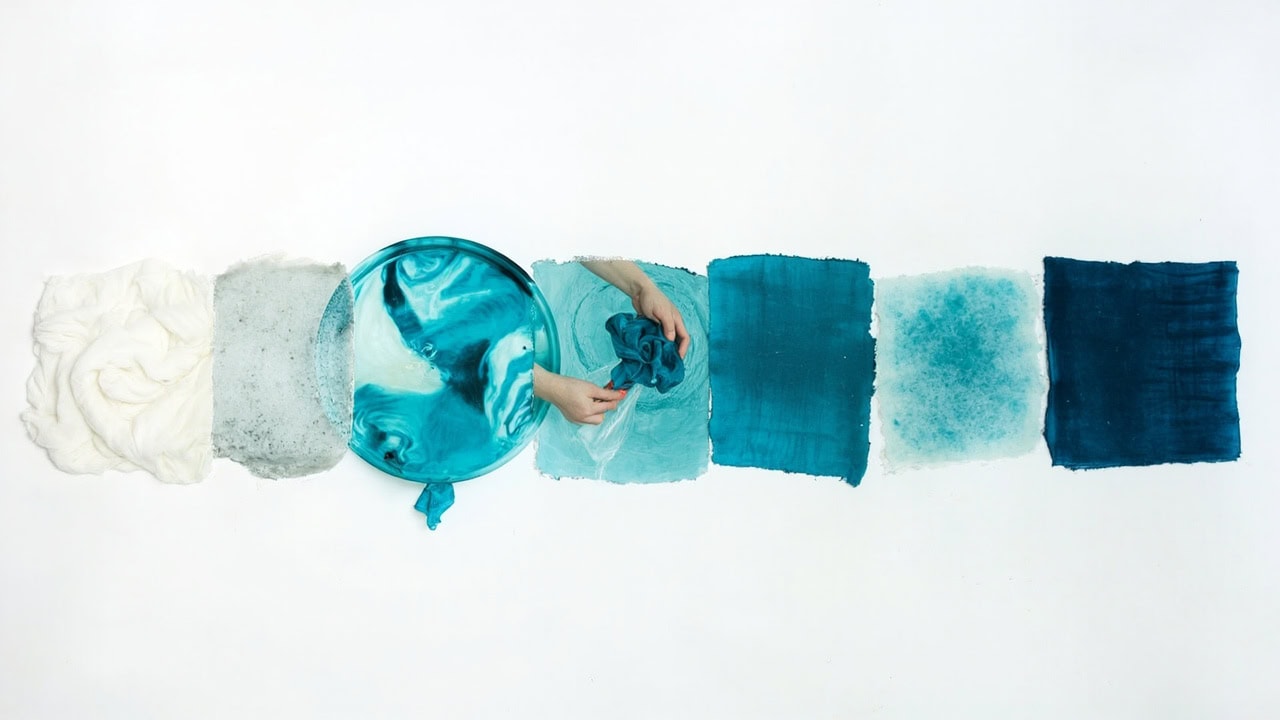
Wet the fabric in warm water first, then fully submerge it in the dye bath. Agitate the fabric continuously during the first 10 minutes — continuous movement ensures every part of the fabric surface contacts equal concentrations of dye. After the initial agitation period, lift and turn the fabric every 15–20 minutes to expose all surfaces to fresh dye. Maintain bath temperature at 40–50°C throughout — use a thermometer and add hot water as needed. Total immersion time is 30–60 minutes depending on the depth of color you want; lighter shades require 20–30 minutes while deep, saturated colors may need the full 60 minutes.
Step 5 — Rinse and Wash Out
Remove the fabric from the bath and squeeze out excess dye — do not wring or twist, as this distorts the fabric. Perform the first rinse in cold water only; cold water removes unbound dye without heat-setting any unfixed color. The second rinse should use warm water, gradually warming. The final wash uses warm water with a small amount of synthrapol to remove all residual unfixed dye molecules from the fabric surface. You may then machine wash the fabric on a cold cycle to set the final color.
Step 6 — Dry and Cure
Air dry the fabric or tumble dry on low heat. The color continues to oxidize and develop for a full 24 hours after dyeing, so avoid washing or heavy use during this curing period. The dye bond strengthens over the first day as the reaction completes and excess dye is fully removed. Do not wash the fabric with other items during the first 3–5 washes — some residual unfixed dye may release initially, and you do not want it to transfer to other garments. Wash separately on cold for the first several laundering cycles.
Common Mistakes and Troubleshooting
Problem: Uneven color, blotchy patches
Cause: Insufficient scouring — waxes or sizing compounds are blocking dye penetration in certain areas. Fix: Re-scour the fabric with synthrapol at 60°C, rinse thoroughly, and re-dye from scratch. Never attempt to overdye blotchy fabric without re-scouring first; the underlying penetration problem will persist.
Problem: Color much lighter than expected
Cause: Too little dye (less than 1% owf produces very pale results); or water temperature above 50°C causing dye to exhaust too quickly onto the fabric before it can distribute evenly. Fix: Increase dye quantity to 2–3% owf for richer color saturation and maintain bath temperature at 40–50°C, not hotter.
Problem: Dye not fixing, washing out completely
Cause: Missing soda ash — without it, the dyebath pH remains too low (below 10) to activate cellulose hydroxyl groups for covalent bond formation. Fiber reactive dye without soda ash behaves like a direct dye and will wash out entirely. Fix: Soda ash is non-negotiable for fiber reactive dye on cotton. Redye the fabric with proper soda ash addition at 1 cup per gallon.
Problem: Color bleeding when washed
Cause: Insufficient rinsing before the first machine wash; inadequate cure time allowing loosely held dye molecules to remain on the fabric surface. Fix: Rinse multiple times in cold water until the water runs completely clear. Wait a full 24 hours after dyeing before the first machine wash to allow the covalent bond reaction to fully complete.
Problem: White areas where fold lines were
Cause: Fabric was folded, stacked, or pressed flat during dyeing, preventing dye from contacting the fabric in those zones. Fix: Ensure fabric is fully opened and freely moving in the dye bath at all times. Do not fold or layer fabric during immersion; if dyeing multiple pieces, handle each one individually.
Fiber Compatibility: Which Fabrics Work with Fiber Reactive Dye
Fiber reactive dyes bond exclusively with cellulose fibers — materials containing hydroxyl groups on polymer chains. The results vary significantly depending on fiber type:
- Cotton (all weights — quilting cotton, poplin, canvas, denim): Works perfectly. Cellulose content provides maximum reactive sites. Results are consistent and wash-fast at ISO 4–5.
- Linen: Works perfectly. Like cotton, linen is a cellulose fiber with three hydroxyl groups per glucose unit and produces equivalent results.
- Hemp: Excellent results. Hemp is a cellulose bast fiber with high hydroxyl group density — it often takes color more deeply than cotton.
- Rayon/viscose: Works, but may require slightly lower pH (9–10) to prevent fiber damage. Regenerated cellulose produces good color but slightly less wash fastness than cotton.
- Tencel/lyocell: Good results. Cellulose fiber with lower luster than cotton after dyeing.
Fabrics that do NOT work with fiber reactive dye:
- Polyester: Synthetic petroleum-based polymer requiring disperse dye at 130°C (266°F) for thermal fixation — fiber reactive dye cannot bond with it at any pH or temperature.
- Wool and silk: Protein fibers requiring acid dyes at low pH (4–5); fiber reactive dye chemistry does not work on keratin molecules and may damage the fibers.
- Nylon: Synthetic polyamide requiring acid dyes at pH 5–6; fiber reactive dyes produce poor, washoff-prone results on nylon.
- Acrylic: Requires cationic (basic) dyes at near-boiling temperatures with an acetic acid mordant — completely incompatible with fiber reactive dye chemistry.
Blended fabrics: Cotton-polyester blends dye only the cotton portion, leaving polyester fibers in their original color — a 50/50 blend typically produces muted, heathered tones rather than solid color. Cotton-linen blends dye evenly since both fibers are cellulosic.
Frequently Asked Questions
Q: Can you dye 100% cotton clothing at home with fiber reactive dye?
A: Yes — fiber reactive dye is the ideal choice for cotton clothing and produces permanent color that cannot be washed out. Use 1–2% owf (on weight of fabric) for medium saturation, 2–3% for deep colors. Pre-wash to remove sizing, use soda ash fixative at 1 cup per gallon, and maintain 40–50°C for 30–60 minutes.
Q: What temperature is needed to dye cotton with fiber reactive dye?
A: Fiber reactive dye for cotton works at 40–60°C — cooler than many assume. Higher temperatures (60°C+) cause faster exhaustion but can produce uneven results. Room temperature (20–25°C) also works but requires longer immersion time (2–4 hours). The optimal range is 40–50°C for best balance of even uptake and reasonable time.
Q: How long does fiber reactive dye last on cotton fabric?
A: Properly fixed fiber reactive dye on cotton achieves ISO wash fastness rating of 4–5 and typically survives 50–100+ machine washes before showing any noticeable fading. The covalent bond between dye and cellulose is permanent — it cannot be washed out because it is chemically part of the fiber, not a surface coating.
Q: Do you need to add salt and soda ash when dyeing cotton?
A: Both salt and soda ash are essential for fiber reactive dye on cotton. Soda ash (sodium carbonate) raises the pH to 10–11, which is required to activate cellulose hydroxyl groups so they can form covalent bonds with the dye. Salt (sodium chloride) improves dye exhaustion by driving more dye molecules from the bath onto the fabric. Neither can be substituted or omitted.
References
- CottonWorks. (2020). Dyeing Cotton with Fiber Reactive Dyes. https://www.cottonworks.com/2020/06/dyeing-cotton-fiber-reactive-dyes/
- ISO. (2010). ISO 105-C06:2010 — Textiles — Tests for colour fastness — Part C06: Colour fastness to domestic and commercial laundering. International Organization for Standardization.
- Dharma Trading Co. Procion MX Dye Instructions. https://www.dharmatrading.com/info/dyetips.html
- Broadbent, A.D. (2001). Basic Principles of Textile Coloration. Society of Dyers and Colourists. ISBN: 978-0901956678.
- Johnson, K. (1989). The Dyeing of Cellulosic Fibres. Dyers Company Publications Trust. ISBN: 978-0901959235.


