
Yoke Construction

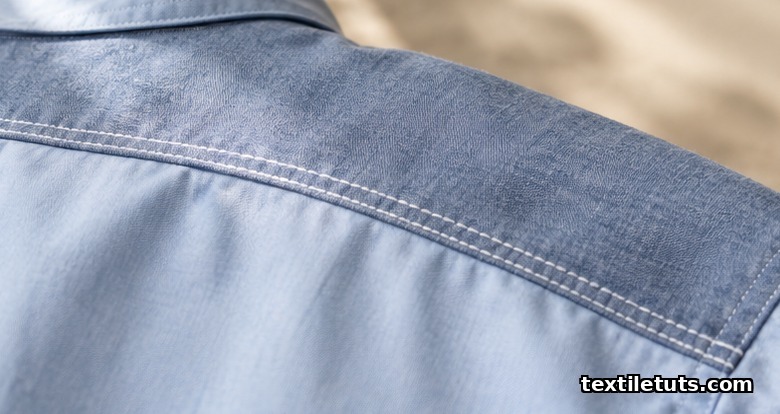
A yoke is a shaped, often curved pattern piece positioned at the shoulder, upper chest, waist, or hip of a garment that redistributes body-conforming shaping from darts or gathers into a single horizontal or curved seam. By moving the bust, shoulder, or waist shaping up or down into the yoke seam itself, designers can remove 40 to 60 percent of the dart volume from the bodice front while keeping the silhouette smooth, a technique documented in the ASTM and ISO body-measurement frameworks (ISO 8559-1:2017; ASTM D5219) and in pattern-engineering literature.
This guide covers how yokes work, the five construction types you will encounter, the darts-to-yoke pattern transfer math, the seam allowances and grain alignment that prevent puckering, and the fitting checks that separate a flat yoke from a contoured one. If you sew shirts, blouses, dresses, or traditional garments such as the Chinese qipao collar panel or the South Asian choli back, the yoke is one of the most impactful shapes you can master.
What a Yoke Actually Does
Every woven or knit top needs shaping where the body is wider than the garment opening. Most patterns handle that with darts, princess seams, or gathers. A yoke replaces one or more of those shaping methods with a seam that runs across the body, and the pattern piece above (or below) that seam is itself pre-shaped to fit the body’s contour.
The shirt yoke is the most familiar example. Cut as a separate piece across the upper back and shoulders, the yoke carries the shoulder slope, the upper-back curvature, and the start of the armhole, allowing the body of the shirt to hang straight from that line. ISO 8559-1:2017 defines the shoulder slope as the angle between the shoulder line and a horizontal reference at the acromion, typically 18 to 24 degrees for adult garments, and that slope is built into the yoke piece rather than sewn as a dart.
Two consequences matter for makers:
- Yokes reduce fabric distortion because the upper body’s shape is locked into a small, pre-shaped panel rather than being absorbed by gathers or seams.
- Yokes allow decorative contrast. Because the yoke is its own piece, it can be cut from a different fabric (denim body, chambray yoke), a different grain (bias-cut yoke on a straight-grain body), or a different colour block.
Five Yoke Types You Will Sew
Yokes are usually classified by their position on the body, because position determines which shaping job the seam is doing.
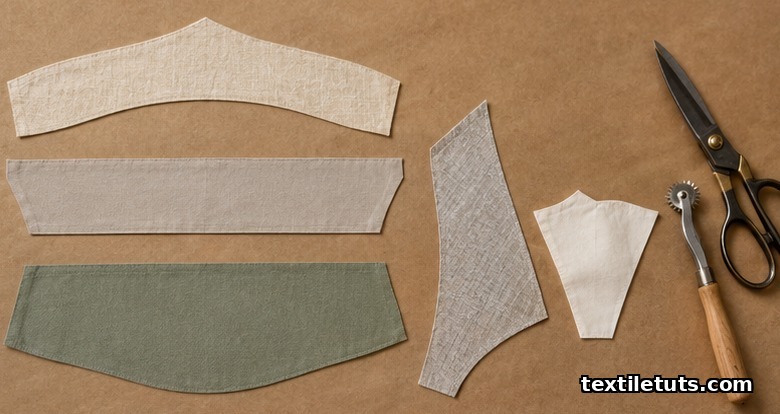
1. Shoulder yoke (the shirt yoke)
The shoulder yoke spans the upper back from one armscye to the other, sitting on or just below the shoulder line. It is the single most common yoke in Western shirting. Construction is almost always “yoke on top, body below,” with two back panels joined at centre back under the yoke seam. The seam is typically 10 to 15 mm (3/8 to 5/8 in) from the cutting line, pressed up toward the yoke and topstitched from the right side.
2. Midriff or empire yoke
A horizontal seam placed under the bust or at the natural waist, used in dirndl blouses, peasant tops, and sundresses. Below the seam, the fabric is gathered, pleated, or released into fullness. Above it, the bodice is fitted. The yoke seam absorbs 30 to 50 percent of the bodice shaping, and the gathers below control the rest.
3. Hip yoke
Used on skirts, trousers, and some coats, the hip yoke sits at the high-hip line, approximately 18 to 20 cm (7 to 8 in) below the waist. It allows the skirt or trouser to be fitted through the hip and released into a fuller lower panel, or vice versa. Tailored trousers use a hip yoke to replace the upper thigh dart.
4. Shoulder princess yoke
A diagonal yoke seam that runs from the shoulder point to the bust apex, functioning like a princess seam but terminating at a yoke line rather than continuing to the hem. Used in fitted blouses and dresses where bust shaping must be precise without breaking the bodice into too many panels.
5. Decorative or contrast yoke
A yoke added for colour blocking, embroidery, or lace insertion rather than shaping. The construction still uses a yoke seam, but the upper piece is shaped only enough to lie flat. Common in guayabera shirts, Mexican wedding shirts, and children’s wear.
Pattern Transfer: From Darts to Yoke
The pattern-engineering rule is straightforward: the volume removed by the dart must equal the volume gained by the yoke’s curvature. For a basic bodice front with a 5 cm (2 in) bust dart, slash the pattern from the dart tip to the shoulder line (or to a chosen yoke line), close the dart, then re-draft the upper section so the shoulder seam is now curved rather than straight.
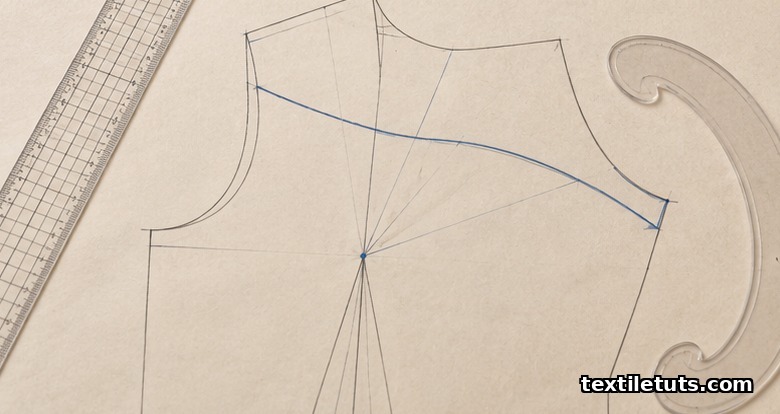
ASTM D5219 standardises the body landmarks used to mark this transfer: bust point, across-front shoulder, and front-waist length. ISO 3635 lays out the measurement intervals, including the across-back-shoulder measurement that defines how wide a shoulder yoke must be cut to span the wearer’s shoulders without riding up.
For a curved (contoured) yoke rather than a flat one, draft a two-piece yoke: the upper edge follows the shoulder line, the lower edge is convex, and the two halves are joined at centre back with a curved seam that is 6 to 10 mm deeper than the equivalent flat yoke. The convexity should be roughly equal to one-third of the dart volume being absorbed.
Construction Details That Decide the Result
Three technical points separate a clean yoke from a wavy one.
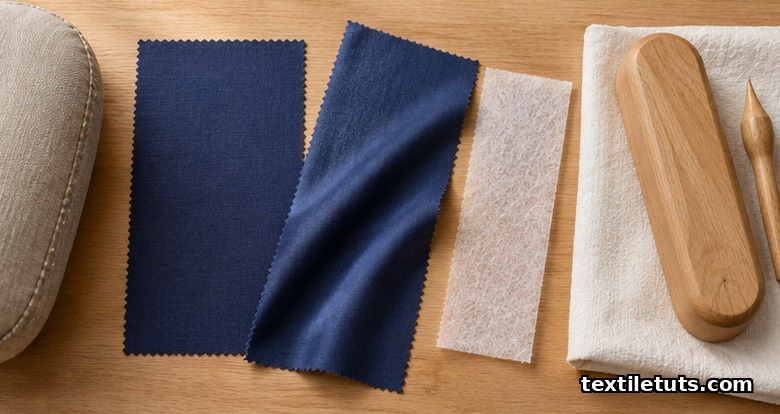
Seam allowance consistency. Standard shirting seam allowance is 10 mm (3/8 in). Anything wider forces the feed dogs to compress the upper layer; anything narrower lets the curved edge pull. Mark the seam allowance with chalk or use a guide foot to keep it uniform around the curve.
Grain and bias alignment. A straight-grain yoke on a straight-grain body is the default. A bias-cut yoke on a straight body adds 10 to 15 percent stretch across the upper back, useful for comfort in fitted shirts but unstable for heavy fabrics. Always interface the yoke when it is bias-cut; without interfacing, the seam will stretch out of shape during wear.
Pressing direction. Press the yoke-seam allowance up toward the yoke and the body-seam allowance down. Doing both allowances in the same direction creates a ridge along the seam that reads as a defect on the outside of the garment. Use a pressing cloth and a clapper to set the seam before topstitching.
Fitting Checks
Five checks, run in order:
- Yoke seam sits on the actual shoulder bone, not floating off the edge.
- No horizontal pulling across the upper back when the wearer raises both arms.
- Centre-back seam (if any) hangs vertical; diagonal pull means the yoke is too narrow.
- Wrinkles radiating from the neck point mean the yoke’s neck edge is too tight.
- Yoke seam stays smooth through the armscye, not pulling into the armhole.
If a check fails, the fix is usually to adjust the yoke’s lower-edge curvature by 5 to 10 mm at the section that failed, not to alter the body of the garment.
Yoke Types Compared
| Property | Shoulder yoke | Midriff yoke | Hip yoke | Princess yoke |
|---|---|---|---|---|
| Position | Upper back / shoulders | Under bust or natural waist | 18 to 20 cm below waist | Shoulder to bust apex |
| Shaping absorbed | Shoulder slope, upper-back curve | 30 to 50% of bodice dart volume | Hip-to-waist contour | Bust dart, some waist shaping |
| Lower piece treatment | Flat or slight gather | Gathers, pleats, or fullness | Released or gathered | Flat, fitted |
| Typical garments | Western shirts, blouses | Peasant blouses, sundresses | Skirts, trousers, coats | Fitted blouses, dresses |
| Fabric compatibility | Wovens and stable knits | Soft wovens, gathers easily | Tailoring wovens | Drape wovens |
| Skill level | Beginner | Beginner to intermediate | Intermediate | Advanced |
Frequently Asked Questions
What is the difference between a yoke and a dart?
A dart is a folded wedge of fabric sewn into the garment to remove fullness. A yoke is a separate pattern piece with a curved or shaped edge that absorbs that fullness at a seam rather than within a single panel. A yoke can do the work of one or more darts while also creating a design line, which is why it is used in both functional and decorative shirting.
How wide should a shoulder yoke be?
The yoke should span the full across-back-shoulder measurement plus 5 to 10 mm (3/16 to 3/8 in) of ease, which for an average adult is 38 to 44 cm (15 to 17.5 in) total. Cut too narrow, it rides up the neck and pulls the armscye; cut too wide, it slips off the shoulder bone and the body of the shirt hangs awkwardly below.
Can I add a yoke to a pattern that does not have one?
Yes, if the pattern has a bodice with a dart. Mark the desired yoke line across the front and back bodice, slash the pattern from the dart tip to that line, close the dart, then re-draft the upper section so the new shoulder or side seam is curved. Trace the upper section as the yoke piece, add seam allowance, and cut one yoke on fold (back) and two mirrored halves (front, if a centre-front seam).
Why does my yoke seam pucker even though I sewed it straight?
Puckering on a yoke seam is almost always a fabric issue, not a stitching issue. The most common causes, in order, are: mismatched grain (yoke on bias, body on straight), insufficient pressing before topstitching, inconsistent seam allowance (a 2 mm variance is enough on a 50 cm curved seam to ripple), and stretch in the yoke fabric that the body fabric does not have. Interface bias yokes and press the seam allowance flat before topstitching.
Do I need to interface the yoke?
Interface the yoke whenever it carries structural load (collars, button stands, heavy topstitching), is cut on the bias, or is made from a fabric with a looser weave than the body. A lightweight fusible such as a 30 to 40 g/m2 (0.9 to 1.2 oz/yd2) weft-insert interfacing is enough for shirting; tailored coat yokes need a heavier canvas or haircloth. Match the interfacing weight to the body fabric by feel, and use ASTM D3774 to confirm yoke and body fabrics are within 10 to 15 percent of each other in mass before sewing.
References
- International Organization for Standardization. ISO 8559-1:2017, Size designation of clothes, Part 1: Anthropometric definitions and measurement locations. Defines the shoulder-slope and across-back-shoulder landmarks used in yoke drafting.
- International Organization for Standardization. ISO 3635:1981, Size designation of clothes, Definitions and body measurement procedure. Standard intervals and posture reference for the body measurements yoke patterns are drafted against.
- ASTM International. ASTM D5219, Standard Terminology Relating to Body Dimensions for Apparel Sizing. Body-landmark definitions used to mark the bust point, shoulder line, and high-hip line during yoke pattern transfer.
- AATCC. AATCC Test Method 135, Dimensional Changes of Fabrics after Home Laundering. Used to verify that a contoured yoke does not distort through repeated wash cycles.
- ASTM International. ASTM D3774, Standard Test Method for Mass Per Unit Area of Fabric (Weight). Confirms yoke and body fabrics are within 10 to 15 percent of each other in mass before sewing, to avoid differential shrinkage.
- Aldrich, W. (2015). Metric Pattern Cutting for Women’s Wear (6th ed.). Wiley. Textbook treatment of the dart-to-yoke transfer and contoured-yoke drafting, accessed via ResearchGate.
This article is a working reference for garment makers and textile students covering shoulder, midriff, hip, and princess yokes: how they work, how they are drafted, and how they are sewn. Editorial by Kazi Sifat Muntasir, TextileTuts. Sources: ISO 8559-1:2017, ISO 3635:1981, ASTM D5219, AATCC TM 135, ASTM D3774, and Aldrich (2015) as cited.


