
Wrinkle-Free Finishes (Easy Care)

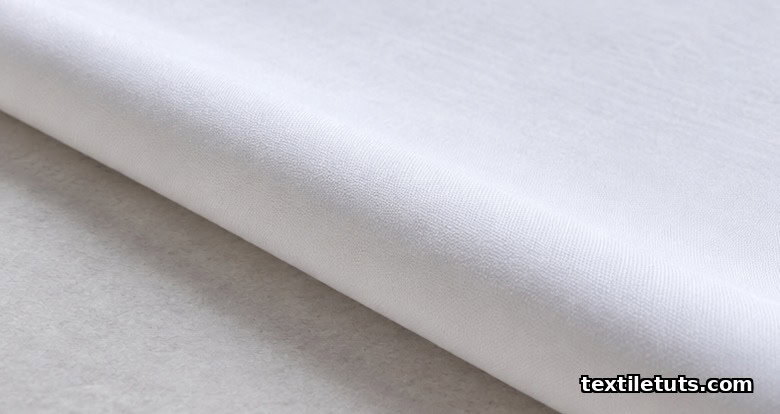
DMDHEU (dimethyloldihydroxyethyleneurea) resin, applied to cotton or cotton-polyester fabric at 5 to 10% wet pickup and cured at 150 to 180 °C for 3 to 5 minutes, is the dominant durable-press finish, raising the wrinkle recovery angle from roughly 90° on untreated cotton to over 280° and lifting the fabric’s smooth-appearance rating from 1.0 to 4.0 to 5.0 per AATCC Test Method 124.
Easy-care finishes trade a small amount of mechanical strength and absorbency for shape memory, so the resin, catalyst, and cure schedule all matter when textile engineers balance hand, whiteness, and formaldehyde release on a production line.
What follows is the working reference for the topic: the crosslinking chemistry, the pad-dry-cure process, the standards used to rate performance, and the trade-offs every engineer has to weigh when specifying an easy-care finish for a woven or knit substrate.
Why Cotton Wrinkles (and What “Easy Care” Actually Changes)
Cotton wrinkles because its cellulose chains carry hydroxyl groups that form hydrogen bonds under the bending stresses of wear and washing. When the fabric dries, those bonds reform in the new, creased position, so the fiber “locks in” every fold it saw during tumble-drying. With no chemical memory, cotton returns to a flat state only when the bonds are broken again by moisture and mechanical action, which is exactly why a hot iron works and why a dryer makes wrinkles permanent.
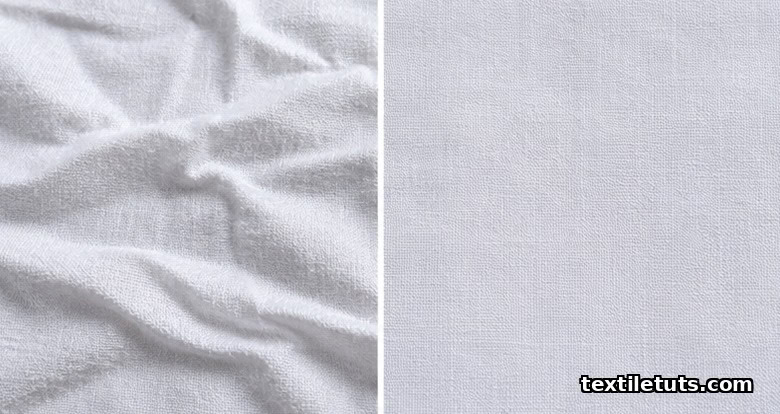
An easy-care finish introduces covalent crosslinks between adjacent cellulose chains, mostly between C-6 hydroxyl groups on neighboring glucopyranose units. These crosslinks act like permanent springs: when the fiber is bent, the network elastically snaps back toward its original geometry instead of locking into the crease. The result is a fabric that emerges from a home wash-and-dry cycle with most of its smooth appearance intact, which is what the textile trade means by “durable press” or “permanent press.”
The Chemistry: Crosslinking Cellulose with N-Methylol Resins
The workhorse resin for cotton easy-care finishing is DMDHEU, a cyclic N-methylol compound synthesized from urea, glyoxal, and formaldehyde. DMDHEU is applied as an aqueous solution together with an acid or Lewis-acid catalyst (typically magnesium chloride hexahydrate at 15 to 25 g/L) and a polyethylene-softener emulsion. Under heat, the N-methylol groups react with cellulose OH groups, forming ether crosslinks and releasing one molecule of water per bond. The resulting network is covalent, hydrophobic in the dry state, and reasonably stable to repeated alkaline laundering at 60 °C.
Variants such as DMeDHEU (dimethylated DMDHEU) are preferred when low formaldehyde release is required, because the methylated N-methylol groups leave fewer free CH2OH groups that can hydrolyze to release formaldehyde during storage or curing. Glyoxal-based polycondensates and 1,3-dimethyl-4,5-dihydroxyethyleneurea derivatives are used in the same pad-dry-cure line and are typically tuned for a finished-fabric formaldehyde release of under 75 ppm per ISO 14184-1 (the OEKO-TEX Class I limit for baby textiles).
Formaldehyde-Free Alternatives: Polycarboxylic Acids
Polycarboxylic acids, especially 1,2,3,4-butanetetracarboxylic acid (BTCA) and citric acid, crosslink cellulose by forming five- and six-membered cyclic anhydride intermediates that esterify two adjacent hydroxyl groups. Sodium hypophosphite (NaH2PO2) is used as the catalyst. BTCA systems deliver DP ratings comparable to DMDHEU and release zero formaldehyde, but the chemistry is roughly three to five times more expensive per kilogram of treated fabric and the pad bath is corrosive to most stainless-steel finishing equipment unless 316L grade tanks and roll covers are specified.
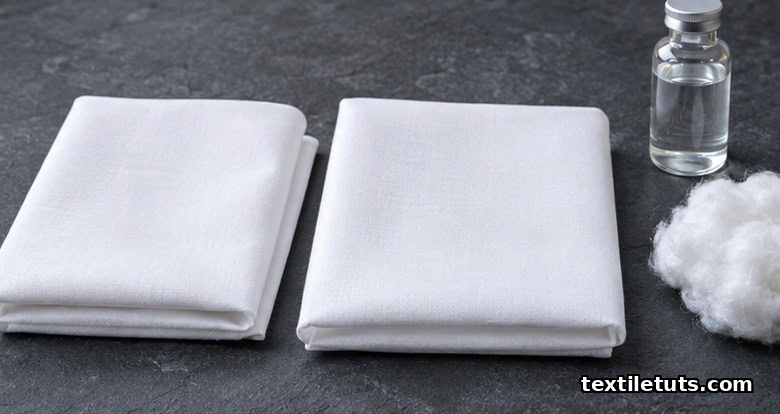
For most commercial shirting and bedding, DMeDHEU remains the cost default, with BTCA reserved for babywear, allergen-controlled product lines, and brands that publish a “no formaldehyde added” label. Polyurethane-based reactive finishes and silicone-elastic finishes are niche alternatives used on knit fabrics where the goal is stretch recovery rather than crease recovery, and they are typically rated by a different set of standards (e.g., ISO 14704 for elastic recovery).
Application: The Pad-Dry-Cure Process
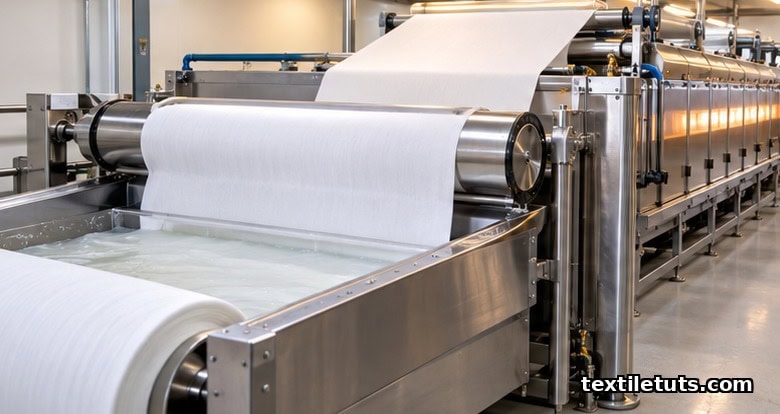
Easy-care finishes are applied by padding, the standard textile unit operation in which fabric passes through a resin bath and through a pair of squeeze rolls set to a target wet pickup. For woven cotton shirting, a wet pickup of 60 to 80% on weight of fabric (owf) is typical, and the pad bath is adjusted so that the dry-add-on of resin solids lands between 5 and 10% owf. The wet fabric is then dried on a stenter at 110 to 130 °C and cured at 150 to 180 °C for 3 to 5 minutes, or cured directly in the same stenter at the higher temperature.
Process variables that move the rating by half a point or more: catalyst loading (more MgCl2 speeds cure but increases strength loss), cure temperature (every 10 °C above 160 °C shortens required cure time but accelerates fabric yellowing on white goods), and residual moisture at the cure zone (over 12% moisture entering the cure causes hydrolysis of the crosslink and a measurable drop in DP rating). Cooling the fabric below 40 °C before winding prevents post-cure migration of free resin.
Measuring Performance: AATCC 124, AATCC 66, and ISO 7768
Three standards dominate the rating of easy-care finishes. AATCC Test Method 124 (Smoothness Appearance of Fabrics After Repeated Home Laundering) is the visual DP rating used by most US mills and brands: fabric is washed five cycles under controlled conditions, tumble-dried, and compared to a set of six plastic replicas (rated 1.0 to 5.0) under standard lighting. AATCC Test Method 66 (Wrinkle Recovery of Fabrics: Recovery Angle) measures the recovery angle in degrees after a fabric specimen is folded and compressed for 5 minutes under a 500 g weight; untreated cotton lands around 90° (warp + weft), a good DMDHEU finish lands above 280°. ISO 7768 mirrors AATCC 124 and is the standard cited in EU technical files.
For formadehyde release, ISO 14184-1 (water extraction, spectrophotometric) is the most cited method and the basis for the OEKO-TEX 100 limit of 75 ppm for Class I and 300 ppm for Class IV. ISO 2313 covers wrinkle recovery by a folded-angle method broadly equivalent to AATCC 66. ASTM D4231 covers wrinkle recovery of fabrics by the appearance method, and ASTM D4265 evaluates staining during home laundering, which is the standard cross-referenced when a finish is blamed for dye migration in adjacent garments.
The Trade-offs: Strength Loss, Whiteness, and Chlorine Damage
Crosslinked cellulose is more brittle than native cellulose. Tensile strength loss on woven cotton typically runs 15 to 30% at a DP rating of 4.5, and tear strength loss can reach 30 to 50% on lightweight poplin. Engineers compensate by picking a slightly heavier greige fabric, blending with polyester (which does not need crosslinking for crease recovery), and using a silicone-softener in the pad bath to recover hand. Whiteness loss on bleached white goods is mostly a function of cure temperature and is minimized by holding the cure at 155 to 160 °C for 4 minutes instead of running at the top of the range.
Free formaldehyde in the pad bath is the most heavily regulated issue. A well-controlled DMeDHEU line with a magnesium chloride / citric acid buffer system can deliver a finished-fabric release of under 75 ppm, in line with OEKO-TEX Class I. Sodium perborate bleaching in the home wash cycle slowly hydrolyzes unreacted N-methylol groups, which is why a treated shirt may pass OEKO-TEX at the mill but drift above 75 ppm after 20 home washes. Polycarboxylic acid finishes avoid this drift because there are no N-methylol groups to hydrolyze.
Performance Comparison Table
| Property | Untreated cotton | DMDHEU (5% owf) | DMeDHEU (5% owf) | BTCA + NaH2PO2 |
|---|---|---|---|---|
| Wrinkle recovery angle (AATCC 66, warp + weft) | ~90° | 280 to 310° | 260 to 290° | 280 to 305° |
| DP rating after 5 washes (AATCC 124) | 1.0 to 1.5 | 4.5 to 5.0 | 4.0 to 4.5 | 4.5 to 5.0 |
| Tensile strength loss vs. untreated | 0% | 20 to 30% | 15 to 25% | 15 to 25% |
| Formaldehyde release (ISO 14184-1) | Not detectable | 200 to 400 ppm | 50 to 100 ppm | Not detectable |
| Cure temperature | Not applicable | 160 to 180 °C | 150 to 170 °C | 170 to 185 °C |
| Cost relative to DMDHEU | 1.0x | 1.0x | 1.4x | 3.5 to 5.0x |
Frequently Asked Questions
Does wrinkle-free finish wash out after repeated laundering?
No. The crosslinks formed by DMDHEU, DMeDHEU, or BTCA are covalent ether or ester bonds to cellulose, and they survive 50 or more home wash cycles at 40 to 60 °C. The smooth-appearance rating typically drops from 5.0 to 4.0 over that lifetime because of surface abrasion, not because the crosslinks break. Adding chlorine bleach accelerates the drop and is the most common cause of premature failure of easy-care finishes on white shirting.
Is formaldehyde released by easy-care fabric harmful?
Finished-fabric formaldehyde on a properly catalyzed DMeDHEU line sits below 75 ppm (OEKO-TEX 100 Class I limit) per ISO 14184-1, which is below the threshold associated with skin sensitization in published dermatology studies. Sensitive individuals, especially eczema patients, often choose BTCA or other formaldehyde-free finishes to remove any residual exposure. The original concern about easy-care fabric came from older DMDHEU finishes at 300 to 500 ppm release, which have largely been replaced.
What is the difference between wrinkle-free and permanent press?
They refer to the same chemistry in most commercial use. “Permanent press” is the older trade term popularized in the 1960s for DMDHEU-treated cotton and cotton-polyester garments that hold a pressed crease through tumble-drying. “Wrinkle-free” and “easy-care” are the modern retail labels for the same finish family. Both rely on cellulosic crosslinking, both are rated per AATCC 124, and the only meaningful difference is which line set the marketing language.
Why does treated cotton feel stiffer than untreated cotton?
Crosslinking locks cellulose chains in a network that no longer slides freely under load, so the fabric loses the soft, drapey hand of native cotton. Mills compensate by adding 1 to 3% silicone microemulsion or polyethylene softener to the pad bath, which restores most of the suppleness without breaking the crosslinks. Heavier softener doses recover hand further but can depress the DP rating by 0.3 to 0.5 points because the silicone film masks the visual recovery.
Can wrinkle-free finishes be applied to linen or silk?
Linen can be finished by the same DMDHEU pad-dry-cure process, although strength loss on the already-bast-fiber substrate is severe (often 40 to 60%) and the visual DP rating is generally capped at about 3.5. Silk is rarely crosslinked because the acidic catalyst system yellows sericin and degrades fibroin, and most “wrinkle-resistant silk” in the market is a resin blend plus a heavy mechanical finishing step (e.g., calendering) rather than a true crosslink. Wool is set by a completely different chemistry, oxidative or reductive setting with sodium sulfite or thioglycollate, which is rated per ISO 18104.
References
- AATCC. Test Method 124: Smoothness Appearance of Fabrics After Repeated Home Laundering. AATCC Technical Manual, current edition. aatcc.org. Standard for the 1.0 to 5.0 visual DP rating used across the US textile industry.
- AATCC. Test Method 66: Wrinkle Recovery of Fabrics: Recovery Angle. AATCC Technical Manual, current edition. aatcc.org. Method for the folded-recovery-angle measurement cited throughout this article.
- AATCC. Test Method 143: Appearance of Apparel and Other Textile End Products After Home Laundering. AATCC Technical Manual, current edition. aatcc.org. Whole-garment visual rating standard that supplements Test Method 124.
- ISO. ISO 7768: Textiles: Smoothness Appearance of Fabrics After Washing. International Organization for Standardization. iso.org. International equivalent of AATCC 124, cited in EU technical files.
- ISO. ISO 14184-1: Textiles: Determination of Formaldehyde, Part 1: Free and Hydrolyzed Formaldehyde (Water Extraction Method). International Organization for Standardization. iso.org. Reference method for finished-fabric formaldehyde release and the basis of OEKO-TEX 100 limits.
- ASTM. ASTM D4231: Standard Practice for Wrinkle Recovery of Fabrics by the Appearance Method. ASTM International. astm.org. Appearance-based wrinkle recovery standard used in US quality-control labs.
- Rowland, S. P., and coworkers. Mechanism of Durable Press: Crosslinking of Cotton with DMDHEU and Related N-Methylol Resins. USDA / academic literature indexed on the USDA Agricultural Research Service publications archive and via peer-reviewed cellulose journals. Foundational chemistry of cellulosic crosslinking.
- Yang, C. Q., and Wang, X. Formation of Cyclic Anhydride Intermediates in Polycarboxylic Acid Finishing of Cotton. Peer-reviewed cellulose-finishing literature indexed on ResearchGate and ScienceDirect. Reference work for BTCA-based formaldehyde-free finishes.
This article is the working reference for easy-care and durable-press finishing of cellulosic fabrics. Editorial by Shahrukh Islam, TextileTuts. Sources: AATCC Test Methods 66, 124, 143; ISO 7768; ISO 14184-1; ASTM D4231; peer-reviewed cellulose-finishing literature as cited.


