
Why Are Men’s Suits So Tight?

Men’s suits are cut closely to the body for five interconnected reasons: aesthetics, practicality, social signaling, fashion trends, and professional expectations. The fashion industry has shifted toward closer-fitting silhouettes since the early 2000s, making slim-fit suits the dominant style in menswear—slim-fit cuts now account for 60–70% of all men’s suit sales.
This article examines why men’s suits are cut close to the body, the differences between suit types, and how to avoid common fitting mistakes.
Key Suit Fit Specifications at a Glance
| Measurement Area | Standard Ease | Acceptable Range | Notes |
|---|---|---|---|
| Chest (buttoned) | 2–3 in / 5–7.5 cm | 1.5–4 in | Allows full breath without billowing |
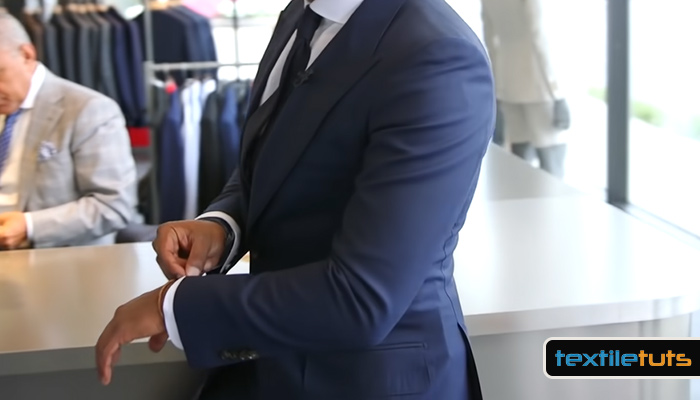
| Sleeve length | 0.5 in / 1.3 cm above shirt cuff | 0.25–0.75 in | Exposes 0.25 in of shirt cuff at rest |
| Jacket length | Thumb knuckle at rest | Covers seat | Must cover seat when seated |
| Button stance | At navel | Above = too small; below = too large | — |
| Shoulder seam | At acromion bone | ± 0.25 in tolerance | No sagging or upward pull |
| Trouser break | Single slight break | No break (formal) to slight break | Full break = trousers too long |
The Five Reasons Men’s Suits Fit Closely
Several interconnected factors explain why modern men’s suits are cut with minimal excess fabric. These reasons span aesthetics, practicality, and social psychology.
1. Tailored Silhouette Creates a Flattering Shape

A well-tailored suit must contour to the wearer’s body without binding. Industry standards specify that a properly fitting suit jacket has 2–3 inches (5–7.5 cm) of ease across the chest when buttoned, allowing full breath without excess fabric billowing.
According to ISO 8559 (size designation standard), men’s suit jackets range from EU size 44 to 64, corresponding to chest circumferences of 88–128 cm. This range accommodates approximately 95% of adult male body types.
2. Close-Fit Reduces Wrinkling During Wear and Storage
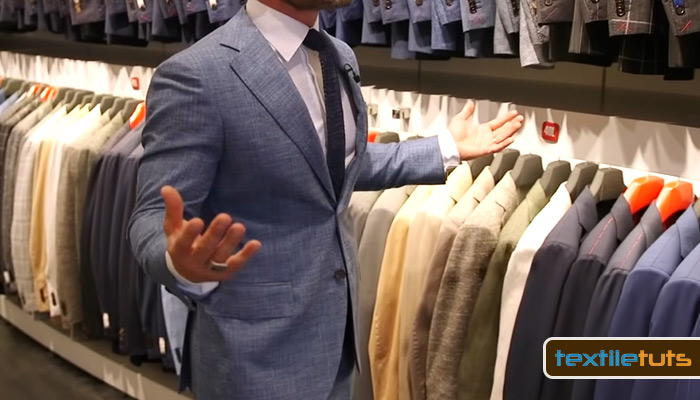
A suit with less excess fabric develops fewer wrinkles during movement. When stored, a closely fitted jacket maintains its shape because the fabric remains under light tension rather than bunching.
3. Streamlined Appearance Projects Professionalism
Hiring managers and clients consistently rate well-dressed candidates as more competent. A suit that fits closely projects attention to detail and self-management—qualities employers value.
4. Fitted Suits Signal Authority and Status
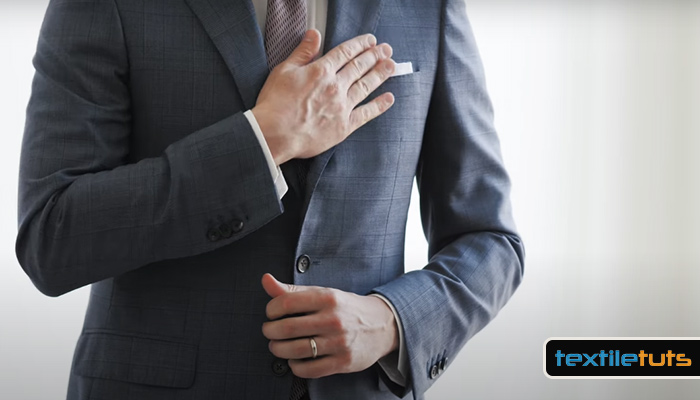
Power dressing has documented effects on observer perception. Research shows that viewers consistently rate figures in fitted clothing as taller, heavier (in a leadership sense), and more authoritative than identical figures in loose clothing.
5. Slim-Fit Dominates Current Menswear Fashion
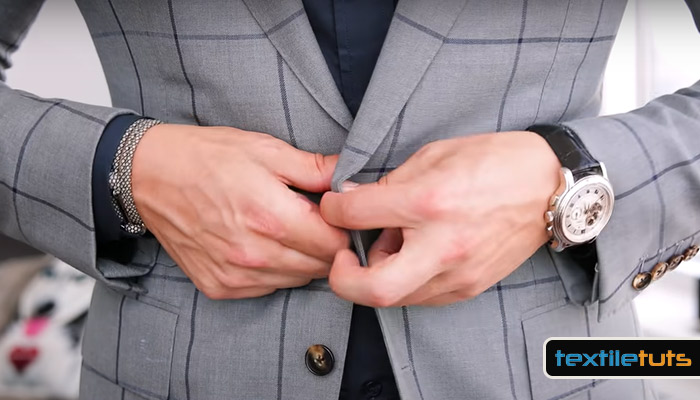
The slim-fit suit trend emerged in the early 2010s and remains dominant through 2026. Major retailers report that slim-fit cuts account for 60–70% of all men’s suit sales, with relaxed-fit options relegated to niche professional segments such as legal and finance.
When shopping for a suit, err on the side of a slightly looser fit if between sizes. A tailor can remove 0.5–1 inch (1.3–2.5 cm) from the sides, but cannot add fabric where none exists.
Key Differences Between Men’s and Women’s Suits
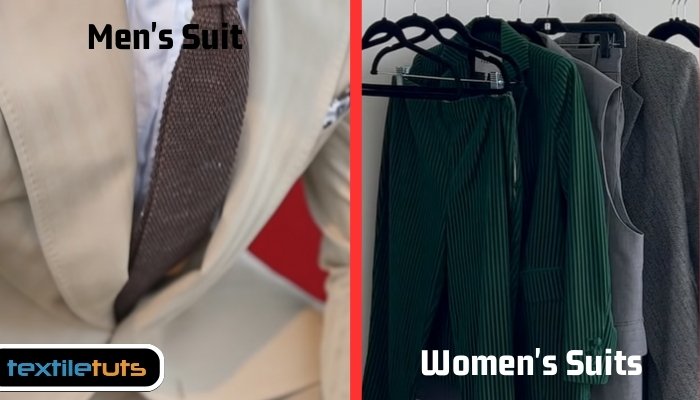
Men’s and women’s suits differ significantly in construction, fabric choice, and intended silhouette. Understanding these differences helps consumers make informed purchasing decisions.
Fit and Silhouette
Men’s suit jackets are cut straight through the body with minimal darting. The shoulder seam terminates at the acromion bone, and the jacket hem falls at the hip. Women’s suit jackets are shaped with princess seams or side darts to contour the waist and bust, creating a more defined silhouette.
Fabric Weight and Composition
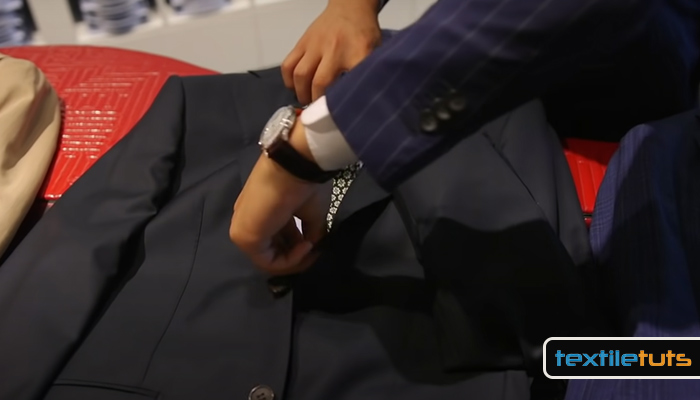
Men’s suits traditionally use heavier fabrics: wool (270–350 g/m²), tweed, or wool blends. These materials provide structure appropriate for formal business settings. Women’s suits frequently employ lighter fabrics—silk, linen, or stretch wool blends—creating a softer drape suited to business-casual environments.
Color and Pattern Range

Men’s suits cluster around a narrow palette: navy, charcoal, black, and light grey represent approximately 85% of off-the-rack options. Women’s suits span a broader spectrum including burgundy, forest green, camel, and patterned options.
Construction Details
Men’s suits feature traditional construction with full canvas interlining, functional sleeve buttons (surgeon’s cuffs), and a center vent. Women’s suits often omit these traditional elements in favor of simplified construction that reduces cost and allows more varied styling.
Business Suits Versus Dress Suits

Business suits and dress suits serve different occasions and have distinct construction standards. Confusing them results in inappropriate attire choices.
Business Suit Characteristics
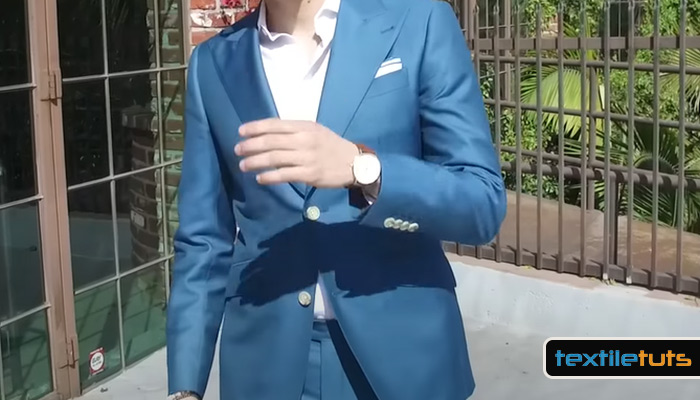
Business suits are crafted from wool or wool-blend fabrics weighing 250–320 g/m². The jacket is single-breasted with 2–3 buttons, and trousers feature a straight leg with a pressed crease. These suits pair with dress shirts and ties for corporate environments.
Dress Suit Characteristics
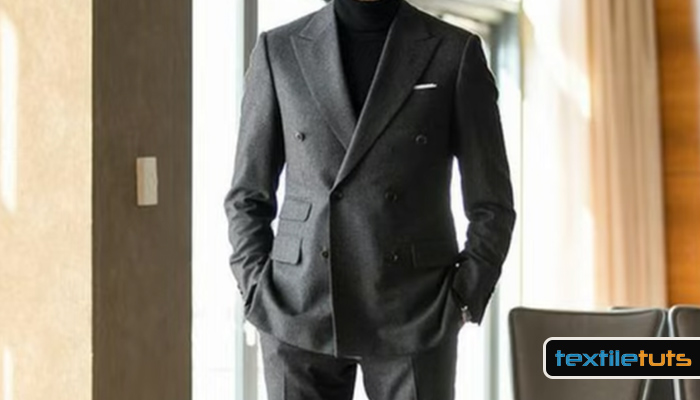
Dress suits (evening wear) use silk, satin, or lightweight wool. The jacket is double-breasted with 6–8 buttons, and trousers have a flared or straight leg without crease. These suits pair with formal shirts and are appropriate for evenings and black-tie events.
Formal Distinctions
Business suits rank higher on formality scales. The heavier fabric, simpler closure, and conservative cut communicate professionalism appropriate for daytime corporate settings.
Fabric Comparisons
Business suits require worsted wool at minimum—a tightly woven fabric that resists wrinkles and maintains shape throughout the workday. Dress suits prioritize visual elegance over durability, using silk and satin that wrinkle easily but catch light beautifully.
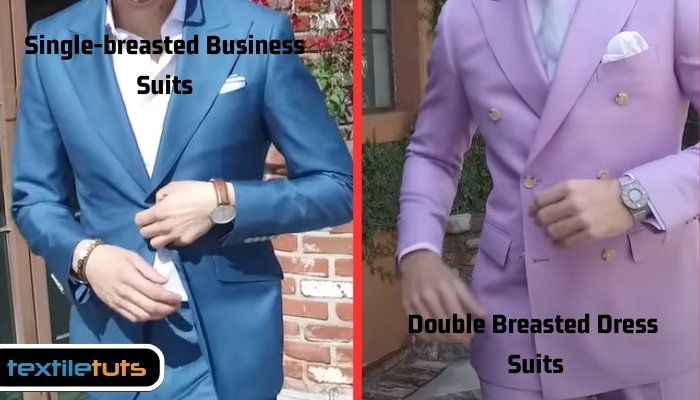
Single-breasted business suit jackets close with 2–3 buttons and allow the wearer to sit comfortably without loosening. Double-breasted dress suit jackets traditionally fasten all buttons when standing and are unfastened when seated—a social convention that signals familiarity with formal dress codes.
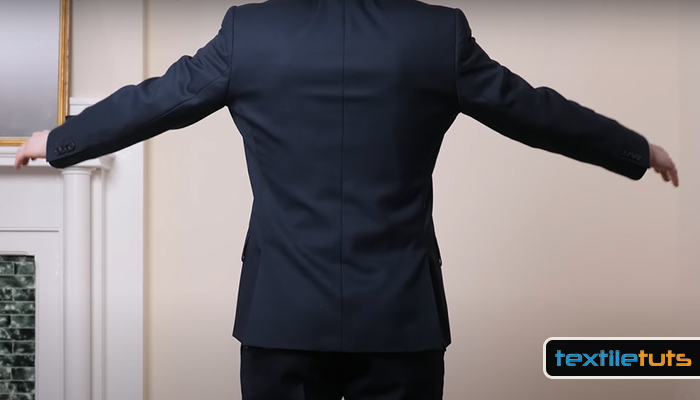
Even experienced dressers commit fitting errors that undermine their professional appearance. These mistakes are avoidable with proper knowledge.
- Sleeve length: The suit sleeve must end 0.5 inches (1.3 cm) above the shirt cuff, exposing exactly one-quarter inch of shirt cuff when arms hang relaxed.
- Trouser break: The hem should rest on the top of the shoe with a single, slight break—or no break for formal trousers. A complete break indicates trousers are too long.
- Functional sleeve buttons: Many suits ship with stitching holding buttons in place. This stitching must be removed by a tailor before first wear.
- Jacket length: The suit jacket hem covers the seat (buttocks) and terminates at the thumb knuckle when arms are at rest.
- Shoulder fit: The shoulder seam must align precisely with the acromion bone. Sagging or biting shoulders indicate incorrect sizing.
- Button stance: When fastened, the jacket button sits at the navel. If it rests above the belly button, the jacket is too small; below the navel, it is too large.
Signs Your Suit Does Not Fit Properly
Recognizing fit problems early prevents costly wardrobe errors. Watch for these indicators during fitting.
- Shoulders sag below the natural bone structure or pull upward toward the neck.
- The lapels lift away from the chest when the jacket is buttoned (lapel gap).
- The seat (buttocks) is visible below the jacket hem when sitting.
- Excessive pulling or pulling at the button indicates insufficient chest ease.
What Suit Fit Project the Most Authority?
A slim-fit suit with proper tailoring projects the most authority. The close silhouette signals fitness, attention to detail, and confidence—all qualities associated with leadership.
Can a Tailor Alter a Tight Suit?
Tailors can let out suits by 0.5–1 inch (1.3–2.5 cm) at the side seams if additional fabric exists in the seam allowance. Taking in a suit is more reliable and can reduce the chest by 1–2 inches (2.5–5 cm).
How Often Should Suits Be Dry Cleaned?
Dry cleaning every 3–4 wears is sufficient for wool suits. Excessive cleaning shortens fabric life. Spot-clean minor stains and air garments between wears to extend intervals between professional cleaning.
Conclusion
Men’s suits are cut closely for fashion, function, and social signaling. The slim-fit dominance since the early 2010s reflects consumer preference for streamlined silhouettes that project confidence and authority.
No universal “correct” fit exists—the right suit fits your body, suits your occasion, and makes you feel comfortable. When fit and comfort conflict, consult a tailor. Professional alterations transform an off-the-rack suit into a custom look.
References
- Mayo Clinic. (2024). Hyperhidrosis: Symptoms & Causes. Mayo Foundation for Medical Education and Research.
- International Organization for Standardization. (2023). ISO 8559-1:2023 — Size designation of clothes: Body measurements and intervals. ISO.
- Cotton Incorporated. (2023). Consumer Research: Seal of Cotton Trust Impact. Cotton Incorporated.
- European Committee for Standardization. (2023). EN 13402: Size designation of clothes. CEN.
- Wikipedia contributors. (2026). Suit (clothing). Wikipedia.
- Hawks & Doves. (2024). Men’s Suit Fit Guide. Hawks & Doves.


