
Why Is It Called A Tank Top?

The term “tank top” derives from the expression “tank suit”—a one-piece sleeveless bathing garment first popularized by Australian swimmer Annette Kellerman in 1907. The connection of the name to swimming enclosures, also known as “tanks” in England, confirms this etymology. Another widely cited account traces the tank top name to the sleeveless shirt that soldiers wore during World War I, also called tank tops at the time. This article explores the history of the tank top, its name origins, its evolution over more than a century, and how people wear it today.

In different geographical locations, the tank top goes by diverse names such as “vest” in the United Kingdom, “muscle shirts” in the United States, “A-shirts” for their triangular armhole shape, “singlets” in Australia and New Zealand, and “banian” or “ganji” in the Indian subcontinent.
The History of Tank Tops
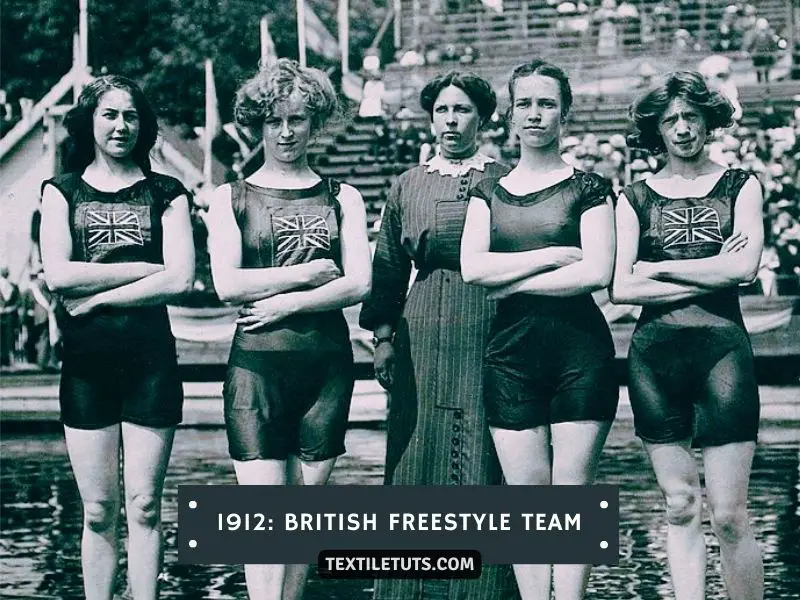
The tank top’s history traces to the early 20th century, when Annete Kellerman introduced the first form-fitting one-piece “tank suit” in 1907. Her design featured long arms and legs, a collar, and a body-hugging silhouette that exposed the arms, legs, and neck. By 1910, one-piece swimming costumes had gained acceptance as legitimate swimwear for women across parts of Europe.
| Year | Event |
|---|---|
| 1907 | Australian swimmer Annette Kellerman popularizes the one-piece “tank suit,” setting the template for modern tank tops. |
| 1913 | John L. Hammons patents the first official tank top design (U.S. Patent No. 1,350,614), cementing the garment in American fashion history. |
| 1920s | Tank tops become standard as part of one-piece swimsuits for both men and women. |
| 1940s | Tank tops gain popularity with women as casual daytime wear. |
| 1940s–1950s | U.S. military personnel wear tank tops as undershirts in tropical deployments during World War II and the Korean War. |
| 1950s | The popularity of tank tops as outerwear declines in mainstream fashion. |
| 1970s | Tank tops return as a mainstream casual garment, driven by disco culture and the feminist movement. |
| 1980s | Tank tops become a fashion essential, particularly among bodybuilders, surfers, and celebrities. The “muscle shirt” variant reaches peak cultural prominence. |
| 1990s–2020s | Tank tops remain a permanent fixture in global wardrobes as year-round casual and athletic wear. |

Beyond mainstream fashion, tank tops have appeared in several key moments in pop culture history:
| Year | Event |
|---|---|
| 1962 | The Beatles wear tank tops on the cover of their album With the Beatles, signaling the garment’s entry into youth culture. |
| 1977 | Arnold Schwarzenegger wears a tank top in Pumping Iron, cementing the garment’s association with bodybuilding. |
| 1982 | Madonna appears in a tank top in the music video for “Lucky Star,” a defining look of 1980s pop fashion. |
| 1999 | Britney Spears wears a tank top in the “Baby One More Time” music video, introducing the garment to a new generation. |
The Origins of the Tank Top
The tank top traces its roots to ancient Rome, where soldiers wore sleeveless tunics called subucula under their armor. These early garments featured armhole cuts designed for freedom of movement during combat.
The modern tank top gained widespread popularity in the United States during the 1920s, when women began wearing sleeveless tops as beachwear. During the 1960s, men’s tank top adoption accelerated as athletic and casual wear. Today, the tank top is a wardrobe staple for all genders.
The garment works equally well dressed down with jeans or dressed up with a blazer. Its lightweight construction—typically weighing between 120 and 180 GSM (grams per square meter)—makes it ideal for temperatures above 25°C (77°F).
Who Invented the Tank Top?
John L. Hammons holds the earliest documented U.S. patent for the tank top, filed in 1911 and granted in 1913 (U.S. Patent No. 1,350,614). His design described a sleeveless undershirt with a U-shaped neckline and shoulder straps wider than a typical T-shirt.
Italian immigrants also contributed significantly to the tank top’s early American history, introducing sleeveless undershirt designs in New York and Chicago garment factories during the early 1900s. These immigrants wore the garment to stay cool during hot summer months in textile mills.
Regardless of who first conceived it, the tank top evolved as a practical response to heat—its sleeveless design reduces body coverage by approximately 15–20% compared to a standard short-sleeve T-shirt.
How the Tank Top Became a Fashion Staple

The tank top’s journey from athletic garment to fashion essential spans multiple decades of cultural shifts.
In the early 1900s, swimmers wore tank tops to maximize range of motion. Tennis players, track athletes, and gym-goers quickly followed suit. By the 1920s, the tank top entered mainstream fashion when designers began featuring sleeveless silhouettes in women’s athletic and resort wear.
The 1960s marked a turning point: the tank top became associated with counterculture. Hippies and young people adopted the garment as a symbol of rebellion against conservative dress codes.

The 1970s disco era elevated the tank top further. Paired with tight trousers or shorts, the garment became synonymous with nightlife, movement, and self-expression on the dance floor.

Throughout the 1980s and 1990s, tank tops became embedded in sports and pop culture. Bodybuilders, rappers, and pop stars all wore distinctive tank top styles, each contributing to the garment’s enduring appeal.
Tank Top Versus Regular Top: Key Differences
| Feature | Tank Top | Regular Top |
|---|---|---|
| Sleeves | Sleeveless — exposes the deltoids and upper arm | Short or long sleeves — covers the upper arm |
| Neckline | Deep U-shaped or V-shaped cut | Standard crew neck, V-neck, or polo collar |
| Body Coverage | Approximately 15–20% less coverage than a T-shirt | Full sleeve and torso coverage |
| Fabric Weight | Lightweight: typically 120–180 GSM | Varies: 140–300 GSM depending on season |
| Primary Materials | Cotton, cotton-polyester blend, nylon, or moisture-wicking synthetic | Cotton, polyester, wool, linen, or blended fabrics |
| Ideal Temperature Range | 25°C (77°F) and above | All-season; insulation layers added for cold weather |
| Common Occasions | Beach, gym, casual outdoor, dance, nightlife | Casual, professional, formal, athletic, all occasions |
The ‘Wife Beater’ Nickname: Origins and Controversy
The slang term “wife beater” for a tank top undershirt has a disputed and uncomfortable history.
One commonly repeated origin story points to a 1947 Detroit criminal case in which a man wearing a stained, sleeveless undershirt was accused of murdering his wife. News coverage of the case circulated widely, and the image of the disheveled man in a white undershirt became associated with domestic violence in American media.
In 2005, filmmaker Paul Davidson published a viral blog post claiming the term derived from medieval chain mail called a “waif-beater” supposedly worn by knights. However, Davidson admitted in 2018 that he fabricated the entire story to test whether people would believe anything online.
Today, the term “wife beater” is widely considered pejorative. Many retailers and style guides now use neutral alternatives such as “tank top,” “undershirt,” or “A-shirt” when referring to this garment style.
The Etymology of Clothing Names
Tank Top Fabric Options and Their Properties
Modern tank tops come in several fabric blends, each suited to different uses:
| Fabric | GSM Range | Best For | Breathability | Moisture-Wicking |
|---|---|---|---|---|
| 100% Cotton | 120–180 | Casual wear, everyday use | High | Low |
| Cotton-Polyester Blend (65/35) | 140–200 | Athletic use, durability | Medium | Medium |
| Nylon | 100–150 | Swimwear, activewear | Very High | High |
| Moisture-Wicking Synthetic | 120–160 | High-intensity sports | Very High | Very High |
| Bamboo-Cotton Blend | 130–170 | Eco-conscious consumers | High | Medium |
Final Words
The tank top derives its name from “tank suits”—the one-piece sleeveless bathing costumes popularized by swimmers in the early 1900s. The garment’s history spans over a century of cultural transformation, from Annette Kellerman’s 1907 swimsuit design to John L. Hammons’ 1913 patent, through decades of athletic, counterculture, and fashion evolution.
If you have questions about tank tops or other textile topics, feel free to leave a comment below.
References
- Annette Kellerman. (1907). One-piece tank suit swimsuit design — early 20th-century fashion history. https://en.wikipedia.org/wiki/History_of_competitive_swimwear
- John L. Hammons. (1913). U.S. Patent No. 1,350,614 — Sleeveless undershirt design. https://patents.google.com/patent/US1350614A/en
- Wikipedia. (2024). Sleeveless shirt — history, regional names, and cultural evolution. https://en.wikipedia.org/wiki/Sleeveless_shirt
- Paul Davidson. (2005, updated 2018). The “Wife Beater” Hoax — fabricated etymology. Plain text citation — no link.
- Dictionary.com. (2024). “Wife Beater” term origin and usage. https://www.dictionary.com/e/take-off-wife-beater-put-tank/


