
What Is Fleece Fabric? Types, Properties, and Uses

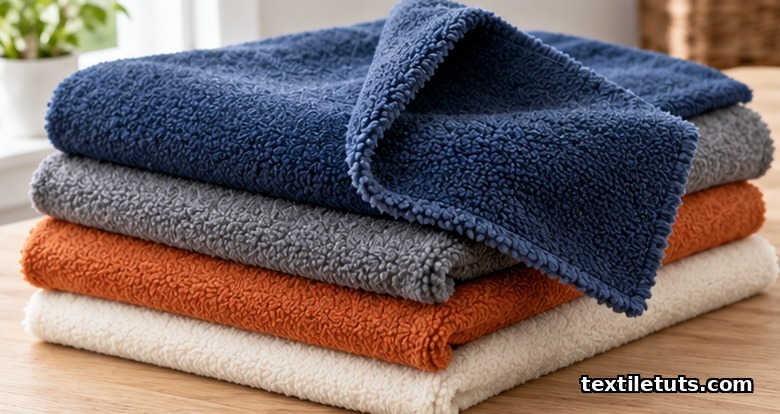
Fleece fabric is a 100% synthetic micro-fabric invented in 1979 by Malden Mills (Aaron Feuerstein) that revolutionized cold-weather clothing by combining polar sherpa warmth with lightweight durability. The fabric is made primarily from polyester (PET) with a unique bi-component construction that creates a fuzzy napped surface on both sides, trapping air for insulation while wicking moisture away from the body. This dual-sided texture distinguishes true fleece from other synthetic fabrics and enables the characteristic warmth-to-weight ratio that makes fleece the preferred mid-layer for outdoor apparel.
Definition and Quick Overview
Fleece is a 100% synthetic micro-fabric (polyester-based) invented in 1979 by Malden Mills in Massachusetts. The name “fleece” refers to the fabric’s wool-like softness, not its fiber origin — it is entirely petroleum-derived and has no relationship to sheep wool despite the evocative naming. Malden Mills CEO Aaron Feuerstein famously declined to patent the fabric, allowing widespread affordable production that democratized cold-weather comfort.
The key defining feature of fleece is its fuzzy napped surface on both sides, created through a bi-component manufacturing process that differentiates it from single-sided synthetic fabrics. This dual-sided nap traps air between the fibers, creating dead air space that provides insulation without added weight. The primary use case is cold-weather mid-layer insulation in outdoor and casual apparel, making fleece a cornerstone of the layered clothing system widely adopted since its introduction.
True fleece fabric should not be confused with wool fleece — the latter is a natural fiber harvested from sheep, while fleece is entirely petroleum-based polyester. This distinction carries important implications for care requirements, environmental impact, and performance characteristics in various weather conditions.
How Fleece Is Made: The Manufacturing Process
The manufacturing process for fleece fabric transforms raw polyester polymer into the soft, insulating material known globally. Each step is carefully controlled to produce the characteristic properties that define quality fleece.
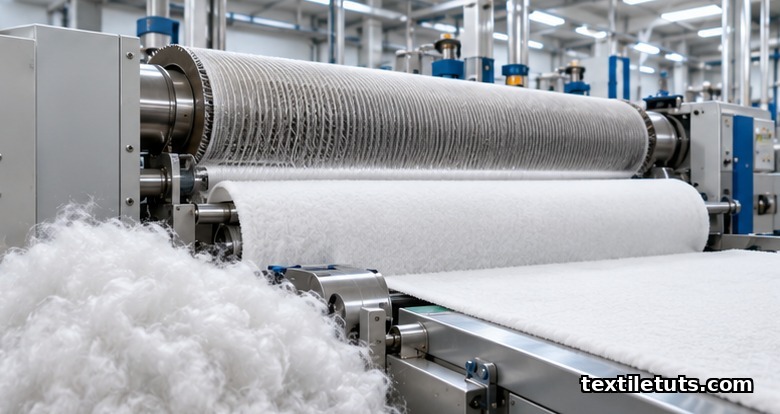
- Polymer extrusion: Polyester polymer is extruded into fine fibers, typically 0.5–2.0 denier in thickness. Denier measures the fiber’s linear mass density, with lower denier producing finer, softer fibers suitable for next-to-skin applications.
- Carding and cross-lapping: The extruded fibers are carded (aligned into a parallel arrangement) and cross-lapped to form a batt — a loose web of fibers that becomes the fabric’s foundation.
- Needling onto backing: The fiber batt is needled (pununched) onto a backing fabric substrate using barbed needles. This creates single-sided fleece with initial structural integrity.
- Dual-sided nap creation: For true fleece, a second layer is laminated or needled to the first to create the characteristic dual-sided napped surface. Malden Mills’ original “Polarplus” process laminated polyester to a nylon backing for enhanced durability.
- Shearing to uniform height: The fabric is sheared to a consistent nap length, typically 1–3mm for standard fleece. This creates uniformity across the fabric surface and controls the visual appearance and hand feel.
- Brushing: The napped surface is mechanically brushed to raise individual fibers and create the signature fuzzy texture. This brushing process is what gives fleece its characteristic soft hand feel.
- Anti-pill treatment: Premium-grade fleece receives anti-pill treatment, either through heat-setting or chemical coating. Heat-setting permanently sets the fiber twist, while chemical coatings create a barrier against fiber tangling during washing.
Malden Mills’ original “Polarplus” process laminated polyester to nylon backing — an innovation that set the standard for outdoor fleece performance and durability.
Key Properties of Fleece Fabric
Fleece fabric possesses a specific set of physical properties that make it suitable for cold-weather applications. Understanding these properties helps consumers and manufacturers select the appropriate fleece grade for their needs.
| Property | Value/Range | Notes |
|---|---|---|
| GSM (weight) | 100–400 GSM | 200–300 GSM most common for apparel |
| Composition | >90% polyester | May include 5–10% nylon, Lycra, or recycled PET |
| Breathability | 3,000–5,000 g/m²/24h | Good moisture vapor transmission |
| Insulation (clo) | 0.5–1.0 clo | Depends on GSM and loft thickness |
| Abrasion resistance | 20,000+ Martindale | High durability for outdoor use |
| Heat sensitivity | >130°C (265°F) | Fabric softens and melts above this |
| Stretch | 2-way or 4-way | Depends on elastic fiber content |
| Drying time | 30–60 min | Fast wicking and quick-dry |
| Water absorption | <1% of weight | Highly hydrophobic but not waterproof |
| Microplastic shed | High | Significant environmental concern |
Fleece is notably hydrophobic — it holds less than 1% of its weight in water and dries in 1–4 hours depending on thickness and environmental conditions. However, fleece is not waterproof and absorbs water when submerged or exposed to prolonged rain. When fleece does become wet, it loses most of its insulating quality, though it recovers quickly once dried. The fabric is also not windproof without an outer shell layer, which is why fleece is typically used as a mid-layer beneath a windproof or waterproof shell.
Abrasion resistance of 20,000+ Martindale cycles makes fleece suitable for demanding outdoor applications where fabrics are subjected to rough surfaces, backpack straps, and repeated motion. The fabric generates static electricity during dry conditions, which attracts lint and dust but can be mitigated with anti-static treatments or fabric softener alternatives.
Types and Varieties of Fleece Fabric
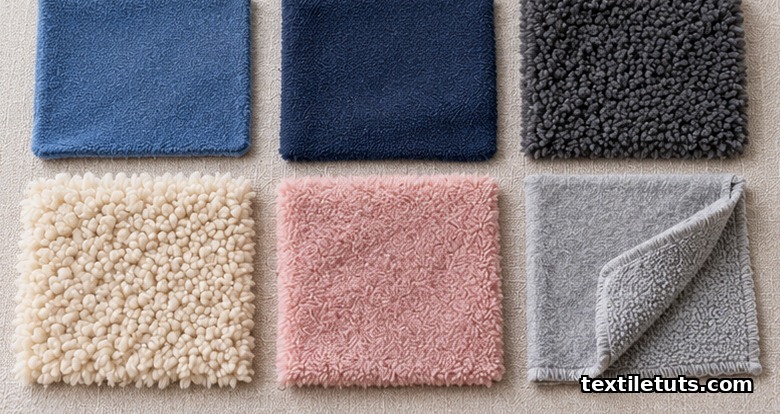
Fleece fabric comes in several varieties classified by weight, texture, and construction method. Each type serves different applications and offers distinct performance characteristics.
By Weight/Grade
- 100–150 GSM (Micro fleece): Lightweight fleece used for base layers, jacket liners, and summer evening layers. Thin enough for year-round use in milder climates.
- 200 GSM (Mid-weight fleece): The most common grade for everyday mid-layer garments. Provides an optimal balance of warmth, breathability, and weight for most outdoor activities.
- 300+ GSM (Heavyweight fleece): Expedition-grade fleece designed for extreme cold conditions. Higher loft traps more air but results in greater weight and potential for matting over time.
By Texture and Construction
- Polar fleece: The original Malden Mills design featuring laminated construction for highest warmth. The benchmark against which all other fleece varieties are compared.
- Sherpa fleece: Designed to mimic natural wool appearance with a longer nap of 5–15mm, creating a fluffier texture. Typically used as a lining material for added warmth in jackets and blankets.
- French terry: Features a looped uncut surface on one side with a smoother finish on the reverse. Lighter weight than standard fleece and commonly used in casual athletic wear.
- Coral fleece: Created when fiber loops are cut, producing a plush texture with an exceptionally soft hand feel. Popular for baby clothing, blankets, and loungewear.
- Anti-pill fleece: Heat-treated fibers resist pilling, making this the most common variety for consumer apparel. Maintains appearance through repeated wash cycles.
- Stretch fleece: Contains 4–10% Spandex or Lycra content enabling 4-way stretch. Designed for athletic applications requiring maximum mobility.
Common Uses and Applications
Fleece fabric’s unique combination of warmth, light weight, and easy care has established it across diverse applications from high-performance outdoor gear to everyday comfort clothing.
- Outdoor apparel: Jackets, mid-layers, pullovers, and base layers for hiking, skiing, snowboarding, and climbing. The mid-weight 200 GSM grade is the industry standard for outdoor mid-layers.
- Casual wear: Hoodies, sweatshirts, loungewear, and blankets leverage fleece’s soft hand feel and easy-care properties for everyday comfort.
- Performance athletic: Running vests, yoga layers, and gym warm-up layers benefit from fleece’s moisture-wicking properties and lightweight warmth during high-output activities.
- Pet accessories: Dog coats and pet blankets are popular applications due to fleece’s machine washability and quick-drying characteristics.
- Industrial applications: Lining for gloves, hat ear flaps, and boot liners provide insulation in footwear and hand protection.
- Home textiles: Throws, blankets, and mattress protectors use fleece for its warmth and easy maintenance in domestic settings.
Pros and Cons of Fleece Fabric
| Advantages | Disadvantages |
|---|---|
| Excellent warmth-to-weight ratio | High microplastic shedding (wash release) |
| Machine washable, easy care | Not windproof without shell layer |
| Quick-drying (30–60 min) | Melts if exposed to open flame or high heat |
| Soft hand feel (wool-like) | Holds odors more than natural fibers |
| Durable, abrasion-resistant (20,000+ Martindale) | Pilling with repeated washing (non anti-pill) |
| Affordable price point | Not biodegradable (polyester) |
| Hypoallergenic (no lanolin) | Static cling in dry conditions |
| Good breathability (3,000–5,000 g/m²/24h) | Loses loft/warmth when compressed |
The warmth-to-weight ratio of fleece is its most significant advantage — fleece achieves equivalent insulation to wool at 20–30% less weight, making it the preferred choice for weight-conscious outdoor enthusiasts. However, the fabric’s environmental footprint, particularly microplastic shedding during washing, is a growing concern. A single wash cycle can release hundreds of thousands of synthetic microfibers into waterways, contributing to ocean plastic pollution.
Fleece Care Summary
Proper care extends fleece garment lifespan and maintains its insulating properties. The hydrophobic nature of polyester means fleece dries quickly, but certain practices must be followed to prevent damage.

- Machine wash cold (30°C/85°F maximum) — never use hot water or high heat, which can damage the nap and cause shrinkage
- Air dry or tumble dry low — heat above 130°C (265°F) causes fibers to soften, melt, and lose loft permanently
- Use liquid detergent — powder detergents can abrade the napped surface and damage fibers through mechanical friction
- Do not iron or expose to high heat sources — the fabric will melt and form shiny patches that permanently damage appearance
- Wash separately or use microfiber filter — capture microplastic fibers before they enter waterways; washing a full load reduces fiber release
- For pilling removal: use a fabric shaver or sweater comb to restore the smooth surface without damaging the fabric
- Do not use fabric softener — softener coats individual fibers, reducing breathability and moisture-wicking performance
When properly cared for, quality anti-pill fleece maintains its appearance and performance through hundreds of wash cycles. The fabric’s hypoallergenic properties — arising from the absence of lanolin (the oil found in natural wool) — make it suitable for individuals with wool allergies or sensitive skin.
Frequently Asked Questions
Q: What is fleece fabric made of?
A: Fleece is made primarily of polyester (polyethylene terephthalate / PET), derived from petroleum. The polyester fibers are extruded, carded, and needled onto a backing to create the characteristic fuzzy napped surface. Some fleece blends incorporate 5–10% nylon for durability or 4–10% Lycra/spandex for stretch. The fabric holds less than 1% of its weight in water, making it highly hydrophobic.
Q: Is fleece a natural or synthetic fabric?
A: Fleece is 100% synthetic — it is made from petroleum-derived polyester, not from natural fibers like wool or cotton. Despite being called fleece, the name only refers to its wool-like softness, not its origin. This makes fleece both affordable and easy-care but also a source of microplastic pollution when washed.
Q: What is the difference between sherpa and fleece?
A: Sherpa fleece (or polar sherpa) is a variety of fleece with a longer nap of 5–15mm that more closely mimics the appearance and texture of natural sheep wool. Standard fleece has a shorter, denser nap of 1–3mm on both sides, while sherpa has a fluffier, more voluminous texture. Sherpa is typically used as a lining material for added warmth in jackets and blankets.
Q: How warm is fleece compared to wool?
A: Fleece provides approximately 0.5–1.0 clo of insulation per unit thickness, while merino wool provides 0.8–1.2 clo. At equal thickness, wool is slightly warmer. However, fleece achieves similar warmth at 20–30% less weight. Fleece also dries faster and absorbs less water than wool when wet, making it more reliable in damp conditions.
References
- Aaron Feuerstein. (1981). Polar Fleece History and Development. Wikipedia.
- Malden Mills Industries. (1979). Synchilla Synthetic Fleece Technology. Patagonia & Malden Mills Historical Documentation.
- International Organization for Standardization. (1983). ISO 2107:1983 — Fabric Weight Measurement Standards. ISO.
- Textile Exchange. (2024). Recycled Polyester in Textile Manufacturing. Textile Exchange.
- American Association of Textile Chemists and Colorists. (2020). Fabric Comfort Testing Standards for Military Applications. AATCC.


